Accounting, Technology and Small Business – The Best of 2013 from CooperMann

Accounting, Technology and Small Business – The Best of 2013 from CooperMann

cooper-mann-top-20It has been an eventful year, hasn’t it?  With the NSA lurking about collecting data, innovative new approaches to information and identity theft emerging almost daily, and complete turmoil in the IT services industry challenging trusted sales and distribution models, most of us have simply become numb to the noise.  Information technology is evolving at an increasingly rapid pace and the way people and businesses interact with and use technology is being forced to change along with it.  It’s starting to become almost, weirdly, natural.

Much of this change can be attributed to “The Cloud”, which is not a thing or a place.  Cloud has become the term which applies to just about anything having anything to do with the Internet.  For technology “purists”, cloud means something fairly specific, but for normal people (no offense to the nerds and geeks, but you know what I mean), cloud applies to pretty much anything accessible via the Internet.  Photos back up to “the cloud”; music gets stored in “the cloud”, websites are hosted in “the cloud”; businesses run their applications in “the cloud”, and you can do darned near anything you need (or want) to with a phone.  The cloud could be some guy’s server in his basement, or it could be a sophisticated network of systems housed in secure facilities around the globe.  They both qualify, sort of.  The point is that mobility, Internet services, subscription access to technology, and social computing are changing how people view technology – resulting with changes not simply in how IT is purchased, but in how IT is used and applied to daily life.

There are, however, some things that do not change even if the working environment does.  The accounting profession, for example, is undergoing a great deal of change, and much of it fueled by the advancements in technology and social computing.  But accounting fundamentals – the “truth of debits and credits” and the good old accounting equation – remain.  The basics of running a business are also unchanged, even as methods of doing business evolve and globalization of markets continues.  Business fundamentals – fiscal responsibility, cash and growth management, and focus on value and sustainability – are as necessary now as every before.

With all this change and IT “advancement”, there have certainly been impacts to how and where we work.  But the more things change, the more they remain the same.  Good business generates goodwill and more business – that doesn’t change – and bad news still tends to spread faster than good news (much faster, given social platforms that are designed to spread the word far and wide).  And when it comes down to the fundamentals – the basic and essential foundations supporting building, operating, and accounting for business – we generally find that they remain constant even as the environment in which they exist experiences change.

jmbunnyfeetMake Sense?

J

Here are the top 20 ranked posts for 2013 from CooperMann.com

  1. The 2 Most Popular Models for Working with QuickBooks Desktop Editions and the Cloud
  2. Accounting Professionals, You’re right – your clients don’t care about the numbers.
  3. Remote access to client bookkeeping comes in many forms because clients come in many forms
  4. What Small Businesses Need To Know about QuickBooks and the Cloud
  5. Intuit Introduces Changes to Authorized Commercial Host for QuickBooks Program, Introduces QuickBooks Enterprise Rental Licensing
  6. Managed Applications, Cloudpaging, and a New Flavor of Hosted QuickBooks
  7. The Language of Accounting: Disconnect between Accountants and Bookkeepers
  8. Why Accountants and Bookkeepers Use the Cloud
  9. Small Business Owner to Accountant: Make Accounting Valuable to ME
  10. Changing How We See Software: QuickBooks 2013 interface frustrates power users
  11. Bookkeeping and Benchmarks – Getting the Numbers Right
  12. In Bookkeeping, Accounting, and Information Technology: The Value of Outsourcing
  13. Hosting All My Applications in the Cloud
  14. 4 Rules of Thumb for Business Success
  15. Intuit Hosting Program for QuickBooks Website Goes Live
  16. Re-defining the role of the accountant, or going back to the good old days?
  17. Cloud Computing for Small Business: It’s All About 3 Apps
  18. The Collaborative Online Model for Small Business Accounting Professionals
  19. QuickBooks Hosting: New Program Tier Announced for QuickBooks Hosting Providers
  20. 4 Rules for Building Service Customer Loyalty
Posts by category – with Accounting Professionals, QuickBooks Hosting, QuickBooks Software, and Small Business being the top categories with ranking articles.
ACCOUNTING PROFESSIONALS
Small Business Owner to Accountant: Make Accounting Valuable to ME
Accounting Professionals, You’re right – your clients don’t care about the numbers.
The Language of Accounting: Disconnect between Accountants and Bookkeepers
Why Accountants and Bookkeepers Use the Cloud
Bookkeeping and Benchmarks – Getting the Numbers Right
In Bookkeeping, Accounting, and Information Technology: The Value of Outsourcing
Re-defining the role of the accountant, or going back to the good old days?
The Collaborative Online Model for Small Business Accounting Professionals
Remote access to client bookkeeping comes in many forms because clients come in many forms
QUICKBOOKS AND BUSINESS APPLICATION HOSTING
The 2 Most Popular Models for Working with QuickBooks Desktop Editions and the Cloud
What Small Businesses Need To Know about QuickBooks and the Cloud
Intuit Introduces Changes to Authorized Commercial Host for QuickBooks Program, Introduces QuickBooks Enterprise Rental Licensing
Hosting All My Applications in the Cloud
Intuit Hosting Program for QuickBooks Website Goes Live
Cloud Computing for Small Business: It’s All About 3 Apps
QuickBooks Hosting: New Program Tier Announced for QuickBooks Hosting Providers
Managed Applications, Cloudpaging, and a New Flavor of Hosted QuickBooks
QUICKBOOKS SOFTWARE
Changing How We See Software: QuickBooks 2013 interface frustrates power users
SMALL BUSINESS
4 Rules of Thumb for Business Success
4 Rules for Building Service Customer Loyalty

New York or Las Vegas? It doesn’t matter if you can work online.

New York or Las Vegas?  It doesn’t matter if you can work online.

Skyline
Skyline

The 10th annual Accounting Solutions Conference, held by The Sleeter Group, is being held in Las Vegas on November 3-6.  By all accounts, it’s looking like the conference will again bring together some of the best and brightest in accounting and business technologies.

The annual “Sleeter Conference” event is among the best opportunities accounting and bookkeeping professionals have to explore and learn about the technologies, service models, client management tools and other elements involved in delivering accounting, bookkeeping and consulting services to small business clients.  With the introduction of so many new ideas and solutions designed for small businesses and their accountants, it is no wonder that professionals look to this conference to help make sense of it all.

With the right strategy and through the innovative and efficient use of technology, people and processes, even the smallest of organizations can compete with the big boys.  Accounting professionals, pro bookkeepers, and small business consultants and advisors are not simply participants in the financial processes of these small organizations – they are the influencers and implementors of the solutions and methodologies which will generate the positive impact in the client business.  Information technology -mobile access solutions and innovative tools for working together – makes it possible to deliver these benefits to clients, whether they’re in Vegas or the Big Apple.  Come to the conference and hear all about it.

While you’re there, stop by the Uni-Data Skyline Cloud Services booth and check out some of the new stuff that’s going on in the QuickBooks and general application hosting world.  It’s pretty cool!  I give it 5 bunnies.

J

Sleeter Peeps and New Technology in Las Vegas

Sleeter Peeps and New Technology in Las Vegas

Marshmallowpeeps.com bunnies Peeps

The Sleeter Group is preparing for its 10th annual Accounting Solutions Conference, which is in Las Vegas next month (Nov 3-6) at Caesars Palace.  The conference is THE annual event where Sleeter Group Consultant Network members and other accounting, bookkeeping and business professionals get together to learn about new technologies, see and explore a wide variety of solutions and services, and to meet and network with their peers and peeps.

The venue this year, Caesars Palace in Las Vegas, is likely to be even more fun than last year and is far easier to get to than Orlando, Florida (for those of us on the West coast, anyway).  And, unlike in Florida, we’re probably not going to see all those little lizards everywhere around the hotel grounds.  Well, unless there’s a lizard convention going on in LV, which wouldn’t surprise me.  Actually, the good old days of attending the conference at the Tuscany Suites are what I miss – when the venue was a little more intimate and you could really have a good conversation without all of the typical Vegas distractions.

The “Sleeter Conference” used to be a purely QuickBooks-oriented conference, but has expanded to embrace the larger realm of products and services emerging which serve various small business accounting or process automation needs.  While there remains a very large focus on the QuickBooks products and service lines, it is not unusual to see sponsors and speakers representing other accounting solutions and business technology products.  The benefit for the audience is exposure to emerging technologies and trends, and discussion on how these trends are impacting business in so many ways.

Among the technologies and trends to explore at the conference are application hosting and software licensing and delivery, and how those models are changing the way people obtain and use their business applications.  We introduced the application hosting models and cloud-based QuickBooks models years ago, and those hosting solutions proved the value of anytime, anywhere access to conventional desktop applications.  Now, we’re introducing other application delivery models which address a variety of needs, and which go beyond the Remote Desktop concept.  It’s pretty cool stuff, and this conference is where you can learn more about it. [*Note: visit Skyline Cloud Services by Uni-Data at the conference; they’ll know where to find me.]

Meet me in Las Vegas next month, and we’ll chat more about technology, the evolution of the accounting industry and profession, and how these elements are combining to create new challenges and opportunities at all levels of business.  Sleeter peeps – I’ll see you there!

J


  • Read more about how accountants need business intelligence, too
  • Read more about how there’s no fear and loathing in accounting
  • Read more about the pressure on accountants to deliver more value and intelligence to their clients
  • Read more about Data Warriors: accounting in the cloud

Banks and Small Business: Finding the “Just Right” Fit Isn’t Easy

Banks and Small Business: Finding the “Just Right” Fit Isn’t Easy

Banks need business customers because business accounts provide more profitability than consumer accounts.  By volume, there are more small businesses in the US than mid-size or enterprise businesses, which you would think would be a good thing for the banks – more business customers, right?  It seems not so much.

For many banks, the problem is that they don’t appear to really know how to service – or even identify – these small business customers.  The majority of small businesses in the US don’t have employees, so direct deposit and payroll solutions aren’t something they are looking for.  Many of these small businesses operate from the business owner’s home rather than an office, and don’t generate the revenues (=deposits) that bigger businesses do.

To a bank, most small businesses look like consumers.  These small businesses are treated like consumers – are offered consumer-level services and are not educated on what business banking services might be able to do for them.  In reality, the banks really don’t have much to say to these small business owners, because the services offered by the banks are simply not a great fit.  There are studies which suggest that the small business market is fairly evenly divided, with approximately 50% using consumer banking services rather than those designed for business use.  Given the inability of the banks to even identify those consumer banking customers who are actually small businesses, I would suggest that the percentage is even higher.

There are three primary elements tied to banking which should be better-positioned to assist small business owners in leveraging their banking relationships to the benefit of the business and not just the bank.   If the financial institutions can find a way to meet these three essential needs for smaller businesses, they would likely find that more small businesses would embrace business banking services, resulting in greater profitability for the bank.

e-Payments

Use of electronic payments services represents a growing trend in small businesses and needs to be better-addressed by the financial institutions rather than purely retail providers.  Small businesses are increasingly using the Internet and online technologies to service their various business needs, and payments processing is among the top sellers.  Providing SOLO/SOHO and other small businesses with the ability to process payments at any time and from anywhere has become a big driver for this type of solution.  The popularity of Pay Pal, Intuit GoPayment and Square payment solutions is a testament to the need for such services in the small business market, yet the broadest use continues to be within retail providers rather than directly via the financial institutions.

Entitlements

Security and access controls to account and transaction information (frequently referred to as “entitlements” attached to business accounts) are hugely valuable for small businesses.  Most small business owners engage bookkeeping or accounting professionals at some point, and the process of accounting for the business activities is improved dramatically when those professionals are able to access the information directly from the financial institution.  Unfortunately, it is only with the more expensive business class accounts that most banks provide the means for account holders to grant access to account and/or transaction information for accountants and bookkeepers, financial advisors, etc.  Allowing small businesses to benefit from this type of security and control of their accounts is tremendous, yet the overall costs of the associated business banking solutions are often simply too great for the small business to bear.  The result is either a lack of privacy, security and control, where the business owner must grant unfettered access to account information to a 3rd party bookkeeper or accountant, or the business owner simply continues to pay for manual bookkeeping transaction entry.

Cash Management

Most small businesses operate on cash, and expense and cash management is essential to maintaining operations.  Consumer banking solutions may offer limited capabilities for expense and cash reporting, but the services offered through many business banking portals would be far more beneficial for the business, reflecting trends and providing more insight relating to business financial activities and business behavior.  Unfortunately, many of these services designed for business customers are oriented towards the larger organization, and are far too complicated or expensive to provide real value to the owner of a small business.

Small businesses fuel the economy, yet remain a largely untapped market in terms of business banking and other services.  Small businesses run “under the radar” of many service providers because they have not reached the point where the obviously available business services (e.g, the more profitable banking solutions) seem attractive to them.  Banks need to recognize that serving the small business customer well – providing the services which help small businesses grow into bigger businesses – is ultimately the key to acquiring new customers for whom the big banking solutions fit.

jmbunnyfeetMake Sense?

J

Read more about small business banking and credit

Technology and Tools for Accounting Professionals

Joanie Mann Bunny FeetTechnology and Tools for Accounting Professionals

old_school_ledgerThere was a time not so long ago when accounting professionals focused more on tabulation and summarizing of information than on analysis.  Accounting for businesses, in particular, required collecting myriad papers and receipts and other transaction documents, summarizing the information, translating it into journal entries, and finally posting those numbers to the big bound book which represented the business general ledger.  With the work required to gather and enter all of the information, professionals necessarily focused their efforts on making the process as efficient as possible by attempting to structure the workflow and manage the paper.


When those efforts are compared to today’s approach which involves digital documents, intelligent data collection tools, automated workflow solutions, online accounting and data analysis, it is clear that the processes for accounting for business activities have not really become simpler.  In fact, much of the enabling technology has served to complicate certain processes, which drives users to find even more “solutions” to address these new problems.  It (IT) is a bit like the Wonka Everlasting Gobstopper, which never gets finished and never gets smaller.  IT simply changes things – regularly and often.

Back then – before the Internet and digital imaging, or even Personal Computers – high technology wasn’t the focus because it didn’t exist in the realm of business in general.  I suppose you could call business solutions at that time “low” technology, where mainly mechanical solutions were introduced to address various business problems.

old_school_filecabinet

As an example, prior to the advent of digital imaging and electronic documents, one of the primary requirements of the business was to organize and store paper documents.  Over time, a wide variety of filing, foldering and labeling solutions have been developed, all oriented towards making the storage and later retrieval of paper documents easier.  For some businesses, letting go of the paper is a hard thing to do.  Years and years of training in keeping paper files has left many business owners and managers wary of working without physical paper documents.  Investments in office space, filing cabinets, storage folders and personnel to organize, file and retrieve all of the documents is only a partial measurement of the cost of managing paper, and large numbers of businesses continue to operate in this manner.

old_school_desk

The technology applied to processing the work has also changed, in many ways even more dramatically than the technology applied to collecting and storing the information.  Take the simple processes of tabulation (to arrange in tabular form; condense and list) and summing (adding up) information, for example.  Previous generations didn’t have computers and spreadsheet software to perform the work.  Rather, individuals would painstakingly handwrite each transaction entry into a ledger or on a columnar worksheet, and would then have to manually add each column and then cross check footer totals to ensure accuracy.  Back then, the machines used to perform the addition/subtraction were mechanical devices and could not perform multiplication or division.   These adding machines were first hand-cranked devices, later replaced with shiny new electrical ones (weighing approximately 20 lbs each).

old_school_telephone

Even voice communications have changed dramatically over the years.  Many people don’t remember a time when having multiple phone lines in the business meant having multiple telephones, and the concept of a PBX (Private Branch eXchange) didn’t exist.  Every phone would be hard-wired to an incoming line; if you wanted to answer a call, you had to use the right phone.  This became difficult in an office with many people, so solutions such as the “fabulous extendo-phone” was invented to allow anyone in the office to access the phone from their desk.

The technology available to businesses today is astounding, and offers amazing potential and benefit.  On the other hand, technology rarely (truly) makes things simple or easy – it more frequently serves to shelter certain users from the complexity while delivering new workloads and concerns to others.  It’s rather like energy – it isn’t created or destroyed, it just changes form [law of conservation of energy].  Business is like that, particularly where information technology is involved.  The underlying requirement doesn’t go away, just like a business’s requirement to account for financial transactions and activities,  and the need for the business to capture and retain documents isn’t changed.  How the process is managed, and which tools or mechanisms are applied to the task is what changes.

Make Sense?

J

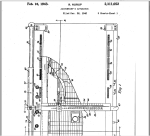
onewrite-accountant_apparatusOne-Write System Revolutionizes Accounting.  These guys had the right idea, they just didn’t have the cloud.

Philosophy of Process Improvement: Today’s CFO Focusing on Operations

Philosophy  of Process Improvement: Today’s CFO Focusing on Operations

There are a great many methodologies and approaches to “making businesses better” through process improvement.  From SixSigma to Continuous Process Improvement to Total Quality Management – all describe methods of measuring performance and outcomes to return intelligence oriented towards improvement.  Many of these approaches are generally applied in manufacturing businesses, because in manufacturing it’s easier to see where processes may be flawed because the process works with tangible elements.  Making corrections in a process can improve the performance of that process by reducing errors or increasing efficiency.  The truth of the matter is that every business is like a manufacturing business, and applying measurements to the various processes the business performs can reveal the secrets to improving not only process performance and product quality, but resultant profitability.

A recent article on CFO.com  titled Operations Take Center Stage, author David McCann discusses how some CFOs are improving business profitability and performance by delving deeper into operational areas of the business, and not remaining focused squarely on accounting and finance issues.

“Operations is the key to everything,” says Larry Litowitz, finance chief at SECNAP Network Security, a secure Internet-services provider. “That orientation is found most at manufacturers, but it should be at every company.”

Fiscal and financial matters are important to every business, but focusing on accounting for the end-result of business activities assumes that the work leading to the result is useful and effective.  As more attention is paid to conservation of cash, reduction of expenses, and overall profit improvement, CFOs are necessarily moving deeper into the operational aspects of the business to uncover potential not previously addressed.  In some cases, the move is more a function of self-defense and necessity than desire, as businesses increasingly compress spending on management, merging the functional roles of CIO, COO and CFO.

Increasingly, CFOs may find themselves taking on operational tasks whether they want to or not. At larger companies, the steady waning of the chief operating officer position has resulted in more operational responsibility for CFOs, recruiters say. In 2000, 47% of the 669 companies included in either the Fortune 500 or S&P 500 had COOs; in 2012, only 35% did, according to executive-recruiting firm Crist Kolder’s 2012 “Volatility Report of America’s Leading Companies.”

Some accounting professionals may believe that they don’t have the skills and experience to suggest changes in operational areas of their client businesses.  I would suggest that logic and reason are generally the prevailing factors supporting process improvement – reasoning that is often developed through simple observation.  Taking the time to understand what the business is doing at each level, and then actually observing those activities and accounting for their effectiveness and error rate, is how professionals can spend quality time in the business and uncover hidden profit potential.

Litowitz says CFOs can influence operations at a range of companies, including service-oriented businesses. “It’s really no different. The work is a set of activities,” he insists… “All these activities can be analyzed, controlled, and measured against a predetermined standard,” says Litowitz. And just as on a manufacturing floor, efficiency generates profit, justifying the CFO’s involvement.

Make Sense?

Joanie Mann Bunny FeetJ