

 In most regions around the country high-speed broadband is readily available, and using the Internet for working and playing online is a part of everyday life. Facebook and Twitter and Instagram are household names and just about every conversation starts or ends with a reference to a meme. It seems that everyone is connected and app-savvy, using high technology while doing business, doing homework, or doing just about anything. Yet this move to online and cloud technologies has come with a high price tag for some businesses, especially small businesses trying to keep up with the pace of change and who are being encouraged to adopt just about every new thing that comes their way. It’ll make them more efficient, more profitable, more attractive to customers, more interesting to prospects, and will allow them to do more in less time. All of the “apps” for this and that have created a great deal of confusion for the average small business owner who may need a few tools to help get business done, and who is now facing the daunting task of figuring out which ones to use as the type and number of tools grows exponentially every day. It used to be so simple, but now even the simple things are becoming difficult to understand – like QuickBooks, for example.
QuickBooks desktop editions, born from Quicken personal finance management software, continues to be the most popular small business bookkeeping solution available. Yet QuickBooks is now offered as either desktop application (software you install on your PC), as a hosted solution (software installed and run on service provider systems and which you access via the Internet), or as an online application (QuickBooks online edition). Initially, the lines were fairly clearly drawn – the desktop software gets installed on the local machine and the online edition runs from Intuit’s servers. Then things got a bit more complicated as hosted services rolled out, and users were able to have their desktop QuickBooks managed with a service provider and accessible via an Internet connection. Now, just to add to the confusion, Intuit delivers a new desktop app to access the online version of QuickBooks. What?! Yeah, you heard me. There’s a desktop app to install to the PC (97MB!) that accesses the QuickBooks online system.
When Intuit, like to many other software companies, began pushing the online-only version of their solution, the messaging was all about making life easier with “no software” to install or manage. Customers could simply sign up and have all the features and capability they need using only the browser on an Internet-connected machine. Failing to consider that computing devices (PCs, tablets, phones, et al) continue to get smarter and more powerful each day, the software companies firmly believed that everything would eventually be on the Web, and the “access device” wouldn’t matter any more. However, things haven’t turned out quite as planned, and users continue to not only demand desktop and device-based apps, they will often forgo the browser-only approach until a better app and interface comes along. The truth is that the market wants apps and software running on their devices because the user experience and performance is almost always better than with a purely browser-based approach. Browsers are great for visiting websites, but not so much when it comes to running business applications. Sure, there are a lot of browser-based solutions out there, but not too many of them are as trusted or as heavily used as their desktop-based counterparts or competitors.
There is little argument to be made regarding the fact that many software developers are working towards entirely online application models, where little or no software would exist on the device and all data is managed and stored online. What is arguable is whether or not the “fully online” model will ultimately win, or whether software will continue to be installed and maintained on the device. Performance, functionality, integration with other applications, and usability will all influence the buyer’s decision regardless of the marketing hype. It may simply be that users will have to try each model before they decide which one works best for them. It seems that, with the introduction of the desktop app for QuickBooks Online, the QuickBooks-users club has voiced an opinion which sounds a lot like they liked the desktop software approach best.
 Make Sense?
J

 Doing more with less is the mantra of today’s business. Hiring more people or throwing money at a problem is almost never the best way to solve it… even if there are people and dollars to throw. Businesses are feeling the crunch today more than ever, in some part due to advancements in technology and the emergence of retail and “self-service” service. Once upon a time it was OK to be a fat dumb and happy business, but those days are long gone. With competitive pressures increasing – and emerging from new sources – just about every business is feeling the need to trim some fat – cutting costs and streamlining processes even as customer demand increases.
 Make Sense?
 Information technology and the “cloud” is amazing. With the right IT resources and connectivity, individuals and small businesses are able to compete at global levels with much larger organizations, and are proving that placing focus and attention on the right aspects of the business helps the business perform better. The right IT approach is to use technology to make the business smarter so more gets done in less time and with fewer resources – this is wearing the bunny slippers. The goal is leveraging systems, software and connectivity to be more efficient and effective, creating the time to stop and think for a while, innovate, or simply relax.
 When I first started my business, like many start-up operations, I decided to
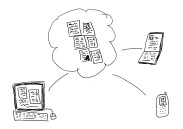 Running applications online, or “in the cloud” using today’s parlance, is top priority for a lot of businesses. It’s not that these organizations have a burning desire to post their financials to the web, which is what a lot of folks thought was going to happen when we first suggested they use their financial applications online. Rather, business owners and managers have begun to recognize and experience the benefits of connecting their various locations, remote and mobile workers with real time access to business applications and data. Further, centralization of IT coupled with outsourced IT management and subscription service pricing has introduced financial and operational benefits which make businesses more cost-efficient as well as more agile. From being the basis for foundational process and workflow improvements to allowing the repositioning of IT costs from capex to opex, online application services are proving their value in various ways every day.


 Make Sense?
 Over 130 Marketing Tips in this Free eBook!

 Cooper Mann Consulting