Banks and Small Business: Finding the “Just Right” Fit Isn’t Easy

Banks and Small Business: Finding the “Just Right” Fit Isn’t Easy

Banks need business customers because business accounts provide more profitability than consumer accounts.  By volume, there are more small businesses in the US than mid-size or enterprise businesses, which you would think would be a good thing for the banks – more business customers, right?  It seems not so much.

For many banks, the problem is that they don’t appear to really know how to service – or even identify – these small business customers.  The majority of small businesses in the US don’t have employees, so direct deposit and payroll solutions aren’t something they are looking for.  Many of these small businesses operate from the business owner’s home rather than an office, and don’t generate the revenues (=deposits) that bigger businesses do.

To a bank, most small businesses look like consumers.  These small businesses are treated like consumers – are offered consumer-level services and are not educated on what business banking services might be able to do for them.  In reality, the banks really don’t have much to say to these small business owners, because the services offered by the banks are simply not a great fit.  There are studies which suggest that the small business market is fairly evenly divided, with approximately 50% using consumer banking services rather than those designed for business use.  Given the inability of the banks to even identify those consumer banking customers who are actually small businesses, I would suggest that the percentage is even higher.

There are three primary elements tied to banking which should be better-positioned to assist small business owners in leveraging their banking relationships to the benefit of the business and not just the bank.   If the financial institutions can find a way to meet these three essential needs for smaller businesses, they would likely find that more small businesses would embrace business banking services, resulting in greater profitability for the bank.

e-Payments

Use of electronic payments services represents a growing trend in small businesses and needs to be better-addressed by the financial institutions rather than purely retail providers.  Small businesses are increasingly using the Internet and online technologies to service their various business needs, and payments processing is among the top sellers.  Providing SOLO/SOHO and other small businesses with the ability to process payments at any time and from anywhere has become a big driver for this type of solution.  The popularity of Pay Pal, Intuit GoPayment and Square payment solutions is a testament to the need for such services in the small business market, yet the broadest use continues to be within retail providers rather than directly via the financial institutions.

Entitlements

Security and access controls to account and transaction information (frequently referred to as “entitlements” attached to business accounts) are hugely valuable for small businesses.  Most small business owners engage bookkeeping or accounting professionals at some point, and the process of accounting for the business activities is improved dramatically when those professionals are able to access the information directly from the financial institution.  Unfortunately, it is only with the more expensive business class accounts that most banks provide the means for account holders to grant access to account and/or transaction information for accountants and bookkeepers, financial advisors, etc.  Allowing small businesses to benefit from this type of security and control of their accounts is tremendous, yet the overall costs of the associated business banking solutions are often simply too great for the small business to bear.  The result is either a lack of privacy, security and control, where the business owner must grant unfettered access to account information to a 3rd party bookkeeper or accountant, or the business owner simply continues to pay for manual bookkeeping transaction entry.

Cash Management

Most small businesses operate on cash, and expense and cash management is essential to maintaining operations.  Consumer banking solutions may offer limited capabilities for expense and cash reporting, but the services offered through many business banking portals would be far more beneficial for the business, reflecting trends and providing more insight relating to business financial activities and business behavior.  Unfortunately, many of these services designed for business customers are oriented towards the larger organization, and are far too complicated or expensive to provide real value to the owner of a small business.

Small businesses fuel the economy, yet remain a largely untapped market in terms of business banking and other services.  Small businesses run “under the radar” of many service providers because they have not reached the point where the obviously available business services (e.g, the more profitable banking solutions) seem attractive to them.  Banks need to recognize that serving the small business customer well – providing the services which help small businesses grow into bigger businesses – is ultimately the key to acquiring new customers for whom the big banking solutions fit.

jmbunnyfeetMake Sense?

J

Read more about small business banking and credit

Lease Accounting Rules, Small Business Financing and the Cloud

Lease Accounting Rules, Small Business Financing and the Cloud

Cloud Service FinancingThere are changes in lease accounting rules that may have broader implications than expected.  Lease accounting, or accounting in general, isn’t exactly an exciting topic and generally doesn’t come up in conversation.  But the changes to how business equipment and other leases are accounted for and reported could become additional fuel for cloud adoption by businesses – small business looking for financing, in particular (= lots).


First, what does accounting for leases have to do with small business financing?  Quite a bit, actually.  The balance sheet is one of the things a lender will look at when considering a small business for a loan, and if lease obligations and leased assets are on the balance sheet, they’re going to want to talk about them.  They’ll also possibly look at asset turnover – trying to understand exactly how much in assets it takes for the business to make “x” amount of money.  Banks and other lenders like to know they’re loaning money to a business that is going to pay it back, and in a reasonable amount of time.  They will limit their risk potential as much as possible, and they do it by looking through the financials and related information.

Business value is generating sustainable cash flow.  If you run a highly efficient business, the more top-line growth you deliver, the more cash flow you enjoy.  For capital-intensive businesses (either through the need for capital equipment or working capital), growth can actually lower your cash flow and diminish your business value.   To understand which side of the equation your business resides, accounting professionals will often look at the return on total assets calculated over time, dividing the operating income for each period from the P&L by the appropriate period values of total assets from the balance sheet.  The resulting metric describes how efficiently assets are applied to creating earnings.

https://coopermann.com/2013/01/22/why-is-asset-management-important-to-a-business/

This can be a difficult conversation with the banker for new businesses, as they have little to go on in terms of historic data to show the bank.  The P&L (profit & loss, or Income Statement) only reflects current business performance, not what it can do in a few months or years.  By putting leases on the balance sheet, businesses are now reflecting a more realistic view of things, but are also introducing additional items for scrutiny and question by the lender; things which are often described more in terms of business strategy than in proveable numbers.  That makes getting the loan just that much tougher.

Previous rules relating to business leases didn’t necessarily require that the business recognize operating leases (leased items and lease obligations) as assets and liabilities on the balance sheet.  This is among the reasons why businesses lease equipment – they are able to obtain the item without having to record a single large capital expenditure.

The FASB changes demand that accounting for leases should be standardized, forcing the lesees to report all leases on the balance sheet, reflecting both the benefit (asset) and the cost (liability) associated with the lease.  Stated in a press release on the subject: “The new guidance responds to requests from investors and other financial statement users for a more faithful representation of an organization’s leasing activities,” stated FASB Chair Russell G. Golden. “It ends what the U.S. Securities and Exchange Commission and other stakeholders have identified as one of the largest forms of off-balance sheet accounting, while requiring more disclosures related to leasing transactions.”

“a capital lease creates a tangible right where you own the equipment; the liability in a capital lease is true debt…”

http://www3.cfo.com/article/2013/9/gaap-ifrs_lease-accounting-elfa-fasb-iasb-global-convergence

By understanding how these changes in accounting for leases impact businesses, cloud solutions providers now have an additional lever to use with prospective customers: leasing equipment isn’t necessarily the way to keep capex off the balance sheet any longer.

One of the big value propositions offered by many cloud solution providers is that their service is paid for as a monthly business expense rather than a large up-front capital expenditure and investment.  Businesses are able to use the solution and benefit from it without actually “buying” anything, it’s just subscribed instead.  All of this is really a fancy way of saying “renting but not owning”, but the result to financial reporting is the same: it’s not on the balance sheet, it’s on the P&L in chewy chunks.  This used to be a preferred treatment for leases, too, allowing businesses to reflect the usage and payment in little parts rather than a big one.  It was “gentler” on the balance sheet.  But leasing equipment and software for on-premises use won’t be competing with the cloud and subscription service any longer, closing off the “impact to the balance sheet” conversation entirely and making cloud IT just that much more important to small businesses who need cash to fuel business growth.

Make Sense?

Joanie Mann Bunny FeetJ

The Language of Accounting: Disconnect between Accountants and Bookkeepers

The Language of Accounting: Disconnect between Accountants and Bookkeepers

There are a tremendous number of bookkeeper training programs developed over the years which propose to deliver the essential bookkeeping knowledge (e.g., double entry accounting) required in order to properly service business bookkeeping requirements.  Particularly as the CPA profession stepped away from traditional bookkeeping in favor of performing “higher level” and more profitable work, there was and continues to be a great need for skilled and experienced bookkeepers.  While it seems that accountants and bookkeepers would be a natural fit for partnering to serve small business client needs, there is often a disconnect between the two which causes the working relationship to not always prove as beneficial as it could.  What is the cause of this disconnect?  In many cases, it is due to the fact that the bookkeeper training educated the operator on the use of a software product, and not on the fundamentals of accounting and bookkeeping.

Over the past few years, I have had the opportunity to look through a lot of bookkeeper training programs, and the thing that stands out is that many of these programs aren’t really training bookkeepers on accounting principles.  More frequently, the training is focused on teaching users how to use software (usually QuickBooks).  With the number of users of the QuickBooks product, it is obvious that there is a need to educate users on the solution because people need to know how to use their software properly.  But it happened at some point in time that a majority of the industry came to believe that learning QuickBooks (or Xero or Freshbooks or Kashoo or whatever) was somehow synonymous with learning bookkeeping.

When I first started working with my father in his accounting practice, I had to use a manual general ledger, check register, etc.  It was all manual – computers didn’t come along for a while (yes, I am that old).  It was time-consuming, but it taught me the fundamentals.  I know what a subledger is.  In consumer-friendly software like QuickBooks, you don’t work in the AR subledger; you push the button that says “customers” or maybe “invoices”.   QuickBooks, in many ways, doesn’t speak accounting.  It speaks record keeping.  And this is where the disconnect begins.

An old school accountant will recall the green eye shade days and working with book ledgers and 13-column pads, but even “new” school accounting professionals know that the fundamentals of accounting aren’t available for re-invention.  A debit is still a debit and a credit is a credit.  Yes, there are intimacies involved which speak to specific treatment of items for reporting and tax purposes, etc., but the essentials of double entry and other basic accounting principles are consistent and unchanging.

The “language of accounting” includes certain precise terms with specific meaning, and this precision in the use of terms simply doesn’t exist in many bookkeeper training programs. Rather than focusing on the fundamental accounting training bookkeepers truly need in order to be of maximum value to the business, these programs focus on helping users become experts in using the software product, or even to become experts at teaching others how to use the solution.  While this software expertise may be beneficial in terms of helping accountants work with their clients who use the software, it doesn’t add enough value to the relationship to warrant partnering.  What accounting professionals need are bookkeepers who understand bookkeeping and who can apply basic accounting principles to the task.  Which software they operate is secondary to that purpose.

Professional bookkeepers, accountants, and the business client are all in a position to benefit tremendously when the service providers team up to provide comprehensive service.  The key to making these connections lies with the professional bookkeeper who must not only understand basic accounting principles, but must also be able to speak to the accounting professional in their native language.

Make Sense?

J

read more…

Opinion:   I think that every QuickBooks training program should include taking the sample data file in QuickBooks, and translating that to a manual accounting system of book ledgers and reports.  Then, have the student process a years’ worth of transactions manually and from paper-based source materials (and also make them create and use a manual paper filing system for all that information, and come up with a means to travel to obtain all the documents necessary which aren’t mailed via USPS).  The requirement would include generating the bank reconciliations from printed bank statements and cancelled check copies, creating a trial balance from the general ledger and then creating the P&L and Balance Sheet.  I’ll bet you end up with a group of bookkeepers who better understand the fundamentals of the accounting process.  The other benefit is that these folks will have a much better understanding of the problems in the outsourced accounting model which can be directly addressed and solved by today’s cloud and connected solutions.


The Small Business Borrower | Biz2Credit

In order for regulation and legislation to work in favor of small businesses, it becomes essential that accurate and complete information be available for analysis. Too often there are details not recognized in the information used by various agencies to help guide policy and action, and particularly in the world of privately held small business, the quality of data is often in question. This is where structured accounting software and the public accountant come in to play, and where a difference can be made not only with the individual client, but at a higher level by facilitating more accurate data production to support various research initiatives, such as those sponsored through the SBA and the Fed.

Overall, these research studies highlight two things: the important role that financial institutions play in lending to small business owners, and the value of quality data sets in ascertaining financing issues faced by small businesses and their owners.

Charles Ou, Ph.D. | Senior Economist | Office of Advocacy | July 2009

With the availability of highly useful tools for monitoring various key performance indicators and metrics in the business (with analysis of cash flow being an essential part), business owners and their accounting professionals alike are able to use real business data to reveal not simply the trends in business performance, but to identify areas where direct action could improve results in one aspect or another. By paying closer attention to managing business finances and analyzing key aspects of business performance, the “discouraged” or “denied” business borrower may become a successful or (even more valuable) a non-borrower.

via The Small Business Borrower at Biz2Credit.com.

Technology and Tools for Accounting Professionals

Joanie Mann Bunny FeetTechnology and Tools for Accounting Professionals

old_school_ledgerThere was a time not so long ago when accounting professionals focused more on tabulation and summarizing of information than on analysis.  Accounting for businesses, in particular, required collecting myriad papers and receipts and other transaction documents, summarizing the information, translating it into journal entries, and finally posting those numbers to the big bound book which represented the business general ledger.  With the work required to gather and enter all of the information, professionals necessarily focused their efforts on making the process as efficient as possible by attempting to structure the workflow and manage the paper.


When those efforts are compared to today’s approach which involves digital documents, intelligent data collection tools, automated workflow solutions, online accounting and data analysis, it is clear that the processes for accounting for business activities have not really become simpler.  In fact, much of the enabling technology has served to complicate certain processes, which drives users to find even more “solutions” to address these new problems.  It (IT) is a bit like the Wonka Everlasting Gobstopper, which never gets finished and never gets smaller.  IT simply changes things – regularly and often.

Back then – before the Internet and digital imaging, or even Personal Computers – high technology wasn’t the focus because it didn’t exist in the realm of business in general.  I suppose you could call business solutions at that time “low” technology, where mainly mechanical solutions were introduced to address various business problems.

old_school_filecabinet

As an example, prior to the advent of digital imaging and electronic documents, one of the primary requirements of the business was to organize and store paper documents.  Over time, a wide variety of filing, foldering and labeling solutions have been developed, all oriented towards making the storage and later retrieval of paper documents easier.  For some businesses, letting go of the paper is a hard thing to do.  Years and years of training in keeping paper files has left many business owners and managers wary of working without physical paper documents.  Investments in office space, filing cabinets, storage folders and personnel to organize, file and retrieve all of the documents is only a partial measurement of the cost of managing paper, and large numbers of businesses continue to operate in this manner.

old_school_desk

The technology applied to processing the work has also changed, in many ways even more dramatically than the technology applied to collecting and storing the information.  Take the simple processes of tabulation (to arrange in tabular form; condense and list) and summing (adding up) information, for example.  Previous generations didn’t have computers and spreadsheet software to perform the work.  Rather, individuals would painstakingly handwrite each transaction entry into a ledger or on a columnar worksheet, and would then have to manually add each column and then cross check footer totals to ensure accuracy.  Back then, the machines used to perform the addition/subtraction were mechanical devices and could not perform multiplication or division.   These adding machines were first hand-cranked devices, later replaced with shiny new electrical ones (weighing approximately 20 lbs each).

old_school_telephone

Even voice communications have changed dramatically over the years.  Many people don’t remember a time when having multiple phone lines in the business meant having multiple telephones, and the concept of a PBX (Private Branch eXchange) didn’t exist.  Every phone would be hard-wired to an incoming line; if you wanted to answer a call, you had to use the right phone.  This became difficult in an office with many people, so solutions such as the “fabulous extendo-phone” was invented to allow anyone in the office to access the phone from their desk.

The technology available to businesses today is astounding, and offers amazing potential and benefit.  On the other hand, technology rarely (truly) makes things simple or easy – it more frequently serves to shelter certain users from the complexity while delivering new workloads and concerns to others.  It’s rather like energy – it isn’t created or destroyed, it just changes form [law of conservation of energy].  Business is like that, particularly where information technology is involved.  The underlying requirement doesn’t go away, just like a business’s requirement to account for financial transactions and activities,  and the need for the business to capture and retain documents isn’t changed.  How the process is managed, and which tools or mechanisms are applied to the task is what changes.

Make Sense?

J

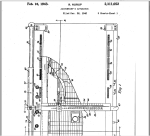
onewrite-accountant_apparatusOne-Write System Revolutionizes Accounting.  These guys had the right idea, they just didn’t have the cloud.

Sustainability and the Humanization of Work

Sustainability and the Humanization of Work

Joanie Mann Bunny FeetFew problems in business are truly solved simply by throwing more money and resources at them.  Certainly, having the people, tools and supplies to get the work done well is a business requirement, and many organizations take a “building out” approach to addressing growing workloads and customer demand.  On the other hand, there are business owners who recognize that things can always be accomplished better and more efficiently, and that improvements in these areas can make the difference between ending up with an overburdened organization with more mass than agility, or a lean organization with the ability to sustain itself while continuously adjusting to meet changing internal and external challenges.

It is said that the only constant is change, and businesses must find a way to effectively and cost-efficiently meet changing demands and conditions in order to survive.  What frustrates many business owners is that change is generally disruptive to the business, representing a significant challenge when it comes to the re-development of internal processes and procedures.   At issue is the understanding that proven, structured and repeatable processes help to improve efficiency, yet changing conditions often require changes to these processes.  In many cases, businesses find that the requirement to structure and document activities is work that must be re-done in the event of broad changes.  Too often, the work falls by the wayside because the minute it is completed, some change comes along and renders it obsolete.  It is somewhat like the child who questions making their bed each day, as they’re just going to sleep in it again and make it messy.

There may be a solution, and a lesson to be learned, in the “kaizen” approach to change and improvement.  Wikipedia’s entry on Kaizen identifies the meaning of the Japanese-Kanji word as simply “good change”.  Similar to the English word “improvement”, kaizen does not refer specifically to any single or ongoing change.  Rather, it has come to describe an approach to business which recognizes the potential for improvement – improvement in work product, work conditions, worker satisfaction, and worker performance – at all levels throughout the enterprise.  Further, kaizen does not describe change as being broad-ranging or particularly intrusive.  Beneficial (good) change may come at any level and may be identified by almost any source.

Kaizen is a daily process, the purpose of which goes beyond simple productivity improvement. It is also a process that, when done correctly, humanizes the workplace, eliminates overly hard work (“muri”), and teaches people how to perform experiments on their work using the scientific method and how to learn to spot and eliminate waste in business processes. http://en.wikipedia.org/wiki/Kaizen

The ultimate business goals are, of course, improved productivity, product quality and profitability.  A “Kaizen” approach to business recognizes that these goals are often met through gaining the participation of the entire organization.  Whether approached as individual effort, small or large group, or via suggestion system, the purpose is to nurture the company’s human resource and help focus it towards making improvements in work environment and activities which lead to improved productivity.  After all, the most valuable asset a business has is its people.  It is logical to apply this individual and collective intelligence and source of business knowledge towards making the company better – and a better place to work.

Make sense?

J