Sleeter Peeps and New Technology in Las Vegas

Sleeter Peeps and New Technology in Las Vegas

Marshmallowpeeps.com bunnies Peeps

The Sleeter Group is preparing for its 10th annual Accounting Solutions Conference, which is in Las Vegas next month (Nov 3-6) at Caesars Palace.  The conference is THE annual event where Sleeter Group Consultant Network members and other accounting, bookkeeping and business professionals get together to learn about new technologies, see and explore a wide variety of solutions and services, and to meet and network with their peers and peeps.

The venue this year, Caesars Palace in Las Vegas, is likely to be even more fun than last year and is far easier to get to than Orlando, Florida (for those of us on the West coast, anyway).  And, unlike in Florida, we’re probably not going to see all those little lizards everywhere around the hotel grounds.  Well, unless there’s a lizard convention going on in LV, which wouldn’t surprise me.  Actually, the good old days of attending the conference at the Tuscany Suites are what I miss – when the venue was a little more intimate and you could really have a good conversation without all of the typical Vegas distractions.

The “Sleeter Conference” used to be a purely QuickBooks-oriented conference, but has expanded to embrace the larger realm of products and services emerging which serve various small business accounting or process automation needs.  While there remains a very large focus on the QuickBooks products and service lines, it is not unusual to see sponsors and speakers representing other accounting solutions and business technology products.  The benefit for the audience is exposure to emerging technologies and trends, and discussion on how these trends are impacting business in so many ways.

Among the technologies and trends to explore at the conference are application hosting and software licensing and delivery, and how those models are changing the way people obtain and use their business applications.  We introduced the application hosting models and cloud-based QuickBooks models years ago, and those hosting solutions proved the value of anytime, anywhere access to conventional desktop applications.  Now, we’re introducing other application delivery models which address a variety of needs, and which go beyond the Remote Desktop concept.  It’s pretty cool stuff, and this conference is where you can learn more about it. [*Note: visit Skyline Cloud Services by Uni-Data at the conference; they’ll know where to find me.]

Meet me in Las Vegas next month, and we’ll chat more about technology, the evolution of the accounting industry and profession, and how these elements are combining to create new challenges and opportunities at all levels of business.  Sleeter peeps – I’ll see you there!

J


  • Read more about how accountants need business intelligence, too
  • Read more about how there’s no fear and loathing in accounting
  • Read more about the pressure on accountants to deliver more value and intelligence to their clients
  • Read more about Data Warriors: accounting in the cloud

Lease Accounting Rules, Small Business Financing and the Cloud

Lease Accounting Rules, Small Business Financing and the Cloud

Cloud Service FinancingThere are changes in lease accounting rules that may have broader implications than expected.  Lease accounting, or accounting in general, isn’t exactly an exciting topic and generally doesn’t come up in conversation.  But the changes to how business equipment and other leases are accounted for and reported could become additional fuel for cloud adoption by businesses – small business looking for financing, in particular (= lots).

First, what does accounting for leases have to do with small business financing?  Quite a bit, actually.  The balance sheet is one of the things a lender will look at when considering a small business for a loan, and if lease obligations and leased assets are on the balance sheet, they’re going to want to talk about them.  They’ll also possibly look at asset turnover – trying to understand exactly how much in assets it takes for the business to make “x” amount of money.  Banks and other lenders like to know they’re loaning money to a business that is going to pay it back, and in a reasonable amount of time.  They will limit their risk potential as much as possible, and they do it by looking through the financials and related information.

Business value is generating sustainable cash flow.  If you run a highly efficient business, the more top-line growth you deliver, the more cash flow you enjoy.  For capital-intensive businesses (either through the need for capital equipment or working capital), growth can actually lower your cash flow and diminish your business value.   To understand which side of the equation your business resides, accounting professionals will often look at the return on total assets calculated over time, dividing the operating income for each period from the P&L by the appropriate period values of total assets from the balance sheet.  The resulting metric describes how efficiently assets are applied to creating earnings.

https://coopermann.com/2013/01/22/why-is-asset-management-important-to-a-business/

This can be a difficult conversation with the banker for new businesses, as they have little to go on in terms of historic data to show the bank.  The P&L (profit & loss, or Income Statement) only reflects current business performance, not what it can do in a few months or years.  By putting leases on the balance sheet, businesses are now reflecting a more realistic view of things, but are also introducing additional items for scrutiny and question by the lender; things which are often described more in terms of business strategy than in proveable numbers.  That makes getting the loan just that much tougher.

Previous rules relating to business leases didn’t necessarily require that the business recognize operating leases (leased items and lease obligations) as assets and liabilities on the balance sheet.  This is among the reasons why businesses lease equipment – they are able to obtain the item without having to record a single large capital expenditure.

The FASB changes demand that accounting for leases should be standardized, forcing the lesees to report all leases on the balance sheet, reflecting both the benefit (asset) and the cost (liability) associated with the lease.  Stated in a press release on the subject: “The new guidance responds to requests from investors and other financial statement users for a more faithful representation of an organization’s leasing activities,” stated FASB Chair Russell G. Golden. “It ends what the U.S. Securities and Exchange Commission and other stakeholders have identified as one of the largest forms of off-balance sheet accounting, while requiring more disclosures related to leasing transactions.”

“a capital lease creates a tangible right where you own the equipment; the liability in a capital lease is true debt…”

http://www3.cfo.com/article/2013/9/gaap-ifrs_lease-accounting-elfa-fasb-iasb-global-convergence

By understanding how these changes in accounting for leases impact businesses, cloud solutions providers now have an additional lever to use with prospective customers: leasing equipment isn’t necessarily the way to keep capex off the balance sheet any longer.

One of the big value propositions offered by many cloud solution providers is that their service is paid for as a monthly business expense rather than a large up-front capital expenditure and investment.  Businesses are able to use the solution and benefit from it without actually “buying” anything, it’s just subscribed instead.  All of this is really a fancy way of saying “renting but not owning”, but the result to financial reporting is the same: it’s not on the balance sheet, it’s on the P&L in chewy chunks.  This used to be a preferred treatment for leases, too, allowing businesses to reflect the usage and payment in little parts rather than a big one.  It was “gentler” on the balance sheet.  But leasing equipment and software for on-premises use won’t be competing with the cloud and subscription service any longer, closing off the “impact to the balance sheet” conversation entirely and making cloud IT just that much more important to small businesses who need cash to fuel business growth.

Make Sense?

Joanie Mann Bunny FeetJ

The Cloud for Your Firm: 3 Initial Considerations for Cloud Enabling Accounting and Bookkeeping Firms Working With Small Businesses

The Cloud for Your Firm

3 Initial Considerations for Cloud Enabling Accounting and Bookkeeping Firms Working With Small Businesses

dscn0903.jpgThe potential benefits of a real-time, lean collaborative working model are too great to argue with.  Accounting professionals, bookkeepers and their small business clients are all hearing about the value of working together in the cloud, and how cloud technologies and solutions can reduce cost and improve efficiency.  There is a great deal of truth in these statements, just as there was a truth in the value of implementing computers, networks and other technologies in business.  What is not clear is exactly what businesses need “in the cloud”, and how they should approach this shift from local IT to outsourced managed service.  Initially, there are 3 issues which warrant consideration, if not deep discussion, prior to making any significant move to relocate internal IT and shift business applications to the cloud: internal use systems, client interaction, and operational support for both.

With all the discussion about cloud computing and remote access, it would seem that all the applications and solutions businesses need are now available online and paid for in low monthly subscription fees.  Anyone working with small businesses, however, comes to understand that the vast majority of these businesses are still using more traditional modes of information management and computing.   For the most part, these businesses are using PCs and local networks, possibly with a little hosted email thrown in.  Almost certainly they have a website and maybe even a fairly sophisticated e-commerce system that allows them to sell products online.  But when it comes to general office functions, and particularly back-office functions like bookkeeping and accounting, the software and the data generally reside on the office PC and server.

Accounting and bookkeeping professionals who work with small businesses are often in the same position as their business clients when it comes to information technology.  Since so much of the work involved requires the same programs and data formats as those used by the client, service providers find that they spend as much in management of software licensing and systems to support working with client data as they do on systems intended for internal use only – sometimes more.  Many of these service providers are also small businesses, and it becomes challenging to find a way to handle internal IT needs while at the same time trying to address those of the client. Where e-commerce solutions are readily available to handle operational aspects of product based businesses, the best tool set for a professional accounting firm or bookkeeping business working with small business clients may not be so easily defined.

The solution for many providers has been revealed through cloud computing and hosted application models.  With Cloud Servers, Remote Desktops, and Virtual Desktop Infrastructure now widely available as affordable alternatives to capital-intensive implementations of locally installed products, businesses are finding new abilities to manage applications and data, provide mobility and enhance collaboration.  The additional benefit is in how accounting service providers may engage with their clients in more efficient and effective ways, without the burdens of replicating data or trying to share access to a single machine or application resource.

There are a number of elements to consider before taking the file server to the parking lot and running it over with a truck.  Moving to the cloud is not a one-step process, and it is important to do a little research and collect some important information before making the final decision on how to proceed.

Internal Use Systems

Among the first of the questions to ask when considering a change in IT management approaches is “which software do we need”?  Implementing an outsourced IT arrangement, which is really what “cloud” is about”, does not necessarily mean throwing away all the existing software and starting with new.  The software in use within the firm may be exactly what it needs right now and adding full IT management, fault tolerance, and remote or mobile access could be the main scope of the requirement.  Moving from locally installed solutions to hosted solutions provides quite a number of benefits while removing many of the direct costs and frustrations of IT management and administration. The greatest benefit of this type of approach is the ability to preserve the “body of knowledge” existing in the business, knowledge invested in the people and processes already developed.

On the other hand, there may be new tools or services only available as “cloud” service, and it makes sense to explore how they may benefit the business more than the in-use applications.  The important element is to remember that the solution must address real business problems, and whether it runs in the cloud or not isn’t the first or most important thing to ask.  For example, a discussion about whether QuickBooks Online might be a better choice than QuickBooks Pro, Premier or Enterprise should be focused on the functionality provided by the applications and not which servers they are running on.  With application hosting for QuickBooks now being an available option, there is a managed IT and remote access capability for both solutions, rendering the fact that QBO is a SaaS solution almost irrelevant in terms of being a differentiator.

Client Interaction

An important aspect of adopting new technologies or working models is the consideration of how the firm and the client businesses will work together, and whether or not there is (or could be) a standardized approach that might work for most clients.  Certainly, it makes sense to standardize as much as possible.  Treating every issue or engagement as a singular event – a one-off – is the least efficient way to do business.  The key to profitability is in the firm’s ability to produce high quality work consistently and in a timely fashion.  This requires that the business be well-structured in terms of the standard processes and methods which will be used to work with client information.  When the firm and the client can work seamlessly together as and when required, and when each is responsible for their own systems and data, it is a best-case scenario. The questions relating to client interactions focus on how the firm works with clients and which tools or solutions are required to improve that situation.

It is likely that the firm will need to be able to address working relationships with various client and engagement types – where clients do some of the work, where the bookkeeper does the work, or where the participants work collaboratively together in the same systems.  While it may seem that the best way to create a dependency on your services with the client is to keep them out of the systems, empowering the client is really the key to a close and long-standing engagement.  This means that the client needs to have their own solutions and approach to cloud-enabled IT, and the accounting or bookkeeping service provider should be able to access and work within that environment.

It is rare that a small business can effectively operate without computers and software to manage information and support operations, so it makes sense that the business should have its own accounting and financial systems, too.  For the accounting service provider, it is essential that a level of understanding be gained around the use of today’s available remote and mobile access technologies, as it is with these solutions and tools that participation in client systems will be enabled.  When the client accounting solution sits on their office PC, there are limited options for working together in any real collaborative form.  Connecting to their PC via remote control is a widely recognized means of gaining access to client systems, but if the bookkeeper is on the system when there is a problem of some sort, all eyes go directly to that remote user as the likely cause of the problem.

The considerations relating to remote access to client systems focus not just on enabling a collaborative working environment, but also on mitigating risk and improving client perception.  The risk issue comes in when the accounting service provider is exposed to systems and information not relevant to their task, and the perception issue becomes material when the accounting professional becomes the software or IT service provider.  It makes sense for the accounting professional to make recommendations or suggestions about software and IT service which might benefit the business, but not to necessarily be the reseller or direct provider of the product or service.  The moment the accounting professional attempts to sell the client a software product or IT service, the relationship is changed and the client is more likely to view their accounting pro as another vendor rather than a trusted advisor.  It’s also not necessarily a great move to start a new client engagement by telling the client they have to switch accounting products to allow the accountant to work closer.  Rather, professionals need to help their clients position those products for more efficient use, which may include enabling remote or mobile access granted via deployment in the cloud.

Operational Support

When businesses outsource their IT management and administration, there is often an initial belief that all responsibilities in these areas will be handled by the IT service provider.  What is often overlooked is the reality that the firm still needs to have people attending to IT related tasks, just doing different levels of work with the technology. It is important to recognize that someone in the firm will end up dealing with various IT and process support issues, and it still makes sense to have personnel dedicated to these tasks (*Note: here’s where I suggest that the cloud changes the focus of internal IT personnel, but it doesn’t eliminate the need for them).  The service provider and solution evaluation and selection process, as well as the actual deployment and administration of services, will take valuable time away from actually performing client accounting or bookkeeping work, and there should be people attending to these issues while the business continues operating.

Where an internal IT department or contract technicians may once have supported internal systems, an operational role within the business is still required to manage outsourced IT activities, including and particularly those where clients are involved with the firm systems.  Delivering new benefits with a minimum of business disruption is the goal, and can be achieved through proper planning and coordination with team members and clients alike.

Closing Thoughts

“The Cloud” is just another way to run software and implement computing resources.  It still takes servers and software, it uses processors and storage and networking, just like more “traditional” computing models.  The difference is in how these resources are purchased and provisioned, and the impact is a change in how businesses of all types can benefit from technologies which enable collaboration, lean process, and mobilityThe Cloud for Your Firm addresses your internal business requirements, lends itself to client collaboration, and has internal operational support to ensure the firm is fully leveraging the available benefits to improve business performance and profitability.

Make sense?

J

Read more about Accountants and Bookkeepers Working With QuickBooks Clients: App Hosting Approaches That Work

technorati-top-100-small-business-blog

The Language of Accounting: Disconnect between Accountants and Bookkeepers

The Language of Accounting: Disconnect between Accountants and Bookkeepers

There are a tremendous number of bookkeeper training programs developed over the years which propose to deliver the essential bookkeeping knowledge (e.g., double entry accounting) required in order to properly service business bookkeeping requirements.  Particularly as the CPA profession stepped away from traditional bookkeeping in favor of performing “higher level” and more profitable work, there was and continues to be a great need for skilled and experienced bookkeepers.  While it seems that accountants and bookkeepers would be a natural fit for partnering to serve small business client needs, there is often a disconnect between the two which causes the working relationship to not always prove as beneficial as it could.  What is the cause of this disconnect?  In many cases, it is due to the fact that the bookkeeper training educated the operator on the use of a software product, and not on the fundamentals of accounting and bookkeeping.

Over the past few years, I have had the opportunity to look through a lot of bookkeeper training programs, and the thing that stands out is that many of these programs aren’t really training bookkeepers on accounting principles.  More frequently, the training is focused on teaching users how to use software (usually QuickBooks).  With the number of users of the QuickBooks product, it is obvious that there is a need to educate users on the solution because people need to know how to use their software properly.  But it happened at some point in time that a majority of the industry came to believe that learning QuickBooks (or Xero or Freshbooks or Kashoo or whatever) was somehow synonymous with learning bookkeeping.

When I first started working with my father in his accounting practice, I had to use a manual general ledger, check register, etc.  It was all manual – computers didn’t come along for a while (yes, I am that old).  It was time-consuming, but it taught me the fundamentals.  I know what a subledger is.  In consumer-friendly software like QuickBooks, you don’t work in the AR subledger; you push the button that says “customers” or maybe “invoices”.   QuickBooks, in many ways, doesn’t speak accounting.  It speaks record keeping.  And this is where the disconnect begins.

An old school accountant will recall the green eye shade days and working with book ledgers and 13-column pads, but even “new” school accounting professionals know that the fundamentals of accounting aren’t available for re-invention.  A debit is still a debit and a credit is a credit.  Yes, there are intimacies involved which speak to specific treatment of items for reporting and tax purposes, etc., but the essentials of double entry and other basic accounting principles are consistent and unchanging.

The “language of accounting” includes certain precise terms with specific meaning, and this precision in the use of terms simply doesn’t exist in many bookkeeper training programs. Rather than focusing on the fundamental accounting training bookkeepers truly need in order to be of maximum value to the business, these programs focus on helping users become experts in using the software product, or even to become experts at teaching others how to use the solution.  While this software expertise may be beneficial in terms of helping accountants work with their clients who use the software, it doesn’t add enough value to the relationship to warrant partnering.  What accounting professionals need are bookkeepers who understand bookkeeping and who can apply basic accounting principles to the task.  Which software they operate is secondary to that purpose.

Professional bookkeepers, accountants, and the business client are all in a position to benefit tremendously when the service providers team up to provide comprehensive service.  The key to making these connections lies with the professional bookkeeper who must not only understand basic accounting principles, but must also be able to speak to the accounting professional in their native language.

Make Sense?

J

read more…

Opinion:   I think that every QuickBooks training program should include taking the sample data file in QuickBooks, and translating that to a manual accounting system of book ledgers and reports.  Then, have the student process a years’ worth of transactions manually and from paper-based source materials (and also make them create and use a manual paper filing system for all that information, and come up with a means to travel to obtain all the documents necessary which aren’t mailed via USPS).  The requirement would include generating the bank reconciliations from printed bank statements and cancelled check copies, creating a trial balance from the general ledger and then creating the P&L and Balance Sheet.  I’ll bet you end up with a group of bookkeepers who better understand the fundamentals of the accounting process.  The other benefit is that these folks will have a much better understanding of the problems in the outsourced accounting model which can be directly addressed and solved by today’s cloud and connected solutions.


Technology and Tools for Accounting Professionals

Joanie Mann Bunny FeetTechnology and Tools for Accounting Professionals

old_school_ledgerThere was a time not so long ago when accounting professionals focused more on tabulation and summarizing of information than on analysis.  Accounting for businesses, in particular, required collecting myriad papers and receipts and other transaction documents, summarizing the information, translating it into journal entries, and finally posting those numbers to the big bound book which represented the business general ledger.  With the work required to gather and enter all of the information, professionals necessarily focused their efforts on making the process as efficient as possible by attempting to structure the workflow and manage the paper.


When those efforts are compared to today’s approach which involves digital documents, intelligent data collection tools, automated workflow solutions, online accounting and data analysis, it is clear that the processes for accounting for business activities have not really become simpler.  In fact, much of the enabling technology has served to complicate certain processes, which drives users to find even more “solutions” to address these new problems.  It (IT) is a bit like the Wonka Everlasting Gobstopper, which never gets finished and never gets smaller.  IT simply changes things – regularly and often.

Back then – before the Internet and digital imaging, or even Personal Computers – high technology wasn’t the focus because it didn’t exist in the realm of business in general.  I suppose you could call business solutions at that time “low” technology, where mainly mechanical solutions were introduced to address various business problems.

old_school_filecabinet

As an example, prior to the advent of digital imaging and electronic documents, one of the primary requirements of the business was to organize and store paper documents.  Over time, a wide variety of filing, foldering and labeling solutions have been developed, all oriented towards making the storage and later retrieval of paper documents easier.  For some businesses, letting go of the paper is a hard thing to do.  Years and years of training in keeping paper files has left many business owners and managers wary of working without physical paper documents.  Investments in office space, filing cabinets, storage folders and personnel to organize, file and retrieve all of the documents is only a partial measurement of the cost of managing paper, and large numbers of businesses continue to operate in this manner.

old_school_desk

The technology applied to processing the work has also changed, in many ways even more dramatically than the technology applied to collecting and storing the information.  Take the simple processes of tabulation (to arrange in tabular form; condense and list) and summing (adding up) information, for example.  Previous generations didn’t have computers and spreadsheet software to perform the work.  Rather, individuals would painstakingly handwrite each transaction entry into a ledger or on a columnar worksheet, and would then have to manually add each column and then cross check footer totals to ensure accuracy.  Back then, the machines used to perform the addition/subtraction were mechanical devices and could not perform multiplication or division.   These adding machines were first hand-cranked devices, later replaced with shiny new electrical ones (weighing approximately 20 lbs each).

old_school_telephone

Even voice communications have changed dramatically over the years.  Many people don’t remember a time when having multiple phone lines in the business meant having multiple telephones, and the concept of a PBX (Private Branch eXchange) didn’t exist.  Every phone would be hard-wired to an incoming line; if you wanted to answer a call, you had to use the right phone.  This became difficult in an office with many people, so solutions such as the “fabulous extendo-phone” was invented to allow anyone in the office to access the phone from their desk.

The technology available to businesses today is astounding, and offers amazing potential and benefit.  On the other hand, technology rarely (truly) makes things simple or easy – it more frequently serves to shelter certain users from the complexity while delivering new workloads and concerns to others.  It’s rather like energy – it isn’t created or destroyed, it just changes form [law of conservation of energy].  Business is like that, particularly where information technology is involved.  The underlying requirement doesn’t go away, just like a business’s requirement to account for financial transactions and activities,  and the need for the business to capture and retain documents isn’t changed.  How the process is managed, and which tools or mechanisms are applied to the task is what changes.

Make Sense?

J

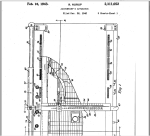
onewrite-accountant_apparatusOne-Write System Revolutionizes Accounting.  These guys had the right idea, they just didn’t have the cloud.

Cloud Computing and Online Accounting for All? Some Markets Are Still Waiting for Broadband

Cloud Computing and Online Accounting for All? Some Markets Are Still Waiting on Broadband

As the information technology industry espouses the benefits of the “paradigm shift” in computing and the move to cloud computing platforms and models, there are folks out there in the world who just aren’t seeing it happen like that.  Not everybody’s working online. For many, the Internet and online working models simply haven’t intruded into their lives and businesses as it has for others.  While this may be partially rooted in conservative mentalities and beliefs which are resistant to change, the more likely reality is that options for high-quality and affordable broadband service is simply not available to them.  Without choices for affordable and useful connectivity to the Internet, online just doesn’t have the attraction it does for those who are “connected”.

When businesses look at cloud solutions and the Internet dependency that comes along with them, having more than one connection to the outside world becomes the imperative rather than a luxury.  Unfortunately, some markets are still waiting for broadband (or have very limited options for service), rendering the cloud nearly unreachable.

It may come as a surprise to some, particularly to those in East and West coastal regions, that high speed broadband just isn’t as available in other zones.  In fact, the *National Broadband Map clearly reveals limited availability and choice in numerous regions of the US.  Broadband Internet access is a necessity to support the IT industry’s shift from localized IT to “cloud” IT.  But the shift is only evident to those who are involved in it or who have that option.  For those who the industry is beginning to refer to as the technology “have-nots”, this lack of available and affordable access will ultimately create more than simply an inability to participate in broadband-reliant IT solutions.  The fast pace of innovation and evolution in IT almost guarantees that the technology have-nots will fall even further behind, possibly to the point of not being able to catch up.

 “A Growing Gap Between IT Haves, Have-Nots. There will be a growing gap between the IT haves and have-nots in 2013. The latter will fall behind the former on a wide range of business technology fronts such as mobile, cloud, social, virtualization, and analytics…” 7 SMB Technology Predictions for 2013 | InformationWeek.com

As business (and personal) technology models continue to evolve, and as new solutions and services begin to displace the old, those who remain disconnected will begin to directly experience much more impact.

Consider something as simple as using QuickBooks desktop software for small business bookkeeping.  As Intuit continues to remove elements from the installed software product, turning them into web services instead, customers with limited or no broadband access will find themselves without the features and functionality they need in the software.  And the only possibly comparable alternatives to QuickBooks desktop accounting products are Internet-based alternatives, making them not really alternative options at all.

It is also likely that lack of sufficient broadband is one of the factors motivating many solution providers to seek clients in other markets – outside of the United States, and in regions where broadband availability is more prevalent and service speed and quality is higher.  Yes, it’s true.  The United States is not the leader in broadband availability, or even in quality.

“For many people, their broadband connections are their lifelines. So what is the state of broadband in the U.S.? Well, when it comes to speed and price and adoption, we’re certainly not a leader — “middling” is a better way to describe our position.

Currently 119 million people that live in the U.S. don’t have broadband connections (for many reasons, including not wanting it or not being able to afford it) while 19 million don’t even have the option to get it. Our rate of broadband adoption (62 percent) lags behind countries such as South Korea, the U.K.,and Germany, according this year’s Federal Communication Commission report. (We’re closer to the penetration rates to Japan, Finland, and Canada.) These numbers are not likely to change soon, given that broadband growth is slowing and providers are moving away from wireline infrastructure. “ GIGAOM:The state of broadband in the U.S. [infographic]

Accountants and other professional service providers serving clients in regions lacking sufficient choices for access must recognize that their approaches to doing business will not necessarily match their peers in more fully connected areas.  Certainly, accounting and legal professionals are dealing with this reality as practice coaches and industry leaders push for IT- and cloud-enabled models for improving practice performance and creating differentiation, even as their proven applications and business solutions morph into or are replaced with SaaS applications and online service.

The take away from this is that there are still large numbers of businesses and individuals doing things with legacy tools, managing spreadsheets on standalone PCs, or writing with pens and using paper – even in areas where broadband access is plentiful.  Regardless of how forward moving the rest of the world may be there remains a need to provide service and support these IT have-nots.  Perhaps this becomes a means for differentiation, finding ways to work with businesses who are connected and those who are not, and leveraging the firm’s access and capability to deliver what the client cannot obtain directly.

Make Sense?

J

*The National Broadband Map is a tool to search, analyze and map broadband availability across the United States