

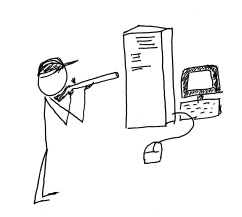
Go Ahead and Shoot the Server: End of Microsoft Small Business Server Inspires Cloud Adoption with Small Businesses

shoot_the_serverMicrosoft has made a decision to include more “cloud” capability in its offerings for small business, ending the life of the successful Small Business Server line and replacing it within the Windows Server 2012 family.  Some businesses are continuing with locally installed servers and are upgrading to Windows 2012 Essentials (or other editions) for in-house use, but more businesses every day are electing to deploy their servers and systems in the cloud instead.

Back when Microsoft introduced the Small Business Server, small business owners found that it was now really easy to implement way more technology in the business than they could directly support.  In one happy little package the SMB could get Windows Server, Exchange, SQL, SharePoint, Remote Web Access, an internal Company Website and more.  Information technology service companies, on the other hand, found it to be a big driver for delivering equipment and services to small business customers, and the product line’s adoption and implementation numbers grew.  Even the smallest of businesses could enjoy enterprise-class email, file and document sharing, client-server applications and remote access for a (relatively) affordable price.  It was this type of offering which created opportunity for server virtualization technologies to be used in small business, as the various server types each benefitted from their own “sandbox”, and IT providers recognized another opportunity to leverage their expertise at the customer location.

Business use of technology continues to expand rapidly so it makes sense that the Small Business Server offering from Microsoft is pretty popular.  In fact, Foresitetech.com says in an article on the subject that “The overwhelming majority of small businesses (80%) with less than 75 employees use Microsoft’s Small Business Server (SBS) software.”

But this fast-paced world of technology continues to move along, and Microsoft has ended the life of the SBS 2011 product.  In its place, small business customers are encouraged to upgrade to one of the editions of Windows Server 2012 as a replacement for their beloved SBS and hopefully they can find an edition which (affordably) delivers the functionality and features the business has come to rely on.  Unfortunately, there isn’t an edition of Windows Server 2012 that offers quite what SBS did, so now there is a big buying decision for the customer.  As the Clash sang it: “do I stay or do I go?”

Microsoft’s elimination of the feature-rich and friendly-sounding Small Business Server has created a lot of opportunity for VARs and IT service providers to move their customers to cloud services, SaaS solutions and hosted environments.  Particularly as information technology continues to become more complex, small businesses (well, businesses of all sizes) are recognizing that they may be better off focusing on running the business operation and managing the company as opposed to spending a lot of focus on IT system purchasing, installation, administration and management.  They have come to understand that IT services are critical to the business, but the server doesn’t have to be under the front desk or in a back closet in order to function for the business.  There is simply too much evidence in the market for these business owners to ignore;  shooting the server is now a viable option.

Every day more business owners are being inspired to [shoot their servers] seek out the services that will allow them to continue to benefit from innovations in technology while relieving them of the direct responsibilities of equipment purchasing, implementation, administration and lifecycle management.  Cloud services deliver this capability, and channel partners and Value Added Resellers should recognize their opportunity to get inspired as well, and to start offering cloud-based and hosted services to their customers and capture the “buying decision” opportunity that Microsoft has created.

Ready. Aim. Fire.

jmbunnyfeetMake Sense?

J

Keeping Up with Expectations: Buyer Satisfaction and the Customer Experience

Keeping Up with Expectations: Buyer Satisfaction and the Customer Experience

There used to be saying in business that the customer is always right and anything or everything should be done to make the customer happy, even if it includes throwing someone under a bus.  On the other hand, some professionals in sales and service would contend that keeping the company mission in mind and fairly representing the company side of things is a better way even if the customer goes away mad.  Realistically, both mentalities have some merit, and it is the challenge of finding balance between making customers happy and doing what is right for the business that makes things difficult.  What many businesses fail to recognize is that they are no longer directly responsible for setting the customer expectation, so they must understand and adapt to the environment and influences impacting the buyer in order offer a customer experience that satisfies.

A customer experience is not simply what happens after someone buys.  The customer experience is composed of the entire life cycle of interactions between the company and the buyer, including any “impressions” the buyer may have experienced through social venues, personal interactions and in media.  Creating and managing the customer experience doesn’t mean simply tracking interactions like sales calls and emails, as with a customer relationship management or sales force solution.  Crafting a customer experience embodies all aspects of the business – from the outside face shown to the public and market to the internal mechanisms that help get work done, the attitudes of the people involved, and the influences of others.

Businesses used to have more sway over how their customer experience flowed, and a great bunch of people providing quality services would generally be a “win” with the buyer.  In today’s market, the table has turned and it is the consumer who dictates what, exactly, they want their customer experience to be.  If the experience doesn’t meet with expectations, it is likely to be a failure regardless of how well the company executes on it.  The exceptional difficulty introduced is that each and every buyer is different – has different motivations and priorities and agendas – and meeting all the expectations of a diverse audience is not easily accomplished.

It’s sort of like with those advertisements you see now, where prospective college students aren’t willing to accept the “old way” of getting an education.  They want to have classes that interest them, they expect to get educated when and where it is right for them, and to get that education in a manner that fits better into the way of life they imagine.   Everyone wants it “my way”, and they’re getting it because they have come to understand that technology and the Internet have made it possible.

Technology and information systems are the foundations of creating and delivering a customer experience and level of service which will keep customers engaged and coming back for more.  Businesses have been trained to look to technology advances and identify opportunities to leverage new developments towards the defined business goal.  In the market that has now developed, where social and mobile computing are the norms, it is the consumer rather than the technology which is driving change.

The individual experience – how the buyer perceives the solution to fit within their business and lifestyle, and how the buyer benefits from the interaction – has become the basis for measuring quality of service and delivery.  Regardless of how technically perfect and flawless a product or service may be, the overall customer experience is the basis on which a stay or go decision is formed.

This shift in focus has changed how businesses view service delivery and support performance, and has introduced the concept that every department in the business should act a little bit like the marketing department – listening to and learning what the buyer deems important and adjusting the process or message based on the finding.  By placing a focus on the buyer priorities and developing an approach that allows a buyer to guide their own experiences with the company, businesses are finding great success in engaging with increasingly demanding buyers and improving overall satisfaction with the experience.

Make sense?

J

Why #Accountants Should Implement #Cloud Services | QuickBooks and Beyond

Why Accountants Should Implement Cloud Services

Most professional accounting service providers, accounting pros included, are recognizing that customers are increasingly demanding lower costs for service but want more flexible methods for obtaining the service. Where the business value of the service provided used to be enough, providers are now expected to deliver their services how and when clients want them delivered.

Evidence of the mobile and social impacts of technology is visible everywhere, and no business is immune to the requirement to adapt or perish. Rather than viewing the shift in technology application and use as a threat to previous well-rehearsed process models, wise practitioners are finding opportunity to change things around a bit, facilitating workflow and process improvements and creating new opportunities where they didn’t previously exist.

Breaking Down Time and Distance Barriers

via Why Accountants Should Implement Cloud Services | QuickBooks and Beyond.

Happy Holidays from CooperMann

Ninjabread cookies in the kitchen, an appearance by the Christmas Elk, and Minty Fresh (fresh cat, not canned) looking for Frangos all clearly indicate that the holiday season is here.  2013 has been an eventful year – some would say it was “fraught with peril” while others see opportunity in change. It’s all a matter of perspective – pursuing goals and taking action rather than resting on ones’ laurels and trying to wait it out.  This cloud stuff isn’t going away.

With technology and social computing adoption increasing at almost alarming rates, I can’t wait to see how 2014 goes!  This certainly isn’t a time for the tech-timid, as it appears as though the nerds and geeks do rule the world (aren’t we all a little nerdly, really?).

I hope you and yours have a wonderful season.

jmbunnyfeetCheers

J

cooper-mann-top-20

Read the Best of CooperMann.com from 2013

Accounting, Technology and Small Business – The Best of 2013 from CooperMann

Accounting, Technology and Small Business – The Best of 2013 from CooperMann

cooper-mann-top-20It has been an eventful year, hasn’t it?  With the NSA lurking about collecting data, innovative new approaches to information and identity theft emerging almost daily, and complete turmoil in the IT services industry challenging trusted sales and distribution models, most of us have simply become numb to the noise.  Information technology is evolving at an increasingly rapid pace and the way people and businesses interact with and use technology is being forced to change along with it.  It’s starting to become almost, weirdly, natural.

Much of this change can be attributed to “The Cloud”, which is not a thing or a place.  Cloud has become the term which applies to just about anything having anything to do with the Internet.  For technology “purists”, cloud means something fairly specific, but for normal people (no offense to the nerds and geeks, but you know what I mean), cloud applies to pretty much anything accessible via the Internet.  Photos back up to “the cloud”; music gets stored in “the cloud”, websites are hosted in “the cloud”; businesses run their applications in “the cloud”, and you can do darned near anything you need (or want) to with a phone.  The cloud could be some guy’s server in his basement, or it could be a sophisticated network of systems housed in secure facilities around the globe.  They both qualify, sort of.  The point is that mobility, Internet services, subscription access to technology, and social computing are changing how people view technology – resulting with changes not simply in how IT is purchased, but in how IT is used and applied to daily life.

There are, however, some things that do not change even if the working environment does.  The accounting profession, for example, is undergoing a great deal of change, and much of it fueled by the advancements in technology and social computing.  But accounting fundamentals – the “truth of debits and credits” and the good old accounting equation – remain.  The basics of running a business are also unchanged, even as methods of doing business evolve and globalization of markets continues.  Business fundamentals – fiscal responsibility, cash and growth management, and focus on value and sustainability – are as necessary now as every before.

With all this change and IT “advancement”, there have certainly been impacts to how and where we work.  But the more things change, the more they remain the same.  Good business generates goodwill and more business – that doesn’t change – and bad news still tends to spread faster than good news (much faster, given social platforms that are designed to spread the word far and wide).  And when it comes down to the fundamentals – the basic and essential foundations supporting building, operating, and accounting for business – we generally find that they remain constant even as the environment in which they exist experiences change.

jmbunnyfeetMake Sense?

J

Here are the top 20 ranked posts for 2013 from CooperMann.com

  1. The 2 Most Popular Models for Working with QuickBooks Desktop Editions and the Cloud
  2. Accounting Professionals, You’re right – your clients don’t care about the numbers.
  3. Remote access to client bookkeeping comes in many forms because clients come in many forms
  4. What Small Businesses Need To Know about QuickBooks and the Cloud
  5. Intuit Introduces Changes to Authorized Commercial Host for QuickBooks Program, Introduces QuickBooks Enterprise Rental Licensing
  6. Managed Applications, Cloudpaging, and a New Flavor of Hosted QuickBooks
  7. The Language of Accounting: Disconnect between Accountants and Bookkeepers
  8. Why Accountants and Bookkeepers Use the Cloud
  9. Small Business Owner to Accountant: Make Accounting Valuable to ME
  10. Changing How We See Software: QuickBooks 2013 interface frustrates power users
  11. Bookkeeping and Benchmarks – Getting the Numbers Right
  12. In Bookkeeping, Accounting, and Information Technology: The Value of Outsourcing
  13. Hosting All My Applications in the Cloud
  14. 4 Rules of Thumb for Business Success
  15. Intuit Hosting Program for QuickBooks Website Goes Live
  16. Re-defining the role of the accountant, or going back to the good old days?
  17. Cloud Computing for Small Business: It’s All About 3 Apps
  18. The Collaborative Online Model for Small Business Accounting Professionals
  19. QuickBooks Hosting: New Program Tier Announced for QuickBooks Hosting Providers
  20. 4 Rules for Building Service Customer Loyalty
Posts by category – with Accounting Professionals, QuickBooks Hosting, QuickBooks Software, and Small Business being the top categories with ranking articles.
ACCOUNTING PROFESSIONALS
Small Business Owner to Accountant: Make Accounting Valuable to ME
Accounting Professionals, You’re right – your clients don’t care about the numbers.
The Language of Accounting: Disconnect between Accountants and Bookkeepers
Why Accountants and Bookkeepers Use the Cloud
Bookkeeping and Benchmarks – Getting the Numbers Right
In Bookkeeping, Accounting, and Information Technology: The Value of Outsourcing
Re-defining the role of the accountant, or going back to the good old days?
The Collaborative Online Model for Small Business Accounting Professionals
Remote access to client bookkeeping comes in many forms because clients come in many forms
QUICKBOOKS AND BUSINESS APPLICATION HOSTING
The 2 Most Popular Models for Working with QuickBooks Desktop Editions and the Cloud
What Small Businesses Need To Know about QuickBooks and the Cloud
Intuit Introduces Changes to Authorized Commercial Host for QuickBooks Program, Introduces QuickBooks Enterprise Rental Licensing
Hosting All My Applications in the Cloud
Intuit Hosting Program for QuickBooks Website Goes Live
Cloud Computing for Small Business: It’s All About 3 Apps
QuickBooks Hosting: New Program Tier Announced for QuickBooks Hosting Providers
Managed Applications, Cloudpaging, and a New Flavor of Hosted QuickBooks
QUICKBOOKS SOFTWARE
Changing How We See Software: QuickBooks 2013 interface frustrates power users
SMALL BUSINESS
4 Rules of Thumb for Business Success
4 Rules for Building Service Customer Loyalty

Lawyer Immunity from Delivering Customer Value is No More

Lawyer Immunity from Delivering Customer Value is No More

All indications are that business and revenue growth for law firms is no longer a function of head count.  As with other professional service providers, lawyers are experiencing increased competition from a variety of new sources, and client demands and needs are changing as society adopts and embraces technology, social computing, and self-service solutions.  The problem is that many partners and firm leaders don’t really know what do to about it, and are attempting to fuel continued growth of revenues and profitability while essentially maintaining status quo.

Looking to reduce costs and pushing for more billable hours is standard fare among firm managers, yet the results to be gained from these efforts have pretty much reached their maximum potential.  You can only cut so much, and you can only work your people so hard.  Unfortunately, many partners and managers simply look away from the problem and continue along the path that has been successful in the past.  But growth has slowed, revenues have not grown as expected, and firms are literally being forced to adjust to market forces or go out of business.  It’s just too competitive and the pace of change is too rapid.  There is no immunity for lawyers in this changing market – service quality and value must improve.

Instead of taking the legacy approach of hiring more people so they can bill for more hours, successful firms are taking a few queues from other professional service providers and are recognizing that individualized client service, consistently high-quality and timely service, and service priced commensurate with the value delivered are at least parts of the solution.

There is quite a lot that law firms and accounting firms have in common, particularly when it comes to the fact that most of these entities are viewed – perhaps rightly so – as being “old school”, with a managing partner or board with intractable views and grey hair.  Lawyers, like accountants, are inherently wary of new-fangled concepts and wild ideas.  They’re a cautious bunch, and tend to be resistant to change.  Yet accounting professionals are beginning to embrace new tools and new ideas when it comes to delivering service and value, and forward-thinking law firms are following suit.

For successful firms, the focus is on the client and the value delivered – on internal process improvements and a better value proposition for the customer – not on the billable hour.  Yes, there are investments required.  The firm must invest time most of all.  It takes time to get everyone educated about issues the firm is facing in the changing marketplace.  Unless everyone knows what they’re up against, there will be continued resistance to new ideas and concepts.  It also takes time with clients to understand their needs, which is the essential element to delivering service valuable to them.  And it takes time to develop and nurture a long-term vision, recognizing that the vision may change as conditions change, and that regular monitoring and adjustment may be necessary.

Investing time and consideration in these areas is the key to delivering customer (and shareholder) value.  The result is satisfied and loyal clients, repeat business and increased growth and profitability.  Rather than viewing this brave new world as a challenge to the firm’s traditional model, it should be viewed as the opportunity to deliver new and greater value to the firm’s customers.

Make Sense?

J
