Remote Access to QuickBooks – a free report from the author of Radically Simple Accounting

Remote Access to QuickBooks – a free report from the author of Radically Simple Accounting

Radically Simple Accounting

Madeline Bailey, author of the book Radically Simple Accounting, is offering a free report on Remote Access Options for QuickBooks.

The free report provides details and simple explanations to help every QuickBooks user or consultant understand how best to leverage the Internet to work when, where, and how they need to.

Cloud computing and the Internet have introduced both challenges and opportunity for QuickBooks users and those who support them.  Madeline’s report provides real-world information, links to live services, pricing, and personal evaluations that anyone looking at remote access options will find useful.

Everyone’s talking about remote access and QuickBooks, but the options are so plentiful and confusing that only a few have made the move.  For those still wondering what solutions will work best for them, this report may clear things up a bit.

Joanie Mann Bunny Feet

Make Sense?

J

Remote access to client bookkeeping comes in many forms because clients come in many forms

There are a lot of conversations in LinkedIn and other groups, where bookkeepers and accountants are discussing their various methods of accessing client QuickBooks data and applications remotely.  While these conversations are quite helpful for some folks, there are others out there that simply get confused due to all of the possibilities.  There are many ways to work remotely with QuickBooks clients, and there are a lot of different situations where one approach may work better than others.

The key to remember here is that REMOTE ACCESS MATTERS.  Time and distance is the enemy when it comes to outsourced bookkeeping, and whether you like visiting your clients or not, having remote access to their data can be the key element in providing the highest level of service and value possible.  Remember when PCanywhere became available, and we were all excited because now we could use a modem to dial directly in to the client PC?  OK, maybe I’m talking to a crowd that’s too new to remember that excitement, but believe me, remote access is something all outsourced accountants and bookkeepers have been looking for.  Now that really good options are available (a lot of options), it makes sense to get a better understanding of what you can and can’t do with various remote access approaches.

First, when you’re looking at any true SaaS solution (true being a relative term, but here we mean an app service that was built for the web and is offered as a subscription model), consider that the solution exists only on the web, and that when a business subscribes they are generally subscribing to a single company data set.  Unlike QuickBooks desktop, for example, where you can have numerous company data files, QuickBooks Online and other SaaS solutions generally build a single company data file associated with the subscription.  When you want to access different companies, you may have to log in as a user of the company you’re accessing.

If you’re an accounting professional, there may be an edition or approach that allows you to connect to multiple client accounts, but then again, there may not be.  So be prepared to have to log in as each individual client to access their data.  When this becomes the situation, what’s the difference between one client having QB Online and one using Xero, Wave, FreshBooks or Kashoo?  None, really, other than the fact that you need to get to know all of the solutions a bit.  As a bookkeeper or accounting professional, this shouldn’t be so much of an issue, as debits and credits and basic accounting theory doesn’t change with the accounting software (basic “accounting theory” isn’t really available for redefinition).

The other thing to recognize about these solutions is that the data belongs on the web with the app, so it’s not like you’ll be copying the data file to your PC to work on.  You might export the data to another solution, but you won’t be using the SaaS solution offline.

If the client isn’t using a SaaS solution, then it is likely a desktop solution, where the application is installed on their local PC.  This type of solution – QuickBooks desktop editions being the most popular and easiest example to work with – gets installed and runs from the PC.  Data may be stored on the PC or on a network hard drive, but the program is running locally on the user’s computer, and is using resources on the local computer (memory, processor, etc.).  There are only a few ways to make this type of application into something you can access remotely, and one of them is by using a remote control approach.

Remote control is where one computer connects to and controls certain aspects of another.  This is like the old dial-up approach, using PCanywhere-type applications to control one computer from another.  These days, the Internet rather than a dial-up phone connection is the preferred method, and there are web service providers which “broker” the connection and communication between computers, providing added features and layers of security.  Using a remote control solution (examples are LogMeIn or GoToMyPC) simply allows the user on one computer to control the keyboard and mouse, and view the display, of a remote computer.  It doesn’t matter what is running on the remote, so a bookkeeper could use this approach to access a client PC and QuickBooks desktop applications and data, or even to connect with the client so they can log in to QuickBooks Online or Xero together.

Some bookkeepers work with their clients, showing them how to do things and connecting to client resources in order to get work accomplished.  Others connect using their own resources or accounts, and work concurrently with the client.  Still others may export data from the client solution into their product of choice, not even working within the client application at all except to make adjustments and data exports.  It all depends on the collaboration model you and the client have going, and it is unlikely that any single model or approach will work for the entire client base.

QuickBooks hosting introduces a bit of a wrinkle in the concept, but not much of one.  Really, hosted QuickBooks desktop editions should be viewed to be not less and not significantly more than a QuickBooks Online or other SaaS approach.  If the client would benefit from working online (most client would), then having them host their QuickBooks desktop applications and data with a hosting provider makes sense.  However, just because the client is hosting their QuickBooks doesn’t mean that you should immediately assume that you’ll have access to their applications or data.  Like with a SaaS solution, you’ll likely have to have an account to log in with, and that account could be a separate login allowing you to work at the same time as the client, or the account could be one that is shared with the client and where only one of you can log in at the same time.

Since a hosted solution is accessed online just like a SaaS solution is, you don’t have to have the software installed on your own PC, and you only need an Internet connection to access the application and data at any time.  A major difference of working with a hosted solution is that you could possibly have the application installed on your PC, and could copy the data from the host and work on it offline.

With all of the options available, accountants and bookkeepers have realized that the selection of client collaboration approaches depends on a number of factors, and that professionals may end up applying an unlikely combination of solutions in order to address meeting various client preferences as well as their accounting needs.

Make sense?

J

Read more about hosted QuickBooks desktop editions

Read about the race to find the secret sauce of hosted application services for small businesses

Licensing and Virtualization: Changes to SPLA May Impact Provider Cost Models

Licensing and Virtualization: Changes to SPLA May Impact Provider Cost Models

In many application hosting environments, machine and operating system virtualization provide the only realistic means for delivering services for applications which were never designed for high-volume multitenant implementation.  In these environments, providers rely upon technologies from Microsoft, VMWare, Citrix and Parallels to provide containment of application environments, creating frameworks where single-tenant applications and hosted infrastructure may be affordably offered to subscribing business customers.  Because many of the applications being hosted today do not conform to the various standards which exist for high-volume and multitenant delivery, providers have taken what we’ll call “creative” approaches to virtualized application and environment implementations.  Under certain licensing models, these approaches may be sustainable for a period of time.  However, recent adjustments to core licensing components and pricing from key providers, Microsoft in particular, may significantly impact the cost of service delivery for providers with less than optimized infrastructure.

One of the notable changes in the Microsoft SPLA (Service Provider License Agreement) is the treatment of Windows and RDS users in the “desktop as a service” model.  In previous editions of the SPLA, as was offered with 2008/R2 licensing and prior, providers could select from two different models when implementing service: the SAL-only (server access license) model, which applies on a per concurrent user basis to the infrastructure, or the PL (processor license) model, which applied to the processors installed in systems with Windows operating system and SQL server instances.

For high-density and multitenant environments, the per-processor approach is far more cost efficient to implement, as it allows the provider to create a scale economy with the infrastructure, leveraging hardware and resources across many subscribing tenants.  Reducing the cost model to a base infrastructure rate also introduced predictability and stability in recurring costs for the provider, even as subscriber numbers and subscription revenues increase.

The problem reveals itself with the providers deploying “not optimal” infrastructure, whether by design or due to legacy application requirements.  These providers rely upon the per-user pricing models to support access and usage to the infrastructure, largely due to the fact that the infrastructure has grown “out” and not “up”.  Deploying more servers and more VM instances allowed these providers to present legacy applications as part of a managed application service model.  While the management of the infrastructure is greatly complicated with this approach, it is often the only means to addressing the needs of popular “noncompliant” applications (such as Intuit QuickBooks and Sage 50).  With the SPLA changes introduced for Windows 2012, these service providers may be in a bit of a tough spot.  You see, the per-user option for licensing Windows server access is gone, and only the per-processor licensing model remains.

Microsoft is wisely addressing the needs of the market which is demanding more capability and affordability in terms of cloud-based access to applications.  These pricing adjustments are necessary to support the needs of service providers who are increasingly stretching their infrastructure investments to deliver higher user density at a lower per-user cost.  Further, application developers seeking new markets and delivery models are taking advantage of these virtualization approaches, creating hybrid and hosted solution models around their legacy application products.  The licensing approaches which support these higher density application deliveries introduce options for developers to optimize their applications for the hosted model rather than dealing with immediate comprehensive re-development (which isn’t an option for many ISVs – independent software vendors).

The IT world is forging ahead with cloud computing, high-capacity infrastructure, and heavily virtualized environments supporting larger numbers of users.  Software developers must take heed, and embrace these deployment models (or at least adjust to the point of supporting them) in order to have a chance at keeping pace in the anytime, anywhere world of today’s business technology.  This means working collaboratively with hosting service and infrastructure providers, crafting services which have the required scalability and incorporating a deployment model agile enough to take advantage of infrastructure licensing benefits as they are introduced.

What was a serviceable pricing structure yesterday may be an anchor holding your profitability down tomorrow.  Service providers – make sure you’re keeping a close eye on licensing requirements and delivery cost models, and consider that building up your infrastructure capability is often more cost efficient than building out.

Make sense?

J

BuildingUP.biz  |  CooperMann.com

Licensing for Hosted Application Services: Why it costs what it costs

read more about the confusion over hosted licensing on The Progressive Accountant http://www.theprogressiveaccountant.com/tech-tips/confusion-over-hosted-licensing.html

Using Structured Workflow to Manage Offline Clients | Intuit Accountants News Central

Using Structured Workflow to Manage Offline Clients | Intuit Accountants News Central

The demand today requires that accounting professionals be more attentive and, yes, aggressive, in terms of “attacking” a regular flow of processing client information rather than batching it at period end. This drives a great need to structure and organize the work, and workflow, so that the repetitive and regularly performed processes may be streamlined and made easier to manage on an ongoing regular basis. It is no longer good enough to wait for clients to deliver the information and request the resultant reports. We must proactively request and gather the required information for processing, especially with offline clients, in order to get the work done more frequently.

Read the entire article at Intuit Accountants News Central

J

CooperMann 2012 in review

CooperMann 2012 in review

2012 Was an interesting year, to say the least.  Not that it wasn’t a good year, but it certainly brought its share of challenges as well as opportunities.  At CooperMann.com, we attempted to reflect upon these challenges and opportunities, discussing how they impact our views on accounting and technology and business in general.

While the economy continued to struggle and churn, business owners found that reducing operating costs and creating sustainability in the business were initiatives they could no longer afford to minimally address. As advancements in technology and the growing popularity of cloud computing models resulted in a number of solutions to help businesses meet those cost and continuity issues, they also introduced new and different challenges for accounting and finance professionals seeking to reinforce their relevance and value to the business.  They say that the only constant is change, so we should expect no fewer challenges (or opportunities!) in the new year.

Joanie Mann Bunny Feet

As for CooperMann.com, here’s how we did in 2012, our inaugural year

600 people reached the top of Mt. Everest in 2012. This blog got about 10,000 views in the latter part of 2012. If every person who reached the top of Mt. Everest viewed this blog, it would have taken 17 years to get that many views.

The busiest day of the year was October 2nd: The most popular post that day was

Attractions in 2012

These are the posts that got the most views on CooperMann in 2012.

Changing How We See Software: QuickBooks 2013 interface frustrates power users

Is This The End Of ERP?

In Bookkeeping, Accounting, and Information Technology: The Value of Outsourcing

Working With the Right Numbers: Financial Data Analysis Requires Accurate Financial Data

Not Everybody’s Accounting Online: Outsourced Bookkeeping and Accounting for “Offline” Clients

Top 3 Favorite posts for 2012

One-Write System Revolutionizes Accounting: These guys had the right idea, they just didn’t have the cloud.

The race to find the “secret sauce” of hosted application services for small business

Accounting Professionals: It’s Good To Be Sticky

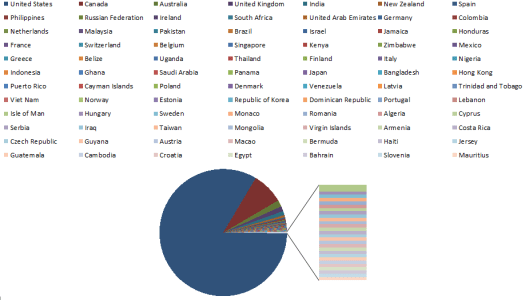
Where in the world is CooperMann viewed?

CMC2012-countries

buildingup-small-logoWhat’s coming up for 2013?  Keep watching CooperMann.com and BuildingUP.biz to stay on top of current issues and trends in accounting and business technology.

The True Cost of the Cloud

The True Cost of the Cloud

Excerpt from article on Intuit Accountants News Central: The True Cost of the Cloud

“Accounting professionals are strongly encouraged to adopt cloud computing models in their practices, and there can be little argument that mobility and access are driving the need. In concert with the messages supporting mobile access to business information – and the value of anytime, anywhere access – cloud service providers are strongly suggesting that the overall cost of purchasing and maintaining information technology (IT) in the business is much lower when a cloud computing approach is used.

Arguments over the total cost of IT and related services become somewhat subjective. Many business owners and managers fail to consider the value of their own time spent dealing with business technology issues, much less the time spent by in-house employees and remote workers. To further complicate the issue, dramatic changes in process support and delivery, connected service and cloud computing approaches are impacting business productivity and profitability in new and dramatic ways. As a result, every business should consider the costs and the benefits of this new connected and collaborative working model.

At the core, cloud computing is really just an outsourced IT service that addresses the various levels of application and computing infrastructure. From IaaS (infrastructure as a service) to SaaS (software as a service) and all things in between, a viable cloud computing approach for a business may encompass little more than co-location of physical server and network resources with a third-infrastructure provider to something much larger scale, such as offloading virtually every aspect of application management and delivery to a SaaS solution.

Because there is no single, correct definition of what makes up a “cloud” service model, attempting to compare costs directly to a more traditional IT approach is quite complicated.”

Read the entire article at Intuit Accountants News Central

http://blog.accountants.intuit.com/ways-to-grow-your-business/the-true-cost-of-the-cloud/