Better QuickBooks Access, Management and Security – QuickBooks Licensing and Hosting Models

Whether hosted in-house or offsite, licensing models for hosting QuickBooks can be very confusing.

driving1-ANIMATIONThe demand for solutions to address user mobility, better collaboration and improved information security is increasing as connectivity improves and cloud services and threats evolve. Server-based computing models and application hosting are increasingly popular as businesses seek to embrace teleworking and telecommuting models for their entrenched applications and systems, creating a foundation for improved productivity and work/life balancing (or integration).  On the technical side, the benefits of centralizing applications and data include improved efficiency in managing, maintaining and securing systems. For many small businesses, this means centralizing the installation and maintenance of core business applications like Intuit QuickBooks Pro, Premier or Enterprise.

Whether it be offsite with a commercial hosting provider or on a co-located server somewhere, or an onsite installation on the in-house server, hosting Intuit QuickBooks licenses can be straightforward or complicated depending on what you are trying to do with them. Because QuickBooks was designed as a standalone single-user application, there are a number of challenges when it comes to preparing it for server-based use.  The primary issue is often simply understanding the QuickBooks licensing model, which is not particularly INTUITive (sorry).

Licensing hosted QuickBooks applications comes with two different sets of implementation issues: the technical implementation (the installation and setup) and the logical allocation of licenses to users (the licensing rules).

When it comes to the technical implementation, many an experienced engineer has beaten their head against the wall trying to get QuickBooks to work properly in a workspace or session-based system (e.g., terminal server), all because they expect the product to implement like a “normal” client/server application. While QuickBooks may use the Sybase database manager guts to handle multi-user access to QuickBooks data files (I think it is still Sybase), the architecture required to properly service a networked QuickBooks installation does not necessarily mimic what would be used with, for example, a .NET desktop client application with an MS SQL back-end.   First, the QuickBooks data files cannot be remote to the application, meaning that both the client and the database manager (which is actually working as an adjunct to the client) must exist on the local network; it will not work over a WAN connection, which is why so many folks get frustrated when they put their server “in the cloud” and attempt to connect from a local client using a VPN.  It just won’t work that way with QuickBooks; it all has to be on the local network – client, server, data… all of it.

It is notable that many businesses use Dropbox and other file sync solutions because they want to be able to get to their data from multiple locations, but the data they’re getting must be “local” to the apps that use it.  It doesn’t allow for simultaneous multi-user access, but it can be an effective way to share a file.  The caveat is that the file (at least in the case of a QuickBooks file, or Outlook PST file, etc.) should not actually be used from the sync folder.  Sync folder should contain copies of data files that users wish to sync or share with other devices.  But I digress…

With a server-based implementation of QuickBooks, technicians will install the QuickBooks desktop software on the server, and will determine whether or not that same machine will also handle the company data files.  The QuickBooks DB manager is part of the installation of QuickBooks, and the file system and drive where the QB files are to be managed must be recognized as a local drive on the server running the QBDB manager.  The overhead used by the database manager isn’t huge, but it can impact the performance of users on the server.  For this reason, some techs will decide to implement a separate file server to manage the QB data files, taking that load off the app server.

  • The QuickBooks software uses the database manager to “host” access to company files.  This simply means that a single server with the data on it is providing managed access to remote-desktop-sessionsQuickBooks application users.
  • When QuickBooks application software and data is installed and centrally managed on a server (instead of QuickBooks being installed on individual PCs), that means QuickBooks application is being “hosted” on that server.
  • When a 3rd party provider supplies the server, the QuickBooks installation, data storage, and your way of connecting to it all,  that provider is a “host” providing hosting services for your QuickBooks.

In a dedicated hosting environment, the data is often stored on the same server as the applications, whereas in a shared hosting environment, the data is often stored on central file servers which serve multiple customers. This is why, in some shared hosting situations, one bad data file can take down the database manager services for all the customers using that same file server.

Users open the QuickBooks application on the server instead of having the application installed on individual PCs.  The single server-based installation of the software is able to be used concurrently by all users logging in to that computer. With the database manager running, the file is essentially “hosted” on that machine, and the file may then be opened in multi-user mode.  OK so far.  The problem generally comes about when a second user on the same computer/server wants to open the same QB data file as the first user.

Because the QB database manager is looking at the license of the client application accessing the data file, it will recognize when two different users/sessions with the same license key attempt to open the company data file.  If that license key is a single-user key, then the database manager knows it should allow only 1 concurrent user in the file.  QuickBooks doesn’t get installed for each user on a computer or server; it is installed one time on the machine and each user on that machine runs from that single shared installation. Any particular version of the QuickBooks application may be installed only once on a single computer, but it is possible to install multiple editions, year versions, and “flavors” of QuickBooks on a single machine (cannot be more than one installation of each unique product). There will be more than a few annoyances when running a variety of QBs on the same computer, but it is technically possible.

In order to allow multiple users to simultaneously access the same data file from a central installation of QuickBooks, the license key installed on the computer must be a multi-user key.  QuickBooks Pro, for example, can be keyed to 3 concurrent users, meaning that the license will allow up to 3 users with that same license key to simultaneously access the same company file.  Technically (but not lawfully) this installation of QuickBooks on the machine could allow a virtually unlimited number of users to launch the QuickBooks application simultaneously, limited only by machine resources.  This is where the logical allocation of licensing comes in.. the rule of licensing QuickBooks.

The logical allocation of unique licenses for each QuickBooks user is a little easier to understand than the technical implementation.  The rule is simply that each user of QuickBooks is required to have a valid registered/activated license. That valid license is a license purchased and activated for that business.
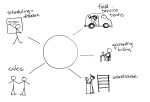
total-businessMaking QuickBooks desktop editions more useful by adding secure remote access and centralized management makes a lot of sense.  For companies who rely on the functionality and features of the desktop products (QuickBooks Pro, Premier and Enterprise), a hosted approach is the only way to really address mobility and multi-location requirements.  Remember that hosting doesn’t necessarily mean offsite, although that could make sense for the business, too.

Centrally-managing QuickBooks applications and data creates greater efficiency and improves overall IT management capability for the business.  At the same time, a centralized model introduces a better strategy for mobilizing the workforce and connecting remote users and offices. The struggles of understanding and implementing proper QuickBooks licensing begin to seem very small when compared to the benefits of deploying a centralized system that’s easier to access, manage and secure.

Make sense?

J

The Cloud for Your Firm: 3 Initial Considerations for Cloud Enabling Accounting and Bookkeeping Firms Working With Small Businesses

The Cloud for Your Firm

3 Initial Considerations for Cloud Enabling Accounting and Bookkeeping Firms Working With Small Businesses

dscn0903.jpgThe potential benefits of a real-time, lean collaborative working model are too great to argue with.  Accounting professionals, bookkeepers and their small business clients are all hearing about the value of working together in the cloud, and how cloud technologies and solutions can reduce cost and improve efficiency.  There is a great deal of truth in these statements, just as there was a truth in the value of implementing computers, networks and other technologies in business.  What is not clear is exactly what businesses need “in the cloud”, and how they should approach this shift from local IT to outsourced managed service.  Initially, there are 3 issues which warrant consideration, if not deep discussion, prior to making any significant move to relocate internal IT and shift business applications to the cloud: internal use systems, client interaction, and operational support for both.

With all the discussion about cloud computing and remote access, it would seem that all the applications and solutions businesses need are now available online and paid for in low monthly subscription fees.  Anyone working with small businesses, however, comes to understand that the vast majority of these businesses are still using more traditional modes of information management and computing.   For the most part, these businesses are using PCs and local networks, possibly with a little hosted email thrown in.  Almost certainly they have a website and maybe even a fairly sophisticated e-commerce system that allows them to sell products online.  But when it comes to general office functions, and particularly back-office functions like bookkeeping and accounting, the software and the data generally reside on the office PC and server.

Accounting and bookkeeping professionals who work with small businesses are often in the same position as their business clients when it comes to information technology.  Since so much of the work involved requires the same programs and data formats as those used by the client, service providers find that they spend as much in management of software licensing and systems to support working with client data as they do on systems intended for internal use only – sometimes more.  Many of these service providers are also small businesses, and it becomes challenging to find a way to handle internal IT needs while at the same time trying to address those of the client. Where e-commerce solutions are readily available to handle operational aspects of product based businesses, the best tool set for a professional accounting firm or bookkeeping business working with small business clients may not be so easily defined.

The solution for many providers has been revealed through cloud computing and hosted application models.  With Cloud Servers, Remote Desktops, and Virtual Desktop Infrastructure now widely available as affordable alternatives to capital-intensive implementations of locally installed products, businesses are finding new abilities to manage applications and data, provide mobility and enhance collaboration.  The additional benefit is in how accounting service providers may engage with their clients in more efficient and effective ways, without the burdens of replicating data or trying to share access to a single machine or application resource.

There are a number of elements to consider before taking the file server to the parking lot and running it over with a truck.  Moving to the cloud is not a one-step process, and it is important to do a little research and collect some important information before making the final decision on how to proceed.

Internal Use Systems

Among the first of the questions to ask when considering a change in IT management approaches is “which software do we need”?  Implementing an outsourced IT arrangement, which is really what “cloud” is about”, does not necessarily mean throwing away all the existing software and starting with new.  The software in use within the firm may be exactly what it needs right now and adding full IT management, fault tolerance, and remote or mobile access could be the main scope of the requirement.  Moving from locally installed solutions to hosted solutions provides quite a number of benefits while removing many of the direct costs and frustrations of IT management and administration. The greatest benefit of this type of approach is the ability to preserve the “body of knowledge” existing in the business, knowledge invested in the people and processes already developed.

On the other hand, there may be new tools or services only available as “cloud” service, and it makes sense to explore how they may benefit the business more than the in-use applications.  The important element is to remember that the solution must address real business problems, and whether it runs in the cloud or not isn’t the first or most important thing to ask.  For example, a discussion about whether QuickBooks Online might be a better choice than QuickBooks Pro, Premier or Enterprise should be focused on the functionality provided by the applications and not which servers they are running on.  With application hosting for QuickBooks now being an available option, there is a managed IT and remote access capability for both solutions, rendering the fact that QBO is a SaaS solution almost irrelevant in terms of being a differentiator.

Client Interaction

An important aspect of adopting new technologies or working models is the consideration of how the firm and the client businesses will work together, and whether or not there is (or could be) a standardized approach that might work for most clients.  Certainly, it makes sense to standardize as much as possible.  Treating every issue or engagement as a singular event – a one-off – is the least efficient way to do business.  The key to profitability is in the firm’s ability to produce high quality work consistently and in a timely fashion.  This requires that the business be well-structured in terms of the standard processes and methods which will be used to work with client information.  When the firm and the client can work seamlessly together as and when required, and when each is responsible for their own systems and data, it is a best-case scenario. The questions relating to client interactions focus on how the firm works with clients and which tools or solutions are required to improve that situation.

It is likely that the firm will need to be able to address working relationships with various client and engagement types – where clients do some of the work, where the bookkeeper does the work, or where the participants work collaboratively together in the same systems.  While it may seem that the best way to create a dependency on your services with the client is to keep them out of the systems, empowering the client is really the key to a close and long-standing engagement.  This means that the client needs to have their own solutions and approach to cloud-enabled IT, and the accounting or bookkeeping service provider should be able to access and work within that environment.

It is rare that a small business can effectively operate without computers and software to manage information and support operations, so it makes sense that the business should have its own accounting and financial systems, too.  For the accounting service provider, it is essential that a level of understanding be gained around the use of today’s available remote and mobile access technologies, as it is with these solutions and tools that participation in client systems will be enabled.  When the client accounting solution sits on their office PC, there are limited options for working together in any real collaborative form.  Connecting to their PC via remote control is a widely recognized means of gaining access to client systems, but if the bookkeeper is on the system when there is a problem of some sort, all eyes go directly to that remote user as the likely cause of the problem.

The considerations relating to remote access to client systems focus not just on enabling a collaborative working environment, but also on mitigating risk and improving client perception.  The risk issue comes in when the accounting service provider is exposed to systems and information not relevant to their task, and the perception issue becomes material when the accounting professional becomes the software or IT service provider.  It makes sense for the accounting professional to make recommendations or suggestions about software and IT service which might benefit the business, but not to necessarily be the reseller or direct provider of the product or service.  The moment the accounting professional attempts to sell the client a software product or IT service, the relationship is changed and the client is more likely to view their accounting pro as another vendor rather than a trusted advisor.  It’s also not necessarily a great move to start a new client engagement by telling the client they have to switch accounting products to allow the accountant to work closer.  Rather, professionals need to help their clients position those products for more efficient use, which may include enabling remote or mobile access granted via deployment in the cloud.

Operational Support

When businesses outsource their IT management and administration, there is often an initial belief that all responsibilities in these areas will be handled by the IT service provider.  What is often overlooked is the reality that the firm still needs to have people attending to IT related tasks, just doing different levels of work with the technology. It is important to recognize that someone in the firm will end up dealing with various IT and process support issues, and it still makes sense to have personnel dedicated to these tasks (*Note: here’s where I suggest that the cloud changes the focus of internal IT personnel, but it doesn’t eliminate the need for them).  The service provider and solution evaluation and selection process, as well as the actual deployment and administration of services, will take valuable time away from actually performing client accounting or bookkeeping work, and there should be people attending to these issues while the business continues operating.

Where an internal IT department or contract technicians may once have supported internal systems, an operational role within the business is still required to manage outsourced IT activities, including and particularly those where clients are involved with the firm systems.  Delivering new benefits with a minimum of business disruption is the goal, and can be achieved through proper planning and coordination with team members and clients alike.

Closing Thoughts

“The Cloud” is just another way to run software and implement computing resources.  It still takes servers and software, it uses processors and storage and networking, just like more “traditional” computing models.  The difference is in how these resources are purchased and provisioned, and the impact is a change in how businesses of all types can benefit from technologies which enable collaboration, lean process, and mobilityThe Cloud for Your Firm addresses your internal business requirements, lends itself to client collaboration, and has internal operational support to ensure the firm is fully leveraging the available benefits to improve business performance and profitability.

Make sense?

J

Read more about Accountants and Bookkeepers Working With QuickBooks Clients: App Hosting Approaches That Work

technorati-top-100-small-business-blog

Focus on the Finance Department: QuickBooks in the Cloud

Focus on the Finance Department: QuickBooks in the Cloud

Vendors and IT solution providers are all buzzing about their cloud services and solutions available via the Web.  This buzz often includes statements about lower cost of IT acquisition and service management and how mobility and remote access benefits the business.  These statements are proving true for many businesses, yet there are still vast numbers of small business operating on local computers and unmanaged service.  The reasons which hold back these business from adopting cloud computing models are as many and varied as the businesses themselves, but there is a consistent thread to be found in these reasons, and it has to do with a lack of understanding of what certain applications really mean to the business.  In this case, the discussion is about the focus on strictly operational or administrative areas of the business and not on the finance department which, in so many small businesses, uses QuickBooks.

Cloud solution providers are in business to make money, and hosting companies in particular are looking for the right applications which will drive usage and revenues on their platforms.  When these providers look at the small business market, they’re trying to identify the applications and services that small business owners will adopt in volume.  Identification of these opportunities to serve a large customer base is essential to the provider’s economy of scale and profit model.  It makes sense that hosts would want to offer the applications which drive the highest degree of usage in their environments, so they tend to focus on the applications used by the greatest number of users within the customer organization.  In the small business market, these applications are email and productivity tools – solutions which are used broadly throughout the business and which serve a horizontal rather than vertical industry orientation.  Those are the two easy picks; finding the next most valuable solution represents a bigger challenge for the provider.

qbcloudWith Intuit QuickBooks desktop editions boasting the lion’s share of the small business accounting market, it seems that hosting QuickBooks products would be the next natural selection by hosting providers already serving their small business clients with email and productivity solutions.  However, because these service providers do not fully understand the essential functions QuickBooks serves in the small business, the assumption is that the usage of the solution is so nominal that it doesn’t make sense to develop the capability to offer it.  It is a misunderstanding that many providers have, and is the result of a lack of historic participation in the product.  QuickBooks, you see, is a direct to consumer product rather than a channel product, and most IT service providers and hosting companies recognize the product name but not really what it does or how it operates.  And these hosts are often large companies and therefore have no direct experience using the product, so there is no frame of reference for them to work from.  These service providers are simply overlooking the important role that QuickBooks solutions play in many small businesses, where it is used to handle various operational aspects of the business as well as being the product of choice for bookkeeping and accounting.  Particularly with the QuickBooks Premier and Enterprise editions offering additional functionality and industry-specific features, the products are used widely by small businesses and not just for accounting and finance.

The point of the discussion is that hosting companies and “cloud server” providers should look at the mixture of applications used by their small business customers, and they are likely to find that QuickBooks products are pretty high on the list.  Even if there are only a few people in the accounting department, and the usage by these individuals is not representative of the entire hosting opportunity, hosts should recognize that those few individuals and the software they use are not only essential, but are probably processing payroll for all those other users on the system and are paying the bills for products and services purchased.  After all, if you’re going to make anybody in the company happy, make sure to focus on the finance department and help them get their QuickBooks in the Cloud, as they’re the ones that will be paying the bill for the service.

Joanie Mann Bunny Feet

Make Sense?

J


Google+

Cloud Computing for Small Business: It’s All About 3 Apps

Every business uses technology at some level, and every business has certain fundamental needs which are most frequently met through the use of computing technology.  Regardless of business type or size and independent of industry orientation, there are 3 fundamental things which every business does which means that there are 3 fundamental application types or solutions which every business will buy at some point.  These 3 application types, which could be distilled down to just “applications”, have become so broadly used in business and so widely recognized as the standards that their names are often used instead of the term representing the functionality they provide.  When it comes to cloud computing for small business, it’s all about these 3 applications.

In what are now referred to as “legacy” or “traditional” models, these products would generally be purchased as software and associated hardware to run it, and would be installed and managed on the local premises.  With cloud computing models, the solutions may be purchased or subscribed as managed infrastructure and application licenses, or as a full service subscription (SaaS).  Regardless of the service model, the applications are the key to the customer win.  While cloud computing may be challenging how IT products and services are sold and delivered to customers, it is not fully impacting which solutions customers are actually looking for.  Over the past 16 years this has been the reality, and it may take another decade before these products are unseated from their top positions simply due to the inertia of the installed bases they’ve already developed.  Service providers have found (or will find) a way to deliver these applications in cloud computing style, or small businesses will simply not move everything to the cloud very quickly.  It is really just that simple, and I’ll explain why.

QuickBooks-Hosting-WordCloudThe three things that each and every business does, and which they generally purchase computers and software to facilitate, are communicating, producing information, and keeping score.

1. Communicating is an essential need for every business.  Whether it is communication via phone, fax, email or otherwise, businesses will communicate and they will purchase products which help them do it better.  The standard for business email communications has become Microsoft Exchange, which is now available as a highly affordable subscription service from Microsoft or from a wide variety of commercial MS Exchange hosting providers.  Certainly the popularity and growth of hosted Exchange supports the argument that not only is MS Exchange mail very widely used in businesses of all sizes, but that it is also highly acceptable as a hosted solution because users retain desired functionality and are able to benefit from a variety of add-ons and additional services from their hosted Exchange email provider.  The other thing about hosted Exchange is that the user can still use MS Outlook on their desktop to get their mail.  Now we’re back to the desktop application again.  Regardless of what mail server and service the user has, they are often more attached to using Outlook than they are to the mail service.  In fact, when you ask a fairly non-technical user what they use for email, they’ll often say they use Outlook (the desktop client, not Outlook.com).

2. Producing Information is another essential need for every business.  Whether the information is produced for internal or external use, there is a lot of information created to inform various people about the business.  Documents, spreadsheets and presentations are used in every business, and productivity applications help people create them.  The standard in this area is Microsoft’s Office suite of products which includes Word, Excel and Powerpoint.  It isn’t unusual to have someone suggest “making a powerpoint to get the message across”, rather than using the word “presentation”, and does anyone expect to get a document not in .doc format?  When users ask for productivity products, they usually ask for Office software and they usually mean Microsoft Office suite products.

The broad use and proven suitability of these products has well established them as the standards for use in business.  While these applications are now available as limited-functionality web-based applications, most businesses continue to rely on the desktop products which resulted in myriad file sharing and “collaboration” tools which work with the Office products.  Microsoft recognized the value of having the feature-rich productivity applications available in hosted and managed service models (as hosted applications rather than true web-based apps), and made the products available for licensing and distribution via their Service Provider License Agreement (SPLA). Microsoft (direct and via partners) also offers Office 365, which provides licensing for Office desktop applications and/or hosted Exchange email services.

Hosts with cloud servers and managed infrastructure and VDI solutions are all facing this truth: their services are useful when there are applications running on them, and among the most frequently requested applications are the Office apps.  This is why so many providers offer not only cloud servers and virtual desktop solutions, they add value to their service by also offering the Microsoft Office products.  At least in the case of MS Office, service providers have recognized that certain fundamental applications must be present in order for the server or desktop to have value for the SMB customer.  After all, “moving the server to the cloud” doesn’t solve the problem if all the apps remain on the local PCs.

And then we come to the final application – the last fundamental small business application for service providers to focus on.  It is with this application that hosting companies will make real impact in moving their small business customers from local to hosted applications, virtual desktops, and the world of cloud servers and managed hosting.

3. Keeping score, or accounting, is the final absolute and fundamental business function which exists in every business regardless of size, type or industry.  This is another area where service providers are focusing, realizing that within the realm of small business accounting there is a single standard product line which serves the exact profile of the target SMB/SME customer: Intuit QuickBooks desktop products.

When challenged to find a single application solution which addresses a fundamental business need, is not oriented towards a particular industry segment, and which is likely to drive increased usage simply due to existing market penetration and sales – there is only one name that answers, and it is QuickBooks, most specifically the Pro, Premier and Enterprise desktop editions.

Looking further into the problem reveals that there may be more options for small business accounting emerging in the SaaS market, but this doesn’t help the hosting companies looking to increase usage on their own platforms.  Additionally, while new and emerging solutions may be introducing options for very small business, the activity actually serves to increase awareness of and usage of computerized accounting solutions, resulting in increased share of the market looking for and purchasing these solutions – increasing the overall market for SMB accounting products and providing an opportunity to sell QuickBooks solutions to those new users. Further, Intuit QuickBooks remains the dominant choice once the business has needs beyond simple invoicing and bill payment, and continues to see growth in product sales and distribution for this reason.

It’s also true that, once a business has itself “invested” in an accounting product, change is not something considered easily.  In many (most?) cases, the business is more closely tied to their financial systems than they are to their service provider.  If the provider can’t work with the software, the business is likely to seek services from another provider.

Moving everything but finance to the cloud is not an option for most businesses, either. Particularly with small business/small enterprise, there are generally systems which serve a broad business need and not a single function.  QuickBooks is not just a back-office accounting product.  It also provides some front-office functionality, such as storing general customer information, handling invoicing, inventory management, job costing and other functions.  It is essential that service providers not minimize the importance of this solution in their target client operation.

The financial system is not an island and is often integrated with or connected to other applications and data.  Even though the QuickBooks desktop products are designed to suit businesses up to 250 employees, it is unlikely that a business will have all 250 people running QuickBooks.  Rather, the product may be used by 2 or 3 people in the accounting department, or possibly by up to 30+ users in an Enterprise deployment where the product serves more operationally oriented functions.  The rest of the company is likely using MS Office and email as suggested earlier, and perhaps some other operational or business specific product which may integrate with QuickBooks.  The point is that it’s unwise for service providers to minimize the importance of the financial software and systems, even if those solutions are used by only a very few of the total number of users within the organization. 

More evidence suggesting that the name QuickBooks has become almost synonymous with  small business bookkeeping is visible within the accounting and bookkeeping industry, where bookkeeper training programs focus as much on the QuickBooks product (if not more so) than on actual accounting fundamentals.  Businesses hiring bookkeepers don’t ask for bookkeeping experience, they ask for QuickBooks experience.  If a small business owner asks his accountant what product to use, it’s a good bet that the accountant will recommend, and possibly even set up, QuickBooks for the client.  There is momentum there which cannot be argued with, and it represents significant opportunity for those who have platforms to run the stuff.  Weirdly, QuickBooks desktop editions and other desktop-based financial products available in a cloud hosted model represent a last and final element which is driving broad adoption of cloud servers and hosted desktops within the SMB markets.

It is all about the apps, but not just any apps.  It’s about the apps small businesses need, want, know, and currently use.  Service providers who can offer their customers these applications as cloud service – as managed applications on a cloud server or VDI platform – are in a position to serve the broadest base of SMB/SME customers. Talk about addressable market… at that point, it becomes a simple function of exposure as the value proposition is undeniable (and barrier-free).

Joanie Mann Bunny FeetMake Sense?

J

Predicting Outcomes and Providing Guidance | Being Nostradamus| Proformative.com

I have a gripe with the accounting profession.  My gripe is with the fact that accounting information delivered to most business owners is old news.  Stuff happened, the professional properly recorded it and reported on it,  you paid your taxes, and that’s that.  Game over.

Once upon a time, accountants had to work with book ledgers, pen and pencil (mostly pen, putting that single line through incorrect entries), and stacks upon stacks of paper documents.  Just keeping up with the process of recording transaction information, adding it all up (and making sure the footing totals jibe), and then summarizing the information into usable form took all the time available, and the focus was on the accuracy of the work – not necessarily the timeliness of it.  With the advent of computers and computerized accounting systems, the process of creating and storing the data became easier, but the volume and nature of information increased and thus the complexity and time to process increased (the “everlasting gobstopper” problem.. it never really goes away).There isn’t any argument over the critical value and importance of that work.  Every business owner understands that not properly accounting for business activities can mean increases in tax burdens, penalties and interest, and more.  It’s good work… but what do you do with it?  My intent is not to try to diminish the value of today’s approach to accounting.  Rather, I’m trying to point out how the accounting profession could make a huge impact in today’s pathetic economy, help businesses get financially healthier, and help put the small/medium business market on a path to growth and success.  It involves seeing into the future.

These days, technologies exist which facilitate acquiring the information (even in paper form), converting that information into digital data, and then actually interpreting the data to arrive at a transaction.  Traditional software and cloud service providers alike are recognizing that mechanical data entry is passé, and do-it-yourself solutions for accounting and bookkeeping will rely upon “smart” engines which can read and properly understand what each scanned document means.

So – once the accurate data entry problem is solved… what’s the next logical step?  Analytics!  It’s only really possible now that online solutions have brought the business information to the accounting professional in real-time, and have allowed the accounting professional and the business owner to collaborate and share data faster than ever before.  If information is power, we have a lot of power in our hands… but do we really know it?  This is where BI (business intelligence) and analytics come in, and where the opportunity exists for the accounting profession to become a guiding force in rebuilding our economy.

What if an accountant could not only tell his client that the business lost money last year or last month, but that they’re going to lose money through this month and year if they don’t change their behavior?  And, what if the accountant could run a variety of scenarios which would help forecast the most positive business outcome based on certain choices which could be made, or certain activities which could be handled in different ways?  What if the accountant could help his client peer into the future, and get an inkling of what the business could look like if certain economic or business conditions continued… changed… ?

Maybe I’m a little overzealous when it comes to believing that the accounting profession could have recognized the economic trauma which was coming, or that they could have prepared their business clients for it.  But I don’t believe I’m very far off the mark in believing that not nearly enough “analysis” occurs in the typical public accounting engagement, and even when it does… is the suggested path the right one?  I would submit that BI is new enough to so many people that it may not be.  Learning what the numbers are telling you is one thing… staving off disaster is quite another.

I would encourage all BI and Data Analytics fanatics to check out an article on CFO.com on this subject:  That New Big Data Magic  http://www3.cfo.com/article/2011/8/analytics_that-new-big-data-magic

A few memorable takeaways from the article:

“you may be spot-on about a problem, but the solution doesn’t magically appear out of the data.”

“what you do with [data] is a people-based activity, a skill base you have to mature.  And it doesn’t come quickly.”

“CFOs have a gut sense that there’s money out there in all that data… The challenge is how to turn that data into new opportunities.” The good news.. is that new technologies are making it more economical to make sense of Big Data… The caveat is that those technologies will not provide those opportunities. That’s still up to the people who make business decisions.”

jmbunnyfeetMake Sense?

J

reblogged from Proformative.com  Being Nostradamus – Predicting Outcomes and Providing Guidance

Financial Literacy and Small Business Success

Businesses and individuals alike must make complicated financial decisions throughout their lives.  Sadly, the volumes of research which explore aspects of financial and debt “literacy” among individuals and small business owners reflects that a growing portion of the population lacks the understanding to make these decisions.  Questions surrounding this issue often focus on the educational aspects, and the positive impacts which might be created through greater levels of understanding of accounting fundamentals and the basics of financial management.  Particularly in smaller businesses, where there is a much closer relationship between business and personal finances, understanding even basic financial concepts is likely to lead to “better financial decisions and household well-being”.

a strong relationship between debt literacy and both financial experiences and debt loads[1]

Because many educational offerings tie to specific training approaches and methodologies, it becomes very difficult to measure the usefulness of the skills developed separately from the effectiveness of the training methodology.   Trainers may employ specific devices or tools which facilitate their delivery, and often times these tools become more of a focus than the actual educational content.  On the other hand, a program might provide a great deal of information in a fairly raw form, yet this information is unlikely to deliver a useful result if the participants do not understand it or cannot grasp the concepts introduced. The challenge is not only with providing the education, but finding a balance with the information and the outcomes; understanding how basic the training might be and still provide a measurable, beneficial impact.

In the study Keeping it Simple: Financial Literacy and Rules of Thumb, the authors discuss the benefits of teaching small business owners a series of fundamental “rules of thumb” for management of the business, rather than delving into the complexities of comprehensive business accounting and finance.  Teaching participants about the basics of double entry bookkeeping, cash management and investing, and then coupling that information with instruction on essential processes to follow resulted in significant improvements in financial management and improved the accuracy and consistency of reported data.

the rule-of-thumb training changes actual business management practices[2]


Outcomes show consistently positive when a simpler approach to developing “financial literacy” is provided to small business owners, and particularly when the training and content is oriented towards the characteristics of the participants.   The highest level of result was achieved with business owners with a low level of financial “sophistication”, with a limited interest in financial or accounting training, and with limited baseline business practice structure.  These were the participants who were found to be most likely to implement what they learned in the “rule of thumb” training.

The conclusion drawn from these discussions is that financial education and basic accounting training can become a key factor in helping business owners not only account and report better for their businesses, but provides an essential foundation for understanding how to grow the business and create profitability.   Accounting professionals working with small business clients should recognize that an effort to provide a level of education to clients is likely to not only help those clients make better business (and personal) financial decisions, it will also increase the chances that the client will keep better books and provide the accounting professional with more consistently useful information to work from.

After all, the goal of the accounting professional working with small business clients is to help those small businesses become successful businesses, isn’t it?

Joanie Mann Bunny FeetMake Sense?

J


[1] http://www.nber.org/papers/w14808.pdf

Debt Literacy, Financial Experiences, and Overindebtedness | Annamaria Lusardi and Peter Tufano| NBER Working Paper No. 14808|March 2009

[2] https://www.poverty-action.org/sites/default/files/kis-dfs-march2013_0.pdf | Keeping it Simple: Financial Literacy and Rules of Thumb | By ALEJANDRO DREXLER, GREG FISCHER, AND ANTOINETTE SCHOAR