The Language of Accounting: Disconnect between Accountants and Bookkeepers

The Language of Accounting: Disconnect between Accountants and Bookkeepers

There are a tremendous number of bookkeeper training programs developed over the years which propose to deliver the essential bookkeeping knowledge (e.g., double entry accounting) required in order to properly service business bookkeeping requirements.  Particularly as the CPA profession stepped away from traditional bookkeeping in favor of performing “higher level” and more profitable work, there was and continues to be a great need for skilled and experienced bookkeepers.  While it seems that accountants and bookkeepers would be a natural fit for partnering to serve small business client needs, there is often a disconnect between the two which causes the working relationship to not always prove as beneficial as it could.  What is the cause of this disconnect?  In many cases, it is due to the fact that the bookkeeper training educated the operator on the use of a software product, and not on the fundamentals of accounting and bookkeeping.

Over the past few years, I have had the opportunity to look through a lot of bookkeeper training programs, and the thing that stands out is that many of these programs aren’t really training bookkeepers on accounting principles.  More frequently, the training is focused on teaching users how to use software (usually QuickBooks).  With the number of users of the QuickBooks product, it is obvious that there is a need to educate users on the solution because people need to know how to use their software properly.  But it happened at some point in time that a majority of the industry came to believe that learning QuickBooks (or Xero or Freshbooks or Kashoo or whatever) was somehow synonymous with learning bookkeeping.

When I first started working with my father in his accounting practice, I had to use a manual general ledger, check register, etc.  It was all manual – computers didn’t come along for a while (yes, I am that old).  It was time-consuming, but it taught me the fundamentals.  I know what a subledger is.  In consumer-friendly software like QuickBooks, you don’t work in the AR subledger; you push the button that says “customers” or maybe “invoices”.   QuickBooks, in many ways, doesn’t speak accounting.  It speaks record keeping.  And this is where the disconnect begins.

An old school accountant will recall the green eye shade days and working with book ledgers and 13-column pads, but even “new” school accounting professionals know that the fundamentals of accounting aren’t available for re-invention.  A debit is still a debit and a credit is a credit.  Yes, there are intimacies involved which speak to specific treatment of items for reporting and tax purposes, etc., but the essentials of double entry and other basic accounting principles are consistent and unchanging.

The “language of accounting” includes certain precise terms with specific meaning, and this precision in the use of terms simply doesn’t exist in many bookkeeper training programs. Rather than focusing on the fundamental accounting training bookkeepers truly need in order to be of maximum value to the business, these programs focus on helping users become experts in using the software product, or even to become experts at teaching others how to use the solution.  While this software expertise may be beneficial in terms of helping accountants work with their clients who use the software, it doesn’t add enough value to the relationship to warrant partnering.  What accounting professionals need are bookkeepers who understand bookkeeping and who can apply basic accounting principles to the task.  Which software they operate is secondary to that purpose.

Professional bookkeepers, accountants, and the business client are all in a position to benefit tremendously when the service providers team up to provide comprehensive service.  The key to making these connections lies with the professional bookkeeper who must not only understand basic accounting principles, but must also be able to speak to the accounting professional in their native language.

Make Sense?

J

read more…

Opinion:   I think that every QuickBooks training program should include taking the sample data file in QuickBooks, and translating that to a manual accounting system of book ledgers and reports.  Then, have the student process a years’ worth of transactions manually and from paper-based source materials (and also make them create and use a manual paper filing system for all that information, and come up with a means to travel to obtain all the documents necessary which aren’t mailed via USPS).  The requirement would include generating the bank reconciliations from printed bank statements and cancelled check copies, creating a trial balance from the general ledger and then creating the P&L and Balance Sheet.  I’ll bet you end up with a group of bookkeepers who better understand the fundamentals of the accounting process.  The other benefit is that these folks will have a much better understanding of the problems in the outsourced accounting model which can be directly addressed and solved by today’s cloud and connected solutions.


Lean and Mean – Improving Sales and Distribution Performance

Lean and Mean – Improving Sales and Distribution Performance

It is surprising that, even in this world of Internet marketing and online commerce, many businesses are operating at levels far below their potential.  Reliant upon people rather than information and process, these businesses are weighted down by their legacy approach to getting things done.  They throw money and personnel at the problem, adding more “fat” to the business and making sustainability just that much harder to achieve.  The right approach, and the mantra of all manufacturers and distributors, should be to work “lean and mean”, applying technology and business principles which support agility and improved process efficiency.

The center of lean business is in operations, and includes all aspects of the “order” processing and support systems.  From the point where an order is sought, to the point of order entry, and through to delivery and service – all aspects of the operation must be addressed for the business to achieve maximum success.  Innovating in operational areas, such as in order management and distribution, can help the business rise above others in the market and create a significant competitive advantage.

What becomes challenging for many businesses is the fact that years of working in established “silos” often makes it difficult to introduce the cross-functionality necessary to support lean operations.  It is not sufficient to simply suggest that the organization work collaboratively to streamline processes from order through to service and support.  Work groups and team members must work together and adapt to delivering process improvements, following through with the actions necessary to turn the philosophy into bottom line results.  Good support is required to keep customers, and a good product is necessary to support increased sales.  No aspect of the operation stands alone, so each is necessary to participate in making end-to-end improvement.  Additionally, back-office processes must be aligned to work collaboratively where required, supporting efficient operations rather than creating unnecessary bottlenecks or delays.

The key to developing a lean and mean, high performance operation is applying the technology and principles which translate into improved profitability and customer retention.  In many cases, the same solutions which create customer “self-help” capabilities are also solutions which can address similar needs for internal business users. Ultimately, the goals are elimination of redundant or error-prone processes, establishing the sharing and secure collaboration of information throughout the organization, implementing integrated systems which allow users to efficiently perform their particular tasks, and working cooperatively with others in the supply chain to maximize the real-time capability and efficiency.

Rather than continuing to utilize basic record keeping solutions, or accounting products which aren’t prepared to address the specific operational aspects of the business, owners and managers should be looking to the tools and solutions which will help them develop the framework to support improving operational performance, turning people knowledge into sustainable business profitability.

Make Sense?

J

Accountants and Small Manufacturers: Getting in Front of the Ball

There’s a lot more to accountability in a manufacturing or inventory-based business than simply keeping track of money in and money out.  Particularly in an economy when nobody can afford to build or stock products too far ahead of demand, it is essential that these businesses have a means to not only track and manage purchasing, manufacturing, distribution and stocking activities, but to understand conditions or trends which impact the flow of materials and cash through the business.  Read more…

Virtual CFO Services and Partnering with Bookkeepers

Virtual CFO Services and Partnering with Bookkeepers

Many accounting professionals seek to become more involved with their business clients, helping to institute the controls and establish the processes which support sustainability and higher levels of business performance and value.  Acting as the Virtual CFO to the business, these professionals use historical financial information and detailed operational data to guide their clients towards stated goals.

While this move to engage clients are deeper operational levels is a worthy effort, there is often a disconnection in the supply chain for these services.  In too many cases, there is discord or a lack of understanding and trust between the CPA and the bookkeeper supporting the daily processing of the business information.

The business bookkeeper is the person “in the trenches”, getting daily information organized and processed, reconciling accounts, and generally tasked with recording transactions resulting from business activities.  Because the bookkeeper operates very closely with the business, they are perhaps in the best position to provide insight into how operational tasks and various business functions are performed and “accounted” for.  While the bookkeeper may not have the skill or experience to design change in these systems, they are a particularly powerful source of current process information and, in some cases, represent the barrier to change.

Years ago, as CPAs removed themselves from daily bookkeeping services to focus on “higher level” work, the opportunity was created for outsourced bookkeeping services to fill the gap in providing daily book and record keeping tasks for small businesses.  Small business owners in particular need help with the management of their bookkeeping and accounting, and without the availability (or affordability) of getting this service from the accounting professional, businesses turned to the bookkeepers who stepped in to fill the gap.  Yet every year, businesses turn over their bookkeeping and documentation to CPAs who simply re-create the bookkeeping in the form of “write-up”, trusting only their own work when it comes to tax and financial statement preparation.

It would seem that there would be a naturally occurring desire of CPAs to partner with professional bookkeepers in order to provide a full service capability to business clients and eliminate the need to reinvent and write-up the information, but this is often not the case and may be partly due to the reality that CPAs are trained on accounting principles while many bookkeepers are really only trained on the use of a software product.  Too often, bookkeepers gain their education primarily based on using QuickBooks software, and “speak” the language of QuickBooks rather than “accounting” resulting with a minimized view of the bookkeeper value by the CPA.

The CPA is thinking in terms of AR and AP subledgers, while QuickBooks bookkeepers think in terms of customers, invoices, and bills to pay.  While the language of QuickBooks has been designed to be meaningful to the non-accountant user, it is this very language and presentation which has made QuickBooks both a popular small business accounting solution as well as a foundational solution for an outsourced bookkeeping offering.

Working more closely with the bookkeepers, CPAs could help their clients not only achieve a more accurate and timely accounting of activities, they could also influence areas where necessary controls should be implemented, or where inefficient processes might be improved.  Providing not just information but also direction and actionable ability, these accounting professionals are now positioned more directly to provide the CFO services businesses need.

CPAs must find a way to get past their prejudices in working with business bookkeepers, and recognize that these operators “in the trenches” could be their most useful resource – and their most powerful ally – in the supply of Virtual CFO services to the client.

Make Sense?

J

read more…


CooperMann 2012 in review

CooperMann 2012 in review

2012 Was an interesting year, to say the least.  Not that it wasn’t a good year, but it certainly brought its share of challenges as well as opportunities.  At CooperMann.com, we attempted to reflect upon these challenges and opportunities, discussing how they impact our views on accounting and technology and business in general.

While the economy continued to struggle and churn, business owners found that reducing operating costs and creating sustainability in the business were initiatives they could no longer afford to minimally address. As advancements in technology and the growing popularity of cloud computing models resulted in a number of solutions to help businesses meet those cost and continuity issues, they also introduced new and different challenges for accounting and finance professionals seeking to reinforce their relevance and value to the business.  They say that the only constant is change, so we should expect no fewer challenges (or opportunities!) in the new year.

Joanie Mann Bunny Feet

As for CooperMann.com, here’s how we did in 2012, our inaugural year

600 people reached the top of Mt. Everest in 2012. This blog got about 10,000 views in the latter part of 2012. If every person who reached the top of Mt. Everest viewed this blog, it would have taken 17 years to get that many views.

The busiest day of the year was October 2nd: The most popular post that day was

Attractions in 2012

These are the posts that got the most views on CooperMann in 2012.

Changing How We See Software: QuickBooks 2013 interface frustrates power users

Is This The End Of ERP?

In Bookkeeping, Accounting, and Information Technology: The Value of Outsourcing

Working With the Right Numbers: Financial Data Analysis Requires Accurate Financial Data

Not Everybody’s Accounting Online: Outsourced Bookkeeping and Accounting for “Offline” Clients

Top 3 Favorite posts for 2012

One-Write System Revolutionizes Accounting: These guys had the right idea, they just didn’t have the cloud.

The race to find the “secret sauce” of hosted application services for small business

Accounting Professionals: It’s Good To Be Sticky

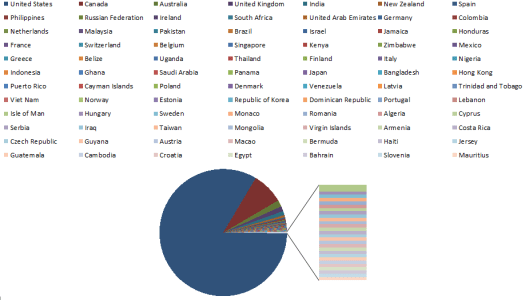
Where in the world is CooperMann viewed?

CMC2012-countries

buildingup-small-logoWhat’s coming up for 2013?  Keep watching CooperMann.com and BuildingUP.biz to stay on top of current issues and trends in accounting and business technology.

Accountants and Small Manufacturers

rollingballGetting in Front of the Ball

There’s a lot more to accountability in a manufacturing or inventory-based business than simply keeping track of money in and money out.  Particularly in an economy when nobody can afford to build or stock products too far ahead of demand, it is essential that these businesses have a means to not only track and manage purchasing, manufacturing, distribution and stocking activities, but to understand conditions or trends which impact the flow of materials and cash through the business.  Further, this understanding must come in a timely manner in order for the business owner to make decisions and take action when it matters most.  Unfortunately, many business owners find themselves “behind the ball”, constantly pushing to make forward strides, and often due to not having the information they need to make business decisions that matter now, today.

Why is it so critical for these businesses to have more and better information to help them make strategic decisions and answer daily operational questions?  In a word: connectedness.  The Internet has truly made the world smaller when it comes to participation with even the smallest of local businesses.  Globalization of markets has impacted manufacturers in significant ways, and these businesses (like so many others) must now be prepared to address the realities of global supply chains, outsourcing, and a remote or mobile workforce and market.  While many of the software solutions addressing the functional business requirements of manufacturing and inventory or warehouse management are “locally implemented” solutions, extending and integrating these solutions to address the new global and mobile paradigm may represent a significant expenditure in time and resources for the small enterprise.

Application hosting and web-based solutions have emerged to help businesses address the need to “modernize” legacy applications and enable greater levels of system management and access.  Introducing the applications into a centralized and remotely accessible environment allows the business to immediately deliver the necessary support for remote work and mobile access, and positions the system to facilitate collaboration within the business and with outside participants, such as outsourced bookkeepers, accounting and finance professionals.

These professionals can be instrumental in assisting their clients manage the change to new collaborative computing paradigms.  Where accounting was previously viewed as an after-the-fact process, accountability through detailed activity tracking and reporting is now a focus which begins at the front end of the business, and accounting professionals are finding far greater value in helping structure and manage this daily activity in order to deliver greater operational information and insight.  Rather than being the last people to know what is happening in the business, accounting professionals are recognizing that their ability to positively impact business performance requires getting “in front of the ball”, initiating process structure, data control and collection which ultimately results in better and more informed decision-making through better and more timely access to more meaningful information.

Businesses at all levels are realizing that new computing paradigms can ease the burdens of collecting and sharing information, yet most small companies need help in determining exactly how to approach this “enabling” of the business and systems.  While accountants are also experiencing dramatic change in how they do business, it makes sense for them to embrace the opportunity and recognize that enabling client systems will ultimately allow the accounting professional to work more closely and to deliver more tangible value to their client on an ongoing basis.  Online accounting approaches are no longer a fad but are the new reality supporting how many bookkeepers and accountants work with their business clients.  Extending access beyond accounting and bookkeeping systems, and incorporating support for operational and line-of-business solutions, is the next step which will bring the accountant closer to the client business, and position both to benefit from deeper collaboration and useful insight.

Make Sense?

J

Success in the Finance Department: Better Data and Analysis

Success in the Finance Department: Better Data and Analysis

CFOs and corporate controllers are beginning to recognize the increased value they can deliver to the organization when they take a more holistic and comprehensive approach to data reporting and analysis.  The key is in delegation of duties, and establishing the controls and connections which ensure proper (and complete) flow of information throughout the enterprise.  The finance department can easily become overburdened if not structured properly, but can be as easily undervalued if the sole focus is getting the numbers right.

An article on CFO.com discusses some of the elements of structuring the finance department for greater success, and identifies the value of taking a proactive, consultative and analytical approach to business finance.

“For a CFO, “success is not just about getting the numbers right, but also uncovering the story behind the numbers: taking raw accounting information and creating cogent and compelling management discussion and analysis,” says Eileen Kamerick, managing director and CFO at investment bank Houlihan Lokey.

Those who take the big picture into account are more likely to develop an organizational structure that isn’t merely reactive. That will allow staff to come up with more ideas and, ultimately, help drive revenue and run the business. “You have to create an organization so you aren’t in the engine all the time,” Kamerick notes.”


This is a great article… read the entire post on CFO.com here

You’ll find that it makes sense.

J