The Cloud for Your Firm: 3 Initial Considerations for Cloud Enabling Accounting and Bookkeeping Firms Working With Small Businesses

The Cloud for Your Firm

3 Initial Considerations for Cloud Enabling Accounting and Bookkeeping Firms Working With Small Businesses

dscn0903.jpgThe potential benefits of a real-time, lean collaborative working model are too great to argue with.  Accounting professionals, bookkeepers and their small business clients are all hearing about the value of working together in the cloud, and how cloud technologies and solutions can reduce cost and improve efficiency.  There is a great deal of truth in these statements, just as there was a truth in the value of implementing computers, networks and other technologies in business.  What is not clear is exactly what businesses need “in the cloud”, and how they should approach this shift from local IT to outsourced managed service.  Initially, there are 3 issues which warrant consideration, if not deep discussion, prior to making any significant move to relocate internal IT and shift business applications to the cloud: internal use systems, client interaction, and operational support for both.

With all the discussion about cloud computing and remote access, it would seem that all the applications and solutions businesses need are now available online and paid for in low monthly subscription fees.  Anyone working with small businesses, however, comes to understand that the vast majority of these businesses are still using more traditional modes of information management and computing.   For the most part, these businesses are using PCs and local networks, possibly with a little hosted email thrown in.  Almost certainly they have a website and maybe even a fairly sophisticated e-commerce system that allows them to sell products online.  But when it comes to general office functions, and particularly back-office functions like bookkeeping and accounting, the software and the data generally reside on the office PC and server.

Accounting and bookkeeping professionals who work with small businesses are often in the same position as their business clients when it comes to information technology.  Since so much of the work involved requires the same programs and data formats as those used by the client, service providers find that they spend as much in management of software licensing and systems to support working with client data as they do on systems intended for internal use only – sometimes more.  Many of these service providers are also small businesses, and it becomes challenging to find a way to handle internal IT needs while at the same time trying to address those of the client. Where e-commerce solutions are readily available to handle operational aspects of product based businesses, the best tool set for a professional accounting firm or bookkeeping business working with small business clients may not be so easily defined.

The solution for many providers has been revealed through cloud computing and hosted application models.  With Cloud Servers, Remote Desktops, and Virtual Desktop Infrastructure now widely available as affordable alternatives to capital-intensive implementations of locally installed products, businesses are finding new abilities to manage applications and data, provide mobility and enhance collaboration.  The additional benefit is in how accounting service providers may engage with their clients in more efficient and effective ways, without the burdens of replicating data or trying to share access to a single machine or application resource.

There are a number of elements to consider before taking the file server to the parking lot and running it over with a truck.  Moving to the cloud is not a one-step process, and it is important to do a little research and collect some important information before making the final decision on how to proceed.

Internal Use Systems

Among the first of the questions to ask when considering a change in IT management approaches is “which software do we need”?  Implementing an outsourced IT arrangement, which is really what “cloud” is about”, does not necessarily mean throwing away all the existing software and starting with new.  The software in use within the firm may be exactly what it needs right now and adding full IT management, fault tolerance, and remote or mobile access could be the main scope of the requirement.  Moving from locally installed solutions to hosted solutions provides quite a number of benefits while removing many of the direct costs and frustrations of IT management and administration. The greatest benefit of this type of approach is the ability to preserve the “body of knowledge” existing in the business, knowledge invested in the people and processes already developed.

On the other hand, there may be new tools or services only available as “cloud” service, and it makes sense to explore how they may benefit the business more than the in-use applications.  The important element is to remember that the solution must address real business problems, and whether it runs in the cloud or not isn’t the first or most important thing to ask.  For example, a discussion about whether QuickBooks Online might be a better choice than QuickBooks Pro, Premier or Enterprise should be focused on the functionality provided by the applications and not which servers they are running on.  With application hosting for QuickBooks now being an available option, there is a managed IT and remote access capability for both solutions, rendering the fact that QBO is a SaaS solution almost irrelevant in terms of being a differentiator.

Client Interaction

An important aspect of adopting new technologies or working models is the consideration of how the firm and the client businesses will work together, and whether or not there is (or could be) a standardized approach that might work for most clients.  Certainly, it makes sense to standardize as much as possible.  Treating every issue or engagement as a singular event – a one-off – is the least efficient way to do business.  The key to profitability is in the firm’s ability to produce high quality work consistently and in a timely fashion.  This requires that the business be well-structured in terms of the standard processes and methods which will be used to work with client information.  When the firm and the client can work seamlessly together as and when required, and when each is responsible for their own systems and data, it is a best-case scenario. The questions relating to client interactions focus on how the firm works with clients and which tools or solutions are required to improve that situation.

It is likely that the firm will need to be able to address working relationships with various client and engagement types – where clients do some of the work, where the bookkeeper does the work, or where the participants work collaboratively together in the same systems.  While it may seem that the best way to create a dependency on your services with the client is to keep them out of the systems, empowering the client is really the key to a close and long-standing engagement.  This means that the client needs to have their own solutions and approach to cloud-enabled IT, and the accounting or bookkeeping service provider should be able to access and work within that environment.

It is rare that a small business can effectively operate without computers and software to manage information and support operations, so it makes sense that the business should have its own accounting and financial systems, too.  For the accounting service provider, it is essential that a level of understanding be gained around the use of today’s available remote and mobile access technologies, as it is with these solutions and tools that participation in client systems will be enabled.  When the client accounting solution sits on their office PC, there are limited options for working together in any real collaborative form.  Connecting to their PC via remote control is a widely recognized means of gaining access to client systems, but if the bookkeeper is on the system when there is a problem of some sort, all eyes go directly to that remote user as the likely cause of the problem.

The considerations relating to remote access to client systems focus not just on enabling a collaborative working environment, but also on mitigating risk and improving client perception.  The risk issue comes in when the accounting service provider is exposed to systems and information not relevant to their task, and the perception issue becomes material when the accounting professional becomes the software or IT service provider.  It makes sense for the accounting professional to make recommendations or suggestions about software and IT service which might benefit the business, but not to necessarily be the reseller or direct provider of the product or service.  The moment the accounting professional attempts to sell the client a software product or IT service, the relationship is changed and the client is more likely to view their accounting pro as another vendor rather than a trusted advisor.  It’s also not necessarily a great move to start a new client engagement by telling the client they have to switch accounting products to allow the accountant to work closer.  Rather, professionals need to help their clients position those products for more efficient use, which may include enabling remote or mobile access granted via deployment in the cloud.

Operational Support

When businesses outsource their IT management and administration, there is often an initial belief that all responsibilities in these areas will be handled by the IT service provider.  What is often overlooked is the reality that the firm still needs to have people attending to IT related tasks, just doing different levels of work with the technology. It is important to recognize that someone in the firm will end up dealing with various IT and process support issues, and it still makes sense to have personnel dedicated to these tasks (*Note: here’s where I suggest that the cloud changes the focus of internal IT personnel, but it doesn’t eliminate the need for them).  The service provider and solution evaluation and selection process, as well as the actual deployment and administration of services, will take valuable time away from actually performing client accounting or bookkeeping work, and there should be people attending to these issues while the business continues operating.

Where an internal IT department or contract technicians may once have supported internal systems, an operational role within the business is still required to manage outsourced IT activities, including and particularly those where clients are involved with the firm systems.  Delivering new benefits with a minimum of business disruption is the goal, and can be achieved through proper planning and coordination with team members and clients alike.

Closing Thoughts

“The Cloud” is just another way to run software and implement computing resources.  It still takes servers and software, it uses processors and storage and networking, just like more “traditional” computing models.  The difference is in how these resources are purchased and provisioned, and the impact is a change in how businesses of all types can benefit from technologies which enable collaboration, lean process, and mobilityThe Cloud for Your Firm addresses your internal business requirements, lends itself to client collaboration, and has internal operational support to ensure the firm is fully leveraging the available benefits to improve business performance and profitability.

Make sense?

J

Read more about Accountants and Bookkeepers Working With QuickBooks Clients: App Hosting Approaches That Work

technorati-top-100-small-business-blog

IT Security and Engaging Users to Reduce Vulnerability

IT Security and Engaging Users to Reduce Vulnerability

There is a lot of discussion going on about security in the cloud.  With numerous advancements in technologies of various sorts intended to secure our information and identities on the Web, how is it that security continues to be a growing problem?  The answer is in the Big Data the Web collects (read about the Internet of Things – IoT), the large silos of data now handily available in the cloud, and users who continue to provide access for all sorts of bad guys and malicious attackers simply due to not understanding that they – the users – remain as the biggest vulnerability of all.  It is educating this user and finding a way to get them to recognize their potential as a critical element in enhancing system security and reducing vulnerability that has become the larger challenge.

People are nothing more than another operating system, says Lance Spitzner, training director for the Securing The Human Program at SANS Institute.  “Computers store, process and transfer information, and people store, process and transfer information,”  How Hackers Fool Your Employees

Social engineering and finding ways to earn user trust has become a widely recognized means for gaining access to systems and information.  Any experienced computer security consultant recognizes that Microsoft Outlook is among the best applications to place in front of users to test system security, as emails with malicious attachments (spearphishing) represent a majority of targeted attacks.  And hackers aren’t resting on their laurels while users figure out that opening email from unfamiliar sources isn’t a good idea.  Nope, not for a minute.  Today’s flavor is “conversational” phishing, where it is made to appear as though a real person is at the other end of the conversation.  Hackers are patient, and they are willing to take the time to find a way in.  Users, on the other hand, still tend to be somewhat complacent when it comes to security, and often operate under the belief that the IT security products and the IT department have it all under control.   And no matter how many times they’re told to not click on strange email attachments, to change passwords frequently, not to reuse passwords, and to make passwords hard to guess… getting users to comply continues to challenge system administrators.

most-valuable-security-practices

Communicating with users about the importance of adhering to password management and other security standards often falls on deaf ears for two reasons:  users believe that system security is the job of the IT department, and users are made to feel stupid by being chastised and punished by the IT department that’s supposed to be helping them.   Rather than helping to educate users and find innovative ways to get users to participate in helping to improve system security, IT administrators and security teams generally view users as part of the problem rather than part of the system of solving it.

It’s a heated debate that can upset people on opposing sides.  For instance, one RSA conference presenter conducted a class on “how to patch stupidity,” Spitzner says.  “He explained why people are stupid, how they’re stupid and how to fix stupid.  It was a very emotional talk for me, because how can you sit there and insult the very people who can end up helping us?…  How Hackers Fool Your Employees

In order to build strong security which is better-suited to protect businesses from today’s variety of threats, IT security professionals and system administrators should engage in positive internal marketing for better system security, deliver improved education to build awareness with users, and actually engage users in the process of threat identification and detection.  These users don’t have to be geeks or IT people; they can be average users who simply keep their eyes open to things that just don’t seem right.  “People can become a detection system to improve organizational resilience.”

jmbunnyfeetMake Sense?

J

via Accounting and Business Technologies | QuickBooks Pro and Premier as Software-as-a-Service

QuickBooks Pro and Premier as Software-as-a-Service

Running business applications online was once considered a fad, but has now become a mainstream approach to implementing technology. Businesses large and small are finding that turning technology investments into a predictable expense allows them to focus on their business operations and not the IT budget. For some, the ability to bring remote locations or mobile team members closer to the systems that support the business is the biggest benefit. For others, the security of having business continuity and disaster recovery built into the system is the key. Regardless of the motivating factors, business owners are finding that online application services can make a positive impact to their bottom line.

The market has clearly identified online technologies and application services as something beneficial. This is demonstrated by the rapid adoption and growth of business solutions that leverage the Internet as network. Further, online applications and services are being used as a way to augment systems that were once exclusively LAN or PC based. An example of this is the extension of Intuit’s QuickBooks products to incorporate online payroll services and online payment processing solutions.

With the move to online application services being one of the biggest shifts in technology seen in years, it only makes sense that the applications that have become “standards” in business shift to an online model, as well. The opportunity is great, but the responsibility is greater.

Many software companies are facing a number of problems with respect to the unauthorized hosting of their desktop applications. Because of the technology employed for desktop application hosting is very costly, many service providers feel compelled to “leverage” application licensing and other system features to increase their value proposition and in order to compete. Customers who utilize these unauthorized application services are putting their businesses at potential risk. This risk may come in the form of substandard services resulting in lost or corrupted data; risk may come in the form of unauthorized access to confidential business or personal information due to poor system security; risk may come in the form of exposure due to the unauthorized use of software licenses.

While the market has clearly demonstrated the value and benefit of application hosting services, the lack of protections, consistency and support make it a venture fraught with peril for many. The volume of “grey market” activity and instances of license piracy have undoubtedly increased dramatically, as the cost of service delivery is high and the margins for the service provider are narrow. Manipulating the cost of service by leveraging the application licensing is sometimes the only way some service providers can create profitability in their offerings. But with the prior lack of oversight in terms of service pricing, licensing, quality assurance, or service orientation, it had become the “wild west” for service providers, and the perceived value of the service declined while the number of and variety of deliveries increased.

The answer to the problem, or at least as it exists around the Intuit QuickBooks products, is in the ability for Intuit-Authorized QuickBooks hosting providers to offer subscription access to QuickBooks Pro and Premier licenses when they are hosted. Customers no longer need worry about purchasing their QuickBooks software before engaging with the hosting company, and can avoid the annual cost of upgrading their application software. With the QuickBooks license delivered under a subscription program, customers are able to work with the most current version of the software, and know that their systems are protected and their data is secure. Intuit-authorized QuickBooks Hosting providers can supply, manage, and maintain hosted QuickBooks implementations for businesses of virtually any size and type – all with an Intuit-supported license.

via Accounting and Business Technologies | Joanie Mann: QuickBooks Pro and Premier as Software-as-a-Service.

Technology and Tools for Accounting Professionals

Joanie Mann Bunny FeetTechnology and Tools for Accounting Professionals

old_school_ledgerThere was a time not so long ago when accounting professionals focused more on tabulation and summarizing of information than on analysis.  Accounting for businesses, in particular, required collecting myriad papers and receipts and other transaction documents, summarizing the information, translating it into journal entries, and finally posting those numbers to the big bound book which represented the business general ledger.  With the work required to gather and enter all of the information, professionals necessarily focused their efforts on making the process as efficient as possible by attempting to structure the workflow and manage the paper.


When those efforts are compared to today’s approach which involves digital documents, intelligent data collection tools, automated workflow solutions, online accounting and data analysis, it is clear that the processes for accounting for business activities have not really become simpler.  In fact, much of the enabling technology has served to complicate certain processes, which drives users to find even more “solutions” to address these new problems.  It (IT) is a bit like the Wonka Everlasting Gobstopper, which never gets finished and never gets smaller.  IT simply changes things – regularly and often.

Back then – before the Internet and digital imaging, or even Personal Computers – high technology wasn’t the focus because it didn’t exist in the realm of business in general.  I suppose you could call business solutions at that time “low” technology, where mainly mechanical solutions were introduced to address various business problems.

old_school_filecabinet

As an example, prior to the advent of digital imaging and electronic documents, one of the primary requirements of the business was to organize and store paper documents.  Over time, a wide variety of filing, foldering and labeling solutions have been developed, all oriented towards making the storage and later retrieval of paper documents easier.  For some businesses, letting go of the paper is a hard thing to do.  Years and years of training in keeping paper files has left many business owners and managers wary of working without physical paper documents.  Investments in office space, filing cabinets, storage folders and personnel to organize, file and retrieve all of the documents is only a partial measurement of the cost of managing paper, and large numbers of businesses continue to operate in this manner.

old_school_desk

The technology applied to processing the work has also changed, in many ways even more dramatically than the technology applied to collecting and storing the information.  Take the simple processes of tabulation (to arrange in tabular form; condense and list) and summing (adding up) information, for example.  Previous generations didn’t have computers and spreadsheet software to perform the work.  Rather, individuals would painstakingly handwrite each transaction entry into a ledger or on a columnar worksheet, and would then have to manually add each column and then cross check footer totals to ensure accuracy.  Back then, the machines used to perform the addition/subtraction were mechanical devices and could not perform multiplication or division.   These adding machines were first hand-cranked devices, later replaced with shiny new electrical ones (weighing approximately 20 lbs each).

old_school_telephone

Even voice communications have changed dramatically over the years.  Many people don’t remember a time when having multiple phone lines in the business meant having multiple telephones, and the concept of a PBX (Private Branch eXchange) didn’t exist.  Every phone would be hard-wired to an incoming line; if you wanted to answer a call, you had to use the right phone.  This became difficult in an office with many people, so solutions such as the “fabulous extendo-phone” was invented to allow anyone in the office to access the phone from their desk.

The technology available to businesses today is astounding, and offers amazing potential and benefit.  On the other hand, technology rarely (truly) makes things simple or easy – it more frequently serves to shelter certain users from the complexity while delivering new workloads and concerns to others.  It’s rather like energy – it isn’t created or destroyed, it just changes form [law of conservation of energy].  Business is like that, particularly where information technology is involved.  The underlying requirement doesn’t go away, just like a business’s requirement to account for financial transactions and activities,  and the need for the business to capture and retain documents isn’t changed.  How the process is managed, and which tools or mechanisms are applied to the task is what changes.

Make Sense?

J

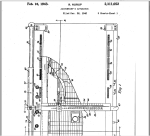
onewrite-accountant_apparatusOne-Write System Revolutionizes Accounting.  These guys had the right idea, they just didn’t have the cloud.

Cloud IT: Hiding Complexity and Risk

jmbunnyfeet

Cloud IT: Hiding Complexity and Risk

Cloud computing and Internet technologies have delivered previously unimagined capability for even the smallest of businesses – capability to compete, build brand recognition, and reach markets in remote geographies.  The mantra for businesses used to be “location, location, location”, but it’s become connectivity – perhaps even more than location – which now delivers business opportunity.  As technology has evolved, allowing businesses and consumers to connect regardless of time or place, the complexity of the systems and networks have also increased dramatically.  Where a business could once easily identify their various vendors or business service providers, the identification of those involved in the service ‘delivery chain’ are no longer so easily recognized.   Among the benefits of cloud computing technologies is the ability to reach beyond traditional boundaries.  The risk for many businesses is in not fully understanding how, and with whom, those boundaries are being crossed.

For many an enterprise, the convenience and efficiency introduced with cloud computing models overshadows the increased risk potential.  Service level agreements and vendor contracts are assumed to be sufficient to protect the business and its information assets, yet recent events (such as the recent reveals of PRISM and the actions of the National Security Agency) should cause businesses to look a little deeper at their entire provider network.  It’s not that the average business should be concerned about government snooping of their emails, but they should be aware of who has access to their systems and data, and which entities are responsible for which parts of the system.  It’s only prudent to know the details, and it is the best first step to mitigate business risk.

Enterprise Clouds are complex, sophisticated entities which invariably rely on a daisy-chain of third parties and contractors to help build, run and maintain their Cloud provider’s systems. The organizational and technical complexities are additive, resulting in increased systemic risk. Systemic risk is the least visible and hardest to eliminate, and those risks become real when the providers’ systemic risks become [yours].

The question is, how well does your Cloud provider manage the ecosystem of contractors and third parties that are farther down the food chain? This is even more relevant in the globalized workforce, where, paradoxically, Cloud and related technologies have greatly facilitated the outsourcing and offshoring of work to low-cost countrieshttp://www3.cfo.com/article/2013/6/data-security_prism-national-security-agency-edward-snowden-cloud-implications-vendor-management

Before executing a service agreement with an outsourced provider, make certain that the details of facility, connectivity, network, equipment, and other elements of the delivery and system are spelled out.  Business subscribers should know where the various points of failure exist, and which company is responsible for dealing with each.  If a carrier fails and connectivity to the data center is lost, the hosting service provider may be powerless to impact the situation, even though access to service is part of the SLA and requirement.  If a hosted software product has a vulnerability or fails to perform, the developer of the product is likely responsible, rather than a hosting service provider.  The point is that there are often multiple players in the delivery chain, and customers should be aware of this reality prior to engaging with the service.

Ultimately, the business with mission critical data in the possession of a 3rd party service provider should have a healthy helping of doubt as to whether the provider has full control over their environment.  Business owners, managers and CFOs should recognize the increased necessity of evaluating risk within their provider systems and in provider/vendor relationships, to keep trade secrets secret and prevent intellectual property from becoming the property of others.

Joanie Mann Bunny Feet

Make Sense?

J

Cloud Computing Evolved: Disruptive Technology Goes Mainstream

jmbunnyfeetCloud Computing Evolved: Disruptive Technology Goes Mainstream

A 2010 information technology report by IDC (International Data Corporation, a global provider of market intelligence) provided a few interesting predictions for Information Technology in these changing times.  Not surprisingly, many of the predictions centered around the same “ingredients of IT industry transformation” which were identified in past years as being disruptive technologies including cloud computing, mobile devices and applications, wireless broadband, virtualized infrastructure, social networking, and smart devices being among those listed.  The subsequent 2011 report suggested a continuing trend of spending and innovation in cloud technologies and mobile computing and in collecting and analyzing the huge volumes of data being generated.  It is clear that cloud computing is evolving from being disruptive technology to mainstream IT.

Everyone must by now recognize the significant growth in use of online and mobile applications and services.  If you haven’t noticed that just about everyone has a smart phone or tablet computer, then you’ve got your head buried deep in the sand.  What this clearly indicates, and IDC supported the position with quantifiable evidence, is that the “disruptive technologies” of yesterday have transitioned from early adoption to mainstream adoption.   This means that use of these technologies had pushed “well beyond” the first 10 to 15% of the market through 2010, and that customers were ready to integrate these new solutions as core parts of their overall IT strategy.

If you don’t believe that cloud computing, virtualization, and mobile access are becoming (have become?) mainstream, consider the staggering number and variety of mobile devices and networks available today.  The adoption of these devices is driven by the availability of broadband wireless service, and their use is fueled by applications offering “social business” and “pervasive analytics”.  No longer limited as a voice communications device, the mobile phone has now become the mobile workstation, capable of supporting a wide variety of business and personal interactions and functions intended to help users generate and analyze “unprecedented volumes of information” – and the 2011 report indicates that mobile computing is continuing to fuel the trend.

“Mobility wins” will be the top theme of the year as mobile devices outship PCs by more than 2 to 1 and generate more revenue than PCs for the first time. 85 billion mobile apps will be downloaded, and mobile data network spending will exceed fixed data network spending for the first time.

IDC’s 2010 report placed an interesting focus on the impact of this new era of IT, believing that it would be a launchpad for  the creation of “intelligent industry” with an IT-enabled “intelligent economy”.  This doesn’t apply only to those very large multinational corporations, like the IBM commercials about a smarter planet and the commercials where the box tells us where it (and the delivery truck) is.  This new-found intelligence would allow businesses of all sizes to offer better and more customized services locally while dramatically expanding their market reach beyond geographic boundaries, and positioning themselves for accelerated growth.

As the number of intelligent communicating devices on the network will outnumber “traditional computing” devices by almost 2 to 1, the way people think about interacting with each other, and with devices on the network, will change. Look for the use of social networking to follow not just people but smart things.”

Business owners who find a way to leverage this new capability through innovative applications of cloud computing and mobile device access will almost certainly find that their businesses are better suited to addressing the needs of their current market, but are also poised to take advantage of emerging opportunities in emerging markets as well.

In 2010 IDC predicted that by 2012 we would begin to see the “slow death” of cloud computing – the term, not the technology model.  Even though cloud computing is one of the hottest buzzwords in tech today, the model is becoming mainstream to the point where it is no longer considered a bleeding-edge method of computing requiring its own descriptive name. While IDC may have been a bit off in terms of forecasting the slow death of “cloud” terminology, their finding that the evolution of cloud computing models is rapidly progressing from disruptive to mainstream appears to be spot on.

Joanie Mann Bunny FeetMake Sense?
J

updated from original post in 2010