Lease Accounting Rules, Small Business Financing and the Cloud

Lease Accounting Rules, Small Business Financing and the Cloud

Cloud Service FinancingThere are changes in lease accounting rules that may have broader implications than expected.  Lease accounting, or accounting in general, isn’t exactly an exciting topic and generally doesn’t come up in conversation.  But the changes to how business equipment and other leases are accounted for and reported could become additional fuel for cloud adoption by businesses – small business looking for financing, in particular (= lots).

First, what does accounting for leases have to do with small business financing?  Quite a bit, actually.  The balance sheet is one of the things a lender will look at when considering a small business for a loan, and if lease obligations and leased assets are on the balance sheet, they’re going to want to talk about them.  They’ll also possibly look at asset turnover – trying to understand exactly how much in assets it takes for the business to make “x” amount of money.  Banks and other lenders like to know they’re loaning money to a business that is going to pay it back, and in a reasonable amount of time.  They will limit their risk potential as much as possible, and they do it by looking through the financials and related information.

Business value is generating sustainable cash flow.  If you run a highly efficient business, the more top-line growth you deliver, the more cash flow you enjoy.  For capital-intensive businesses (either through the need for capital equipment or working capital), growth can actually lower your cash flow and diminish your business value.   To understand which side of the equation your business resides, accounting professionals will often look at the return on total assets calculated over time, dividing the operating income for each period from the P&L by the appropriate period values of total assets from the balance sheet.  The resulting metric describes how efficiently assets are applied to creating earnings.

https://coopermann.com/2013/01/22/why-is-asset-management-important-to-a-business/

This can be a difficult conversation with the banker for new businesses, as they have little to go on in terms of historic data to show the bank.  The P&L (profit & loss, or Income Statement) only reflects current business performance, not what it can do in a few months or years.  By putting leases on the balance sheet, businesses are now reflecting a more realistic view of things, but are also introducing additional items for scrutiny and question by the lender; things which are often described more in terms of business strategy than in proveable numbers.  That makes getting the loan just that much tougher.

Previous rules relating to business leases didn’t necessarily require that the business recognize operating leases (leased items and lease obligations) as assets and liabilities on the balance sheet.  This is among the reasons why businesses lease equipment – they are able to obtain the item without having to record a single large capital expenditure.

The FASB changes demand that accounting for leases should be standardized, forcing the lesees to report all leases on the balance sheet, reflecting both the benefit (asset) and the cost (liability) associated with the lease.  Stated in a press release on the subject: “The new guidance responds to requests from investors and other financial statement users for a more faithful representation of an organization’s leasing activities,” stated FASB Chair Russell G. Golden. “It ends what the U.S. Securities and Exchange Commission and other stakeholders have identified as one of the largest forms of off-balance sheet accounting, while requiring more disclosures related to leasing transactions.”

“a capital lease creates a tangible right where you own the equipment; the liability in a capital lease is true debt…”

http://www3.cfo.com/article/2013/9/gaap-ifrs_lease-accounting-elfa-fasb-iasb-global-convergence

By understanding how these changes in accounting for leases impact businesses, cloud solutions providers now have an additional lever to use with prospective customers: leasing equipment isn’t necessarily the way to keep capex off the balance sheet any longer.

One of the big value propositions offered by many cloud solution providers is that their service is paid for as a monthly business expense rather than a large up-front capital expenditure and investment.  Businesses are able to use the solution and benefit from it without actually “buying” anything, it’s just subscribed instead.  All of this is really a fancy way of saying “renting but not owning”, but the result to financial reporting is the same: it’s not on the balance sheet, it’s on the P&L in chewy chunks.  This used to be a preferred treatment for leases, too, allowing businesses to reflect the usage and payment in little parts rather than a big one.  It was “gentler” on the balance sheet.  But leasing equipment and software for on-premises use won’t be competing with the cloud and subscription service any longer, closing off the “impact to the balance sheet” conversation entirely and making cloud IT just that much more important to small businesses who need cash to fuel business growth.

Make Sense?

Joanie Mann Bunny FeetJ

The Cloud for Your Firm: 3 Initial Considerations for Cloud Enabling Accounting and Bookkeeping Firms Working With Small Businesses

The Cloud for Your Firm

3 Initial Considerations for Cloud Enabling Accounting and Bookkeeping Firms Working With Small Businesses

dscn0903.jpgThe potential benefits of a real-time, lean collaborative working model are too great to argue with.  Accounting professionals, bookkeepers and their small business clients are all hearing about the value of working together in the cloud, and how cloud technologies and solutions can reduce cost and improve efficiency.  There is a great deal of truth in these statements, just as there was a truth in the value of implementing computers, networks and other technologies in business.  What is not clear is exactly what businesses need “in the cloud”, and how they should approach this shift from local IT to outsourced managed service.  Initially, there are 3 issues which warrant consideration, if not deep discussion, prior to making any significant move to relocate internal IT and shift business applications to the cloud: internal use systems, client interaction, and operational support for both.

With all the discussion about cloud computing and remote access, it would seem that all the applications and solutions businesses need are now available online and paid for in low monthly subscription fees.  Anyone working with small businesses, however, comes to understand that the vast majority of these businesses are still using more traditional modes of information management and computing.   For the most part, these businesses are using PCs and local networks, possibly with a little hosted email thrown in.  Almost certainly they have a website and maybe even a fairly sophisticated e-commerce system that allows them to sell products online.  But when it comes to general office functions, and particularly back-office functions like bookkeeping and accounting, the software and the data generally reside on the office PC and server.

Accounting and bookkeeping professionals who work with small businesses are often in the same position as their business clients when it comes to information technology.  Since so much of the work involved requires the same programs and data formats as those used by the client, service providers find that they spend as much in management of software licensing and systems to support working with client data as they do on systems intended for internal use only – sometimes more.  Many of these service providers are also small businesses, and it becomes challenging to find a way to handle internal IT needs while at the same time trying to address those of the client. Where e-commerce solutions are readily available to handle operational aspects of product based businesses, the best tool set for a professional accounting firm or bookkeeping business working with small business clients may not be so easily defined.

The solution for many providers has been revealed through cloud computing and hosted application models.  With Cloud Servers, Remote Desktops, and Virtual Desktop Infrastructure now widely available as affordable alternatives to capital-intensive implementations of locally installed products, businesses are finding new abilities to manage applications and data, provide mobility and enhance collaboration.  The additional benefit is in how accounting service providers may engage with their clients in more efficient and effective ways, without the burdens of replicating data or trying to share access to a single machine or application resource.

There are a number of elements to consider before taking the file server to the parking lot and running it over with a truck.  Moving to the cloud is not a one-step process, and it is important to do a little research and collect some important information before making the final decision on how to proceed.

Internal Use Systems

Among the first of the questions to ask when considering a change in IT management approaches is “which software do we need”?  Implementing an outsourced IT arrangement, which is really what “cloud” is about”, does not necessarily mean throwing away all the existing software and starting with new.  The software in use within the firm may be exactly what it needs right now and adding full IT management, fault tolerance, and remote or mobile access could be the main scope of the requirement.  Moving from locally installed solutions to hosted solutions provides quite a number of benefits while removing many of the direct costs and frustrations of IT management and administration. The greatest benefit of this type of approach is the ability to preserve the “body of knowledge” existing in the business, knowledge invested in the people and processes already developed.

On the other hand, there may be new tools or services only available as “cloud” service, and it makes sense to explore how they may benefit the business more than the in-use applications.  The important element is to remember that the solution must address real business problems, and whether it runs in the cloud or not isn’t the first or most important thing to ask.  For example, a discussion about whether QuickBooks Online might be a better choice than QuickBooks Pro, Premier or Enterprise should be focused on the functionality provided by the applications and not which servers they are running on.  With application hosting for QuickBooks now being an available option, there is a managed IT and remote access capability for both solutions, rendering the fact that QBO is a SaaS solution almost irrelevant in terms of being a differentiator.

Client Interaction

An important aspect of adopting new technologies or working models is the consideration of how the firm and the client businesses will work together, and whether or not there is (or could be) a standardized approach that might work for most clients.  Certainly, it makes sense to standardize as much as possible.  Treating every issue or engagement as a singular event – a one-off – is the least efficient way to do business.  The key to profitability is in the firm’s ability to produce high quality work consistently and in a timely fashion.  This requires that the business be well-structured in terms of the standard processes and methods which will be used to work with client information.  When the firm and the client can work seamlessly together as and when required, and when each is responsible for their own systems and data, it is a best-case scenario. The questions relating to client interactions focus on how the firm works with clients and which tools or solutions are required to improve that situation.

It is likely that the firm will need to be able to address working relationships with various client and engagement types – where clients do some of the work, where the bookkeeper does the work, or where the participants work collaboratively together in the same systems.  While it may seem that the best way to create a dependency on your services with the client is to keep them out of the systems, empowering the client is really the key to a close and long-standing engagement.  This means that the client needs to have their own solutions and approach to cloud-enabled IT, and the accounting or bookkeeping service provider should be able to access and work within that environment.

It is rare that a small business can effectively operate without computers and software to manage information and support operations, so it makes sense that the business should have its own accounting and financial systems, too.  For the accounting service provider, it is essential that a level of understanding be gained around the use of today’s available remote and mobile access technologies, as it is with these solutions and tools that participation in client systems will be enabled.  When the client accounting solution sits on their office PC, there are limited options for working together in any real collaborative form.  Connecting to their PC via remote control is a widely recognized means of gaining access to client systems, but if the bookkeeper is on the system when there is a problem of some sort, all eyes go directly to that remote user as the likely cause of the problem.

The considerations relating to remote access to client systems focus not just on enabling a collaborative working environment, but also on mitigating risk and improving client perception.  The risk issue comes in when the accounting service provider is exposed to systems and information not relevant to their task, and the perception issue becomes material when the accounting professional becomes the software or IT service provider.  It makes sense for the accounting professional to make recommendations or suggestions about software and IT service which might benefit the business, but not to necessarily be the reseller or direct provider of the product or service.  The moment the accounting professional attempts to sell the client a software product or IT service, the relationship is changed and the client is more likely to view their accounting pro as another vendor rather than a trusted advisor.  It’s also not necessarily a great move to start a new client engagement by telling the client they have to switch accounting products to allow the accountant to work closer.  Rather, professionals need to help their clients position those products for more efficient use, which may include enabling remote or mobile access granted via deployment in the cloud.

Operational Support

When businesses outsource their IT management and administration, there is often an initial belief that all responsibilities in these areas will be handled by the IT service provider.  What is often overlooked is the reality that the firm still needs to have people attending to IT related tasks, just doing different levels of work with the technology. It is important to recognize that someone in the firm will end up dealing with various IT and process support issues, and it still makes sense to have personnel dedicated to these tasks (*Note: here’s where I suggest that the cloud changes the focus of internal IT personnel, but it doesn’t eliminate the need for them).  The service provider and solution evaluation and selection process, as well as the actual deployment and administration of services, will take valuable time away from actually performing client accounting or bookkeeping work, and there should be people attending to these issues while the business continues operating.

Where an internal IT department or contract technicians may once have supported internal systems, an operational role within the business is still required to manage outsourced IT activities, including and particularly those where clients are involved with the firm systems.  Delivering new benefits with a minimum of business disruption is the goal, and can be achieved through proper planning and coordination with team members and clients alike.

Closing Thoughts

“The Cloud” is just another way to run software and implement computing resources.  It still takes servers and software, it uses processors and storage and networking, just like more “traditional” computing models.  The difference is in how these resources are purchased and provisioned, and the impact is a change in how businesses of all types can benefit from technologies which enable collaboration, lean process, and mobilityThe Cloud for Your Firm addresses your internal business requirements, lends itself to client collaboration, and has internal operational support to ensure the firm is fully leveraging the available benefits to improve business performance and profitability.

Make sense?

J

Read more about Accountants and Bookkeepers Working With QuickBooks Clients: App Hosting Approaches That Work

technorati-top-100-small-business-blog

The Small Business Borrower | Biz2Credit

In order for regulation and legislation to work in favor of small businesses, it becomes essential that accurate and complete information be available for analysis. Too often there are details not recognized in the information used by various agencies to help guide policy and action, and particularly in the world of privately held small business, the quality of data is often in question. This is where structured accounting software and the public accountant come in to play, and where a difference can be made not only with the individual client, but at a higher level by facilitating more accurate data production to support various research initiatives, such as those sponsored through the SBA and the Fed.

Overall, these research studies highlight two things: the important role that financial institutions play in lending to small business owners, and the value of quality data sets in ascertaining financing issues faced by small businesses and their owners.

Charles Ou, Ph.D. | Senior Economist | Office of Advocacy | July 2009

With the availability of highly useful tools for monitoring various key performance indicators and metrics in the business (with analysis of cash flow being an essential part), business owners and their accounting professionals alike are able to use real business data to reveal not simply the trends in business performance, but to identify areas where direct action could improve results in one aspect or another. By paying closer attention to managing business finances and analyzing key aspects of business performance, the “discouraged” or “denied” business borrower may become a successful or (even more valuable) a non-borrower.

via The Small Business Borrower at Biz2Credit.com.

via Accounting and Business Technologies | QuickBooks Pro and Premier as Software-as-a-Service

QuickBooks Pro and Premier as Software-as-a-Service

Running business applications online was once considered a fad, but has now become a mainstream approach to implementing technology. Businesses large and small are finding that turning technology investments into a predictable expense allows them to focus on their business operations and not the IT budget. For some, the ability to bring remote locations or mobile team members closer to the systems that support the business is the biggest benefit. For others, the security of having business continuity and disaster recovery built into the system is the key. Regardless of the motivating factors, business owners are finding that online application services can make a positive impact to their bottom line.

The market has clearly identified online technologies and application services as something beneficial. This is demonstrated by the rapid adoption and growth of business solutions that leverage the Internet as network. Further, online applications and services are being used as a way to augment systems that were once exclusively LAN or PC based. An example of this is the extension of Intuit’s QuickBooks products to incorporate online payroll services and online payment processing solutions.

With the move to online application services being one of the biggest shifts in technology seen in years, it only makes sense that the applications that have become “standards” in business shift to an online model, as well. The opportunity is great, but the responsibility is greater.

Many software companies are facing a number of problems with respect to the unauthorized hosting of their desktop applications. Because of the technology employed for desktop application hosting is very costly, many service providers feel compelled to “leverage” application licensing and other system features to increase their value proposition and in order to compete. Customers who utilize these unauthorized application services are putting their businesses at potential risk. This risk may come in the form of substandard services resulting in lost or corrupted data; risk may come in the form of unauthorized access to confidential business or personal information due to poor system security; risk may come in the form of exposure due to the unauthorized use of software licenses.

While the market has clearly demonstrated the value and benefit of application hosting services, the lack of protections, consistency and support make it a venture fraught with peril for many. The volume of “grey market” activity and instances of license piracy have undoubtedly increased dramatically, as the cost of service delivery is high and the margins for the service provider are narrow. Manipulating the cost of service by leveraging the application licensing is sometimes the only way some service providers can create profitability in their offerings. But with the prior lack of oversight in terms of service pricing, licensing, quality assurance, or service orientation, it had become the “wild west” for service providers, and the perceived value of the service declined while the number of and variety of deliveries increased.

The answer to the problem, or at least as it exists around the Intuit QuickBooks products, is in the ability for Intuit-Authorized QuickBooks hosting providers to offer subscription access to QuickBooks Pro and Premier licenses when they are hosted. Customers no longer need worry about purchasing their QuickBooks software before engaging with the hosting company, and can avoid the annual cost of upgrading their application software. With the QuickBooks license delivered under a subscription program, customers are able to work with the most current version of the software, and know that their systems are protected and their data is secure. Intuit-authorized QuickBooks Hosting providers can supply, manage, and maintain hosted QuickBooks implementations for businesses of virtually any size and type – all with an Intuit-supported license.

via Accounting and Business Technologies | Joanie Mann: QuickBooks Pro and Premier as Software-as-a-Service.

Criteria for Evaluating QuickBooks Hosting Providers: Going Beyond Pricing

Criteria for Evaluating QuickBooks Hosting Providers: Going Beyond Pricing

When a small business elects to run their QuickBooks desktop edition software in the “cloud”, it makes sense to work with an experienced provider – a company with the people and the experience to keep the QuickBooks desktop software working properly and securely.  The keys to selecting the best provider for the business are often hidden in the experiences of others; experiences which reveal issues that may significantly impact vendor selection and which have nothing to do with the price of the service. Criteria such as system performance, responsiveness to technical issues, resources for self-help, and knowledge of support personnel – these are the things that more frequently and directly impact the customer experience and, ultimately, the customer’s loyalty.

While Intuit supports QuickBooks Enterprise in terminal server and Remote Desktop environments, they only support the license when it is deployed for the single business organization the license was issued to. If a business has lots of different users on the platform and those users don’t belong to the one company who “owns” the infrastructure and the license, then the implementation is non-compliant and won’t be supported. Intuit also doesn’t offer direct support for QuickBooks Pro and QuickBooks Premier editions in remote desktop implementations, yet the software will work perfectly well in that environment. There are a few quirks and tricks to using the software in this manner, however, so provider technical experience specifically with QuickBooks is essential.

When working with a company providing managed application hosting services and not just managed server platforms, it generally means that the provider is taking responsibility not only for the server/network/infrastructure, but also for the setup, configuration and maintenance of system users and security, and the installation/management/maintenance of the applications running on the server.  When a business elects to outsource this level of service to any 3rd party, there are a variety of areas in addition to pricing which should be thoroughly explored prior to signing the service agreement.

When evaluating potential service providers, research the provider’s offerings and performance directly as well as evaluating the public’s perception of them, considering these 4 areas:

  1. Technology
  2. Innovation
  3. Business Practices
  4. Customer Satisfaction

The technology evaluation relates not only to the systems and tools applied to the service delivery, but also to the systems or tools applied to assist the customer with dealing with the service.  Too often, providers pay more attention to their ordering systems than their service delivery, believing that a quality customer experience rests more with simple purchasing processes than with a functional and well-performing application service.  Others may focus on delivering the best and highest quality application service, yet relegate their clients to sending emails or making phone calls to place service orders or request service information.  The providers who score the highest points in this category are those who recognize that both elements – service delivery and service administration – are critically important to providing a quality overall customer experience.

The innovation evaluation looks at the actual service infrastructure and delivery. This includes features as well as limitations.  One of the pitfalls of being an application service provider is the inertia created with existing systems and customers.  Once the platform is in place and there are a bunch of users on the systems, upgrading and updating the underlying technologies can be a tremendous challenge.  I have often related this as being like trying to change tires on a moving truck.  Unfortunately, systems age and lose functionality, compatibility, support, etc.

Keeping the platform updated isn’t the only element involved with scoring provider innovation.  Even more important than simple change management supporting status quo, true innovation speaks to efforts directed towards crafting a better, more functional and more useful solution delivery.  Many skilled technicians can set up a terminal server for remote access to QuickBooks using the “standard” tools available, but it takes more skill and understanding to create a service which offers more and better capability than everyone else.  The point isn’t that the provider is changing QuickBooks software in any way – that’s not really an option.  Rather, it is in how the provider elects to architect their systems and solution, and whether they are attempting to improve the experience and deliver with a unique approach rather than a generic one.

With increased competition and as some provider platforms experience challenges either due to age or capacity, certain “interesting” practices have emerged.  I now look at these business practices as part of the process of evaluating providers.  In the early days of hosting and application delivery, the business practices of various providers had some similarities, but not any more.  The practices which frustrate me most and which always cause me to score the provider with low marks in this category relate almost exclusively to transparency – or lack thereof.  Here are two scenarios which I’ve seen come up with some frequency, and which (in my opinion) are indications that the provider may not necessarily be one you want to work with.

  • A business has signed a one-year service agreement with a hosting provider, and has been required to prepay that annual contract.  The business was not provided with a demonstration or evaluation system prior to executing the service agreement; they simply trusted the information provided by sales.  After a few months on the service, the performance and support are so poor that the business wants out of the annual agreement, even though high service levels and support responses were part of the contract.  In order to be allowed to end the service agreement and stop paying for the service, the business was told they would have to not only buy out a portion of the remaining contract, but also sign an agreement not to communicate the service problems they experienced or the exit agreement terms with anyone. (*please note that I am essentially in agreement about having to buy out a committed term agreement, at least in part, but applying a gag order? Not so much).
  • A business is using the services of a hosting provider, and has a need to know details of their delivery (like server operating system version) in order to verify compatibility with a new software product they wish to purchase.  Before the business customer is allowed to obtain the information, the provider requires that they sign an agreement promising not to disclose the information they may receive to any other party.  (*note: While I recognize that this type of agreement is desirable to protect proprietary information, it is more often used to prevent the prospective customer from disclosing something potentially negative, and it certainly doesn’t do much in terms of building trust.)

The final evaluation is on customer satisfaction, where anecdotes and information is collected from both current and past customers of the provider.  Admittedly, much of this information I scour from various forums and discussion groups and interviews but it is truly amazing what you can learn about a business simply by listening to customer stories in various social venues.  The picture these stories paint is often (frequently!) very different from the “happy sunshine and rainbows” testimonials you find on websites and in marketing brochures.  Of course, who would buy from a provider who says their “support is great until you’ve been with us for a month, and then we pretty much don’t care about you any more”.  Also, people tend to be more vocal when they’re mad about something, so there is often more negative than positive out there in the social realm, so weight that carefully.  But the fact that certain provider names come up more often than others is the clue; when you don’t see the provider name come up in these discussions, it usually means they’re simply not making people mad.

There is a lot to consider in selecting the right service provider for the business, and the items listed above are just part of it.  While there are some (few) standards among application service providers, it is still what some might refer to as an “emerging” model and will continue to evolve with the market demand and technology.

For now, businesses just need to know that their solution provider is trustworthy and willing to communicate honestly and completely. Selecting the right provider – a provider who supports their business and model with full transparency to the client –  will help the business move forward just as the wrong provider is more likely to hold it back.  While pricing is an important and unavoidable aspect of the discussion, businesses should also put some focus on these other elements which help to reveal how the provider works with their customers, and to determine whether or not they can (or will even try to) meet your requirements now and in the future. 

Make Sense?

Joanie Mann Bunny FeetJ

Technology and Tools for Accounting Professionals

Joanie Mann Bunny FeetTechnology and Tools for Accounting Professionals

old_school_ledgerThere was a time not so long ago when accounting professionals focused more on tabulation and summarizing of information than on analysis.  Accounting for businesses, in particular, required collecting myriad papers and receipts and other transaction documents, summarizing the information, translating it into journal entries, and finally posting those numbers to the big bound book which represented the business general ledger.  With the work required to gather and enter all of the information, professionals necessarily focused their efforts on making the process as efficient as possible by attempting to structure the workflow and manage the paper.


When those efforts are compared to today’s approach which involves digital documents, intelligent data collection tools, automated workflow solutions, online accounting and data analysis, it is clear that the processes for accounting for business activities have not really become simpler.  In fact, much of the enabling technology has served to complicate certain processes, which drives users to find even more “solutions” to address these new problems.  It (IT) is a bit like the Wonka Everlasting Gobstopper, which never gets finished and never gets smaller.  IT simply changes things – regularly and often.

Back then – before the Internet and digital imaging, or even Personal Computers – high technology wasn’t the focus because it didn’t exist in the realm of business in general.  I suppose you could call business solutions at that time “low” technology, where mainly mechanical solutions were introduced to address various business problems.

old_school_filecabinet

As an example, prior to the advent of digital imaging and electronic documents, one of the primary requirements of the business was to organize and store paper documents.  Over time, a wide variety of filing, foldering and labeling solutions have been developed, all oriented towards making the storage and later retrieval of paper documents easier.  For some businesses, letting go of the paper is a hard thing to do.  Years and years of training in keeping paper files has left many business owners and managers wary of working without physical paper documents.  Investments in office space, filing cabinets, storage folders and personnel to organize, file and retrieve all of the documents is only a partial measurement of the cost of managing paper, and large numbers of businesses continue to operate in this manner.

old_school_desk

The technology applied to processing the work has also changed, in many ways even more dramatically than the technology applied to collecting and storing the information.  Take the simple processes of tabulation (to arrange in tabular form; condense and list) and summing (adding up) information, for example.  Previous generations didn’t have computers and spreadsheet software to perform the work.  Rather, individuals would painstakingly handwrite each transaction entry into a ledger or on a columnar worksheet, and would then have to manually add each column and then cross check footer totals to ensure accuracy.  Back then, the machines used to perform the addition/subtraction were mechanical devices and could not perform multiplication or division.   These adding machines were first hand-cranked devices, later replaced with shiny new electrical ones (weighing approximately 20 lbs each).

old_school_telephone

Even voice communications have changed dramatically over the years.  Many people don’t remember a time when having multiple phone lines in the business meant having multiple telephones, and the concept of a PBX (Private Branch eXchange) didn’t exist.  Every phone would be hard-wired to an incoming line; if you wanted to answer a call, you had to use the right phone.  This became difficult in an office with many people, so solutions such as the “fabulous extendo-phone” was invented to allow anyone in the office to access the phone from their desk.

The technology available to businesses today is astounding, and offers amazing potential and benefit.  On the other hand, technology rarely (truly) makes things simple or easy – it more frequently serves to shelter certain users from the complexity while delivering new workloads and concerns to others.  It’s rather like energy – it isn’t created or destroyed, it just changes form [law of conservation of energy].  Business is like that, particularly where information technology is involved.  The underlying requirement doesn’t go away, just like a business’s requirement to account for financial transactions and activities,  and the need for the business to capture and retain documents isn’t changed.  How the process is managed, and which tools or mechanisms are applied to the task is what changes.

Make Sense?

J

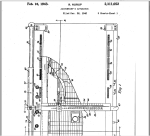
onewrite-accountant_apparatusOne-Write System Revolutionizes Accounting.  These guys had the right idea, they just didn’t have the cloud.