Cybersecurity and Small Business

Small businesses face many challenges as they grow and expand, and chief among them is the growing threat of cyber-attack. As the company grows, its value to cybercriminals grows, too. Implementing comprehensive cybersecurity measures is essential to maintaining customer trust and safeguarding important business data against these threats.

There is a belief among small business owners that their operations are too small or insignificant to be attractive targets for cybercriminals. Cybercriminals, on the other hand, more often view small businesses as easy targets. Why is this? Largely because the bad guys know that the smaller companies aren’t spending on cybersecurity services and tools and aren’t always keeping their workers informed about ways they can participate in keeping things safe.

To help protect the business from cybersecurity threats, it is crucial to invest in some key security measures. Longer and more complex passwords, regular software patching and updating, and periodic training for employees on how to identify phishing attempts and what to do with suspicious emails is a good start. Cybersecurity efforts should scale with the business, and this requires strategic planning that is aligned with the goals and objectives of the business.

The best cybersecurity approaches are built on a secure foundation, and this is what helps to support business growth and expansion. For every business, there are four cornerstones of a solid cybersecurity foundation.

  • Identifying potential cyber threats and understanding the business risk they represent.
  • Enforcing strong password protection and role-based access controls.
  • Following best practices in cybersecurity.
  • Managing documentation and vital business information securely.

Cybercriminals know that smaller businesses generally have limited cybersecurity resources, making small businesses prime targets for phishing and malware. What is the potential impact of falling for a phishing email, or what happens if there is a ransomware attack? Each type of threat carries different levels of risk, and growing businesses should be aware of the potential financial, legal and reputational impacts when evaluating their approach.

Businesses can help their users become part of the cybersecurity plan by regularly training them on phishing methods and ways to avoid ransomware or malware. When users know more about emerging threats and how to recognize and report suspicious things, they become valuable assets in the improvement of cybersecurity of the business.

The first line of defense in cybersecurity is the username/password challenge. Many systems today use an email address as the username or user ID, which means it really isn’t much of a challenge to guess. This leaves it to the password to keep the account secure, so a strong and unique password is necessary.

Making another challenge to the authentication adds another layer of protection to the account. Referred to as 2FA or MFA (two-factor authentication or multi-factor authentication), users may be required to respond to an in-app message, provide a code received via SMS or other, or provide a code from an authenticating application to satisfy the login requirements. This additional challenge to the user identity makes it harder for cybercriminals to gain unauthorized access.

Ensuring the protection of sensitive business information requires controlling what users have access to once they are in the system. If someone were to gain unauthorized access, having appropriate role-based access controls in place would limit their ability to get sensitive data. This is often another area of vulnerability for smaller businesses that don’t implement strict document controls or structures, opting instead for an open self-service model that leaves data available to whomever can get logged in.

With businesses changing frequently, it is important to not just create a framework to limit user access, but to keep user and role-based access reviewed and updated regularly. Software and systems also need to be updated regularly. Known software vulnerabilities should be patched and security updates installed on devices, and policies enforcing updates and antivirus/malware detection should be implemented.

We understand that businesses must enhance their cybersecurity strategies to combat the growing number and type of cyber threats, and it can be challenging just figuring out what to do first. Working with a variety of technologies and specialists, we can help secure your digital environment and keep you better-protected from the bad guys.

jm bunny feetMake Sense?

J

Improving the Business of Art: Making Beautiful Business Decisions

There is a lot more to managing and maintaining an art collection than simply collecting.  In the art business, knowing where something came from, how it got to where it is now (and what it cost to get there), and keeping track of it thereafter requires software and systems to store and manage the information.  A professional art collection management solution will do much more than simply keep an inventory list of items.  This solution must store all the relevant information about the work as well as gather information while facilitating the various business processes relating to activities around the work. The first step to improvement is ensuring all the processes are being facilitated.
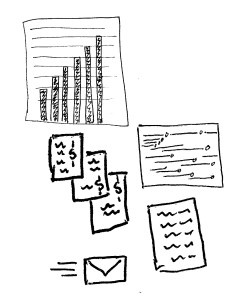

Acquiring the item, transporting the item, preparing the item, showing the item, maintaining the item, selling the item… all of these business activities performed must not just be accounted for, they must relate back to the work of art and become part of its historical record. Art tends to move around. Traveling from collector to collector or to different galleries, works of art may change location and ownership or custodial care frequently.  The origin of a work and the tracked purchase history, as well as the history of placements is among the critical information to be stored with each item. This most valuable data is part of the legacy of the work that any professional system should address. If information is power, then better retention and management of information regarding a work makes the entire collection stronger.

The location or exhibition of a work, its purchase history, the related museum and contact records – all this and more must be maintained and managed with each and every item in a collection.  Essential data such as provenance, condition and value is certainly kept for each work, but the key to making a truly useful system for collectors and artists both is the ability to get all the needed data in a single view or report.

Having the inventory information available for invoicing and reporting is one thing, but also being able to connect or identify individual works and collections with relevant contacts is surprisingly valuable. Tracking other information items like costs associated with shipping or framing, or storing both an appraised value as well as an insured value, provides for a comprehensive record of the work and its properties and makes forms and documents preparation not only more accurate but more efficient and useful, too.

Art businesses are like many other “product”-based businesses in that they have e-commerce needs, they build websites to show off their catalogue, they use mobile applications to display items, and they find much higher efficiency and agility when the websites and mobile applications work with the same real-time inventory data that the rest of the system works with.  The goal is to achieve measurable results through improved efficiencies, and that comes from improved information management and integrated systems.  Centralized computing models and connected cloud services establish the foundation.

Cloud hosting, remote access and mobile technologies, and location-based solutions are all part of the package for businesses involved in the business of art these days.  Implementing a hosting solution which enable anytime/anywhere access to business applications and information is often the first key to unlocking the better and more efficient art business.

Whether it is collecting, selling or showing, users involved in the business of art need secure access to all their information whether they’re in the office or not so they have the data needed to support making beautifully intelligent business decisions when it matters most. The rest is just pretty pictures.

Make Sense?

J

Confusing Value Propositions: Cloud Platforms and Hosted Applications

it-balancing-actConfusing Value Propositions: Cloud Platforms and  Hosted Applications

When a service provider is in the business of selling computing resources – like bandwidth, processors and memory, and disk storage – it makes a lot of sense to also leverage the value of software products and systems which drive consumption of computing resources.  In short, they market and sell software that runs on the platform in order to get folks to buy the platform, no different from selling desktop and server software in order to sell the hardware to run it.  It’s just that these days the hardware and networking components are often referred to as the “platform” or maybe “the cloud”.

Let’s face it… cloud computing platforms are just no fun if there’s nothing to run on them, and a hard drive has little value when there isn’t anything stored on it.  Once there is something there – an application, data… something – then the part has actual value in terms of driving revenue.  This is the difficulty and the basis for confusing value propositions when it comes to offering and delivering services in the form of a hosting platform.  Once again: platforms are just no fun if there’s nothing to run on them.  Is the value is really about the applications, not the platform? Or is the value in the platform, because it’s necessary for running the applications?

The truth is that both are essential parts of the entire “solution”, and the value of how the solution is packaged and offered is purely up to the purchaser to determine in terms of applicability to the business.  When it comes to hosted application offerings for businesses, there isn’t a single one-size-fits-all approach that will work.  Sometimes people want to purchase from different vendors and put their own solutions together, and sometimes folks want turnkey delivery of whatever they need.  Even channel partners and value-added resellers are finding that, with diminishing margins and aggressive competition prevalent in the market, removing the time-consuming aspects of solution delivery becomes paramount to achieving some level of profitability on the work.

What this means is that providers are looking for ways to increase the overall value and usability of their solutions, and when it comes to platform services there are only two directions to look: automation to support self-service, and application software delivery to drive consumption and usage on the hosting platform.

So now we’re back to the applications again.  There’s no way to avoid them, but there’s no great way for platform companies to engage with them, either.  Working with business application software is sometimes complicated, often annoying, and can be exceptionally time-consuming and resource intensive. And there are few licensing models which make it really easy for hosts and ISVs (Independent Software Vendors) to work together.  Then, of course, there is the desire for exclusivity on one side or the other.

Software companies don’t generally want to select a single platform provider for their software for a very simple reason: they don’t want to limit their potential user base.  Now that Windows platform is available just about anywhere – on local computers, on mobile devices, from platform and infrastructure hosting providers – how does the ISV make a decision on a single delivery channel or model or provider?

Some lean towards working with hosting providers to create branded, point-deliveries of the application.  Too often, however, this approach removes the ability for customers to benefit from other applications or integrations, eliminating some of the value of the solution and certainly curtailing benefits for integrating partners of the ISV.

Host it themselves?  The last thing most software developers want is to be responsible for hosting and maintaining some other guys’ software products; they have enough to worry about with their own offerings.  If the solution is standalone, maybe this approach works.  But there are few solutions made for the desktop which don’t have some strange integration point with MS Office apps, Adobe reader, Internet browsers or other things prevalent on the user desktop.

There isn’t any proven or easy path for software developers, IT suppliers or small business customers looking to create mobility and managed subscription service around desktop and server applications, and there is likely never going to be a single story line that all will follow.  This is among the reasons for the popularity of the “hybrid” cloud approach and growing importance of managed application hosting and ISV-authorized delivery models.  Yet even key providers in those areas have a tough time really communicating what they do in a way that is meaningful to the buyer.  Are they selling a platform, applications, or both? Folks in the industry know the jargon and how to use it, and are often skilled at adjusting their language in order to obfuscate or confuse certain sticky issues regarding software licensing in the cloud and other similar aspects of hosting.  It’s no wonder that many customers remain confused as to what, exactly, they’re being asked to buy, and where the lines of flexibility and responsibility are drawn.

The applications justify the platform, and there are possibly multiple platform approaches to delivering the app. It is a confusing situation for business buyers of IT as well as for their resellers and suppliers, and the increasing number of options for how businesses approach purchasing and using information technology makes it unlikely that the process will become as simple as some suggest.

jmbunnyfeetMake Sense?

J

Turning a Product or Service into a Solution: the Value Add of a Reseller

Turning a Product or Service into a Solution: the Value Add of a Reseller

There is quite a bit of chatter on the web and among IT resellers about how opportunities to serve business customers are diminishing, yet business adoption of cloud computing, managed services, and mobile technologies is growing tremendously.  It seems that use of technology is increasing, but the opportunity for “traditional” IT resellers and channel partners to make money by selling IT-related products and services is diminishing.  This is not new, and is simply a finer form of the problem that has been revealing itself for years.  In order to provide value, suppliers must provide businesses with solutions to business problems rather than just trying to sell them products and services with a hefty profit margin.

Whether it is a physical item like a computer or an intangible item like consulting services, businesses will buy if they see value in it.  In the eyes of the consumer, the value is likely tied to far more than the item at hand; the value tracks to some expectation of business benefit to be achieved now and in the future.  Businesses will pay for solutions to problems they experience more readily than they will pay for shiny things or big ideas, and it is this truth that many “value added” resellers tend to forget even though it is part of their business description.

For many years channel resellers have struggled with competitive elements that reduce revenue and profit potential on core products and services.  When computer hardware prices dropped years ago and businesses found that going through distribution or direct to the manufacturer was often a more affordable path than buying through a reseller, the resellers re-trenched and began providing more value in terms of solution architecture, training and implementation support, and system management services.  As the delivery chain for information technology continues to compress and more products and services are delivered direct-to-consumer, the pressure for resellers to discover their “value add” grows even more severe.

The days of simply reselling technology products to make a living are quickly coming to an end. There isn’t enough profit margin available to eek out a living just selling hardware and software, and it takes a large volume of subscribing customers to reach any significant revenue level by reselling commoditized cloud services. Yet the customers are there to be won if the offerings represent solutions to defined and recognized business problems – solutions that introduce quantifiable business benefit rather than creating more business problems – and where the reseller plays an integral part in making the selection a successful one for the customer.

While it may seem that business cloud computing, hosting services and SaaS solutions all come with easy-to-read instructions, do-it-yourself installation and painless upkeep, the truth is often very different. Some consumers realize this when they go shopping for solutions and come up with more questions than answers; some only figure it out after they have made the wrong decision. Either way, these businesses could use the help of a professional who will provide the added value of taking time to understand the problem to be solved, consider the variables which exist in the client organization, and clear a path which takes the customer business to a better place.

Cloud computing and SaaS may be changing HOW businesses purchase and use technology, but it is not changing WHY they do it.  Businesses buy IT because they think it will solve a problem – they have expectations. The reseller can find and provide the added value: the reasoning (meeting expectation) for selecting the solution, why it is the right choice for the customer organization, and how they will ensure that the solution delivers the benefits described and expected.

Joanie Mann Bunny FeetMake Sense?

J

Read  more about Helping a Small Business Customer Choose Your Solution

The Business Cloud: Hype versus Reality

The Business Cloud: Hype versus Reality

There is no doubt that cloud and mobile computing models are driving technology adoption as well as changing the landscape of how consumers and businesses purchase and use IT.  Accompanying any great shift – which in this case is fueled not simply by cloud technologies but by social computing – are the purveyors of propaganda and hype.  Cloud computing and social media won’t make you popular, is not always safe or free, and it doesn’t whiten your teeth. What it can do is help businesses increase agility, collect and use information better and reduce the cost of change. There are many benefits to be achieved with cloud computing models, yet many providers continue to play on the hype rather taking the more difficult road of communicating how their solution actually solves real business problems.

Gartner research tracks this type of activity, producing reports offering assessments of the “maturity, business benefit and future direction of over 1,900 technologies”.  In the Gartner 2011 Hype Cycle Special Report, entries were grouped into 76 different “Hype Cycles”, revealing the similar patterns of “over-enthusiasm, disillusionment, and eventual realism” that comes with every new technology or innovation.  Hoping to provide guidance business IT decision makers, the report intends to inform businesses about when they should consider adopting technologies or IT models in order maximize the value of the approach.

Yet the market is bursting with definitions for “cloud computing”, and services providers offer their wares with varying levels of service and capability.  It’s really difficult to compare one private cloud solution to another, as they are all seemingly offering the same value proposition described in the same language – and none of it really describing what the solution is, how the business takes the greatest advantage of it, and what disruption can be expected along the way. Layer on top of that confusion a big heap of expectation, and the belief that cloud computing technologies are somehow different from “real” on-premise systems in that they are not subject to the same potential for breakage, failure, or unexpected cost.

elastic-2

For example, even though Amazon may use the term “elastic”, cloud computing does not automatically create a stretchy and eternally-dynamic resource that can grow without end.   There are still limitations and costs associated with growth.

There is also a great deal of hype around applications and their performance in cloud environments.  When a piece of software is poorly designed and crashes frequently on a local computer or network, it is just as likely that the application will perform poorly in the cloud. It’s simply a reality of software that even great products that are designed to run exactly the way they are being run don’t have a guarantee that nothing will ever go wrong. With cloud computing models, however, there may be a service provider working in the background to manage the systems and keep things running.  You simply might not notice the failures and hiccups as much, but they are still there.

And not all cloud services mean everyone is sharing servers and infrastructure.  While the term cloud generally applies to multiple scaled systems, it doesn’t mean that everyone shares everything and benefits from tremendous levels of redundancy and fault tolerance. In most cases, a solution described as a “private” cloud means that the service has been customized for the unique needs of the organization, and that there are resources of certain types allocated exclusively to the use of that customer. On the other hand, a private cloud may mean that the system elements are all contained within the business infrastructure, providing “cloud” type of services but being delivered from company resources.  There are a wide variety of ways to describe these configurations and approaches, and quite a bit of inconsistency in use of terminology.

The best thing for a business owner to do now is to just ignore the term “cloud” and simply consider how the business might leverage resources from service providers to gain more IT capability at reduced costs, and how outsourcing certain technology needs allows a greater focus on internal innovation and improvement.  Centralized management, improved security, disaster recovery, and increased mobility are all benefits to be realized with the right business cloud implementation.  Just because it is to be an outsourced solution does not mean that the business organization should not still architect and understand the solution they will depend on.  If this level of participation and understanding is not in place, the solution is unlikely to deliver the resulting benefits expected and hoped for.

Outsourced IT service, remote access and server-based computing aren’t new concepts.  It still requires using common sense and reasoning when considering any change in business technology and the innovative application of IT in a business – this cannot be outsourced.  When it comes to cloud computing… to put it bluntly, just avoid the hype and stay away from unrealistic marketing and sales messaging.  If it sounds too good to be true… it probably is.  Technology hasn’t come that far.

Joanie Mann Bunny FeetMake Sense?

J

Migrating Business Data to the Cloud

Migrating Business Data to the Cloud

When businesses elect to have their desktop applications hosted in the cloud with a hosting service provider, they are also electing to have their data hosted with the provider.  This point is not always obvious to non-technical users and those unfamiliar with the hosted application concept.  Many business owners have adopted an online or hosted application solution and then realized after-the-fact that their data was no longer present on their computer.  At least, no current data was present, and it was quite a surprise the day they wanted some information but could not get it because they were not connected to the Internet at the time.  An important thing to remember, and the essential factor in measuring risk associated with use of cloud services and hosted solutions, is that adopting online applications in almost any form means that the data associated with (and possibly even data remotely associated with) the application will also migrate to the cloud.

mobile cloud data

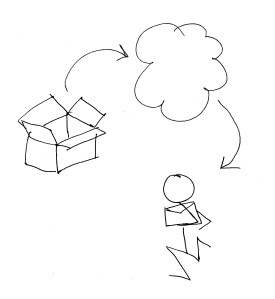
Migrating on-premises servers – and the applications and data residing on them – to the cloud makes sense for many businesses.  Particularly as network and internet threats increase in number and as system vulnerabilities are more frequently introduced with remote and mobile access technologies, cloud solutions can significantly assist a business in mitigating the risks of being connected.  Yet business owners and IT managers must be diligent in terms of understanding the measures their service providers take to protect and preserve as confidential the customer’s business data.  And it becomes more than essential that any and all tools or services implemented be part of a strictly controlled information management and data protection plan.

Where applications are simply interfaces and logic; the value for a business is in the data used by the applications – data containing information about the company, how and with whom it does business, and how it makes money.  It is critical that the business consider how and where users need access to applications and data, so that any cloud deployment does not wind up hindering productivity rather than facilitating it to a greater level.  It is when the user becomes disenfranchised, unable to perform their work due to lack of access to information or tools, that “shadow IT” deployments appear, and data sharing solutions are introduced outside of the governance of management or IT.

The vast number of offerings for hosting applications and managing business data in the cloud makes finding and implementing the right business solutions a complicated and often frustrating process.  Even large providers that specialize in delivering from a menu of business cloud solutions often forget that their target customers may not be particularly tech-savvy, and will fail to recognize the nuances in service delivery or protection that could make big differences to the business down the line – like in the case of a system failure or outage.

Among the keys to a successful cloud solution deployment, particularly when critical and frequently used applications and data are to be migrated off-premises, is a thorough understanding of how users currently work with the tools provided, ensuring that processes and utilization can be fully adapted to the new IT model.

As long as users are able to retain their productivity and efficiency, and when improvements in workflows and information access become additional benefits, the security and protection of the business data is more likely, as users will feel less compelled to find alternative and less secure means for making the business data available from the cloud.  You may want to migrate your business data to the cloud, but you don’t want your data to migrate further than you can reach.

Joanie Mann Bunny FeetMake Sense?

J