The Cloud for Your Firm
3 Initial Considerations for Cloud Enabling Accounting and Bookkeeping Firms Working With Small Businesses
 The potential benefits of a real-time, lean collaborative working model are too great to argue with. Accounting professionals, bookkeepers and their small business clients are all hearing about the value of working together in the cloud, and how cloud technologies and solutions can reduce cost and improve efficiency. There is a great deal of truth in these statements, just as there was a truth in the value of implementing computers, networks and other technologies in business. What is not clear is exactly what businesses need “in the cloud”, and how they should approach this shift from local IT to outsourced managed service. Initially, there are 3 issues which warrant consideration, if not deep discussion, prior to making any significant move to relocate internal IT and shift business applications to the cloud: internal use systems, client interaction, and operational support for both.
With all the discussion about cloud computing and remote access, it would seem that all the applications and solutions businesses need are now available online and paid for in low monthly subscription fees. Anyone working with small businesses, however, comes to understand that the vast majority of these businesses are still using more traditional modes of information management and computing. For the most part, these businesses are using PCs and local networks, possibly with a little hosted email thrown in. Almost certainly they have a website and maybe even a fairly sophisticated e-commerce system that allows them to sell products online. But when it comes to general office functions, and particularly back-office functions like bookkeeping and accounting, the software and the data generally reside on the office PC and server.
Accounting and bookkeeping professionals who work with small businesses are often in the same position as their business clients when it comes to information technology. Since so much of the work involved requires the same programs and data formats as those used by the client, service providers find that they spend as much in management of software licensing and systems to support working with client data as they do on systems intended for internal use only – sometimes more. Many of these service providers are also small businesses, and it becomes challenging to find a way to handle internal IT needs while at the same time trying to address those of the client. Where e-commerce solutions are readily available to handle operational aspects of product based businesses, the best tool set for a professional accounting firm or bookkeeping business working with small business clients may not be so easily defined.
The solution for many providers has been revealed through cloud computing and hosted application models. With Cloud Servers, Remote Desktops, and Virtual Desktop Infrastructure now widely available as affordable alternatives to capital-intensive implementations of locally installed products, businesses are finding new abilities to manage applications and data, provide mobility and enhance collaboration. The additional benefit is in how accounting service providers may engage with their clients in more efficient and effective ways, without the burdens of replicating data or trying to share access to a single machine or application resource.
There are a number of elements to consider before taking the file server to the parking lot and running it over with a truck. Moving to the cloud is not a one-step process, and it is important to do a little research and collect some important information before making the final decision on how to proceed.
Internal Use Systems
Among the first of the questions to ask when considering a change in IT management approaches is “which software do we need”? Implementing an outsourced IT arrangement, which is really what “cloud” is about”, does not necessarily mean throwing away all the existing software and starting with new. The software in use within the firm may be exactly what it needs right now and adding full IT management, fault tolerance, and remote or mobile access could be the main scope of the requirement. Moving from locally installed solutions to hosted solutions provides quite a number of benefits while removing many of the direct costs and frustrations of IT management and administration. The greatest benefit of this type of approach is the ability to preserve the “body of knowledge” existing in the business, knowledge invested in the people and processes already developed.
On the other hand, there may be new tools or services only available as “cloud” service, and it makes sense to explore how they may benefit the business more than the in-use applications. The important element is to remember that the solution must address real business problems, and whether it runs in the cloud or not isn’t the first or most important thing to ask. For example, a discussion about whether QuickBooks Online might be a better choice than QuickBooks Pro, Premier or Enterprise should be focused on the functionality provided by the applications and not which servers they are running on. With application hosting for QuickBooks now being an available option, there is a managed IT and remote access capability for both solutions, rendering the fact that QBO is a SaaS solution almost irrelevant in terms of being a differentiator.
Client Interaction
An important aspect of adopting new technologies or working models is the consideration of how the firm and the client businesses will work together, and whether or not there is (or could be) a standardized approach that might work for most clients. Certainly, it makes sense to standardize as much as possible. Treating every issue or engagement as a singular event – a one-off – is the least efficient way to do business. The key to profitability is in the firm’s ability to produce high quality work consistently and in a timely fashion. This requires that the business be well-structured in terms of the standard processes and methods which will be used to work with client information. When the firm and the client can work seamlessly together as and when required, and when each is responsible for their own systems and data, it is a best-case scenario. The questions relating to client interactions focus on how the firm works with clients and which tools or solutions are required to improve that situation.
It is likely that the firm will need to be able to address working relationships with various client and engagement types – where clients do some of the work, where the bookkeeper does the work, or where the participants work collaboratively together in the same systems. While it may seem that the best way to create a dependency on your services with the client is to keep them out of the systems, empowering the client is really the key to a close and long-standing engagement. This means that the client needs to have their own solutions and approach to cloud-enabled IT, and the accounting or bookkeeping service provider should be able to access and work within that environment.
It is rare that a small business can effectively operate without computers and software to manage information and support operations, so it makes sense that the business should have its own accounting and financial systems, too. For the accounting service provider, it is essential that a level of understanding be gained around the use of today’s available remote and mobile access technologies, as it is with these solutions and tools that participation in client systems will be enabled. When the client accounting solution sits on their office PC, there are limited options for working together in any real collaborative form. Connecting to their PC via remote control is a widely recognized means of gaining access to client systems, but if the bookkeeper is on the system when there is a problem of some sort, all eyes go directly to that remote user as the likely cause of the problem.
The considerations relating to remote access to client systems focus not just on enabling a collaborative working environment, but also on mitigating risk and improving client perception. The risk issue comes in when the accounting service provider is exposed to systems and information not relevant to their task, and the perception issue becomes material when the accounting professional becomes the software or IT service provider. It makes sense for the accounting professional to make recommendations or suggestions about software and IT service which might benefit the business, but not to necessarily be the reseller or direct provider of the product or service. The moment the accounting professional attempts to sell the client a software product or IT service, the relationship is changed and the client is more likely to view their accounting pro as another vendor rather than a trusted advisor. It’s also not necessarily a great move to start a new client engagement by telling the client they have to switch accounting products to allow the accountant to work closer. Rather, professionals need to help their clients position those products for more efficient use, which may include enabling remote or mobile access granted via deployment in the cloud.
Operational Support
When businesses outsource their IT management and administration, there is often an initial belief that all responsibilities in these areas will be handled by the IT service provider. What is often overlooked is the reality that the firm still needs to have people attending to IT related tasks, just doing different levels of work with the technology. It is important to recognize that someone in the firm will end up dealing with various IT and process support issues, and it still makes sense to have personnel dedicated to these tasks (*Note: here’s where I suggest that the cloud changes the focus of internal IT personnel, but it doesn’t eliminate the need for them). The service provider and solution evaluation and selection process, as well as the actual deployment and administration of services, will take valuable time away from actually performing client accounting or bookkeeping work, and there should be people attending to these issues while the business continues operating.
Where an internal IT department or contract technicians may once have supported internal systems, an operational role within the business is still required to manage outsourced IT activities, including and particularly those where clients are involved with the firm systems. Delivering new benefits with a minimum of business disruption is the goal, and can be achieved through proper planning and coordination with team members and clients alike.
Closing Thoughts
“The Cloud” is just another way to run software and implement computing resources. It still takes servers and software, it uses processors and storage and networking, just like more “traditional” computing models. The difference is in how these resources are purchased and provisioned, and the impact is a change in how businesses of all types can benefit from technologies which enable collaboration, lean process, and mobility. The Cloud for Your Firm addresses your internal business requirements, lends itself to client collaboration, and has internal operational support to ensure the firm is fully leveraging the available benefits to improve business performance and profitability.
Make sense?

J
Read more about Accountants and Bookkeepers Working With QuickBooks Clients: App Hosting Approaches That Work



 Cloud computing and SaaS applications are all the rage, and businesses are finding tremendous benefits with the mobility and managed service these models provide. On the other hand, there also continues to be huge reliance on the desktop computer and the software running on it. From basic productivity tools to more advanced business solutions, desktop-based software and locally installed applications remain in favor for the vast majority of businesses around the country. Adoption of web-based solutions is certainly increasing, but the need for tried-and-true business applications that were traditionally installed and managed directly on the PC or local network doesn’t seem to be going away. At least part of the reason for this is the functionality and performance these applications deliver. Another factor is that hosting and remote access solutions have matured to the point where hosting applications is just as “mainstream” (and often more useful to the business) as using a SaaS solution. Managed application hosting models have made solutions like Microsoft Office and QuickBooks desktop editions available anytime, anywhere and using just about any device. I call hosting the best “tweener” solution available, because users can have the functionality they need and still get fully managed, on-demand service.
 Make Sense?
 Yet the desktop remains as the primary workhorse for most business users. This is where the productivity applications live, where large spreadsheets and full-screen applications are run, and where keyboarders and production data entry users operate. Tablets, touchscreens and mobile devices just don’t provide the same capabilities unless you tether them to full size monitors and keyboards. Even then they may not because they might not run the same OS as the desktop. The point is that the desktop hasn’t gone away and isn’t likely to any time soon. Users may use more mobile apps and devices, but this isn’t diminishing use on the desktop as much as it augmenting it. This is what fuels the interest in application hosting and virtual desktop computing models – the desire to mobilize desktop and network applications and working environments.

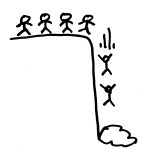 Once a business has adopted a certain working model and the mentality that goes along with it, it is difficult to come in and tell them they have to change to a new model and find a way to adjust. Change doesn’t come that easily for many individuals much less an entire organization, so this is a big deal and potentially very impactful to all aspects of the operation. Yet this is exactly what is currently suggested with Intuit’s desire to have customers use the online edition.
 Everyone, it seems, is adopting outsourced IT and cloud computing models yet one size does not fit all when it comes to serving business – whether it’s the software or infrastructure under discussion. Cloud, mobile and online application models deliver big benefits for small businesses, but it is important to know the options available before investing in something that’s hard to get out of later. Initially, a hosted application model might be the best approach, allowing the business to achieve the mobility and on-demand service they desire but without an investment in SaaS solutions that are much more difficult to change out of or grow with later.
 Make Sense?


 Cooper Mann Consulting