Technology and Tools for Accounting Professionals

Joanie Mann Bunny FeetTechnology and Tools for Accounting Professionals

old_school_ledgerThere was a time not so long ago when accounting professionals focused more on tabulation and summarizing of information than on analysis.  Accounting for businesses, in particular, required collecting myriad papers and receipts and other transaction documents, summarizing the information, translating it into journal entries, and finally posting those numbers to the big bound book which represented the business general ledger.  With the work required to gather and enter all of the information, professionals necessarily focused their efforts on making the process as efficient as possible by attempting to structure the workflow and manage the paper.

When those efforts are compared to today’s approach which involves digital documents, intelligent data collection tools, automated workflow solutions, online accounting and data analysis, it is clear that the processes for accounting for business activities have not really become simpler.  In fact, much of the enabling technology has served to complicate certain processes, which drives users to find even more “solutions” to address these new problems.  It (IT) is a bit like the Wonka Everlasting Gobstopper, which never gets finished and never gets smaller.  IT simply changes things – regularly and often.

Back then – before the Internet and digital imaging, or even Personal Computers – high technology wasn’t the focus because it didn’t exist in the realm of business in general.  I suppose you could call business solutions at that time “low” technology, where mainly mechanical solutions were introduced to address various business problems.
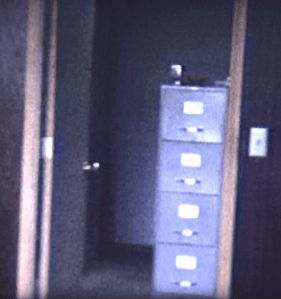
old_school_filecabinet

As an example, prior to the advent of digital imaging and electronic documents, one of the primary requirements of the business was to organize and store paper documents.  Over time, a wide variety of filing, foldering and labeling solutions have been developed, all oriented towards making the storage and later retrieval of paper documents easier.  For some businesses, letting go of the paper is a hard thing to do.  Years and years of training in keeping paper files has left many business owners and managers wary of working without physical paper documents.  Investments in office space, filing cabinets, storage folders and personnel to organize, file and retrieve all of the documents is only a partial measurement of the cost of managing paper, and large numbers of businesses continue to operate in this manner.

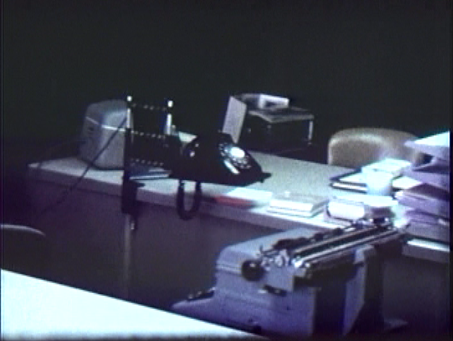
old_school_desk

The technology applied to processing the work has also changed, in many ways even more dramatically than the technology applied to collecting and storing the information.  Take the simple processes of tabulation (to arrange in tabular form; condense and list) and summing (adding up) information, for example.  Previous generations didn’t have computers and spreadsheet software to perform the work.  Rather, individuals would painstakingly handwrite each transaction entry into a ledger or on a columnar worksheet, and would then have to manually add each column and then cross check footer totals to ensure accuracy.  Back then, the machines used to perform the addition/subtraction were mechanical devices and could not perform multiplication or division.   These adding machines were first hand-cranked devices, later replaced with shiny new electrical ones (weighing approximately 20 lbs each).
old_school_telephone

Even voice communications have changed dramatically over the years.  Many people don’t remember a time when having multiple phone lines in the business meant having multiple telephones, and the concept of a PBX (Private Branch eXchange) didn’t exist.  Every phone would be hard-wired to an incoming line; if you wanted to answer a call, you had to use the right phone.  This became difficult in an office with many people, so solutions such as the “fabulous extendo-phone” was invented to allow anyone in the office to access the phone from their desk.

The technology available to businesses today is astounding, and offers amazing potential and benefit.  On the other hand, technology rarely (truly) makes things simple or easy – it more frequently serves to shelter certain users from the complexity while delivering new workloads and concerns to others.  It’s rather like energy – it isn’t created or destroyed, it just changes form [law of conservation of energy].  Business is like that, particularly where information technology is involved.  The underlying requirement doesn’t go away, just like a business’s requirement to account for financial transactions and activities,  and the need for the business to capture and retain documents isn’t changed.  How the process is managed, and which tools or mechanisms are applied to the task is what changes.

Make Sense?

J

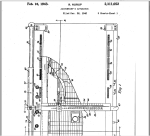
onewrite-accountant_apparatusOne-Write System Revolutionizes Accounting.  These guys had the right idea, they just didn’t have the cloud.

Innovation and Disruption: Challenging the Professional Accountant’s Value

Innovation and Disruption: Challenging the Professional Accountant’s Value

It’s tough, being a professional accountant or bookkeeper for small businesses and it’s not getting any easier.  Yes, there have always been challenges to the relationship, particularly with the perceived value of performing the work being fairly low yet the value of the work product being quite high. But professionals are facing new competition – competition in more areas and delivered in more ways – than ever before.  This competition and the advantage it often represents is founded in the disruption of traditional IT created through cloud computing services, and the innovative use of technology, people and process to craft entirely new service models.  Accounting professionals must recognize and leverage these elements to improve client service levels and differentiate offerings, or they risk losing revenue, business value, and relevance to their clients and markets.

Accounting and finance technology has, for many years, been necessarily focused on managing the ever-increasing volume of paper-based information.  This paperwork provided the basis for financial transactions and had to be collected, translated and normalized, keyed into the system as data, and finally summarized for various reporting purposes.  It makes sense that the simple fact of “document and paper handling logistics” have resulted in a variety of approaches and computerized tools designed to deal with all that paper. The “reality of paper” is firmly entrenched in business, and has been for so long that accounting solutions and financial systems have been developed to make working with supporting documents easier, yet continue to approach the use of those documents simply as support for data entered after-the-fact.

But there are new participants in the world of small business accounting and bookkeeping, and this entirely new generation of solutions does not carry with them the weight of years of paperwork and paper-based processes.  Rather, this generation of online application solutions is developed with innovation in mind, and is seeking to develop a new approach to what are generally referred to as “best practices” for accounting for small business.  Bear in mind that the term “best practices” describes something well-known and

There are two very important aspects of these “new generation” solutions and the services they provide, and which represent the challenge to the old rules of doing business.  Based on early adoption and usage of many of these solutions, they will be successful.  How they fit into the profile of today’s accounting or bookkeeping practice remains to be fully exposed.

1.  Real-time information

It was always broke, and now we can fix it.  When most of the business and accounting information was paper based, it meant that accounting and bookkeeping would always be performed after-the-fact.  It takes time to gather the information, and even more time to organize it and turn it into useful digital data.  The new approach is not to provide a better way to manage paper or to turn it into data more quickly.  The disruptive and innovative approach introduced is the belief that information should originate as data and not as a document.

2.  Consumer-oriented service

DIY is fundamental to many of today’s small business solutions and services.  While the term Software as a Service describes how software and systems are being sold in the form of subscription services, the reality of many of these solutions is Service through Software, where the work product is the service rather than the software and systems (and people) performing it. Customers subscribe to a supporting business service, and it’s delivered through a software-based interface. The innovation delivered is the simplicity and affordability of getting the work done for the business owner, and the disruption is the further-diminished perceived value of the accounting or bookkeeping professional and the fundamental services they provide.

Accounting and bookkeeping service providers have difficult decisions to make regarding how they will address these very immediate challenges to the value of the services they provide.  Professionals who learn to understand and appropriately select and apply this new generation of technology-supported services are likely to find that the competencies they develop – which represent differentiation – serve to make them as valuable to their own enterprises as those of their clients.

Make Sense?

J

Accounting Professionals: Is Your Value Tied Up in The Accounting Software?

Accounting Professionals: Is Your Value Tied Up in The Accounting Software?

Subtitle: when all you have is a hammer…

There was a time, not so many years ago, when it made sense for an accounting firm to take the position that all clients must use the firm’s preferred accounting software product or they would not be clients.  For these firms, the concept of standardizing transaction entry and data processing across the client base made sense, and provided a means to create maximum efficiency in handling the bookkeeping and accounting processes.  Typically, firms handling small business clients would select Intuit QuickBooks for client use, and offered QuickBooks training, QuickBooks transaction processing, and use of QuickBooks add-ons to support the model.  With Intuit QuickBooks “owning” the small business market for accounting software, it made sense for accounting professionals to leverage the popularity of the solution to the benefit of the practice.

As cloud-based solutions and online application services have emerged (including QuickBooks Online Edition and Intuit Partner Platform – IPP – integrations), many accounting professionals have simply continued with the philosophy of applying QuickBooks (the hammer) to every client engagement.  These firms focus on the software as a basis for delivering what they believe is value in the engagement.  In short, these professionals focus their value in the use of the product (licensing, installation, training and support), and in their data entry skills (efficiency in entering and reviewing transactions in the product), rather than in the greater value of business intelligence, insight and actionable advice.

The new challenge facing many professionals – the reality of the current market – is that there are myriad solutions and approaches available to address client bookkeeping and process needs which work really well, and it is not always a good idea to try to turn a client using one of them into a “nail” just so you can hit it with your favorite hammer – QuickBooks.   With Freshbooks, Wave Accounting, Xero and other solutions which handle various business accounting or bookkeeping requirements quite well and for an attractive price, small business owners are more frequently electing to implement applications outside of the QuickBooks product line even as their accounting professionals are continuing to promote QuickBooks for everyone.  The reason business owners are electing to use these other tools is simple: they work for them.

In reality, this issue has existed in some form for a very long time, and was perceived to be primarily in markets where technology adoption and use is low for various reasons.  The truth is that a lot of small business owners find ways to accommodate their information management and record keeping needs, and they use whatever approach works for them and what they want to accomplish.  Sometimes the approach involves Internet solutions and online applications, and sometimes it does not (Excel spreadsheets with stapled piles of receipts are still quite popular and in widespread use by SMBs and Entrepreneurs).  When that small business elects to engage the help of an accounting professional, the last thing they want to be told is that they have to make a big change to how they get things done.  It’s fine for the accountant to provide guidelines for when information will be made available to support getting the accounting work processed, but it is not necessarily okay to dictate immediate changes in software and systems supporting the business daily operations.  In a lot of cases, the accounting professional simply has no real basis for the requirement to change, other than to support their own efficiency (which is the wrong basis for making a client change their systems).   It’s that silly cost-benefit thing. If it costs the client a lot (change always = cost), and the client does not perceive or experience an expected benefit, then it makes no sense for them to make the change.

Consider a professional accounting firm in Los Angeles, California.  This firm serves small businesses, and has a pretty significant market available to sell to.  LA is a market where technology adoption is high and broadband Internet is cheap and reliable, so this firm has elected to use a product-based focus (e.g., the QuickBooks approach) in qualifying clients and crafting engagements.  Clients must conform to the solution set and the workflow in order to participate with the firm.

Now, consider a professional accounting firm in Elkton, Oregon.  This firm serves just about every business in town (population 195) as well as businesses from a few nearby towns.  Broadband Internet service is sketchy at times, and provider options are few.  This rural area of Oregon is not known for being particularly “high tech”, and computers and software and online application services are not among the things many of these business owners focus on or even care about.  The accounting firm serving this market is not focused on what accounting solution the client uses (or not), and they aren’t pushing to have all their clients purchase and install the same accounting software so that the firm’s processes can be more efficient.  Interestingly enough, this firm is likely doing better work and probably developed a closer and more intimate relationship with their client than those who have fully “standardized” the client base.  The reason is that the firm, whether out of necessity or out of desire, recognizes that each of their clients may have unique needs, and it is up to the firm alone to create maximum efficiency in meeting them.  Further, delivering personal service and useful insight instead of simply providing the work product has allowed the professional to more fully reveal their value to the client.

The truth of the small business accounting market is that there are more businesses like those in Elkton than in LA. Accounting professionals should consider whether they are in a position to “filter” their client opportunities based on use of certain software products and online solutions, or if they will accept that business clients come in all sizes and shapes – with various needs and wants and self-developed methods of getting things done – and that the firm is willing to embrace them as they are and work with them.

Make Sense?

J