Technology and Tools for Accounting Professionals

Joanie Mann Bunny FeetTechnology and Tools for Accounting Professionals

old_school_ledgerThere was a time not so long ago when accounting professionals focused more on tabulation and summarizing of information than on analysis.  Accounting for businesses, in particular, required collecting myriad papers and receipts and other transaction documents, summarizing the information, translating it into journal entries, and finally posting those numbers to the big bound book which represented the business general ledger.  With the work required to gather and enter all of the information, professionals necessarily focused their efforts on making the process as efficient as possible by attempting to structure the workflow and manage the paper.

When those efforts are compared to today’s approach which involves digital documents, intelligent data collection tools, automated workflow solutions, online accounting and data analysis, it is clear that the processes for accounting for business activities have not really become simpler.  In fact, much of the enabling technology has served to complicate certain processes, which drives users to find even more “solutions” to address these new problems.  It (IT) is a bit like the Wonka Everlasting Gobstopper, which never gets finished and never gets smaller.  IT simply changes things – regularly and often.

Back then – before the Internet and digital imaging, or even Personal Computers – high technology wasn’t the focus because it didn’t exist in the realm of business in general.  I suppose you could call business solutions at that time “low” technology, where mainly mechanical solutions were introduced to address various business problems.

old_school_filecabinet

As an example, prior to the advent of digital imaging and electronic documents, one of the primary requirements of the business was to organize and store paper documents.  Over time, a wide variety of filing, foldering and labeling solutions have been developed, all oriented towards making the storage and later retrieval of paper documents easier.  For some businesses, letting go of the paper is a hard thing to do.  Years and years of training in keeping paper files has left many business owners and managers wary of working without physical paper documents.  Investments in office space, filing cabinets, storage folders and personnel to organize, file and retrieve all of the documents is only a partial measurement of the cost of managing paper, and large numbers of businesses continue to operate in this manner.

old_school_desk

The technology applied to processing the work has also changed, in many ways even more dramatically than the technology applied to collecting and storing the information.  Take the simple processes of tabulation (to arrange in tabular form; condense and list) and summing (adding up) information, for example.  Previous generations didn’t have computers and spreadsheet software to perform the work.  Rather, individuals would painstakingly handwrite each transaction entry into a ledger or on a columnar worksheet, and would then have to manually add each column and then cross check footer totals to ensure accuracy.  Back then, the machines used to perform the addition/subtraction were mechanical devices and could not perform multiplication or division.   These adding machines were first hand-cranked devices, later replaced with shiny new electrical ones (weighing approximately 20 lbs each).

old_school_telephone

Even voice communications have changed dramatically over the years.  Many people don’t remember a time when having multiple phone lines in the business meant having multiple telephones, and the concept of a PBX (Private Branch eXchange) didn’t exist.  Every phone would be hard-wired to an incoming line; if you wanted to answer a call, you had to use the right phone.  This became difficult in an office with many people, so solutions such as the “fabulous extendo-phone” was invented to allow anyone in the office to access the phone from their desk.

The technology available to businesses today is astounding, and offers amazing potential and benefit.  On the other hand, technology rarely (truly) makes things simple or easy – it more frequently serves to shelter certain users from the complexity while delivering new workloads and concerns to others.  It’s rather like energy – it isn’t created or destroyed, it just changes form [law of conservation of energy].  Business is like that, particularly where information technology is involved.  The underlying requirement doesn’t go away, just like a business’s requirement to account for financial transactions and activities,  and the need for the business to capture and retain documents isn’t changed.  How the process is managed, and which tools or mechanisms are applied to the task is what changes.

Make Sense?

J

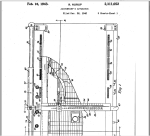
onewrite-accountant_apparatusOne-Write System Revolutionizes Accounting.  These guys had the right idea, they just didn’t have the cloud.

Cloud Computing Evolved: Disruptive Technology Goes Mainstream

jmbunnyfeetCloud Computing Evolved: Disruptive Technology Goes Mainstream

A 2010 information technology report by IDC (International Data Corporation, a global provider of market intelligence) provided a few interesting predictions for Information Technology in these changing times.  Not surprisingly, many of the predictions centered around the same “ingredients of IT industry transformation” which were identified in past years as being disruptive technologies including cloud computing, mobile devices and applications, wireless broadband, virtualized infrastructure, social networking, and smart devices being among those listed.  The subsequent 2011 report suggested a continuing trend of spending and innovation in cloud technologies and mobile computing and in collecting and analyzing the huge volumes of data being generated.  It is clear that cloud computing is evolving from being disruptive technology to mainstream IT.

Everyone must by now recognize the significant growth in use of online and mobile applications and services.  If you haven’t noticed that just about everyone has a smart phone or tablet computer, then you’ve got your head buried deep in the sand.  What this clearly indicates, and IDC supported the position with quantifiable evidence, is that the “disruptive technologies” of yesterday have transitioned from early adoption to mainstream adoption.   This means that use of these technologies had pushed “well beyond” the first 10 to 15% of the market through 2010, and that customers were ready to integrate these new solutions as core parts of their overall IT strategy.

If you don’t believe that cloud computing, virtualization, and mobile access are becoming (have become?) mainstream, consider the staggering number and variety of mobile devices and networks available today.  The adoption of these devices is driven by the availability of broadband wireless service, and their use is fueled by applications offering “social business” and “pervasive analytics”.  No longer limited as a voice communications device, the mobile phone has now become the mobile workstation, capable of supporting a wide variety of business and personal interactions and functions intended to help users generate and analyze “unprecedented volumes of information” – and the 2011 report indicates that mobile computing is continuing to fuel the trend.

“Mobility wins” will be the top theme of the year as mobile devices outship PCs by more than 2 to 1 and generate more revenue than PCs for the first time. 85 billion mobile apps will be downloaded, and mobile data network spending will exceed fixed data network spending for the first time.

IDC’s 2010 report placed an interesting focus on the impact of this new era of IT, believing that it would be a launchpad for  the creation of “intelligent industry” with an IT-enabled “intelligent economy”.  This doesn’t apply only to those very large multinational corporations, like the IBM commercials about a smarter planet and the commercials where the box tells us where it (and the delivery truck) is.  This new-found intelligence would allow businesses of all sizes to offer better and more customized services locally while dramatically expanding their market reach beyond geographic boundaries, and positioning themselves for accelerated growth.

As the number of intelligent communicating devices on the network will outnumber “traditional computing” devices by almost 2 to 1, the way people think about interacting with each other, and with devices on the network, will change. Look for the use of social networking to follow not just people but smart things.”

Business owners who find a way to leverage this new capability through innovative applications of cloud computing and mobile device access will almost certainly find that their businesses are better suited to addressing the needs of their current market, but are also poised to take advantage of emerging opportunities in emerging markets as well.

In 2010 IDC predicted that by 2012 we would begin to see the “slow death” of cloud computing – the term, not the technology model.  Even though cloud computing is one of the hottest buzzwords in tech today, the model is becoming mainstream to the point where it is no longer considered a bleeding-edge method of computing requiring its own descriptive name. While IDC may have been a bit off in terms of forecasting the slow death of “cloud” terminology, their finding that the evolution of cloud computing models is rapidly progressing from disruptive to mainstream appears to be spot on.

Joanie Mann Bunny FeetMake Sense?
J

updated from original post in 2010

QuickBooks In-House Hosting Services for Accountants

QuickBooks Hosting Services for IT-Capable Accountants

DIY-SelfHostingSmall businesses in large numbers are looking to the cloud as a platform to deliver solutions for the problems of escalating IT costs, mobility, and remote access to business data. The cloud is also becoming the recommended platform for the delivery of services from accounting and bookkeeping professionals, as the benefits of remote data access and real-time collaboration nicely address the requirement for accounting pros to exchange and share information with their business clients. One of the popular “cloud” hosting solutions addressing a collaborative accounting model is a hosted application approach to using Intuit QuickBooks desktop products. While accounting professionals may be aware that QuickBooks can be hosted by 3rd party providers, many firms are not aware of what is referred to as the “self-host” model, which is a QuickBooks hosting model for accounting firms with some in-house technical capability.

For small businesses and many accounting service providers, working with a 3rd party hosting provider makes a lot of sense, as the host has the infrastructure and the support organization necessary to service large-scale hosted customer requirements.

On the other hand, there are a lot of accounting and bookkeeping firms which have skilled in-house IT personnel who are more than capable of creating a hosting environment to serve not only their internal needs, but also to meet basic requirements of the QuickBooks-using clients they work with. It makes sense to explore the possibilities of implementing a “self-hosting” model for client access to QuickBooks, overcoming the cost and other barriers involved with 3rd party hosting services.

When an accounting firm works with a number of clients with QuickBooks desktop edition files, the firm has to install and manage not only their own software products, but also the relevant QuickBooks software products in use by the various clients (must have the right QB program in order to open the QB data file). This often puts an undue burden on the internal IT systems of the practice which has its own internal-use software and systems to support. With an internal hosting approach, the firm can provide standardized/centralized application hosting services to their clients, building their own “economy of scale” on the platform and reducing the IT management while achieving all the real-time and remote access benefits of an outsourced hosted model. The firm does not experience a retail cost for a hosting solution, and the cost to host the client is generally offset through the efficiency gained at the firm level through direct access to client data and applications.

The technical model for delivering hosting services to a relatively small client base is not overly complicated. Commercial service providers have complex architectures because they must serve a large and diverse client base, and they never really know what sort of devices (computers and printers) or connectivity the customer may have. Commercial providers have to be prepared to deal with any and all situations, where a “self-host” firm needs only to concern themselves with supporting their particular client users and use cases. Additionally, when the solution is offered as part of the accounting or bookkeeping service, the support requirements of the customer tend to be focused during mutual working hours, as opposed to the 24×7 support demanded of the commercial host.

As accountants and bookkeepers search for solutions to improve efficiency, increase profitability and differentiate services, it makes sense for those serving QuickBooks desktop clients and having an in-house IT capability to explore becoming a QuickBooks self-host. It is one possible way to eliminate cost as a barrier to working closer with QuickBooks desktop clients while providing the mobility and collaboration businesses need.


Make Sense?

Joanie Mann Bunny FeetJ

Preparing for Disasters of the Legal Kind

Preparing for Disasters of the Legal Kind

As businesses begin to realize the benefits of cloud computing and business data mobility, they may be overlooking one of the most important issues any enterprise can face: information management in the event of litigation.  While the IT department probably has a disaster recovery plan for handling various computer system failures, is there also a plan for managing system data and electronic information in the event of a “legal disaster”?  In the spotlight is e-discovery, which is the requirement of the business to respond to legal requests for electronically stored information, and the issues CIOs and business owners should be paying attention to as computing solutions and technology models continue to change at a rapid pace.

The popularity of BYOD (Bring Your Own Device), data sync solutions, and online collaboration tools has created an environment where business data may exist in various states (meaning as in conditions or status, not as in State, like California) and on a variety of devices and systems, some of which may not be in the direct control of internal IT.  Regardless of where or how the information was delivered to these devices and systems, CIOs and business owners should recognize that the information on those devices is included in discovery requests, and should be prepared with a plan for dealing with the response.

This “e-discovery plan” is the most important thing, and it means not only working through the various aspects of managing the information, but also providing consideration to keeping the plan updated.  As technology changes, and as user behavior changes along with it, businesses must adjust their IT management approaches in kind.  Consider that a user couldn’t store business data on their phone until the phone was able to handle that function.   Now that smartphones are the norm and tablet computers are gaining in popularity, business data is roaming on personal and business devices.  These advancements may introduce productivity and process gains which provide an advantage to businesses, but they also introduce potential risk and certain complexity when it comes to e-discovery.

Litigation is always expensive, but sanctions for slow response or other costs can be avoided if the plan helps the business respond in a timely manner.  For this reason, the plan should include an identification of all sources for information (every location where business information and data is stored), as well as the steps to be taken to preserve this data in the current state.  If the business has systems which regularly purge information (like accounting systems which purge prior period details, email systems which automatically purge old emails, or backup systems which delete old backup files as new ones are made), all of these activities must be halted.  If the company doesn’t have access to control the various devices and systems to prevent these activities (or doesn’t know that they are happening), significant risk is introduced.  In the case of a legal “hold”, all data and metadata and the audit controls and files must be preserved.

The final steps in the plan are the steps to be taken after the litigation is over.  This is often times a forgotten part of the plan, which is the final destruction of the information gathered for discovery.  Not that the original data must be destroyed (consider ALL dependencies), but the “database” of collected information related to the litigation probably should be.  With this data pooled in a single place, it becomes a potentially valuable target for a data breach.  At minimum, the collected information could too-easily be pulled into an entirely new legal case.

IT managers, CIOs and business owners must be realistic about the information their enterprises generate and store, including being realistic about the risk potential that duplicated and mobile data represents.  It is not that the enterprise should be afraid of allowing mobility and providing remote access solutions, but it is essential that the enterprise control the use of these solutions and how they use or interact with business data.   Without a strictly enforced policy of usage and control for all devices, services and solutions “touching” business data, any legal disaster planning falls short.

Joanie Mann Bunny FeetMake Sense?

J

Read More:

e-Discovery in the Cloud: Benefits versus Risks

e-Discovery in the Cloud: Benefits versus Risks

After many years of working with business professionals in “enabling” their organizations to make better use of technology, I must say that it is a bit frustrating trying to get folks to understand that this new and wonderful cloud computing model (or Internet-based computing, SaaS, or whatever-you-want-to-call-it computing) is still just technology.  It uses computers and disk drives, it runs software, it takes electricity, and it was developed by human beings.  It can break.   It’s not magical and perfect and you can’t get the good stuff for free.  Swim at your own risk.  So, assess the risks, and measure the benefits against the risks and costs.  For many, the benefits outweigh the risks, as cloud computing approaches can deliver advanced capabilities at cost levels not previously available to most businesses.

No industry is immune to the security and access considerations surrounding a cloud computing model.  Particular those lawyers involved in e-discovery (all of them) have recognizing the potential benefits – and tradeoffs – of the model.  This reality was clearly revealed at the ILTA (International Legal Technology Association) 2010 event in Las Vegas.  While the discussions at the conference were oriented specifically towards the legal profession, the IT-related discussions are totally relevant to every business.  Accounting and finance professionals should pay close attention to this type of conversation, as it relates very directly to accounting’s approach to information technology and the application of IT in the business or professional practice.

In a recap of the event entitled ILTA 2010 in Las Vegas: Strategic Unity, Defensibility, and the Cloud, author Chris Dale discussed that professionals in both public and corporate service must work with the IT departments towards a common goal.  “IT is no longer just a service department providing an infrastructure, applications, training, and troubleshooting.”  While these elements still remain as critical aspects of IT, the role has grown to also incorporate considerations for collaboration (collaborative information management), mobility, and social media.

Recounting one session attended, called Defensible Ediscovery Processes, the author related the variety of definitions provided to the general term” defensible”, which were pretty amusing.  These definitions ranged from protected against attack, to less lousy practices or practices which suck the least” (my personal favorite), and finally, what you can get away with without being found guilty of spoliation.  From these definitions then came qualifiers, such as “reasonableness” and “faith”.

Why would defensible processes be important, and how does this relate to IT or cloud computing?  An example of the element of “faith” came up in this context: ” how can [lawyers] have faith that the technology is delivering the right answers?”  A panelist gave the sample of “an email retrieved from (or possibly not retrieved from [love those lawyers]) a system, with 26.5 pages missing.  How can you be sure that the systems which you are using will not do that to you?”  These are valid questions in any IT environment, and are no less important when considering a cloud-based technology model.   The trade-offs are related to perfection in functionality and performance of the solution versus cost, and should be measured in proportion to one another.

The tradeoffs may come in a variety of areas, with collaboration and connectivity being the primary drivers (collaboration) and barriers (connectivity) to the model.  Businesses are more than ready to adopt cloud computing strategies based on the belief in improved collaboration, access to information, and improved IT management,  but tend to overlook the offsets in the areas of bandwidth availability (and consistency), application functionality (or lack thereof), and level of support available from the provider.  In support of this argument,  Jerry Justice (IT Director for SS&G – Certified Public Accountants and Advisers) posted in a LinkedIn discussion on the topic that “by design the Internet is ‘reasonably’ connected, but not the same as a well-connected [local] network.  the upside is it gives you the ability to connect from great distances, the tradeoff is that you experience variable connectivity.”

The underlying issues are that there is a paradigm shift to working on the Internet (from working in the office) and then another shift when you add in cloud-based environments (versus local apps).  It is possible to be very productive, but .. you have to adapt your approaches“.

The idea “that perfect must be qualified by cost and proportionality” was also discussed in an ILTA session on cloud computing which included panelists from Autonomy iManage, Mayer Brown, and Ernst & Young.  “Cloud computing remains a contentious area, with no obvious agreement even as to what the term means, let alone as to its implications” wrote Mr Dale in his recap of the event.  While the panelists held differing views, the representative from Mayer Brown held a position similar to Mr Dale, in that it is important to “dissect the objections one at a time, accepting that there is room for more than one view, and testing arguments against the alternatives.  Arguments based on pure cost are pretty compelling, and if one method of achieving an objective is very much cheaper than the others, then the burden shifts to those who argue for the more expensive route.”

Discussions went on to describe differences between public cloud providers and others, who segregate customer data in “private and identifiable silos”.  “The key word here is identifiable“, writes the author, “which connotes a geographical certainty as well as anything else.  I sometimes wonder if the imagery associated with cloud computing (invariably a jagged line disappearing into some cumulus) does not leave some people with the idea that their precious data is indeed floating in some inchoate container up in the air.”

If you neglect to provide in your contract that your data remains in a specified jurisdiction, and if you fail to conduct proper due diligence checks on the provider, then you deserve all you get.  Like any risk assessment, it involves weighing cost against other factors; most of these other factors are definable and quantifiable“.

I couldn’t have said it better myself.

Joanie Mann Bunny FeetJ

original post March 24, 2011

Sustainability and the Humanization of Work

Sustainability and the Humanization of Work

Joanie Mann Bunny FeetFew problems in business are truly solved simply by throwing more money and resources at them.  Certainly, having the people, tools and supplies to get the work done well is a business requirement, and many organizations take a “building out” approach to addressing growing workloads and customer demand.  On the other hand, there are business owners who recognize that things can always be accomplished better and more efficiently, and that improvements in these areas can make the difference between ending up with an overburdened organization with more mass than agility, or a lean organization with the ability to sustain itself while continuously adjusting to meet changing internal and external challenges.

It is said that the only constant is change, and businesses must find a way to effectively and cost-efficiently meet changing demands and conditions in order to survive.  What frustrates many business owners is that change is generally disruptive to the business, representing a significant challenge when it comes to the re-development of internal processes and procedures.   At issue is the understanding that proven, structured and repeatable processes help to improve efficiency, yet changing conditions often require changes to these processes.  In many cases, businesses find that the requirement to structure and document activities is work that must be re-done in the event of broad changes.  Too often, the work falls by the wayside because the minute it is completed, some change comes along and renders it obsolete.  It is somewhat like the child who questions making their bed each day, as they’re just going to sleep in it again and make it messy.

There may be a solution, and a lesson to be learned, in the “kaizen” approach to change and improvement.  Wikipedia’s entry on Kaizen identifies the meaning of the Japanese-Kanji word as simply “good change”.  Similar to the English word “improvement”, kaizen does not refer specifically to any single or ongoing change.  Rather, it has come to describe an approach to business which recognizes the potential for improvement – improvement in work product, work conditions, worker satisfaction, and worker performance – at all levels throughout the enterprise.  Further, kaizen does not describe change as being broad-ranging or particularly intrusive.  Beneficial (good) change may come at any level and may be identified by almost any source.

Kaizen is a daily process, the purpose of which goes beyond simple productivity improvement. It is also a process that, when done correctly, humanizes the workplace, eliminates overly hard work (“muri”), and teaches people how to perform experiments on their work using the scientific method and how to learn to spot and eliminate waste in business processes. http://en.wikipedia.org/wiki/Kaizen

The ultimate business goals are, of course, improved productivity, product quality and profitability.  A “Kaizen” approach to business recognizes that these goals are often met through gaining the participation of the entire organization.  Whether approached as individual effort, small or large group, or via suggestion system, the purpose is to nurture the company’s human resource and help focus it towards making improvements in work environment and activities which lead to improved productivity.  After all, the most valuable asset a business has is its people.  It is logical to apply this individual and collective intelligence and source of business knowledge towards making the company better – and a better place to work.

Make sense?

J