Robots are just automation you didn’t know you needed

tall-tower-vancouver
There is a big trend in software integration these days which involves automation – turning connected systems into free-flowing conduits for data to move intelligently into and out of with ease.  Well, maybe not quite that, but the key is the unattended and intelligent movement of data from one system to another.  People don’t have to get involved in order for the information to flow from one system to another… it just goes by itself.  Like a robot.

Having software and systems connect to one another isn’t new at all, and businesses have for many years recognized the value of being able to have information entered in one system available in another.  Entire ERP frameworks have been created based on this concept of entering data once and using it in many ways.  The trick is when there is more than one system or software product involved.

A simple example might be someone who owns a web store and does their bookkeeping with QuickBooks Premier.  The webstore isn’t running QuickBooks; it is running an e-commerce solution or shopping cart system that allows customers to buy things online.  However, the webstore does create sales orders and charge transactions, and may even have to manage an inventory of saleable items.

Getting the information from the webstore to QuickBooks and vice versa is often a task business owners take on, either by entering the information manually themselves or hiring and employee to do it.  This manual re-entry of information introduces a large potential for errors in the data entered and is time-consuming and costly.

“It was just awful,” said David Clothier, treasurer of the Knoxville, Tenn., company, which operates more than 500 Pilot Flying J truck stops nationwide. “There were humans everywhere.”

http://www.wsj.com/articles/the-new-bookkeeper-is-a-robot-1430776272

Rather than having a person re-type the information from one system into another, software-based integration programs may be available to help users map the data and move it from one solution to the other.  Using a software program to transfer the information is much faster and reduces the error rate, increasing the overall value and usefulness of the information.

Automation isn’t the only requirement that makes this all robot-like.  The additional requirement is the intelligence.  If people still have to get directly involved in order for something to happen, then all the happening is still based on human performance. No robots here.

Intelligent integration of information occurs when the systems on both ends are capable of making decisions and acting on them.  For example, a business might use a solution that allows vendors to submit their invoices electronically.  Through a base of rules that match invoices to requests and approvals, the system is able to issue payment and record the transactions automatically and without human intervention, saving hugely on personnel and processing costs.  Robots (the automation solution) wouldn’t make up all the rules, but could follow them repetitively and without question once established.

…software can help businesses operate more effectively. “If you think like a human, there are only certain things you can do. When you think like a robot, many things are possible.”

http://www.wsj.com/articles/the-new-bookkeeper-is-a-robot-1430776272

It isn’t a new paradigm for building businesses – this doing of things a bit smarter than before and leveraging technology to get more done in less time.  The difference is that the pace of change is increasing, giving businesses less time to stand by and rub the chin and consider whether or not this new fangled technology makes sense. Robots, you say? Meet your new part-time bookkeeper.

jmbunnyfeetMake Sense?

J

The Cloud and the Business Desktop

Cloud computing is here – no longer is it considered to be temporary or just a fad.  Even though there are many businesses in the country without access to high quality high-speed Internet connectivity, the levels of investment and revenue surrounding cloud and mobile computing solutions and technologies has proven that mobility and managed service matter to those who are connected. What’s interesting is that the popularity of the cloud and the emergence of cloud-based applications and services haven’t really put much of a dent in the need for the desktop, which remains as the business workhorse and – connected or not – represents the foundation for business productivity and getting work done.

Some years ago, business applications began to emerge in SaaS (software-as-a-service) format, meaning a customer could simply subscribe to an application on the web rather than purchasing and installing software.  This option clearly resounded with many business customers and ushered in an era of online application services oriented specifically toward mobile users. Yet the desktop remains as the place where online solutions meet productivity (export any online data to an Excel spreadsheet recently?) and where accounting and finance connect with the rest of the operation.

Believing too much of the marketing-speak around cloud computing, many business users believe that they can only remotely access business software solutions if they are “cloud” and subscription model applications, and that the desktop products they know and have invested in cannot be available to them in a fully managed online model.  In fact, a large number of the business owners I speak with that actually use hosted desktop services somehow believe that the software they are using is something special and different from that which would be installed to their PCs. The fact is that the software is not different, regardless of what they may think. More often than not, the hosted applications are EXACTLY what the customer had previously installed (or would have installed) to their own computers had they not been working with a hosting provider.  Whether they are hosted or not… the desktop products generally function with all the features and capability designed into them because they are hosted on platforms they were designed to run on (like Microsoft Windows, for example).

Customers of the QuickBooks hosting companies often refer to their systems as “QuickBooks cloud, but not the online one”, not really understanding that it is simply the full desktop application that is being hosted for them.

Regardless of how many online application services emerge, and even if (IF) web-based versions of our favorite word processing and spreadsheet software become as useful as the installed kind, there will still be a need for the desktop if for no other reason than to make it easier to use and work with a variety of solutions at the same time.  Perhaps this is why remote desktop computing and hosted application services are becoming increasingly popular approaches to cloud and managed computing services.  The user benefits from having the feature-rich applications they need and a single place to access them and make them work together (the desktop value proposition), yet is able to have remote and mobile access, comprehensive system management and maintenance, data protection, helpdesk support and affordable monthly payments (the cloud value proposition).  In many ways, application hosting models represent the best of both worlds for the business.

JJoanie Mann Bunny Feet

Make Sense?

Consider how beneficial it would be to businesses who want the advantage of remote desktop and mobile access to applications to be able to run their QuickBooks (feature-rich desktop QuickBooks) and/or other business applications in an anytime, anywhere sort of environment. Businesses can obtain hosting services for QuickBooks Pro, Premier, and Enterprise – allowing organizations to have their QuickBooks financial applications managed, protected, secured, and made available to users all the time and from any location. Some hosting services may also support integrations and extensions for QuickBooks – for both desktop and Web-based applications and services. When the host can provide authorized subscription licensing for Microsoft Office, a business can have a complete, outsourced IT solution and pay only monthly service fees to get it. No installation or system management to worry about: the QuickBooks financials, the productivity, the operational systems and plugged-in applications can all be hosted in the cloud.

Is this email legitimate? QuickBooks Payroll ACH ID Changes go live on the 22nd!

Is this email legitimate? QuickBooks Payroll ACH ID Changes go live on the 22nd!

Trusted QuickBooks Advisors – here’s another thing for you to help your clients with

Intuit recently sent an e-mail to QuickBooks Online Payroll (QBOP) and QuickBooks Full Service Payroll (QBFSP) customers about an ACH ID change.  It kind of looks like a phishing thing, but it is really a legitimate email from Intuit, and it is important to pay attention if your company uses the impacted services and a banking feature called “debit filtering”.  There isn’t much time to act, either, because the changes go live in 3 days (February 22, 2016).

Impacted services are QuickBooks Online Payroll and QuickBooks Full Service Payroll, so it is pretty important to address.  Nobody wants their business payroll processes interrupted, and this could easily do just that.

Intuit has added some new ACH ID numbers for use with direct deposit and other processes which work with the bank, so customers using a fraud-prevention method known as “debit filtering” will need to contact their banks to add the new IDs or their bank transactions will fail.

Debit filtering allows customers to tell their banks which ACH IDs are allowed to perform transactions with the bank account, like removing or depositing funds.  It is an extra level of fraud security that protects the bank account from unauthorized access, but it is also something that can work against the business if it is not managed.  In this case, contacting the bank to add the new IDs is critical to keeping things processing and flowing smoothly.  It is also important that the old IDs not be removed yet, as they may be tied to historic transactions that must be tracked and reported on for tax and other purposes.

“Is this really from Intuit? It seems like Intuit would have a better way to make such changes than to ask millions of subscribers to contact their bank”

Source: Is this email legitimate? ACH ID Changes; – QuickBooks Learn & Support

QuickBooks users don’t have much time to reach their banks and supply the new IDs, so pull the email out of the SPAM folder and call the bank right away. Intuit won’t be sending notices to the banks, and they have no authority to add different IDs to your approved list, anyway… which is a good thing.  If just anyone could add an approved ACH ID on your account, then just anyone could get to your funds.  Better to make the phone call yourself.

jmbunnyfeetMake Sense?

J

No REST for QuickBooks Desktop Integration Developers

No REST for QuickBooks Desktop Integration Developers
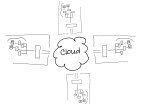
elastic-cloudIntuit, the maker of QuickBooks small business accounting software (among other things), is discontinuing service for the REST API and the Sync Manager on March 1, 2016 [1].  Developers with applications which integrate with the desktop editions of QuickBooks using this method must change their approach right away or risk having their integrations simply stop functioning.  It’s not that Intuit will DO something on March 1st.  Rather, they’ll stop doing something – like handling Sync Manager integrations.

There are a lot of different types of businesses in the world, and each of them produces and consumes a lot of information.   From sales to human resources; from operations to finance – every business generates and manages information to support the various processes which make up the business activities.  Computer systems and software represent the tools businesses use to develop and manage information, and often become foundations for structuring the information which flows through the organization. Just as there may be different people in the business, each with their own responsibilities and job functions, there are likely software applications which are similarly oriented to support different processes within the business.  Integrating or connecting different applications and processes within the business helps the organization be more efficient with information usage, generally increasing the quality of access and reporting throughout the business while at the same time reducing or eliminating redundant data entry and the potential for errors.  Software integrations are a big thing to many businesses, which is why the discontinuation of Intuit’s Sync Manager for QuickBooks Desktop editions is a big deal.

Intuit’s Sync Manager was the big thing just a few short years ago.  Providing developers with a seamless method for accessing QuickBooks company data and passing it to/from web-based and other applications was a boon to the online application model and paved the way for many disk-based integrated solutions to migrate to SaaS offerings instead.  Developers who saw success operating in Intuit’s QuickBooks marketplace as recognized add-ons were encouraged to use Sync Manager so that they would be able to seamlessly market to, subscribe and onboard new users who purchased QuickBooks products. Whether or not the developer participated in Intuit’s application marketplace, the Sync Manager and the REST API provided them with some very important capabilities and supported new methods now recognized as “standards” for development of web-based solutions and services.

The World Wide Web has succeeded in large part because its software architecture has been designed to meet the needs of an Internet-scale distributed hypermedia system. The modern Web architecture emphasizes scalability of component interactions, generality of interfaces, independent deployment of components, and intermediary components to reduce interaction latency, enforce security, and encapsulate legacy systems. http://dl.acm.org/citation.cfm?doid=337180.337228

In order to integrate a solution with QuickBooks desktop products, there are two essential problems to solve.  First, there must be access to the QuickBooks data.  Few products are able to directly access the data in a QuickBooks data file; generally, the QuickBooks program itself is used to ‘broker’ access to the company file. So, developers need a way to work inside of QuickBooks to use it to access the data their applications need.  Second, the data must be transported (via the Internet) to allow for data to come from QuickBooks into another app, or to allow data from the other app to come to QuickBooks.  The REST API and the Sync Manager addressed both of those problems and provided developers with the mechanisms required to facilitate the data integration as well as transport the data.

REST (representational state transfer) is “the software architectural style of the World Wide Web [2]” and represents a standard for creating scalable, distributed system interactions.  Using this method, developers were able to make their online solutions access, read and write data in QuickBooks desktop products because Intuit had first sync’d the data to its servers, so developers needed only to reach the Intuit servers to reach the data.  The Sync Manager provided the transport, carrying the data to/from the desktop installation where the Sync Manager service was running.  And, because the Sync Manager was basically built-in to QuickBooks, there was no additional software to install and maintain on the computer because it was all part of the QuickBooks installation.

Intuit did a fantastic job of getting developers to move to the API integration method, positioning all those lovely 3rd party solutions for linkage via an Intuit.com account and, now, to QuickBooks Online.  Intuit is clearly favoring the QuickBooks Online edition and the API integration method available with that platform, and is telling developers that they must convert their customers to QBO in order to retain the easy connective ability they had with the desktop editions via Sync Manager.

Now that Intuit has announced the discontinuation of the REST API and the Sync Manager, what options do QuickBooks integration developers have, and how can customers using 3rd party integrations keep using them?  Options do remain, and they aren’t all that bad.  In fact, the options which remain continue to be the methods of choice for certain developers. These developers recognized early on that Intuit’s somewhat “lightweight” methods couldn’t handle the complexity or full functionality of their integrations facilitated their solutions using the SDK and never looked back (and still don’t).  For this community of developers – many of whom likely never considered trying to market their solutions in the Intuit app marketplace – the elimination of the REST API and Sync Manager don’t really matter.  They didn’t bother with them in the first place, just as they aren’t bothering with QBO.  Those solutions don’t fit their customers, anyway.

The QuickBooks desktop SDK (Software Development Kit) has been around for years, and using the SDK developers have been able to craft tight integrations between their solutions and the QuickBooks desktop products.  From payment plug-ins to fully integrated sales, customer relationship, inventory and manufacturing solutions – a broad range of integrated applications built with the SDK have been successfully deployed to QuickBooks customers all over the world.   Many applications which integrate with QuickBooks desktop solutions are desktop products themselves and are designed to work within the same desktop and network environment as QuickBooks, so there is no need to worry about “transport” of the data over the Internet.

For other solutions, such as online applications and services, there may be a need to exchange data via the Web. The QuickBooks Web Connector has also been a very popular solution for developers of applications that integrate data with QuickBooks.  The Web Connector is just what its name implies: it is a way to connect QuickBooks to the web and vice versa. With the Web Connector application and a web connector configuration file, developers could provide a method of exchanging data between QuickBooks desktop and another solution fairly simply.  While the Web Connector is quite useful in providing a means to transport integrated data to/from the QuickBooks desktop to an external system (like an online application), it only allows access to whatever data Intuit decides.  For this reason, many developers use both an SDK application and the Web Connector so their applications can access all data required and also have a web service available to transport it.

There are numerous implications relating to the sunset of QuickBooks REST API and Sync Manager, and another among them is the impact in hosted environments.  For customers who are (or might) benefit from hosted QuickBooks delivery models, what does the end-of-life of the Sync Manager mean?  Since the Sync Manager was basically built into QuickBooks desktop editions, it meant that there wasn’t any extra software to install or manage when a company wanted to adopt a Sync Manager-based 3rd party integrated solution. In a hosting environment, this means that the customer could easily add integrated applications to work with their hosted QuickBooks and the service provider might never even know it was being done.  There would be no additional software to install on the host servers; so many providers would simply be unaware that their customers were using these other solutions.

As developers return to SDK and Web Connector implementations in order to integrate with QuickBooks desktop, customers will ask their hosting providers to install the QWC (QuickBooks Web Connector) and/or integration software in their service.  In shared service delivery models, this may be virtually impossible to do without potential compromise to existing customers using those servers or other applications resident on the systems.  Hosting customers will not always understand that a “simple plug-in” actually represents installable software that must be secured, maintained, managed, and kept from improperly interacting with other software in the environment.  Some providers may not even be willing to work with the new integration software, while others may allow it but will not take adequate precautions to ensure proper and secure function.

Intuit has said to many constituent groups that its focus on desktop editions of QuickBooks will continue, and new certifications and benefits for desktop ProAdvisors (and continued development of interoperability with other solutions, like the Revel POS integration for QuickBooks desktop) give support to those statements.  Yet developers who support integrations with QuickBooks desktop are once again adjusting to the not infrequent changes Intuit makes to developer programs and philosophies.  The push to QBO and connected apps may be the focus for QuickBooks marketing dollars, but there are still quite a number of (very busy!) developers supplying solutions to businesses who don’t shop inside their QuickBooks software.

Joanie Mann Bunny FeetMake Sense?

J

[1] https://developer.intuit.com/blog/2014/09/08/timeline-to-discontinue-the-quickbooks-desktop-rest-api

[2] https://en.wikipedia.org/wiki/Representational_state_transfer

Paperless_468x80

Payment Card Roll Call: “Not Present” fraud likely to increase as EMV takes hold

Payment Card Roll Call: “Not Present” fraud likely to increase as EMV takes hold

rollingballNo retailer wants to become the next Target (pun intended).  Payment card fraud costs businesses and consumers billions of dollars every year.  What’s even more frightening, many of the breaches in the news are the result of innocent participants inadvertently granting access to the bad guys.  The Target breach in 2013 exposed the data of 110 million payment cards.  Hackers got into the network using perfectly good credentials of the HVAC company.  Sometimes password security just isn’t enough, which might bring in to question the security of all those SaaS subscriptions and online shopping sites folks use these days.

EMV chip technology, the standard around the world which has just recently become a standard in the United States, has done a lot to stem the tide of credit card fraud in other countries.  As it was implemented in various countries, guess where it pushed the fraudsters?  Where the anti-fraud technology wasn’t, of course! The United States was among the laggards in requiring EMV chip technology for payment cards, opening the door for bad guys and turning the US into a veritable haven for credit card fraud, “accounting for nearly 50% of global fraud losses, according to the Nilson Report[1]”.

EMV chip (or chip and pin) technology will go a long way to prevent credit card fraud for businesses accepting payment cards… in-person and counterfeit card fraud, anyway. Online retail, on the other hand, not so much.  A chip on the card doesn’t really help when the transaction is completed with the card not present (CNP).  Some industry analysts suggest that CNP fraud losses will exceed $6 billion within the next few years, making e-commerce and online payment security a high stakes game for even the smallest of retailers.  As it gets more difficult to hack the payment system when the card is presented, bad guys will fall back in even greater numbers to the card-not-present model to find their victims.

Online retailers and service providers must take additional steps to secure their systems and protect customers and business partners, and face the challenge with the understanding that effort must be ongoing as new threats emerge. Tokenization is a prime method of layering the system with security, making the merchant system somewhat less of a worthy target by not storing the card data in the system.  Even if the system becomes compromised, the bad guys wouldn’t find customer payment card information.  There are numerous other steps a business can take to secure the CNP sales, including applying behavioral analytics which might identify rogue activities, or using 3D Secure to authenticate a cardholder’s identity at the time of purchase.   The point is that CNP fraud is likely to spike as EMV technology takes a firm hold in the US.

Card fraud is already escalating rapidly for ecommerce retailers and other card not present channels – it didn’t take EMV to start on that roll but it will surely give it a push.  Paperless payment systems, SaaS subscription services and online application service usage are increasing dramatically and there’s no chip to get in the way of these transactions.  Sellers of any and every service utilizing online payments need to now pay particular attention to system and information security.  The risk has always been there, and EMV chips and other shifts in pay card technology simply give it a push.

jmbunnyfeetMake Sense?

J


[1] Chipping away at Credit Card Fraud with EMV; Information Week Tech Digest powered by Dark Reading, Nov 2015; NilsonReport http://www.nilsonreport.com/publication_newsletter_archive_issue.php?issue=1071

Analysis, forecasts and modeling: What’s the point?

Analysis, forecasts and modeling: What’s the point?

financeIn today’s business world, risk, uncertainty and volatility are just par for the course – everyday realities of simply being in business.  Nothing is certain, they say, except death and taxes.  Yet there is a fine art to driving profitable growth in a business, and adapting to existing and emerging risk takes a great deal of experience, information and agility.  While planning and process development may occur at many levels within the organization, it is the FP&A (financial planning and analysis) capability which helps top performing businesses be top performers.

Financial planning and analysis are activities central to enterprise performance management (EPM) and must necessarily extend beyond finance.  Integrating various functional domains in the business (financial, operational and strategic), FP&A should bring data together from the various facets of the business and use the information to help structure and guide the organization toward meeting short-term and long-term goals.  Among the most critical of the duties of FP&A is calculating the financial impact, the monetary effects, of potential business decisions.  Everything in business means money, so there is always an impact to a decision.  With the right information supporting the decision, it is far more likely to have a positive impact and a level of sustainability.

While many CFOs may recognize the importance of performance measurement, planning and forecasting, a great many also believe the process isn’t very effective. The cause is frequently the divide between the various domains in the business and the information systems supporting them.  Operational data are distilled into summary financial information and fed to finance systems, losing much of the underlying intelligence that might be gained from analysis of the details.  Strategic development and planning may overlook certain volatile elements in the market, or may base successful outcomes on an expectation that conditions within the business will not change.  Finding ways to integrate the data from the respective domains into a comprehensive model is essential to developing a better and more robust forecasting and scenario-playing capability.  With the right information, analytics may be applied to all facets of management decision-making, anticipating and shaping business outcomes far more effectively than could be done without the insight.

Small business owners may believe that things like “predictive modeling” and “enterprise performance management” aren’t things they need to worry about, but the small business could use this information just as beneficially as a larger enterprise – perhaps even more as the insight could be the key to small business survival and growth.

Using analytics, the owner is able to adjust and re-align strategy in real-time to keep on the right path and goals clearly in sight.  Analytics can also help a business better understand what really drives revenue, working capital and profits.  Analytics can even help managers align compensation and strategy with business objectives, preventing compensation issues from outpacing business benefit.

There is a cost to growing a business, and some strategies might be more sustainable than others.  Time will tell, but it is great if the business owner has some business intelligence that might indicate what’s going to happen before it actually does.

Make Sense?

J