Financial Literacy and Small Business Success

Businesses and individuals alike must make complicated financial decisions throughout their lives.  Sadly, the volumes of research which explore aspects of financial and debt “literacy” among individuals and small business owners reflects that a growing portion of the population lacks the understanding to make these decisions.  Questions surrounding this issue often focus on the educational aspects, and the positive impacts which might be created through greater levels of understanding of accounting fundamentals and the basics of financial management.  Particularly in smaller businesses, where there is a much closer relationship between business and personal finances, understanding even basic financial concepts is likely to lead to “better financial decisions and household well-being”.

a strong relationship between debt literacy and both financial experiences and debt loads[1]

Because many educational offerings tie to specific training approaches and methodologies, it becomes very difficult to measure the usefulness of the skills developed separately from the effectiveness of the training methodology.   Trainers may employ specific devices or tools which facilitate their delivery, and often times these tools become more of a focus than the actual educational content.  On the other hand, a program might provide a great deal of information in a fairly raw form, yet this information is unlikely to deliver a useful result if the participants do not understand it or cannot grasp the concepts introduced. The challenge is not only with providing the education, but finding a balance with the information and the outcomes; understanding how basic the training might be and still provide a measurable, beneficial impact.

In the study Keeping it Simple: Financial Literacy and Rules of Thumb, the authors discuss the benefits of teaching small business owners a series of fundamental “rules of thumb” for management of the business, rather than delving into the complexities of comprehensive business accounting and finance.  Teaching participants about the basics of double entry bookkeeping, cash management and investing, and then coupling that information with instruction on essential processes to follow resulted in significant improvements in financial management and improved the accuracy and consistency of reported data.

the rule-of-thumb training changes actual business management practices[2]


Outcomes show consistently positive when a simpler approach to developing “financial literacy” is provided to small business owners, and particularly when the training and content is oriented towards the characteristics of the participants.   The highest level of result was achieved with business owners with a low level of financial “sophistication”, with a limited interest in financial or accounting training, and with limited baseline business practice structure.  These were the participants who were found to be most likely to implement what they learned in the “rule of thumb” training.

The conclusion drawn from these discussions is that financial education and basic accounting training can become a key factor in helping business owners not only account and report better for their businesses, but provides an essential foundation for understanding how to grow the business and create profitability.   Accounting professionals working with small business clients should recognize that an effort to provide a level of education to clients is likely to not only help those clients make better business (and personal) financial decisions, it will also increase the chances that the client will keep better books and provide the accounting professional with more consistently useful information to work from.

After all, the goal of the accounting professional working with small business clients is to help those small businesses become successful businesses, isn’t it?

Joanie Mann Bunny FeetMake Sense?

J


[1] http://www.nber.org/papers/w14808.pdf

Debt Literacy, Financial Experiences, and Overindebtedness | Annamaria Lusardi and Peter Tufano| NBER Working Paper No. 14808|March 2009

[2] https://www.poverty-action.org/sites/default/files/kis-dfs-march2013_0.pdf | Keeping it Simple: Financial Literacy and Rules of Thumb | By ALEJANDRO DREXLER, GREG FISCHER, AND ANTOINETTE SCHOAR


The Language of Accounting: Disconnect between Accountants and Bookkeepers

The Language of Accounting: Disconnect between Accountants and Bookkeepers

There are a tremendous number of bookkeeper training programs developed over the years which propose to deliver the essential bookkeeping knowledge (e.g., double entry accounting) required in order to properly service business bookkeeping requirements.  Particularly as the CPA profession stepped away from traditional bookkeeping in favor of performing “higher level” and more profitable work, there was and continues to be a great need for skilled and experienced bookkeepers.  While it seems that accountants and bookkeepers would be a natural fit for partnering to serve small business client needs, there is often a disconnect between the two which causes the working relationship to not always prove as beneficial as it could.  What is the cause of this disconnect?  In many cases, it is due to the fact that the bookkeeper training educated the operator on the use of a software product, and not on the fundamentals of accounting and bookkeeping.

Over the past few years, I have had the opportunity to look through a lot of bookkeeper training programs, and the thing that stands out is that many of these programs aren’t really training bookkeepers on accounting principles.  More frequently, the training is focused on teaching users how to use software (usually QuickBooks).  With the number of users of the QuickBooks product, it is obvious that there is a need to educate users on the solution because people need to know how to use their software properly.  But it happened at some point in time that a majority of the industry came to believe that learning QuickBooks (or Xero or Freshbooks or Kashoo or whatever) was somehow synonymous with learning bookkeeping.

When I first started working with my father in his accounting practice, I had to use a manual general ledger, check register, etc.  It was all manual – computers didn’t come along for a while (yes, I am that old).  It was time-consuming, but it taught me the fundamentals.  I know what a subledger is.  In consumer-friendly software like QuickBooks, you don’t work in the AR subledger; you push the button that says “customers” or maybe “invoices”.   QuickBooks, in many ways, doesn’t speak accounting.  It speaks record keeping.  And this is where the disconnect begins.

An old school accountant will recall the green eye shade days and working with book ledgers and 13-column pads, but even “new” school accounting professionals know that the fundamentals of accounting aren’t available for re-invention.  A debit is still a debit and a credit is a credit.  Yes, there are intimacies involved which speak to specific treatment of items for reporting and tax purposes, etc., but the essentials of double entry and other basic accounting principles are consistent and unchanging.

The “language of accounting” includes certain precise terms with specific meaning, and this precision in the use of terms simply doesn’t exist in many bookkeeper training programs. Rather than focusing on the fundamental accounting training bookkeepers truly need in order to be of maximum value to the business, these programs focus on helping users become experts in using the software product, or even to become experts at teaching others how to use the solution.  While this software expertise may be beneficial in terms of helping accountants work with their clients who use the software, it doesn’t add enough value to the relationship to warrant partnering.  What accounting professionals need are bookkeepers who understand bookkeeping and who can apply basic accounting principles to the task.  Which software they operate is secondary to that purpose.

Professional bookkeepers, accountants, and the business client are all in a position to benefit tremendously when the service providers team up to provide comprehensive service.  The key to making these connections lies with the professional bookkeeper who must not only understand basic accounting principles, but must also be able to speak to the accounting professional in their native language.

Make Sense?

J

read more…

Opinion:   I think that every QuickBooks training program should include taking the sample data file in QuickBooks, and translating that to a manual accounting system of book ledgers and reports.  Then, have the student process a years’ worth of transactions manually and from paper-based source materials (and also make them create and use a manual paper filing system for all that information, and come up with a means to travel to obtain all the documents necessary which aren’t mailed via USPS).  The requirement would include generating the bank reconciliations from printed bank statements and cancelled check copies, creating a trial balance from the general ledger and then creating the P&L and Balance Sheet.  I’ll bet you end up with a group of bookkeepers who better understand the fundamentals of the accounting process.  The other benefit is that these folks will have a much better understanding of the problems in the outsourced accounting model which can be directly addressed and solved by today’s cloud and connected solutions.


Bookkeeping Needs Better Reporting Tools

There are many articles and papers available which discuss the rapidly increasing “volume and velocity” of electronic information moving through businesses these days. The focus of the discussion in most cases is on how businesses need to adopt tools and solutions to help them with the management of this electronic data flow. What isn’t being discussed at length is the visceral business intelligence which is lost due to less direct interaction with the raw data.

By manually working through each item, the person regularly processing the information would often develop somewhat of a picture of the business simply through a level of intuition, a gut reaction to the information. This is a rapidly declining model, thanks to intelligent technologies and direct system integrations.

With the plethora of electronic information sources, data collection tools, and transaction download facilities, many bookkeepers and business owners are finding that their gut instinct and business intuition is being lost in the shuffle of managing and matching up all this electronic data.

Focusing on small business bookkeeping, the processes are now being oriented more towards matching up electronic transaction data points than on entering the information from the raw source. Where bookkeepers were once perceived as “mechanics” in terms of performing the bookkeeping data entry, the activities of these professionals is becoming even more mechanical in nature as the primary requirement shifts from entering the information to importing it and then matching it to source documentation.

Even decisions regarding categorization of the transaction are often made by software solutions, eliminating more involvement by the bookkeeping or accounting pro. At the same time that bookkeepers and accountants find themselves having difficulties communicating the value of the service they deliver, technology trends in the industry are weighing even more heavily on that value proposition by providing users with do-it-yourself tools and self-service solutions.

The answer to the challenge of demonstrating value in the bookkeeping and accounting processes is for accountants, bookkeepers and business owners is to focus on the result of the work rather than focusing on the work directly.

Small business owners will challenge their accountants and bookkeepers to explain why processing a limited number of transactions per period would cost much, and the professional ends up fighting a battle which cannot be won; there is far more value in the work they perform than simply entering the data. It’s this explanation of WHY bookkeeping and accounting takes skill and has value which become arguable to the business owner, and is a discussion which the accountant or bookkeeper is more likely to win if they were to in a position to provide their client with proof of this value.

Too often, accounting and bookkeeping service providers attempt to prove their worth to the client by espousing the quality, accuracy, and timeliness of their services and say too little about the value of the result they will deliver. Additionally, many professionals introduce their clients directly to the accounting software and try to engage the client to work cooperatively with the bookkeeping, as there is a perception that the client may see more value in the work if they can a) see it being done in real time and b) see how complicated it could really be.

Unfortunately the accounting and bookkeeping solutions often implemented by small businesses actually look pretty easy to use and are intuitive, which serves to even further diminish the value proposition as the client perceives that they could likely operate the software just as well as the bookkeeper.

In order to deliver the proof to the client that the bookkeeping work has value, the result becomes the focus of the effort. Rather than providing balance sheets, profit and loss statements and bank reconciliations, those involved in the bookkeeping and accounting process for the small business should also focus on reports which demonstrate the value of PROPER bookkeeping and accurately reflecting business activities.

Would the client know the real difference between cost of goods sold and a regular business expense? Reflection of that single transaction with two different treatments could be the trigger to get the light bulb to light up. How best to demonstrate the variation? Not in pure written report form, that’s for sure. Numbers alone don’t generally trigger real understanding, but painting a picture might.

Today’s dashboard and reporting tools – solutions which use information from the accounting system to reflect visual trends and representations of business performance – can deliver far more meaning and easier understanding than a columnar report with numbers and percentages. Further, these tools can address the task of revealing critical insight into business value, demonstrating (for example) the difference between cash flow and profitability, or identifying trends which indicate patterns in how the business is causing or reacting to change.

As small business owners feel continued pressure to improve performance and profitability, and as lending sources for business credit remain difficult and costly to engage, the necessity for quality bookkeeping and accounting services does not diminish, it increases. The challenge is in finding ways to read the data and discover the insight and meaning it reveals.

The value of bookkeeping and processing accounting data for businesses is ever-increasing in these days of global markets and global competition, and the forward-thinking professional will recognize that deeper insight into the business – insight enabled through the use of realtime reporting and analysis tools – delivers an ongoing opportunity to work closer with the client in addressing challenges identified and presented, and allows the accounting professional, bookkeeper and business owner to be guided by real information rather than emotion or intuition.

jmbunnyfeetMake Sense?

J


read the original posting at  The Progressive Accountant.

The Small Business Borrower | Biz2Credit

In order for regulation and legislation to work in favor of small businesses, it becomes essential that accurate and complete information be available for analysis. Too often there are details not recognized in the information used by various agencies to help guide policy and action, and particularly in the world of privately held small business, the quality of data is often in question. This is where structured accounting software and the public accountant come in to play, and where a difference can be made not only with the individual client, but at a higher level by facilitating more accurate data production to support various research initiatives, such as those sponsored through the SBA and the Fed.

Overall, these research studies highlight two things: the important role that financial institutions play in lending to small business owners, and the value of quality data sets in ascertaining financing issues faced by small businesses and their owners.

Charles Ou, Ph.D. | Senior Economist | Office of Advocacy | July 2009

With the availability of highly useful tools for monitoring various key performance indicators and metrics in the business (with analysis of cash flow being an essential part), business owners and their accounting professionals alike are able to use real business data to reveal not simply the trends in business performance, but to identify areas where direct action could improve results in one aspect or another. By paying closer attention to managing business finances and analyzing key aspects of business performance, the “discouraged” or “denied” business borrower may become a successful or (even more valuable) a non-borrower.

via The Small Business Borrower at Biz2Credit.com.

Technology and Tools for Accounting Professionals

Joanie Mann Bunny FeetTechnology and Tools for Accounting Professionals

old_school_ledgerThere was a time not so long ago when accounting professionals focused more on tabulation and summarizing of information than on analysis.  Accounting for businesses, in particular, required collecting myriad papers and receipts and other transaction documents, summarizing the information, translating it into journal entries, and finally posting those numbers to the big bound book which represented the business general ledger.  With the work required to gather and enter all of the information, professionals necessarily focused their efforts on making the process as efficient as possible by attempting to structure the workflow and manage the paper.


When those efforts are compared to today’s approach which involves digital documents, intelligent data collection tools, automated workflow solutions, online accounting and data analysis, it is clear that the processes for accounting for business activities have not really become simpler.  In fact, much of the enabling technology has served to complicate certain processes, which drives users to find even more “solutions” to address these new problems.  It (IT) is a bit like the Wonka Everlasting Gobstopper, which never gets finished and never gets smaller.  IT simply changes things – regularly and often.

Back then – before the Internet and digital imaging, or even Personal Computers – high technology wasn’t the focus because it didn’t exist in the realm of business in general.  I suppose you could call business solutions at that time “low” technology, where mainly mechanical solutions were introduced to address various business problems.

old_school_filecabinet

As an example, prior to the advent of digital imaging and electronic documents, one of the primary requirements of the business was to organize and store paper documents.  Over time, a wide variety of filing, foldering and labeling solutions have been developed, all oriented towards making the storage and later retrieval of paper documents easier.  For some businesses, letting go of the paper is a hard thing to do.  Years and years of training in keeping paper files has left many business owners and managers wary of working without physical paper documents.  Investments in office space, filing cabinets, storage folders and personnel to organize, file and retrieve all of the documents is only a partial measurement of the cost of managing paper, and large numbers of businesses continue to operate in this manner.

old_school_desk

The technology applied to processing the work has also changed, in many ways even more dramatically than the technology applied to collecting and storing the information.  Take the simple processes of tabulation (to arrange in tabular form; condense and list) and summing (adding up) information, for example.  Previous generations didn’t have computers and spreadsheet software to perform the work.  Rather, individuals would painstakingly handwrite each transaction entry into a ledger or on a columnar worksheet, and would then have to manually add each column and then cross check footer totals to ensure accuracy.  Back then, the machines used to perform the addition/subtraction were mechanical devices and could not perform multiplication or division.   These adding machines were first hand-cranked devices, later replaced with shiny new electrical ones (weighing approximately 20 lbs each).

old_school_telephone

Even voice communications have changed dramatically over the years.  Many people don’t remember a time when having multiple phone lines in the business meant having multiple telephones, and the concept of a PBX (Private Branch eXchange) didn’t exist.  Every phone would be hard-wired to an incoming line; if you wanted to answer a call, you had to use the right phone.  This became difficult in an office with many people, so solutions such as the “fabulous extendo-phone” was invented to allow anyone in the office to access the phone from their desk.

The technology available to businesses today is astounding, and offers amazing potential and benefit.  On the other hand, technology rarely (truly) makes things simple or easy – it more frequently serves to shelter certain users from the complexity while delivering new workloads and concerns to others.  It’s rather like energy – it isn’t created or destroyed, it just changes form [law of conservation of energy].  Business is like that, particularly where information technology is involved.  The underlying requirement doesn’t go away, just like a business’s requirement to account for financial transactions and activities,  and the need for the business to capture and retain documents isn’t changed.  How the process is managed, and which tools or mechanisms are applied to the task is what changes.

Make Sense?

J

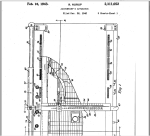
onewrite-accountant_apparatusOne-Write System Revolutionizes Accounting.  These guys had the right idea, they just didn’t have the cloud.

QuickBooks In-House Hosting Services for Accountants

QuickBooks Hosting Services for IT-Capable Accountants

DIY-SelfHostingSmall businesses in large numbers are looking to the cloud as a platform to deliver solutions for the problems of escalating IT costs, mobility, and remote access to business data. The cloud is also becoming the recommended platform for the delivery of services from accounting and bookkeeping professionals, as the benefits of remote data access and real-time collaboration nicely address the requirement for accounting pros to exchange and share information with their business clients. One of the popular “cloud” hosting solutions addressing a collaborative accounting model is a hosted application approach to using Intuit QuickBooks desktop products. While accounting professionals may be aware that QuickBooks can be hosted by 3rd party providers, many firms are not aware of what is referred to as the “self-host” model, which is a QuickBooks hosting model for accounting firms with some in-house technical capability.

For small businesses and many accounting service providers, working with a 3rd party hosting provider makes a lot of sense, as the host has the infrastructure and the support organization necessary to service large-scale hosted customer requirements.

On the other hand, there are a lot of accounting and bookkeeping firms which have skilled in-house IT personnel who are more than capable of creating a hosting environment to serve not only their internal needs, but also to meet basic requirements of the QuickBooks-using clients they work with. It makes sense to explore the possibilities of implementing a “self-hosting” model for client access to QuickBooks, overcoming the cost and other barriers involved with 3rd party hosting services.

When an accounting firm works with a number of clients with QuickBooks desktop edition files, the firm has to install and manage not only their own software products, but also the relevant QuickBooks software products in use by the various clients (must have the right QB program in order to open the QB data file). This often puts an undue burden on the internal IT systems of the practice which has its own internal-use software and systems to support. With an internal hosting approach, the firm can provide standardized/centralized application hosting services to their clients, building their own “economy of scale” on the platform and reducing the IT management while achieving all the real-time and remote access benefits of an outsourced hosted model. The firm does not experience a retail cost for a hosting solution, and the cost to host the client is generally offset through the efficiency gained at the firm level through direct access to client data and applications.

The technical model for delivering hosting services to a relatively small client base is not overly complicated. Commercial service providers have complex architectures because they must serve a large and diverse client base, and they never really know what sort of devices (computers and printers) or connectivity the customer may have. Commercial providers have to be prepared to deal with any and all situations, where a “self-host” firm needs only to concern themselves with supporting their particular client users and use cases. Additionally, when the solution is offered as part of the accounting or bookkeeping service, the support requirements of the customer tend to be focused during mutual working hours, as opposed to the 24×7 support demanded of the commercial host.

As accountants and bookkeepers search for solutions to improve efficiency, increase profitability and differentiate services, it makes sense for those serving QuickBooks desktop clients and having an in-house IT capability to explore becoming a QuickBooks self-host. It is one possible way to eliminate cost as a barrier to working closer with QuickBooks desktop clients while providing the mobility and collaboration businesses need.


Make Sense?

Joanie Mann Bunny FeetJ