Bookkeeping Needs Better Reporting Tools

There are many articles and papers available which discuss the rapidly increasing “volume and velocity” of electronic information moving through businesses these days. The focus of the discussion in most cases is on how businesses need to adopt tools and solutions to help them with the management of this electronic data flow. What isn’t being discussed at length is the visceral business intelligence which is lost due to less direct interaction with the raw data.

By manually working through each item, the person regularly processing the information would often develop somewhat of a picture of the business simply through a level of intuition, a gut reaction to the information. This is a rapidly declining model, thanks to intelligent technologies and direct system integrations.

With the plethora of electronic information sources, data collection tools, and transaction download facilities, many bookkeepers and business owners are finding that their gut instinct and business intuition is being lost in the shuffle of managing and matching up all this electronic data.

Focusing on small business bookkeeping, the processes are now being oriented more towards matching up electronic transaction data points than on entering the information from the raw source. Where bookkeepers were once perceived as “mechanics” in terms of performing the bookkeeping data entry, the activities of these professionals is becoming even more mechanical in nature as the primary requirement shifts from entering the information to importing it and then matching it to source documentation.

Even decisions regarding categorization of the transaction are often made by software solutions, eliminating more involvement by the bookkeeping or accounting pro. At the same time that bookkeepers and accountants find themselves having difficulties communicating the value of the service they deliver, technology trends in the industry are weighing even more heavily on that value proposition by providing users with do-it-yourself tools and self-service solutions.

The answer to the challenge of demonstrating value in the bookkeeping and accounting processes is for accountants, bookkeepers and business owners is to focus on the result of the work rather than focusing on the work directly.

Small business owners will challenge their accountants and bookkeepers to explain why processing a limited number of transactions per period would cost much, and the professional ends up fighting a battle which cannot be won; there is far more value in the work they perform than simply entering the data. It’s this explanation of WHY bookkeeping and accounting takes skill and has value which become arguable to the business owner, and is a discussion which the accountant or bookkeeper is more likely to win if they were to in a position to provide their client with proof of this value.

Too often, accounting and bookkeeping service providers attempt to prove their worth to the client by espousing the quality, accuracy, and timeliness of their services and say too little about the value of the result they will deliver. Additionally, many professionals introduce their clients directly to the accounting software and try to engage the client to work cooperatively with the bookkeeping, as there is a perception that the client may see more value in the work if they can a) see it being done in real time and b) see how complicated it could really be.

Unfortunately the accounting and bookkeeping solutions often implemented by small businesses actually look pretty easy to use and are intuitive, which serves to even further diminish the value proposition as the client perceives that they could likely operate the software just as well as the bookkeeper.

In order to deliver the proof to the client that the bookkeeping work has value, the result becomes the focus of the effort. Rather than providing balance sheets, profit and loss statements and bank reconciliations, those involved in the bookkeeping and accounting process for the small business should also focus on reports which demonstrate the value of PROPER bookkeeping and accurately reflecting business activities.

Would the client know the real difference between cost of goods sold and a regular business expense? Reflection of that single transaction with two different treatments could be the trigger to get the light bulb to light up. How best to demonstrate the variation? Not in pure written report form, that’s for sure. Numbers alone don’t generally trigger real understanding, but painting a picture might.

Today’s dashboard and reporting tools – solutions which use information from the accounting system to reflect visual trends and representations of business performance – can deliver far more meaning and easier understanding than a columnar report with numbers and percentages. Further, these tools can address the task of revealing critical insight into business value, demonstrating (for example) the difference between cash flow and profitability, or identifying trends which indicate patterns in how the business is causing or reacting to change.

As small business owners feel continued pressure to improve performance and profitability, and as lending sources for business credit remain difficult and costly to engage, the necessity for quality bookkeeping and accounting services does not diminish, it increases. The challenge is in finding ways to read the data and discover the insight and meaning it reveals.

The value of bookkeeping and processing accounting data for businesses is ever-increasing in these days of global markets and global competition, and the forward-thinking professional will recognize that deeper insight into the business – insight enabled through the use of realtime reporting and analysis tools – delivers an ongoing opportunity to work closer with the client in addressing challenges identified and presented, and allows the accounting professional, bookkeeper and business owner to be guided by real information rather than emotion or intuition.

jmbunnyfeetMake Sense?

J


read the original posting at  The Progressive Accountant.

The Small Business Borrower | Biz2Credit

In order for regulation and legislation to work in favor of small businesses, it becomes essential that accurate and complete information be available for analysis. Too often there are details not recognized in the information used by various agencies to help guide policy and action, and particularly in the world of privately held small business, the quality of data is often in question. This is where structured accounting software and the public accountant come in to play, and where a difference can be made not only with the individual client, but at a higher level by facilitating more accurate data production to support various research initiatives, such as those sponsored through the SBA and the Fed.

Overall, these research studies highlight two things: the important role that financial institutions play in lending to small business owners, and the value of quality data sets in ascertaining financing issues faced by small businesses and their owners.

Charles Ou, Ph.D. | Senior Economist | Office of Advocacy | July 2009

With the availability of highly useful tools for monitoring various key performance indicators and metrics in the business (with analysis of cash flow being an essential part), business owners and their accounting professionals alike are able to use real business data to reveal not simply the trends in business performance, but to identify areas where direct action could improve results in one aspect or another. By paying closer attention to managing business finances and analyzing key aspects of business performance, the “discouraged” or “denied” business borrower may become a successful or (even more valuable) a non-borrower.

via The Small Business Borrower at Biz2Credit.com.

Technology and Tools for Accounting Professionals

Joanie Mann Bunny FeetTechnology and Tools for Accounting Professionals

old_school_ledgerThere was a time not so long ago when accounting professionals focused more on tabulation and summarizing of information than on analysis.  Accounting for businesses, in particular, required collecting myriad papers and receipts and other transaction documents, summarizing the information, translating it into journal entries, and finally posting those numbers to the big bound book which represented the business general ledger.  With the work required to gather and enter all of the information, professionals necessarily focused their efforts on making the process as efficient as possible by attempting to structure the workflow and manage the paper.


When those efforts are compared to today’s approach which involves digital documents, intelligent data collection tools, automated workflow solutions, online accounting and data analysis, it is clear that the processes for accounting for business activities have not really become simpler.  In fact, much of the enabling technology has served to complicate certain processes, which drives users to find even more “solutions” to address these new problems.  It (IT) is a bit like the Wonka Everlasting Gobstopper, which never gets finished and never gets smaller.  IT simply changes things – regularly and often.

Back then – before the Internet and digital imaging, or even Personal Computers – high technology wasn’t the focus because it didn’t exist in the realm of business in general.  I suppose you could call business solutions at that time “low” technology, where mainly mechanical solutions were introduced to address various business problems.

old_school_filecabinet

As an example, prior to the advent of digital imaging and electronic documents, one of the primary requirements of the business was to organize and store paper documents.  Over time, a wide variety of filing, foldering and labeling solutions have been developed, all oriented towards making the storage and later retrieval of paper documents easier.  For some businesses, letting go of the paper is a hard thing to do.  Years and years of training in keeping paper files has left many business owners and managers wary of working without physical paper documents.  Investments in office space, filing cabinets, storage folders and personnel to organize, file and retrieve all of the documents is only a partial measurement of the cost of managing paper, and large numbers of businesses continue to operate in this manner.

old_school_desk

The technology applied to processing the work has also changed, in many ways even more dramatically than the technology applied to collecting and storing the information.  Take the simple processes of tabulation (to arrange in tabular form; condense and list) and summing (adding up) information, for example.  Previous generations didn’t have computers and spreadsheet software to perform the work.  Rather, individuals would painstakingly handwrite each transaction entry into a ledger or on a columnar worksheet, and would then have to manually add each column and then cross check footer totals to ensure accuracy.  Back then, the machines used to perform the addition/subtraction were mechanical devices and could not perform multiplication or division.   These adding machines were first hand-cranked devices, later replaced with shiny new electrical ones (weighing approximately 20 lbs each).

old_school_telephone

Even voice communications have changed dramatically over the years.  Many people don’t remember a time when having multiple phone lines in the business meant having multiple telephones, and the concept of a PBX (Private Branch eXchange) didn’t exist.  Every phone would be hard-wired to an incoming line; if you wanted to answer a call, you had to use the right phone.  This became difficult in an office with many people, so solutions such as the “fabulous extendo-phone” was invented to allow anyone in the office to access the phone from their desk.

The technology available to businesses today is astounding, and offers amazing potential and benefit.  On the other hand, technology rarely (truly) makes things simple or easy – it more frequently serves to shelter certain users from the complexity while delivering new workloads and concerns to others.  It’s rather like energy – it isn’t created or destroyed, it just changes form [law of conservation of energy].  Business is like that, particularly where information technology is involved.  The underlying requirement doesn’t go away, just like a business’s requirement to account for financial transactions and activities,  and the need for the business to capture and retain documents isn’t changed.  How the process is managed, and which tools or mechanisms are applied to the task is what changes.

Make Sense?

J

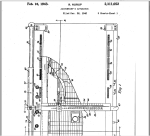
onewrite-accountant_apparatusOne-Write System Revolutionizes Accounting.  These guys had the right idea, they just didn’t have the cloud.

QuickBooks In-House Hosting Services for Accountants

QuickBooks Hosting Services for IT-Capable Accountants

DIY-SelfHostingSmall businesses in large numbers are looking to the cloud as a platform to deliver solutions for the problems of escalating IT costs, mobility, and remote access to business data. The cloud is also becoming the recommended platform for the delivery of services from accounting and bookkeeping professionals, as the benefits of remote data access and real-time collaboration nicely address the requirement for accounting pros to exchange and share information with their business clients. One of the popular “cloud” hosting solutions addressing a collaborative accounting model is a hosted application approach to using Intuit QuickBooks desktop products. While accounting professionals may be aware that QuickBooks can be hosted by 3rd party providers, many firms are not aware of what is referred to as the “self-host” model, which is a QuickBooks hosting model for accounting firms with some in-house technical capability.

For small businesses and many accounting service providers, working with a 3rd party hosting provider makes a lot of sense, as the host has the infrastructure and the support organization necessary to service large-scale hosted customer requirements.

On the other hand, there are a lot of accounting and bookkeeping firms which have skilled in-house IT personnel who are more than capable of creating a hosting environment to serve not only their internal needs, but also to meet basic requirements of the QuickBooks-using clients they work with. It makes sense to explore the possibilities of implementing a “self-hosting” model for client access to QuickBooks, overcoming the cost and other barriers involved with 3rd party hosting services.

When an accounting firm works with a number of clients with QuickBooks desktop edition files, the firm has to install and manage not only their own software products, but also the relevant QuickBooks software products in use by the various clients (must have the right QB program in order to open the QB data file). This often puts an undue burden on the internal IT systems of the practice which has its own internal-use software and systems to support. With an internal hosting approach, the firm can provide standardized/centralized application hosting services to their clients, building their own “economy of scale” on the platform and reducing the IT management while achieving all the real-time and remote access benefits of an outsourced hosted model. The firm does not experience a retail cost for a hosting solution, and the cost to host the client is generally offset through the efficiency gained at the firm level through direct access to client data and applications.

The technical model for delivering hosting services to a relatively small client base is not overly complicated. Commercial service providers have complex architectures because they must serve a large and diverse client base, and they never really know what sort of devices (computers and printers) or connectivity the customer may have. Commercial providers have to be prepared to deal with any and all situations, where a “self-host” firm needs only to concern themselves with supporting their particular client users and use cases. Additionally, when the solution is offered as part of the accounting or bookkeeping service, the support requirements of the customer tend to be focused during mutual working hours, as opposed to the 24×7 support demanded of the commercial host.

As accountants and bookkeepers search for solutions to improve efficiency, increase profitability and differentiate services, it makes sense for those serving QuickBooks desktop clients and having an in-house IT capability to explore becoming a QuickBooks self-host. It is one possible way to eliminate cost as a barrier to working closer with QuickBooks desktop clients while providing the mobility and collaboration businesses need.


Make Sense?

Joanie Mann Bunny FeetJ

Preparing for Disasters of the Legal Kind

Preparing for Disasters of the Legal Kind

As businesses begin to realize the benefits of cloud computing and business data mobility, they may be overlooking one of the most important issues any enterprise can face: information management in the event of litigation.  While the IT department probably has a disaster recovery plan for handling various computer system failures, is there also a plan for managing system data and electronic information in the event of a “legal disaster”?  In the spotlight is e-discovery, which is the requirement of the business to respond to legal requests for electronically stored information, and the issues CIOs and business owners should be paying attention to as computing solutions and technology models continue to change at a rapid pace.

The popularity of BYOD (Bring Your Own Device), data sync solutions, and online collaboration tools has created an environment where business data may exist in various states (meaning as in conditions or status, not as in State, like California) and on a variety of devices and systems, some of which may not be in the direct control of internal IT.  Regardless of where or how the information was delivered to these devices and systems, CIOs and business owners should recognize that the information on those devices is included in discovery requests, and should be prepared with a plan for dealing with the response.

This “e-discovery plan” is the most important thing, and it means not only working through the various aspects of managing the information, but also providing consideration to keeping the plan updated.  As technology changes, and as user behavior changes along with it, businesses must adjust their IT management approaches in kind.  Consider that a user couldn’t store business data on their phone until the phone was able to handle that function.   Now that smartphones are the norm and tablet computers are gaining in popularity, business data is roaming on personal and business devices.  These advancements may introduce productivity and process gains which provide an advantage to businesses, but they also introduce potential risk and certain complexity when it comes to e-discovery.

Litigation is always expensive, but sanctions for slow response or other costs can be avoided if the plan helps the business respond in a timely manner.  For this reason, the plan should include an identification of all sources for information (every location where business information and data is stored), as well as the steps to be taken to preserve this data in the current state.  If the business has systems which regularly purge information (like accounting systems which purge prior period details, email systems which automatically purge old emails, or backup systems which delete old backup files as new ones are made), all of these activities must be halted.  If the company doesn’t have access to control the various devices and systems to prevent these activities (or doesn’t know that they are happening), significant risk is introduced.  In the case of a legal “hold”, all data and metadata and the audit controls and files must be preserved.

The final steps in the plan are the steps to be taken after the litigation is over.  This is often times a forgotten part of the plan, which is the final destruction of the information gathered for discovery.  Not that the original data must be destroyed (consider ALL dependencies), but the “database” of collected information related to the litigation probably should be.  With this data pooled in a single place, it becomes a potentially valuable target for a data breach.  At minimum, the collected information could too-easily be pulled into an entirely new legal case.

IT managers, CIOs and business owners must be realistic about the information their enterprises generate and store, including being realistic about the risk potential that duplicated and mobile data represents.  It is not that the enterprise should be afraid of allowing mobility and providing remote access solutions, but it is essential that the enterprise control the use of these solutions and how they use or interact with business data.   Without a strictly enforced policy of usage and control for all devices, services and solutions “touching” business data, any legal disaster planning falls short.

Joanie Mann Bunny FeetMake Sense?

J

Read More:

e-Discovery in the Cloud: Benefits versus Risks

e-Discovery in the Cloud: Benefits versus Risks

After many years of working with business professionals in “enabling” their organizations to make better use of technology, I must say that it is a bit frustrating trying to get folks to understand that this new and wonderful cloud computing model (or Internet-based computing, SaaS, or whatever-you-want-to-call-it computing) is still just technology.  It uses computers and disk drives, it runs software, it takes electricity, and it was developed by human beings.  It can break.   It’s not magical and perfect and you can’t get the good stuff for free.  Swim at your own risk.  So, assess the risks, and measure the benefits against the risks and costs.  For many, the benefits outweigh the risks, as cloud computing approaches can deliver advanced capabilities at cost levels not previously available to most businesses.

No industry is immune to the security and access considerations surrounding a cloud computing model.  Particular those lawyers involved in e-discovery (all of them) have recognizing the potential benefits – and tradeoffs – of the model.  This reality was clearly revealed at the ILTA (International Legal Technology Association) 2010 event in Las Vegas.  While the discussions at the conference were oriented specifically towards the legal profession, the IT-related discussions are totally relevant to every business.  Accounting and finance professionals should pay close attention to this type of conversation, as it relates very directly to accounting’s approach to information technology and the application of IT in the business or professional practice.

In a recap of the event entitled ILTA 2010 in Las Vegas: Strategic Unity, Defensibility, and the Cloud, author Chris Dale discussed that professionals in both public and corporate service must work with the IT departments towards a common goal.  “IT is no longer just a service department providing an infrastructure, applications, training, and troubleshooting.”  While these elements still remain as critical aspects of IT, the role has grown to also incorporate considerations for collaboration (collaborative information management), mobility, and social media.

Recounting one session attended, called Defensible Ediscovery Processes, the author related the variety of definitions provided to the general term” defensible”, which were pretty amusing.  These definitions ranged from protected against attack, to less lousy practices or practices which suck the least” (my personal favorite), and finally, what you can get away with without being found guilty of spoliation.  From these definitions then came qualifiers, such as “reasonableness” and “faith”.

Why would defensible processes be important, and how does this relate to IT or cloud computing?  An example of the element of “faith” came up in this context: ” how can [lawyers] have faith that the technology is delivering the right answers?”  A panelist gave the sample of “an email retrieved from (or possibly not retrieved from [love those lawyers]) a system, with 26.5 pages missing.  How can you be sure that the systems which you are using will not do that to you?”  These are valid questions in any IT environment, and are no less important when considering a cloud-based technology model.   The trade-offs are related to perfection in functionality and performance of the solution versus cost, and should be measured in proportion to one another.

The tradeoffs may come in a variety of areas, with collaboration and connectivity being the primary drivers (collaboration) and barriers (connectivity) to the model.  Businesses are more than ready to adopt cloud computing strategies based on the belief in improved collaboration, access to information, and improved IT management,  but tend to overlook the offsets in the areas of bandwidth availability (and consistency), application functionality (or lack thereof), and level of support available from the provider.  In support of this argument,  Jerry Justice (IT Director for SS&G – Certified Public Accountants and Advisers) posted in a LinkedIn discussion on the topic that “by design the Internet is ‘reasonably’ connected, but not the same as a well-connected [local] network.  the upside is it gives you the ability to connect from great distances, the tradeoff is that you experience variable connectivity.”

The underlying issues are that there is a paradigm shift to working on the Internet (from working in the office) and then another shift when you add in cloud-based environments (versus local apps).  It is possible to be very productive, but .. you have to adapt your approaches“.

The idea “that perfect must be qualified by cost and proportionality” was also discussed in an ILTA session on cloud computing which included panelists from Autonomy iManage, Mayer Brown, and Ernst & Young.  “Cloud computing remains a contentious area, with no obvious agreement even as to what the term means, let alone as to its implications” wrote Mr Dale in his recap of the event.  While the panelists held differing views, the representative from Mayer Brown held a position similar to Mr Dale, in that it is important to “dissect the objections one at a time, accepting that there is room for more than one view, and testing arguments against the alternatives.  Arguments based on pure cost are pretty compelling, and if one method of achieving an objective is very much cheaper than the others, then the burden shifts to those who argue for the more expensive route.”

Discussions went on to describe differences between public cloud providers and others, who segregate customer data in “private and identifiable silos”.  “The key word here is identifiable“, writes the author, “which connotes a geographical certainty as well as anything else.  I sometimes wonder if the imagery associated with cloud computing (invariably a jagged line disappearing into some cumulus) does not leave some people with the idea that their precious data is indeed floating in some inchoate container up in the air.”

If you neglect to provide in your contract that your data remains in a specified jurisdiction, and if you fail to conduct proper due diligence checks on the provider, then you deserve all you get.  Like any risk assessment, it involves weighing cost against other factors; most of these other factors are definable and quantifiable“.

I couldn’t have said it better myself.

Joanie Mann Bunny FeetJ

original post March 24, 2011