Cloud Computing for Small Business: It’s All About 3 Apps

Every business uses technology at some level, and every business has certain fundamental needs which are most frequently met through the use of computing technology.  Regardless of business type or size and independent of industry orientation, there are 3 fundamental things which every business does which means that there are 3 fundamental application types or solutions which every business will buy at some point.  These 3 application types, which could be distilled down to just “applications”, have become so broadly used in business and so widely recognized as the standards that their names are often used instead of the term representing the functionality they provide.  When it comes to cloud computing for small business, it’s all about these 3 applications.

In what are now referred to as “legacy” or “traditional” models, these products would generally be purchased as software and associated hardware to run it, and would be installed and managed on the local premises.  With cloud computing models, the solutions may be purchased or subscribed as managed infrastructure and application licenses, or as a full service subscription (SaaS).  Regardless of the service model, the applications are the key to the customer win.  While cloud computing may be challenging how IT products and services are sold and delivered to customers, it is not fully impacting which solutions customers are actually looking for.  Over the past 16 years this has been the reality, and it may take another decade before these products are unseated from their top positions simply due to the inertia of the installed bases they’ve already developed.  Service providers have found (or will find) a way to deliver these applications in cloud computing style, or small businesses will simply not move everything to the cloud very quickly.  It is really just that simple, and I’ll explain why.

QuickBooks-Hosting-WordCloudThe three things that each and every business does, and which they generally purchase computers and software to facilitate, are communicating, producing information, and keeping score.

1. Communicating is an essential need for every business.  Whether it is communication via phone, fax, email or otherwise, businesses will communicate and they will purchase products which help them do it better.  The standard for business email communications has become Microsoft Exchange, which is now available as a highly affordable subscription service from Microsoft or from a wide variety of commercial MS Exchange hosting providers.  Certainly the popularity and growth of hosted Exchange supports the argument that not only is MS Exchange mail very widely used in businesses of all sizes, but that it is also highly acceptable as a hosted solution because users retain desired functionality and are able to benefit from a variety of add-ons and additional services from their hosted Exchange email provider.  The other thing about hosted Exchange is that the user can still use MS Outlook on their desktop to get their mail.  Now we’re back to the desktop application again.  Regardless of what mail server and service the user has, they are often more attached to using Outlook than they are to the mail service.  In fact, when you ask a fairly non-technical user what they use for email, they’ll often say they use Outlook (the desktop client, not Outlook.com).

2. Producing Information is another essential need for every business.  Whether the information is produced for internal or external use, there is a lot of information created to inform various people about the business.  Documents, spreadsheets and presentations are used in every business, and productivity applications help people create them.  The standard in this area is Microsoft’s Office suite of products which includes Word, Excel and Powerpoint.  It isn’t unusual to have someone suggest “making a powerpoint to get the message across”, rather than using the word “presentation”, and does anyone expect to get a document not in .doc format?  When users ask for productivity products, they usually ask for Office software and they usually mean Microsoft Office suite products.

The broad use and proven suitability of these products has well established them as the standards for use in business.  While these applications are now available as limited-functionality web-based applications, most businesses continue to rely on the desktop products which resulted in myriad file sharing and “collaboration” tools which work with the Office products.  Microsoft recognized the value of having the feature-rich productivity applications available in hosted and managed service models (as hosted applications rather than true web-based apps), and made the products available for licensing and distribution via their Service Provider License Agreement (SPLA). Microsoft (direct and via partners) also offers Office 365, which provides licensing for Office desktop applications and/or hosted Exchange email services.

Hosts with cloud servers and managed infrastructure and VDI solutions are all facing this truth: their services are useful when there are applications running on them, and among the most frequently requested applications are the Office apps.  This is why so many providers offer not only cloud servers and virtual desktop solutions, they add value to their service by also offering the Microsoft Office products.  At least in the case of MS Office, service providers have recognized that certain fundamental applications must be present in order for the server or desktop to have value for the SMB customer.  After all, “moving the server to the cloud” doesn’t solve the problem if all the apps remain on the local PCs.

And then we come to the final application – the last fundamental small business application for service providers to focus on.  It is with this application that hosting companies will make real impact in moving their small business customers from local to hosted applications, virtual desktops, and the world of cloud servers and managed hosting.

3. Keeping score, or accounting, is the final absolute and fundamental business function which exists in every business regardless of size, type or industry.  This is another area where service providers are focusing, realizing that within the realm of small business accounting there is a single standard product line which serves the exact profile of the target SMB/SME customer: Intuit QuickBooks desktop products.

When challenged to find a single application solution which addresses a fundamental business need, is not oriented towards a particular industry segment, and which is likely to drive increased usage simply due to existing market penetration and sales – there is only one name that answers, and it is QuickBooks, most specifically the Pro, Premier and Enterprise desktop editions.

Looking further into the problem reveals that there may be more options for small business accounting emerging in the SaaS market, but this doesn’t help the hosting companies looking to increase usage on their own platforms.  Additionally, while new and emerging solutions may be introducing options for very small business, the activity actually serves to increase awareness of and usage of computerized accounting solutions, resulting in increased share of the market looking for and purchasing these solutions – increasing the overall market for SMB accounting products and providing an opportunity to sell QuickBooks solutions to those new users. Further, Intuit QuickBooks remains the dominant choice once the business has needs beyond simple invoicing and bill payment, and continues to see growth in product sales and distribution for this reason.

It’s also true that, once a business has itself “invested” in an accounting product, change is not something considered easily.  In many (most?) cases, the business is more closely tied to their financial systems than they are to their service provider.  If the provider can’t work with the software, the business is likely to seek services from another provider.

Moving everything but finance to the cloud is not an option for most businesses, either. Particularly with small business/small enterprise, there are generally systems which serve a broad business need and not a single function.  QuickBooks is not just a back-office accounting product.  It also provides some front-office functionality, such as storing general customer information, handling invoicing, inventory management, job costing and other functions.  It is essential that service providers not minimize the importance of this solution in their target client operation.

The financial system is not an island and is often integrated with or connected to other applications and data.  Even though the QuickBooks desktop products are designed to suit businesses up to 250 employees, it is unlikely that a business will have all 250 people running QuickBooks.  Rather, the product may be used by 2 or 3 people in the accounting department, or possibly by up to 30+ users in an Enterprise deployment where the product serves more operationally oriented functions.  The rest of the company is likely using MS Office and email as suggested earlier, and perhaps some other operational or business specific product which may integrate with QuickBooks.  The point is that it’s unwise for service providers to minimize the importance of the financial software and systems, even if those solutions are used by only a very few of the total number of users within the organization. 

More evidence suggesting that the name QuickBooks has become almost synonymous with  small business bookkeeping is visible within the accounting and bookkeeping industry, where bookkeeper training programs focus as much on the QuickBooks product (if not more so) than on actual accounting fundamentals.  Businesses hiring bookkeepers don’t ask for bookkeeping experience, they ask for QuickBooks experience.  If a small business owner asks his accountant what product to use, it’s a good bet that the accountant will recommend, and possibly even set up, QuickBooks for the client.  There is momentum there which cannot be argued with, and it represents significant opportunity for those who have platforms to run the stuff.  Weirdly, QuickBooks desktop editions and other desktop-based financial products available in a cloud hosted model represent a last and final element which is driving broad adoption of cloud servers and hosted desktops within the SMB markets.

It is all about the apps, but not just any apps.  It’s about the apps small businesses need, want, know, and currently use.  Service providers who can offer their customers these applications as cloud service – as managed applications on a cloud server or VDI platform – are in a position to serve the broadest base of SMB/SME customers. Talk about addressable market… at that point, it becomes a simple function of exposure as the value proposition is undeniable (and barrier-free).

Joanie Mann Bunny FeetMake Sense?

J

Predicting Outcomes and Providing Guidance | Being Nostradamus| Proformative.com

I have a gripe with the accounting profession.  My gripe is with the fact that accounting information delivered to most business owners is old news.  Stuff happened, the professional properly recorded it and reported on it,  you paid your taxes, and that’s that.  Game over.

Once upon a time, accountants had to work with book ledgers, pen and pencil (mostly pen, putting that single line through incorrect entries), and stacks upon stacks of paper documents.  Just keeping up with the process of recording transaction information, adding it all up (and making sure the footing totals jibe), and then summarizing the information into usable form took all the time available, and the focus was on the accuracy of the work – not necessarily the timeliness of it.  With the advent of computers and computerized accounting systems, the process of creating and storing the data became easier, but the volume and nature of information increased and thus the complexity and time to process increased (the “everlasting gobstopper” problem.. it never really goes away).There isn’t any argument over the critical value and importance of that work.  Every business owner understands that not properly accounting for business activities can mean increases in tax burdens, penalties and interest, and more.  It’s good work… but what do you do with it?  My intent is not to try to diminish the value of today’s approach to accounting.  Rather, I’m trying to point out how the accounting profession could make a huge impact in today’s pathetic economy, help businesses get financially healthier, and help put the small/medium business market on a path to growth and success.  It involves seeing into the future.

These days, technologies exist which facilitate acquiring the information (even in paper form), converting that information into digital data, and then actually interpreting the data to arrive at a transaction.  Traditional software and cloud service providers alike are recognizing that mechanical data entry is passé, and do-it-yourself solutions for accounting and bookkeeping will rely upon “smart” engines which can read and properly understand what each scanned document means.

So – once the accurate data entry problem is solved… what’s the next logical step?  Analytics!  It’s only really possible now that online solutions have brought the business information to the accounting professional in real-time, and have allowed the accounting professional and the business owner to collaborate and share data faster than ever before.  If information is power, we have a lot of power in our hands… but do we really know it?  This is where BI (business intelligence) and analytics come in, and where the opportunity exists for the accounting profession to become a guiding force in rebuilding our economy.

What if an accountant could not only tell his client that the business lost money last year or last month, but that they’re going to lose money through this month and year if they don’t change their behavior?  And, what if the accountant could run a variety of scenarios which would help forecast the most positive business outcome based on certain choices which could be made, or certain activities which could be handled in different ways?  What if the accountant could help his client peer into the future, and get an inkling of what the business could look like if certain economic or business conditions continued… changed… ?

Maybe I’m a little overzealous when it comes to believing that the accounting profession could have recognized the economic trauma which was coming, or that they could have prepared their business clients for it.  But I don’t believe I’m very far off the mark in believing that not nearly enough “analysis” occurs in the typical public accounting engagement, and even when it does… is the suggested path the right one?  I would submit that BI is new enough to so many people that it may not be.  Learning what the numbers are telling you is one thing… staving off disaster is quite another.

I would encourage all BI and Data Analytics fanatics to check out an article on CFO.com on this subject:  That New Big Data Magic  http://www3.cfo.com/article/2011/8/analytics_that-new-big-data-magic

A few memorable takeaways from the article:

“you may be spot-on about a problem, but the solution doesn’t magically appear out of the data.”

“what you do with [data] is a people-based activity, a skill base you have to mature.  And it doesn’t come quickly.”

“CFOs have a gut sense that there’s money out there in all that data… The challenge is how to turn that data into new opportunities.” The good news.. is that new technologies are making it more economical to make sense of Big Data… The caveat is that those technologies will not provide those opportunities. That’s still up to the people who make business decisions.”

jmbunnyfeetMake Sense?

J

reblogged from Proformative.com  Being Nostradamus – Predicting Outcomes and Providing Guidance

Bookkeeping Needs Better Reporting Tools

There are many articles and papers available which discuss the rapidly increasing “volume and velocity” of electronic information moving through businesses these days. The focus of the discussion in most cases is on how businesses need to adopt tools and solutions to help them with the management of this electronic data flow. What isn’t being discussed at length is the visceral business intelligence which is lost due to less direct interaction with the raw data.

By manually working through each item, the person regularly processing the information would often develop somewhat of a picture of the business simply through a level of intuition, a gut reaction to the information. This is a rapidly declining model, thanks to intelligent technologies and direct system integrations.

With the plethora of electronic information sources, data collection tools, and transaction download facilities, many bookkeepers and business owners are finding that their gut instinct and business intuition is being lost in the shuffle of managing and matching up all this electronic data.

Focusing on small business bookkeeping, the processes are now being oriented more towards matching up electronic transaction data points than on entering the information from the raw source. Where bookkeepers were once perceived as “mechanics” in terms of performing the bookkeeping data entry, the activities of these professionals is becoming even more mechanical in nature as the primary requirement shifts from entering the information to importing it and then matching it to source documentation.

Even decisions regarding categorization of the transaction are often made by software solutions, eliminating more involvement by the bookkeeping or accounting pro. At the same time that bookkeepers and accountants find themselves having difficulties communicating the value of the service they deliver, technology trends in the industry are weighing even more heavily on that value proposition by providing users with do-it-yourself tools and self-service solutions.

The answer to the challenge of demonstrating value in the bookkeeping and accounting processes is for accountants, bookkeepers and business owners is to focus on the result of the work rather than focusing on the work directly.

Small business owners will challenge their accountants and bookkeepers to explain why processing a limited number of transactions per period would cost much, and the professional ends up fighting a battle which cannot be won; there is far more value in the work they perform than simply entering the data. It’s this explanation of WHY bookkeeping and accounting takes skill and has value which become arguable to the business owner, and is a discussion which the accountant or bookkeeper is more likely to win if they were to in a position to provide their client with proof of this value.

Too often, accounting and bookkeeping service providers attempt to prove their worth to the client by espousing the quality, accuracy, and timeliness of their services and say too little about the value of the result they will deliver. Additionally, many professionals introduce their clients directly to the accounting software and try to engage the client to work cooperatively with the bookkeeping, as there is a perception that the client may see more value in the work if they can a) see it being done in real time and b) see how complicated it could really be.

Unfortunately the accounting and bookkeeping solutions often implemented by small businesses actually look pretty easy to use and are intuitive, which serves to even further diminish the value proposition as the client perceives that they could likely operate the software just as well as the bookkeeper.

In order to deliver the proof to the client that the bookkeeping work has value, the result becomes the focus of the effort. Rather than providing balance sheets, profit and loss statements and bank reconciliations, those involved in the bookkeeping and accounting process for the small business should also focus on reports which demonstrate the value of PROPER bookkeeping and accurately reflecting business activities.

Would the client know the real difference between cost of goods sold and a regular business expense? Reflection of that single transaction with two different treatments could be the trigger to get the light bulb to light up. How best to demonstrate the variation? Not in pure written report form, that’s for sure. Numbers alone don’t generally trigger real understanding, but painting a picture might.

Today’s dashboard and reporting tools – solutions which use information from the accounting system to reflect visual trends and representations of business performance – can deliver far more meaning and easier understanding than a columnar report with numbers and percentages. Further, these tools can address the task of revealing critical insight into business value, demonstrating (for example) the difference between cash flow and profitability, or identifying trends which indicate patterns in how the business is causing or reacting to change.

As small business owners feel continued pressure to improve performance and profitability, and as lending sources for business credit remain difficult and costly to engage, the necessity for quality bookkeeping and accounting services does not diminish, it increases. The challenge is in finding ways to read the data and discover the insight and meaning it reveals.

The value of bookkeeping and processing accounting data for businesses is ever-increasing in these days of global markets and global competition, and the forward-thinking professional will recognize that deeper insight into the business – insight enabled through the use of realtime reporting and analysis tools – delivers an ongoing opportunity to work closer with the client in addressing challenges identified and presented, and allows the accounting professional, bookkeeper and business owner to be guided by real information rather than emotion or intuition.

jmbunnyfeetMake Sense?

J


read the original posting at  The Progressive Accountant.

via Accounting and Business Technologies | QuickBooks Pro and Premier as Software-as-a-Service

QuickBooks Pro and Premier as Software-as-a-Service

Running business applications online was once considered a fad, but has now become a mainstream approach to implementing technology. Businesses large and small are finding that turning technology investments into a predictable expense allows them to focus on their business operations and not the IT budget. For some, the ability to bring remote locations or mobile team members closer to the systems that support the business is the biggest benefit. For others, the security of having business continuity and disaster recovery built into the system is the key. Regardless of the motivating factors, business owners are finding that online application services can make a positive impact to their bottom line.

The market has clearly identified online technologies and application services as something beneficial. This is demonstrated by the rapid adoption and growth of business solutions that leverage the Internet as network. Further, online applications and services are being used as a way to augment systems that were once exclusively LAN or PC based. An example of this is the extension of Intuit’s QuickBooks products to incorporate online payroll services and online payment processing solutions.

With the move to online application services being one of the biggest shifts in technology seen in years, it only makes sense that the applications that have become “standards” in business shift to an online model, as well. The opportunity is great, but the responsibility is greater.

Many software companies are facing a number of problems with respect to the unauthorized hosting of their desktop applications. Because of the technology employed for desktop application hosting is very costly, many service providers feel compelled to “leverage” application licensing and other system features to increase their value proposition and in order to compete. Customers who utilize these unauthorized application services are putting their businesses at potential risk. This risk may come in the form of substandard services resulting in lost or corrupted data; risk may come in the form of unauthorized access to confidential business or personal information due to poor system security; risk may come in the form of exposure due to the unauthorized use of software licenses.

While the market has clearly demonstrated the value and benefit of application hosting services, the lack of protections, consistency and support make it a venture fraught with peril for many. The volume of “grey market” activity and instances of license piracy have undoubtedly increased dramatically, as the cost of service delivery is high and the margins for the service provider are narrow. Manipulating the cost of service by leveraging the application licensing is sometimes the only way some service providers can create profitability in their offerings. But with the prior lack of oversight in terms of service pricing, licensing, quality assurance, or service orientation, it had become the “wild west” for service providers, and the perceived value of the service declined while the number of and variety of deliveries increased.

The answer to the problem, or at least as it exists around the Intuit QuickBooks products, is in the ability for Intuit-Authorized QuickBooks hosting providers to offer subscription access to QuickBooks Pro and Premier licenses when they are hosted. Customers no longer need worry about purchasing their QuickBooks software before engaging with the hosting company, and can avoid the annual cost of upgrading their application software. With the QuickBooks license delivered under a subscription program, customers are able to work with the most current version of the software, and know that their systems are protected and their data is secure. Intuit-authorized QuickBooks Hosting providers can supply, manage, and maintain hosted QuickBooks implementations for businesses of virtually any size and type – all with an Intuit-supported license.

via Accounting and Business Technologies | Joanie Mann: QuickBooks Pro and Premier as Software-as-a-Service.

Criteria for Evaluating QuickBooks Hosting Providers: Going Beyond Pricing

Criteria for Evaluating QuickBooks Hosting Providers: Going Beyond Pricing

When a small business elects to run their QuickBooks desktop edition software in the “cloud”, it makes sense to work with an experienced provider – a company with the people and the experience to keep the QuickBooks desktop software working properly and securely.  The keys to selecting the best provider for the business are often hidden in the experiences of others; experiences which reveal issues that may significantly impact vendor selection and which have nothing to do with the price of the service. Criteria such as system performance, responsiveness to technical issues, resources for self-help, and knowledge of support personnel – these are the things that more frequently and directly impact the customer experience and, ultimately, the customer’s loyalty.

While Intuit supports QuickBooks Enterprise in terminal server and Remote Desktop environments, they only support the license when it is deployed for the single business organization the license was issued to. If a business has lots of different users on the platform and those users don’t belong to the one company who “owns” the infrastructure and the license, then the implementation is non-compliant and won’t be supported. Intuit also doesn’t offer direct support for QuickBooks Pro and QuickBooks Premier editions in remote desktop implementations, yet the software will work perfectly well in that environment. There are a few quirks and tricks to using the software in this manner, however, so provider technical experience specifically with QuickBooks is essential.

When working with a company providing managed application hosting services and not just managed server platforms, it generally means that the provider is taking responsibility not only for the server/network/infrastructure, but also for the setup, configuration and maintenance of system users and security, and the installation/management/maintenance of the applications running on the server.  When a business elects to outsource this level of service to any 3rd party, there are a variety of areas in addition to pricing which should be thoroughly explored prior to signing the service agreement.

When evaluating potential service providers, research the provider’s offerings and performance directly as well as evaluating the public’s perception of them, considering these 4 areas:

  1. Technology
  2. Innovation
  3. Business Practices
  4. Customer Satisfaction

The technology evaluation relates not only to the systems and tools applied to the service delivery, but also to the systems or tools applied to assist the customer with dealing with the service.  Too often, providers pay more attention to their ordering systems than their service delivery, believing that a quality customer experience rests more with simple purchasing processes than with a functional and well-performing application service.  Others may focus on delivering the best and highest quality application service, yet relegate their clients to sending emails or making phone calls to place service orders or request service information.  The providers who score the highest points in this category are those who recognize that both elements – service delivery and service administration – are critically important to providing a quality overall customer experience.

The innovation evaluation looks at the actual service infrastructure and delivery. This includes features as well as limitations.  One of the pitfalls of being an application service provider is the inertia created with existing systems and customers.  Once the platform is in place and there are a bunch of users on the systems, upgrading and updating the underlying technologies can be a tremendous challenge.  I have often related this as being like trying to change tires on a moving truck.  Unfortunately, systems age and lose functionality, compatibility, support, etc.

Keeping the platform updated isn’t the only element involved with scoring provider innovation.  Even more important than simple change management supporting status quo, true innovation speaks to efforts directed towards crafting a better, more functional and more useful solution delivery.  Many skilled technicians can set up a terminal server for remote access to QuickBooks using the “standard” tools available, but it takes more skill and understanding to create a service which offers more and better capability than everyone else.  The point isn’t that the provider is changing QuickBooks software in any way – that’s not really an option.  Rather, it is in how the provider elects to architect their systems and solution, and whether they are attempting to improve the experience and deliver with a unique approach rather than a generic one.

With increased competition and as some provider platforms experience challenges either due to age or capacity, certain “interesting” practices have emerged.  I now look at these business practices as part of the process of evaluating providers.  In the early days of hosting and application delivery, the business practices of various providers had some similarities, but not any more.  The practices which frustrate me most and which always cause me to score the provider with low marks in this category relate almost exclusively to transparency – or lack thereof.  Here are two scenarios which I’ve seen come up with some frequency, and which (in my opinion) are indications that the provider may not necessarily be one you want to work with.

  • A business has signed a one-year service agreement with a hosting provider, and has been required to prepay that annual contract.  The business was not provided with a demonstration or evaluation system prior to executing the service agreement; they simply trusted the information provided by sales.  After a few months on the service, the performance and support are so poor that the business wants out of the annual agreement, even though high service levels and support responses were part of the contract.  In order to be allowed to end the service agreement and stop paying for the service, the business was told they would have to not only buy out a portion of the remaining contract, but also sign an agreement not to communicate the service problems they experienced or the exit agreement terms with anyone. (*please note that I am essentially in agreement about having to buy out a committed term agreement, at least in part, but applying a gag order? Not so much).
  • A business is using the services of a hosting provider, and has a need to know details of their delivery (like server operating system version) in order to verify compatibility with a new software product they wish to purchase.  Before the business customer is allowed to obtain the information, the provider requires that they sign an agreement promising not to disclose the information they may receive to any other party.  (*note: While I recognize that this type of agreement is desirable to protect proprietary information, it is more often used to prevent the prospective customer from disclosing something potentially negative, and it certainly doesn’t do much in terms of building trust.)

The final evaluation is on customer satisfaction, where anecdotes and information is collected from both current and past customers of the provider.  Admittedly, much of this information I scour from various forums and discussion groups and interviews but it is truly amazing what you can learn about a business simply by listening to customer stories in various social venues.  The picture these stories paint is often (frequently!) very different from the “happy sunshine and rainbows” testimonials you find on websites and in marketing brochures.  Of course, who would buy from a provider who says their “support is great until you’ve been with us for a month, and then we pretty much don’t care about you any more”.  Also, people tend to be more vocal when they’re mad about something, so there is often more negative than positive out there in the social realm, so weight that carefully.  But the fact that certain provider names come up more often than others is the clue; when you don’t see the provider name come up in these discussions, it usually means they’re simply not making people mad.

There is a lot to consider in selecting the right service provider for the business, and the items listed above are just part of it.  While there are some (few) standards among application service providers, it is still what some might refer to as an “emerging” model and will continue to evolve with the market demand and technology.

For now, businesses just need to know that their solution provider is trustworthy and willing to communicate honestly and completely. Selecting the right provider – a provider who supports their business and model with full transparency to the client –  will help the business move forward just as the wrong provider is more likely to hold it back.  While pricing is an important and unavoidable aspect of the discussion, businesses should also put some focus on these other elements which help to reveal how the provider works with their customers, and to determine whether or not they can (or will even try to) meet your requirements now and in the future. 

Make Sense?

Joanie Mann Bunny FeetJ

Technology and Tools for Accounting Professionals

Joanie Mann Bunny FeetTechnology and Tools for Accounting Professionals

old_school_ledgerThere was a time not so long ago when accounting professionals focused more on tabulation and summarizing of information than on analysis.  Accounting for businesses, in particular, required collecting myriad papers and receipts and other transaction documents, summarizing the information, translating it into journal entries, and finally posting those numbers to the big bound book which represented the business general ledger.  With the work required to gather and enter all of the information, professionals necessarily focused their efforts on making the process as efficient as possible by attempting to structure the workflow and manage the paper.


When those efforts are compared to today’s approach which involves digital documents, intelligent data collection tools, automated workflow solutions, online accounting and data analysis, it is clear that the processes for accounting for business activities have not really become simpler.  In fact, much of the enabling technology has served to complicate certain processes, which drives users to find even more “solutions” to address these new problems.  It (IT) is a bit like the Wonka Everlasting Gobstopper, which never gets finished and never gets smaller.  IT simply changes things – regularly and often.

Back then – before the Internet and digital imaging, or even Personal Computers – high technology wasn’t the focus because it didn’t exist in the realm of business in general.  I suppose you could call business solutions at that time “low” technology, where mainly mechanical solutions were introduced to address various business problems.

old_school_filecabinet

As an example, prior to the advent of digital imaging and electronic documents, one of the primary requirements of the business was to organize and store paper documents.  Over time, a wide variety of filing, foldering and labeling solutions have been developed, all oriented towards making the storage and later retrieval of paper documents easier.  For some businesses, letting go of the paper is a hard thing to do.  Years and years of training in keeping paper files has left many business owners and managers wary of working without physical paper documents.  Investments in office space, filing cabinets, storage folders and personnel to organize, file and retrieve all of the documents is only a partial measurement of the cost of managing paper, and large numbers of businesses continue to operate in this manner.

old_school_desk

The technology applied to processing the work has also changed, in many ways even more dramatically than the technology applied to collecting and storing the information.  Take the simple processes of tabulation (to arrange in tabular form; condense and list) and summing (adding up) information, for example.  Previous generations didn’t have computers and spreadsheet software to perform the work.  Rather, individuals would painstakingly handwrite each transaction entry into a ledger or on a columnar worksheet, and would then have to manually add each column and then cross check footer totals to ensure accuracy.  Back then, the machines used to perform the addition/subtraction were mechanical devices and could not perform multiplication or division.   These adding machines were first hand-cranked devices, later replaced with shiny new electrical ones (weighing approximately 20 lbs each).

old_school_telephone

Even voice communications have changed dramatically over the years.  Many people don’t remember a time when having multiple phone lines in the business meant having multiple telephones, and the concept of a PBX (Private Branch eXchange) didn’t exist.  Every phone would be hard-wired to an incoming line; if you wanted to answer a call, you had to use the right phone.  This became difficult in an office with many people, so solutions such as the “fabulous extendo-phone” was invented to allow anyone in the office to access the phone from their desk.

The technology available to businesses today is astounding, and offers amazing potential and benefit.  On the other hand, technology rarely (truly) makes things simple or easy – it more frequently serves to shelter certain users from the complexity while delivering new workloads and concerns to others.  It’s rather like energy – it isn’t created or destroyed, it just changes form [law of conservation of energy].  Business is like that, particularly where information technology is involved.  The underlying requirement doesn’t go away, just like a business’s requirement to account for financial transactions and activities,  and the need for the business to capture and retain documents isn’t changed.  How the process is managed, and which tools or mechanisms are applied to the task is what changes.

Make Sense?

J

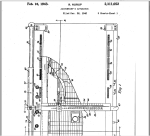
onewrite-accountant_apparatusOne-Write System Revolutionizes Accounting.  These guys had the right idea, they just didn’t have the cloud.