CooperMann 2012 in review

CooperMann 2012 in review

2012 Was an interesting year, to say the least.  Not that it wasn’t a good year, but it certainly brought its share of challenges as well as opportunities.  At CooperMann.com, we attempted to reflect upon these challenges and opportunities, discussing how they impact our views on accounting and technology and business in general.

While the economy continued to struggle and churn, business owners found that reducing operating costs and creating sustainability in the business were initiatives they could no longer afford to minimally address. As advancements in technology and the growing popularity of cloud computing models resulted in a number of solutions to help businesses meet those cost and continuity issues, they also introduced new and different challenges for accounting and finance professionals seeking to reinforce their relevance and value to the business.  They say that the only constant is change, so we should expect no fewer challenges (or opportunities!) in the new year.

Joanie Mann Bunny Feet

As for CooperMann.com, here’s how we did in 2012, our inaugural year

600 people reached the top of Mt. Everest in 2012. This blog got about 10,000 views in the latter part of 2012. If every person who reached the top of Mt. Everest viewed this blog, it would have taken 17 years to get that many views.

The busiest day of the year was October 2nd: The most popular post that day was

Attractions in 2012

These are the posts that got the most views on CooperMann in 2012.

Changing How We See Software: QuickBooks 2013 interface frustrates power users

Is This The End Of ERP?

In Bookkeeping, Accounting, and Information Technology: The Value of Outsourcing

Working With the Right Numbers: Financial Data Analysis Requires Accurate Financial Data

Not Everybody’s Accounting Online: Outsourced Bookkeeping and Accounting for “Offline” Clients

Top 3 Favorite posts for 2012

One-Write System Revolutionizes Accounting: These guys had the right idea, they just didn’t have the cloud.

The race to find the “secret sauce” of hosted application services for small business

Accounting Professionals: It’s Good To Be Sticky

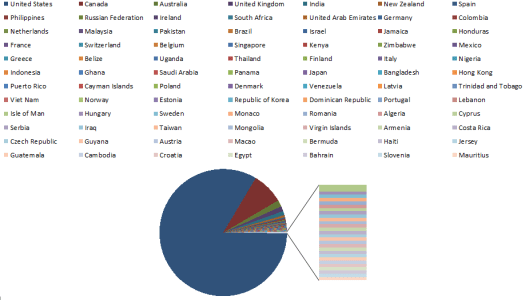
Where in the world is CooperMann viewed?

CMC2012-countries

buildingup-small-logoWhat’s coming up for 2013?  Keep watching CooperMann.com and BuildingUP.biz to stay on top of current issues and trends in accounting and business technology.

Reinventing your Business – What Happens When Systems Fail?

Reinventing your Business – What Happens When Systems Fail?

There is a lot of discussion today about how our children are growing up in a world where high technology is simply part of life and lifestyle.  I even read an article about how people are evolving because of the availability of information; evolving to the point where we no longer store and retrieve information, but store information on how to get information.  The article cited an example of someone who couldn’t recall the name of an actress in a movie they had seen, so the immediate response was to search for the answer on Google.  In the past, people relied upon memory, and found various ways to mentally associate and store information so it was able to be recalled.  Now, there’s an app for that.

Are we losing our ability to effectively store and recall information?  Are we forgetting how to do things before we had all this technology to help us?  It makes you wonder sometimes, how technology-dependent we are. We look at the ruins of past civilizations and view seemingly impossible structures, (impossible given what we know about the technology available at the time) and wonder how they came to be.  The knowledge was there at some point, but is now lost.

Is your business at risk from a similar fate?  Maybe it sounds silly, but it makes sense to at least think about it, because there are a lot of companies out there today that are not paying attention to critical issues such as knowledge management and sustainability.  Finding ways to capture business knowledge and protect it is essential in every organization, whether small business or large enterprise.

Small businesses are often centered on an owner who started the operation, and who just knows how things are done.  The primary goal in this situation is to capture that knowledge and turn it into process.   Only through this approach may a business begin to reduce its reliance upon a single individual, and this is a critical step in creating both sustainability and continuity in the business. In larger enterprises, process and structure are essential to keep the various parts and participants moving in the same general direction.

Once those processes are established, generally using technology to support or facilitate them, is that the end of the task?  Many businesses seem to believe so, and move along with the impression that they have things well in hand.  And then a major system or technology failure occurs, and folks are left standing around, unable to get their jobs done.  In the worst cases, there isn’t anyone in the business who really understands how to pull things back together or there is no longer access to electronically stored information necessary to continue operations.  How would you handle things if your systems – your computers and software and systems – were no longer available to you?

While GPS and high-tech auto-pilot systems can bring tremendous efficiencies to the process of flying, they also can give a false sense of security that encourages complacency. If something goes wrong, the auto-pilot will adjust and the computer will tell you where to go, won’t it?

Here is where technology has the ability to distract pilots–and entrepreneurs–from asking themselves if they’re both focused on and capable of solving the right problems.

http://www.inc.com/chris-mittelstaedt/business-lessons-from-air-france-447-crash.html

Each and every business must consider how they would address a severe information technology outage, and should take steps to protect and preserve business knowledge so that there is some hope of recovery from such an event.  In an article on Inc.com (Survival Skills Every Entrepreneur Needs), writer Chris Mittelstaedt makes this observation, and suggests that business owners address how they might get things done “old school”, just in case all this nifty technology fails us unexpectedly.

Make sense?

J

Accountants and Small Manufacturers

rollingballGetting in Front of the Ball

There’s a lot more to accountability in a manufacturing or inventory-based business than simply keeping track of money in and money out.  Particularly in an economy when nobody can afford to build or stock products too far ahead of demand, it is essential that these businesses have a means to not only track and manage purchasing, manufacturing, distribution and stocking activities, but to understand conditions or trends which impact the flow of materials and cash through the business.  Further, this understanding must come in a timely manner in order for the business owner to make decisions and take action when it matters most.  Unfortunately, many business owners find themselves “behind the ball”, constantly pushing to make forward strides, and often due to not having the information they need to make business decisions that matter now, today.

Why is it so critical for these businesses to have more and better information to help them make strategic decisions and answer daily operational questions?  In a word: connectedness.  The Internet has truly made the world smaller when it comes to participation with even the smallest of local businesses.  Globalization of markets has impacted manufacturers in significant ways, and these businesses (like so many others) must now be prepared to address the realities of global supply chains, outsourcing, and a remote or mobile workforce and market.  While many of the software solutions addressing the functional business requirements of manufacturing and inventory or warehouse management are “locally implemented” solutions, extending and integrating these solutions to address the new global and mobile paradigm may represent a significant expenditure in time and resources for the small enterprise.

Application hosting and web-based solutions have emerged to help businesses address the need to “modernize” legacy applications and enable greater levels of system management and access.  Introducing the applications into a centralized and remotely accessible environment allows the business to immediately deliver the necessary support for remote work and mobile access, and positions the system to facilitate collaboration within the business and with outside participants, such as outsourced bookkeepers, accounting and finance professionals.

These professionals can be instrumental in assisting their clients manage the change to new collaborative computing paradigms.  Where accounting was previously viewed as an after-the-fact process, accountability through detailed activity tracking and reporting is now a focus which begins at the front end of the business, and accounting professionals are finding far greater value in helping structure and manage this daily activity in order to deliver greater operational information and insight.  Rather than being the last people to know what is happening in the business, accounting professionals are recognizing that their ability to positively impact business performance requires getting “in front of the ball”, initiating process structure, data control and collection which ultimately results in better and more informed decision-making through better and more timely access to more meaningful information.

Businesses at all levels are realizing that new computing paradigms can ease the burdens of collecting and sharing information, yet most small companies need help in determining exactly how to approach this “enabling” of the business and systems.  While accountants are also experiencing dramatic change in how they do business, it makes sense for them to embrace the opportunity and recognize that enabling client systems will ultimately allow the accounting professional to work more closely and to deliver more tangible value to their client on an ongoing basis.  Online accounting approaches are no longer a fad but are the new reality supporting how many bookkeepers and accountants work with their business clients.  Extending access beyond accounting and bookkeeping systems, and incorporating support for operational and line-of-business solutions, is the next step which will bring the accountant closer to the client business, and position both to benefit from deeper collaboration and useful insight.

Make Sense?

J

Knowledge, Sustainability, and Succession

Knowledge, Sustainability, and Succession

In a global economy, where competitive pressures are increasing every day for even the smallest of businesses, sustainability becomes as much a focus for the business as growth once was.  Developing strategies for retaining profit margins, improving cash flows, solidifying supply chains, and streamlining operational processes is essential when designing the business to handle the stresses of a depressed economy.  But knowledge management – investing the learning and experience of individuals into the DNA of the business – is also an essential element to sustainability and business continuity.  When the entire realm of understanding of how the business runs exists solely in the proprietor or founder, there is little foundation upon which to build an enterprise.  However, when this knowledge is turned into systems and processes which guide the operation, results are able to be reproduced consistently, and reliance upon key individuals is reduced significantly.  This aspect of succession planning is often overlooked, but is THE essential element in business continuity.

Accounting professionals are trusted advisors to their clients, and provide much more service than simply financial reporting.  The consultative approach, delving deeper into the business and looking beyond the surface-level numbers, is what business owners are looking for.  You can help your clients see beyond the numbers to find ways to improve efficiency and profitability in the business, and to help turn individual knowledge into business knowledge, crafting a plan to retain and build on that value.  That’s what sustainability is all about.

Make sense?

J

Lessons Learned (or Not): Development and the Cloud

Lessons Learned (or Not): Development and the Cloud

Talk about agile technology and how great things are because we can experience rapid software solution development and deployment via the cloud is shining a brighter light on certain IT management issues which have existed for quite some time, but perhaps went largely unrecognized.  One of these issues is product development direction and influence, and where it really comes from.  If you think most IT companies determine their product lines and offerings from the top down, with detailed specifications supported by a strong business case, you may want to think again.  Based on my experience and that of a lot of other folks, there are many companies out there offering products and services  that were crafted in more of an ad hoc manner than through a focused “product development” effort with long term sustainability in mind.  In some cases, this demonstrates ingenuity and a desire to look at things in new ways.  Sometimes it’s just uncontrolled and unstructured chaos with dollar signs attached.

“there’s a school of thought, put forward by the small but influential analyst firm RedMonk, that developers now occupy the role of IT kingmakers. This theory holds that the traditional model of IT adoption, which assumes that major decisions emanate from the top, is wrong. Instead, the decisions that appear to come from a CIO are, in fact, dictated by the choices made by people way down in the IT organization-the traditionally denigrated developers. CIOs merely ratify the decisions made by “lowly” developers.”

It goes like this:  a high level concept comes from upper management… some “great idea”.  This high level idea is communicated (at a high level) to the production teams who will make it real.  The production teams decide what it really is, how it will really work, what it will look like, and how it will be offered – and all of this generally based on the preferences, skill sets, moral guidelines, belief systems, and work ethic of those involved in the development process.  The product details are run back up the food chain, where they then become the defining elements of the new solution.  In many cases, refinements and changes are argued against by the developers, citing various reasons or roadblocks to making changes to their prized construction.  But hey – they got it ready to go out the door, didn’t they?  So what if it’s not quite what you envisioned, and doesn’t necessarily represent a sustainable strategy?

Experience in business does count, particularly if you learn from it.  There is a saying I heard once, and I’m still not sure how I feel about it other than it proves to be so very true each and every day.  The saying is that “there is no morality without context”.  In business, context is often experience, understanding the cause and effect of an action or activity.  Without this learning, without the experience earned within the organization or by others, there is no context guiding the development.

“It’s irresistible to poke fun at some of the most egregious aspects of today’s IT practices-change control committees that only meet once every two weeks;ITIL implementations that place more emphasis on paper trails than actually, you know, getting things done; operations groups that resist application updates in the name of stability, and so on and so forth.

However, the fact is that these functions, if not their manifestation, exist for important reasons. Overlooking them-or outright ignoring them-is not the right solution. Ensuring that updates to production systems are made, and being able to track who makes changes to infrastructure, are enterprise functions are that won’t go away just because cloud computing is in the picture.”

Lessons previously learned will need to be learned again, and addressing problems after-the-fact is generally far more costly than being proactive and trying to avoid them in the first place.  It can be a very painful process, watching the company go through puberty all over again (particularly if it had once reached some level of maturity), yet this is what can occur when the bright and shiny new idea causes management to forget fundamental lessons previously learned.

In a recent article on Computerworld.com, author Bernard Golden makes a number of really good and interesting points about the opposing viewpoints of this “agile” development enabled by the cloud (the article focuses on AWS – Amazon Web Services, but it is completely relevant in the broader context).  Link here to access the entire post, it’s worth the read.

http://www.computerworld.com/s/article/9230040/How_the_Cloud_Brings_Developers_into_Business_Process

Make Sense?

J

Read more about legacy application modernization, and why IT and back-office outsourcing makes sense for a lot of reasons 

More Than an Accountant: A Trusted Business Advisor

More than an accountant: A Trusted Business Advisor

Accounting isn’t available for re-invention.  The rules were established long ago, and my debits and credits aren’t any better than yours.  Accurate accounting, completed tax returns, and quality audits are an expectation of every client of a professional accounting practice.  So, with accounting being somewhat of a “known quantity”, how does a firm show that it can do so much more than simply crunch the basic numbers, and demonstrate their value as a trusted business advisor? The answer is in knowing more about the client business and operation, and using that knowledge to identify opportunity for both the firm and for the client.

Accounting firms serving growing businesses must deliver value, insight, and long-term service to their clients.  These firms desire to enhance their service deliveries to existing clients and prospects, and need efficient and effective tools to support the effort.  For today’s accounting professional, that toolkit needs to include data collection, integration, and analysis.  The accounting professional’s participation in these areas is critical.  Data collection and integration efforts must be controlled in order to ensure accuracy of data in the financial systems.  This becomes the first and most important element – making certain that the data in the financial systems is accurate and complete.  Only then may additional steps be taken to add more value to the service delivery.

A primary method of adding value to accounting service delivery is to enhance the firm’s ability to provide data analysis and deep insight into business and financial performance.  This is, of course, enabled through the monitoring and control of data flowing into the financial systems, ensuring accuracy of information used for analysis. Staying abreast of changing financial needs and finding additional opportunities to add value to client deliveries is a key element in gaining new business and revenue for the firm, and adding to the “sticky” nature of the firm’s services.  Engaging with clients on key financial trends and industry performance metrics can help to set the firm apart from its competition, differentiating services and offering far more value to the client.

Financial analysis tools available today offer accounting professionals more capability and process support than ever before.  With direct integrations to practice management and engagement solutions, firms gain the ability to map and sync data automatically from core firm applications.  This ability can significantly improve upon the time and effort required to introduce data into the system, and delivers efficiency and scalability which allows the firm to easily expand use of the solution to the entire portfolio of client engagements.

There are numerous benchmarking and reporting tools today which make reading and understanding financial data easier and more accessible for business owners and managers, yet these solutions rarely address the needs of the firm in terms of mining the entire portfolio of clients for new opportunity where the firm can deliver more value and service.  The selection of the right tool for the firm becomes a key element in this respect.  The solution must deliver not only better analysis and reporting for each client, but should also be oriented to provide a system-wide view for the firm members and participants.

A key aspect to the efficient application of these tools is to systematize the activity, and structure it as a standard process within the business.  When it becomes part of a firms DNA, to structure, compare and analyze client engagements for trends and similarities and then to take advantage of the opportunities revealed therein, the firm has a practice model which speaks to sustainability and growth over time.  For smaller firms and solo practitioners, this approach is what turns individual accomplishment into a long-term business model.

The solution is out there, and it’s available today for practitioners who wish to introduce efficient and scalable ways to identify client opportunity, capture it, and deliver on it.  Turn your firm into a value machine, and deliver the trusted advice your clients need.  A little investment in this area can deliver large returns for years to come.

Make Sense?

J

Interested in learning more about tools which can help your professional practice get more opportunity from every client?  Contact me @JoanieMann on Twitter, or connect with me on LinkedIn or Facebook.

  • Read more about how accountants need business intelligence, too
  • Read more about how there’s no fear and loathing in accounting
  • Read more about the pressure on accountants to deliver more value and intelligence to their clients
  • Read more about Data Warriors: accounting in the cloud