Your Server Shouldnโ€™t Be Living in a Closet

Why hosting QuickBooks Desktop and other business applications on Microsoft Azure with Noobeh is a smarter way to work

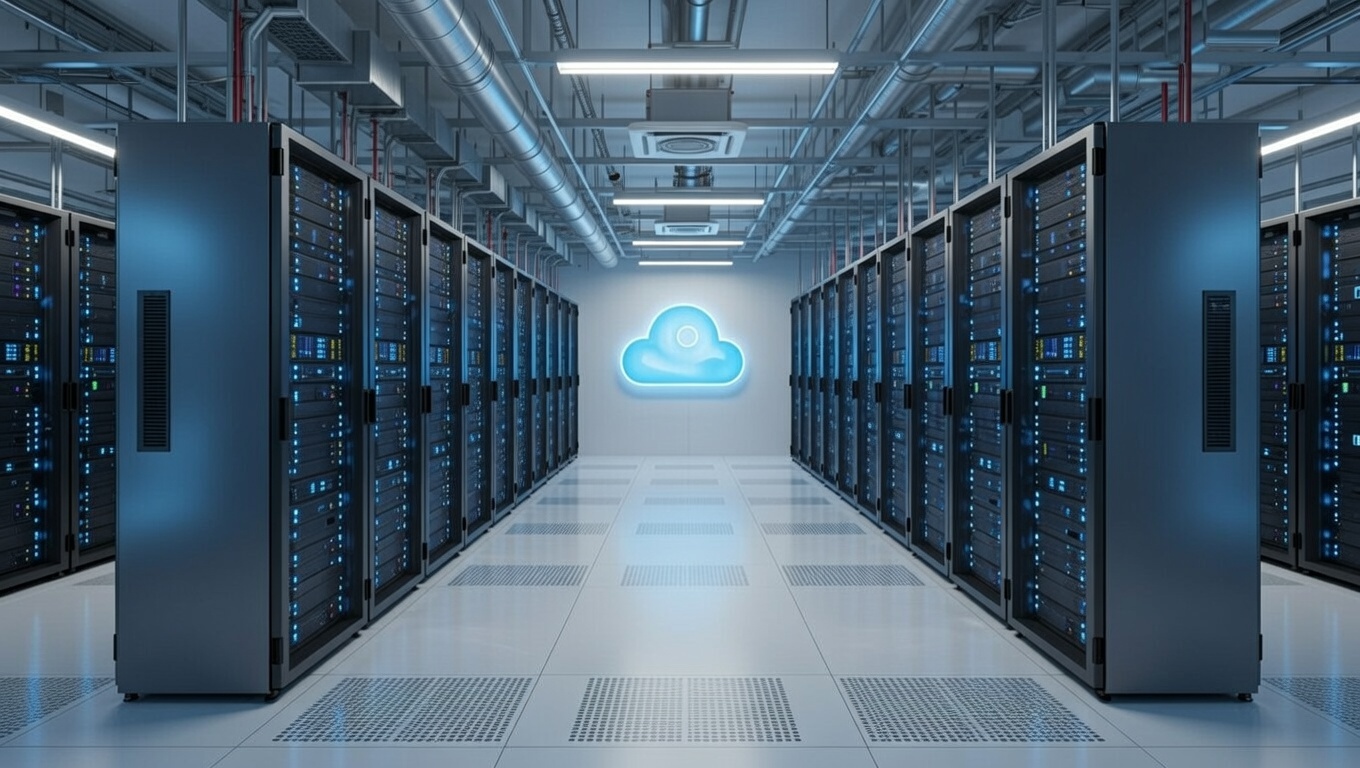
I have seen a lot of servers in my career. Some were humming away in pristine data centers. Others were tucked under desks, squeezed into storage rooms, or sharing a shelf with copier paper and somebodyโ€™s forgotten lunch bag.

That may have worked when everyone came to the same office, used the same network, and crossed their fingers during thunderstorms. It is not a great foundation for a modern business. Today, your team may be working from the office, from home, from a client site, or from an airport between flights. They still need dependable access to QuickBooks Desktop, line-of-business applications, and the files that keep the company moving.

Hosting those systems on Microsoft Azure with Noobeh gives your business a secure, professionally managed environment without asking you to become an infrastructure company.

QuickBooks Desktopโ€”without being tied to a desktop

QuickBooks Desktop remains essential for many businesses because it supports familiar workflows, specialized integrations, and years of valuable company data. The problem is often not the application. The problem is where it lives.

When QuickBooks lives on one office computer or an aging local server, access can become a daily obstacle. Remote users may struggle with complicated connections. Performance can vary. Backups may depend on someone remembering to check them. A hardware failure can turn an ordinary Tuesday into a business emergency.

In an Azure-hosted environment, authorized users connect to a centralized workspace where QuickBooks Desktop and other applications run close to the company data. The experience stays familiar, but the infrastructure behind it is built for secure access, business continuity, and growth.

What the business gains

Work from almost anywhere

Your people need access to their work, not a scavenger hunt for the one machine that has the right software installed. A hosted environment gives approved users a consistent way to reach the applications and data they need, whether they are in the office or working remotely.

Reduce the risk of aging hardware

Servers do not improve with age. Eventually, warranties expire, drives fail, and replacement parts become harder to find. Azure shifts the conversation away from buying and maintaining a physical box and toward providing the right computing resources for the business.

Strengthen security with layers

Security is not one product or one checkbox. It is a combination of identity controls, access policies, system maintenance, monitoring, backups, and good operational practices. Noobeh designs and manages the environment so these pieces work together, based on the needs of your organization.

Plan for interruptions before they happen

A local power outage, failed server, or inaccessible office should not automatically stop the business. A thoughtfully designed cloud environment can support backup, recovery, and continuity objectives that match the companyโ€™s tolerance for downtime and data loss. That planning matters far more than simply saying, โ€œWe have a backup somewhere.โ€

Scale without another hardware project

Businesses change. You hire people, add applications, open locations, or hit a busy season. Azure resources can be adjusted as requirements evolve, which makes growth a planning conversation instead of another round of shopping for a server that may be too small next year or far too large today.

Why Noobeh?

Microsoft Azure is a powerful platform, but power alone does not create a good business outcome. Someone still has to ask the practical questions: How many people need access? Which applications must work together? What performance does QuickBooks require? How should data be protected? What happens when a user needs help?

That is where Noobeh comes in. We bring cloud expertise together with an understanding of the applications businesses actually use. We help design the environment, move workloads, configure access, and manage the infrastructure after launch. You get a cloud solution built around the way your company works, not a pile of technology and a wish for good luck.

And because every business is different, the answer is not automatically โ€œmove everything.โ€ The right approach may include QuickBooks Desktop, supporting applications, shared files, or a broader hosted workspace. Noobeh evaluates the full picture and recommends an environment that makes sense operationally and financially.

The real value is confidence

Cloud hosting is not exciting because a server is running somewhere else. It is exciting because your team can log in and get to work. Because adding a new employee does not require a weekend hardware project. Because your critical systems are managed intentionally instead of being quietly ignored until something breaks.

That is the point: fewer infrastructure distractions, better access to the tools people depend on, and a technology foundation that can keep pace with the business.

Is it time to get your server in a better place?

If your business depends on QuickBooks Desktop or other server-based applications, now is a good time to ask whether the current setup is helping you grow or simply giving you one more thing to worry about.

Talk with Noobeh about an Azure-hosted environment designed for your people, your applications, and your business. Letโ€™s move the infrastructure out of the way so your team can focus on the work that matters.

Make Sense?

bunny feetJ

Podcast Episode: Data, Cloud, and AI for SMBs

Pip: Cooper Mann Consulting has a recurring thesis: before you chase the shiny thing, make sure the foundation underneath it can hold the weight.

Mara: Joanie Mann covers a lot of ground in these posts โ€” QuickBooks reporting infrastructure, cloud resilience for smaller businesses, Microsoft Fabric as a data platform, and what it actually takes to make AI useful.

Pip: Let's start with the reporting question, because it turns out QuickBooks alone may not be enough.

Reporting Beyond QuickBooks Enterprise

Mara: The core tension here is that QuickBooks Enterprise Desktop is genuinely capable software โ€” cost-effective, flexible, widely used โ€” but its built-in reporting has a ceiling.

Pip: The post puts it plainly: "Many businesses eventually outgrow the reporting capabilities available directly inside QuickBooks Enterprise Desktop." That's the inflection point the whole piece is built around.

Mara: And the consequence is concrete. When you hit that ceiling, you're not necessarily shopping for a new accounting system. You're looking at extending what you have โ€” pulling QuickBooks data into Azure infrastructure and surfacing it through Power BI.

Pip: Which is a meaningfully different conversation than "time to rip and replace."

Mara: Right. The post walks through what that extension actually delivers: custom report design, consolidation of data from other operational systems, interactive dashboards, automatic data refreshes across devices, and handling for larger datasets using Azure's elastic infrastructure.

Pip: That last one matters for businesses that have been running long enough to accumulate serious data volume โ€” the reporting slows down before anything else does.

Mara: The scalability argument carries through to a companion piece, Unlocking Insights in QuickBooks Enterprise Data, which frames this as an AI-readiness question too. Once QuickBooks data is centralized in a governed data warehouse or lakehouse, it can feed forecasting and anomaly detection โ€” not just dashboards.

Pip: So the reporting upgrade and the AI foundation are the same project, just described at different stages.

Mara: And a third piece, Unlock KPIs and Improve Reporting with QuickBooks, backs up to the starting line: businesses that haven't yet captured the right operational data can't build meaningful KPIs from it. The post makes the point directly โ€” "No data means no KPIs." You have to get the data right before the reporting layer has anything real to work with.

Pip: Which is a polite way of saying the ledger cards have to go first.

Mara: That thread connects directly to the cloud question โ€” where the data lives shapes what you can do with it.

Cloud Flexibility as a Business Strategy

Mara: The cloud resilience post reframes what resilience actually means for a small or midsized business today.

Pip: The post puts it this way: "Cloud flexibility won't remove uncertainty, but it can change how the business faces it… from reacting under pressure to responding with confidence, agility, and control."

Mara: What that looks like in practice is scaling resources seasonally, enabling secure remote access, deploying tools faster, and strengthening backup and recovery โ€” without rebuilding the technology foundation each time something shifts.

Pip: And the post is careful to say this doesn't have to happen all at once. You start where the value is most immediate.

Mara: That phased framing is what makes the cloud conversation feel like a business decision rather than an infrastructure project. Speaking of infrastructure โ€” Microsoft Fabric is where that foundation gets built.

Microsoft Fabric for Growing Businesses

Pip: The Fabric post is aimed squarely at businesses drowning in spreadsheets โ€” which is most of them.

Mara: The framing is direct: Azure data platforms and Microsoft Fabric can replace "spreadsheet chaos" with a centralized analytics environment, eliminating file version issues and the need for manual consolidation entirely.

Pip: So the upshot is a live business dashboard pulling from QuickBooks, Shopify, HubSpot, Square โ€” whatever the business already uses โ€” without custom integrations.

Mara: And the post emphasizes that getting started doesn't require a dedicated data team. That's the practical threshold for most small businesses. Which brings us to the question of what happens when AI enters that environment.

Fix the Data Before AI Touches It

Mara: The AI posts share a single argument: AI doesn't fix bad data, it scales it.

Pip: Fix the Data, Then Let AI Scale It puts the problem in terms any field-service business will recognize โ€” jobs marked complete in one system but not invoiced in another, customers duplicated across platforms, manual spreadsheet patches holding the whole thing together.

Mara: The post is direct about the consequence: "Imagine training your AI on this data. It isn't going to resolve the data issues or repair them, it will repeat them at scale."

Pip: That's the part AI vendors tend to skip in the demo.

Mara: Data Is the Real Competitive Advantage extends the argument beyond any specific software stack. It asks four questions worth sitting with: Do you trust your core business data today? Can you explain where key numbers come from? Are your processes documented and consistently followed? Do you have a single, reliable version of the truth?

Pip: If the answer to any of those is no, the post's advice is clear โ€” fix the data first, then consider the AI layer.


Mara: The thread across all of this is the same: the foundation has to come before the capability built on top of it.

Pip: Data before AI. Cloud before scale. Reporting infrastructure before the dashboard you actually want. Next time, we'll see what else is in the queue.