Using Structured Workflow to Manage Offline Clients | Intuit Accountants News Central

Using Structured Workflow to Manage Offline Clients | Intuit Accountants News Central

The demand today requires that accounting professionals be more attentive and, yes, aggressive, in terms of “attacking” a regular flow of processing client information rather than batching it at period end. This drives a great need to structure and organize the work, and workflow, so that the repetitive and regularly performed processes may be streamlined and made easier to manage on an ongoing regular basis. It is no longer good enough to wait for clients to deliver the information and request the resultant reports. We must proactively request and gather the required information for processing, especially with offline clients, in order to get the work done more frequently.

Read the entire article at Intuit Accountants News Central

J

CooperMann 2012 in review

CooperMann 2012 in review

2012 Was an interesting year, to say the least.  Not that it wasn’t a good year, but it certainly brought its share of challenges as well as opportunities.  At CooperMann.com, we attempted to reflect upon these challenges and opportunities, discussing how they impact our views on accounting and technology and business in general.

While the economy continued to struggle and churn, business owners found that reducing operating costs and creating sustainability in the business were initiatives they could no longer afford to minimally address. As advancements in technology and the growing popularity of cloud computing models resulted in a number of solutions to help businesses meet those cost and continuity issues, they also introduced new and different challenges for accounting and finance professionals seeking to reinforce their relevance and value to the business.  They say that the only constant is change, so we should expect no fewer challenges (or opportunities!) in the new year.

Joanie Mann Bunny Feet

As for CooperMann.com, here’s how we did in 2012, our inaugural year

600 people reached the top of Mt. Everest in 2012. This blog got about 10,000 views in the latter part of 2012. If every person who reached the top of Mt. Everest viewed this blog, it would have taken 17 years to get that many views.

The busiest day of the year was October 2nd: The most popular post that day was

Attractions in 2012

These are the posts that got the most views on CooperMann in 2012.

Changing How We See Software: QuickBooks 2013 interface frustrates power users

Is This The End Of ERP?

In Bookkeeping, Accounting, and Information Technology: The Value of Outsourcing

Working With the Right Numbers: Financial Data Analysis Requires Accurate Financial Data

Not Everybody’s Accounting Online: Outsourced Bookkeeping and Accounting for “Offline” Clients

Top 3 Favorite posts for 2012

One-Write System Revolutionizes Accounting: These guys had the right idea, they just didn’t have the cloud.

The race to find the “secret sauce” of hosted application services for small business

Accounting Professionals: It’s Good To Be Sticky

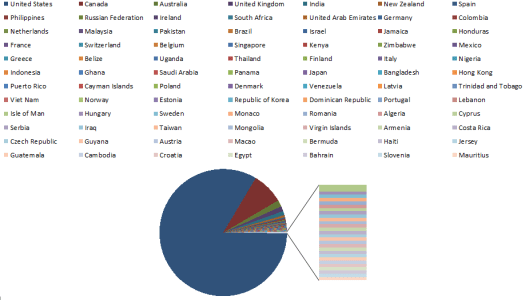
Where in the world is CooperMann viewed?

CMC2012-countries

buildingup-small-logoWhat’s coming up for 2013?  Keep watching CooperMann.com and BuildingUP.biz to stay on top of current issues and trends in accounting and business technology.

Accounting Professionals: Is Your Value Tied Up in The Accounting Software?

Accounting Professionals: Is Your Value Tied Up in The Accounting Software?

Subtitle: when all you have is a hammer…

There was a time, not so many years ago, when it made sense for an accounting firm to take the position that all clients must use the firm’s preferred accounting software product or they would not be clients.  For these firms, the concept of standardizing transaction entry and data processing across the client base made sense, and provided a means to create maximum efficiency in handling the bookkeeping and accounting processes.  Typically, firms handling small business clients would select Intuit QuickBooks for client use, and offered QuickBooks training, QuickBooks transaction processing, and use of QuickBooks add-ons to support the model.  With Intuit QuickBooks “owning” the small business market for accounting software, it made sense for accounting professionals to leverage the popularity of the solution to the benefit of the practice.

As cloud-based solutions and online application services have emerged (including QuickBooks Online Edition and Intuit Partner Platform – IPP – integrations), many accounting professionals have simply continued with the philosophy of applying QuickBooks (the hammer) to every client engagement.  These firms focus on the software as a basis for delivering what they believe is value in the engagement.  In short, these professionals focus their value in the use of the product (licensing, installation, training and support), and in their data entry skills (efficiency in entering and reviewing transactions in the product), rather than in the greater value of business intelligence, insight and actionable advice.

The new challenge facing many professionals – the reality of the current market – is that there are myriad solutions and approaches available to address client bookkeeping and process needs which work really well, and it is not always a good idea to try to turn a client using one of them into a “nail” just so you can hit it with your favorite hammer – QuickBooks.   With Freshbooks, Wave Accounting, Xero and other solutions which handle various business accounting or bookkeeping requirements quite well and for an attractive price, small business owners are more frequently electing to implement applications outside of the QuickBooks product line even as their accounting professionals are continuing to promote QuickBooks for everyone.  The reason business owners are electing to use these other tools is simple: they work for them.

In reality, this issue has existed in some form for a very long time, and was perceived to be primarily in markets where technology adoption and use is low for various reasons.  The truth is that a lot of small business owners find ways to accommodate their information management and record keeping needs, and they use whatever approach works for them and what they want to accomplish.  Sometimes the approach involves Internet solutions and online applications, and sometimes it does not (Excel spreadsheets with stapled piles of receipts are still quite popular and in widespread use by SMBs and Entrepreneurs).  When that small business elects to engage the help of an accounting professional, the last thing they want to be told is that they have to make a big change to how they get things done.  It’s fine for the accountant to provide guidelines for when information will be made available to support getting the accounting work processed, but it is not necessarily okay to dictate immediate changes in software and systems supporting the business daily operations.  In a lot of cases, the accounting professional simply has no real basis for the requirement to change, other than to support their own efficiency (which is the wrong basis for making a client change their systems).   It’s that silly cost-benefit thing. If it costs the client a lot (change always = cost), and the client does not perceive or experience an expected benefit, then it makes no sense for them to make the change.

Consider a professional accounting firm in Los Angeles, California.  This firm serves small businesses, and has a pretty significant market available to sell to.  LA is a market where technology adoption is high and broadband Internet is cheap and reliable, so this firm has elected to use a product-based focus (e.g., the QuickBooks approach) in qualifying clients and crafting engagements.  Clients must conform to the solution set and the workflow in order to participate with the firm.

Now, consider a professional accounting firm in Elkton, Oregon.  This firm serves just about every business in town (population 195) as well as businesses from a few nearby towns.  Broadband Internet service is sketchy at times, and provider options are few.  This rural area of Oregon is not known for being particularly “high tech”, and computers and software and online application services are not among the things many of these business owners focus on or even care about.  The accounting firm serving this market is not focused on what accounting solution the client uses (or not), and they aren’t pushing to have all their clients purchase and install the same accounting software so that the firm’s processes can be more efficient.  Interestingly enough, this firm is likely doing better work and probably developed a closer and more intimate relationship with their client than those who have fully “standardized” the client base.  The reason is that the firm, whether out of necessity or out of desire, recognizes that each of their clients may have unique needs, and it is up to the firm alone to create maximum efficiency in meeting them.  Further, delivering personal service and useful insight instead of simply providing the work product has allowed the professional to more fully reveal their value to the client.

The truth of the small business accounting market is that there are more businesses like those in Elkton than in LA. Accounting professionals should consider whether they are in a position to “filter” their client opportunities based on use of certain software products and online solutions, or if they will accept that business clients come in all sizes and shapes – with various needs and wants and self-developed methods of getting things done – and that the firm is willing to embrace them as they are and work with them.

Make Sense?

J

The True Cost of the Cloud

The True Cost of the Cloud

Excerpt from article on Intuit Accountants News Central: The True Cost of the Cloud

“Accounting professionals are strongly encouraged to adopt cloud computing models in their practices, and there can be little argument that mobility and access are driving the need. In concert with the messages supporting mobile access to business information – and the value of anytime, anywhere access – cloud service providers are strongly suggesting that the overall cost of purchasing and maintaining information technology (IT) in the business is much lower when a cloud computing approach is used.

Arguments over the total cost of IT and related services become somewhat subjective. Many business owners and managers fail to consider the value of their own time spent dealing with business technology issues, much less the time spent by in-house employees and remote workers. To further complicate the issue, dramatic changes in process support and delivery, connected service and cloud computing approaches are impacting business productivity and profitability in new and dramatic ways. As a result, every business should consider the costs and the benefits of this new connected and collaborative working model.

At the core, cloud computing is really just an outsourced IT service that addresses the various levels of application and computing infrastructure. From IaaS (infrastructure as a service) to SaaS (software as a service) and all things in between, a viable cloud computing approach for a business may encompass little more than co-location of physical server and network resources with a third-infrastructure provider to something much larger scale, such as offloading virtually every aspect of application management and delivery to a SaaS solution.

Because there is no single, correct definition of what makes up a “cloud” service model, attempting to compare costs directly to a more traditional IT approach is quite complicated.”

Read the entire article at Intuit Accountants News Central

http://blog.accountants.intuit.com/ways-to-grow-your-business/the-true-cost-of-the-cloud/

Not Everybody’s Accounting Online: Outsourced Bookkeeping and Accounting for “Offline” Clients

Not Everybody’s Accounting Online: Outsourced Bookkeeping and Accounting for “Offline” Clients

With all the focus on online technology, solutions that help you work smarter and not harder, and having mobile access to information at any time and from anywhere, you’d think that the entire world had adopted an entirely mobile and high-tech approach to life and business.   The popularity of software-as-a-service models and apps for just about everything are certainly a testament to the movement toward a more connected and mobile lifestyle and business environment.  However, not every business has adopted a comprehensive paperless, mobile-accessed, virtual working world – not by a long shot.  In fact, more folks than you may realize are still using actual paper, writing things by hand (things like checks and invoices), filing piles of paperwork in stand-up filing cabinets, and generally doing things the long, slow, painful way and then recording it on PC-based spreadsheets.  You know – the way we did things before the Internet showed up.

While paperless offices and technology-enabled approaches to collaborative business are gaining popularity and adopting users every day, there is a community of business users out there who are not as laser-focused on the high-tech approach to online accounting and working closer with their outsourced accountant or bookkeeper.  These business people are just getting the job done, and have found ways to handle their information and processes that work for them.  It is this business user that accounting professionals should not forget as they seek to adopt new and innovative cloud approaches to service delivery, and for a couple of reasons.  First, this type of client is likely to be in need of process support and additional service as the business grows, and the accounting professional is in a great position to help with those needs.  Second, this type of client exists in great number.

Consider the following scenario; a discussion I discovered when perusing a small business forum recently.  The interesting thing is that this is a discussion I see pretty frequently with small business owners and entrepreneurs – the discussion about the value of actual accounting or bookkeeping solutions versus a simple spreadsheet approach to record keeping.

I am the owner of a brand new small business. It has only been up and running for a short time. My accountant is pressuring me to use the online version of QuickBooks, but I am doubtful as to whether this is the right software for me.

I know that QuickBooks has a lot of different features, but I really only need it to track spending and customer payments, and since it’s still early on, I don’t have a lot of either. I would only need the very basics, and would probably only check it every two weeks at most.  The fees they want for the software would add up pretty quickly for something I’m not really going to use much.  My business is very small (just me) and service-based (tour guide), without much potential for repeat customers. I don’t need the payroll, invoicing, or other advanced features.

I honestly think that the easiest thing for me would be some sort of spreadsheet or really basic software that I could put directly on my computer instead of accessing online.

The truth of the matter is that spreadsheets often provide the common ground between small business owners and their accountants.  For a business owner, spreadsheets offer a simple and intuitive way to organize and record information because the column layout makes it easy to understand where to enter which data.  For the accountant, a spreadsheet can fairly quickly be sorted, filtered and prepared as accounting or tax return data.  While working with clients in a fully online, collaborative model may be the “best case scenario” in terms of delivering high levels of service in the most efficient manner, understanding how best to work with those clients in other scenarios is also necessary.  Getting the spreadsheet from this type of client is generally not terribly difficult – they are often more than willing to email it.  As long as the professional has a good document management solution to capture and manage these files, and introduce them into the firm workflow, then working with this type of offline client doesn’t have to be a huge impact to internal firm efficiency.

For accounting and bookkeeping professionals working with small business owners around the country, this type of client likely fits into the “normal” category more than those with a strong motivation to use cloud computing and having a great desire to use the Internet and connected services for everything they can (eventually the “new”normal?).  I believe the reality is that only a small fraction of smaller companies – solo, soho, and small/medium business – are actively managing the majority of their business process and information online.  In fact, Intuit (makers of QuickBooks) and other entry-level accounting and bookkeeping solution providers continue to heavily target small business users who are still tracking their finances using spreadsheets and other methods.  This simplified and after-the-fact approach to spreadsheet record keeping is being further facilitated by the banks and credit card companies providing customers with a greater ability to classify and categorize transaction information, and then quickly download it into said spreadsheet.

Yes, the dichotomy is clear: many small business owners resist (or are, at least, unimpressed with) cloud accounting approaches, yet these very same individuals are likely utilizing cloud services from banks and other financial institutions to support their spreadsheet and checkbook record keeping, as well as accessing email and other services via the web for various reasons.  It makes some sense, though, when you look at it from the business owner perspective.  Their way sounds easier, is less overwhelming, and meets the need – for now.

J

Learn more about Working Online With Clients: How to leverage the internet and cloud computing to work closer with your clients

Read more about Online Accountants and Their Clients: Working Smarter, or just Closer?

Read more about Data Warriors: Accountants in the Cloud

Read more about using the cloud to extend “connectedness” beyond traditional boundaries

QuickBooks Hosting Services and Accounting Professionals

The value of applying an application hosting model for your clients

The concept of application hosting is not at all new.  In fact, there are literally millions of business users accessing hosted applications and similar services every day, and adoption didn’t reach those numbers overnight.  For several years now, Intuit (the makers of QuickBooks financial software, among other things) has even had an “Authorized Commercial Host for QuickBooks” program.  If Intuit recognizes the value of a hosted application service model, then there must be something to it, because Intuit rarely does anything unless it’s big.

The value of application hosting services, such as QuickBooks hosting, may differ from business to business, but the underlying benefits are there for all to achieve.  For some, the main value is in being able to access business information and data while traveling.  Using mobile devices, business users are able to get information on customers, orders, payments, and other valuable data – from anywhere they choose to work.  Being able to keep tabs on the business even when they aren’t there is very important to some business owners.

For others, the value of application hosting services is the collaboration that it enables.  With public accounting in particular, the client business and the accounting professional do not work at the same place at the same time.  Being able to work on the same software and data, and doing that work at the same or different times (it doesn’t matter when or where they work) allows business owners and their accounting and bookkeeping professionals to work seamlessly together in support of the business.  This online model allows the business owner to benefit from better financial data in real-time, rather than waiting for the work to be done after the fact, at the end of the month or year.

The underlying benefit that all parties get from a hosted application and online working model is better information technology management and greater predictability in IT service costs and capabilities.  Businesses need to be able to focus on their business and not on the IT which supports it, and outsource professionals such as accountants and bookkeepers need to be able to work with clients efficiently without having to invest in expensive tools and services to make it happen.  A hosted application approach, when applied to the client business, delivers many benefits to the business owners while at the same time providing tangible benefits in efficiency through more effective time management and improved access to information for the professionals who support those businesses.

When developing a working model for outsourced bookkeeping, accounting, or virtual CFO services, it is essential to recognize that businesses need technology to support their operations, and there may be “line of business” solutions in use as well as accounting or financial software.  Too often, outsource bookkeeping and accounting professionals focus only on the accounting or financial systems, and fail to consider the critical aspects of the operational level applications which support the various functions of the business.   With a hosted application approach, the business solutions in use can be “enabled” – from operational solutions to accounting and finance supporting applications – so that accounting professionals may gain access to the complete realm of business data, putting them in a far better position to ensure that the information resulting in the accounting system is of high quality and may be trusted.

Make sense?

J

Read more about Accountants and Bookkeepers Working With QuickBooks Clients: App Hosting Approaches That Work