Unlock KPIs and Improve Reporting with QuickBooks

It is surprising how many businesses still keep boxes of 3×5 ledger cards with customer and vendor information on them. More likely than the card box, the business may be storing its essential customer billing and vendor product information in the accounting system because that is the system they have.

These growing businesses need a better system to capture more information that delivers greater detail for accounting and reporting purposes. Just as likely, the business has other information it should and possibly could be capturing but isn’t sure about what steps to take next.

When details that inform a process are not part of an integrated system, it creates greater potential for lost or inaccurate data. The larger the volume, the more difficult and error-prone managing the information becomes.  

Business needs more detailed information about… everything.

Businesses may need to track time for payroll or jobs or both, job tracking may be a requirement, inventory tracking or more detailed inventory management may all be areas for greater attention. Mendelson Consulting can help develop these capabilities by making sure the business is using the right software, and then enabling the functionality needed to support the workflow and capture more and better data.

No data means no KPIs.

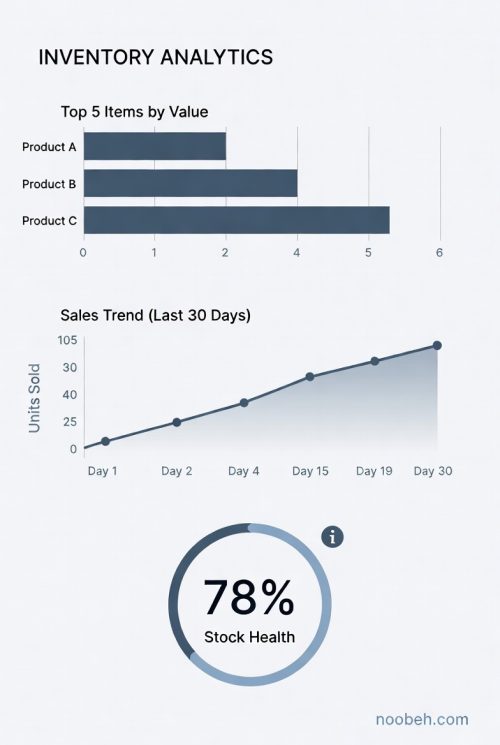
More and better data means more information to fuel KPI reporting. Key performance indicators can reflect operational performance in a variety of areas and may help identify where improvements are required.

Using data from the accounting and operational systems, businesses of all sizes measure their effectiveness using KPIs to evaluate the successes – or failures – of their processes and activities.

Mendelson Consulting’s team of QuickBooks Enterprise Experts and ERP consultants provide guidance, implementation and training, and report development to get beyond bookkeeping to proper processes that result in good accounting data. Mendelson’s cloud services team – Noobeh – sets it all up on Microsoft Azure, where data connectors, data warehouses and Microsoft Fabric weave it all together.

Whether just starting out or an enterprise or franchise expanding at a national or global level, we help businesses do more with their systems and software. We understand each stage of business and how to help our clients reach their next best level.

jm bunny feetMake sense?

J

Streamline Your Accounting: Add-Ons vs. Full Migration

Growing businesses have growing needs.  More customers, more products, more workers, more vendors. More of everything, and the need to keep track of it all comes along for the ride. With business accounting systems, one of the challenges of supporting more detailed or complex processes is the idea of changing over to an entirely different solution.

Instead of thinking in terms of migration, it is often better to preserve the knowledge, training, and data already invested in the current solution, and add on to that system to support the expanded processes or functionality.

This is a buying decision in the business lifecycle: enable new systems and processes versus a comprehensive solution migration.

In many cases, the add-on or extension for QuickBooks is a better answer than a migration to an entirely different – more expansive and more expensive – ERP solution. Part of the reason is the historical data. Another is learning.

The early years of a company are the formative years, where much learning is accomplished. Losing the fidelity of this data and the organizational knowledge that developed is losing a past that could be learned from. There is also tremendous value in the working knowledge of the team members who utilize the systems every day. Preserving any of these investments is of benefit to the organization.

Mendelson Consulting works with business owners and stakeholders who know they need to expand systems and capabilities but just aren’t sure where to begin.

Our QuickBooks Enterprise experts, ERP consultants and cloud specialists can help identify the gaps in information, processes and workflows, and identify the solutions to solve the problems and smooth the flows. From QuickBooks add-ons, extensions and sync solutions to other ERP options, we provide our clients what they need to do more and better business.

jm bunny feetMake sense?

J

Maximize QuickBooks Performance with Proper Data Maintenance

Millions of businesses around the globe use QuickBooks software for their accounting. With an estimated 84% of the small business accounting market making the buying decision to go with it, QuickBooks has enough product momentum and functionality to support small businesses through midmarket customers.

This is a broad base of customers for any accounting product, and the continued popularity of QuickBooks Enterprise is a testament not just to the application’s usefulness, but to the large gap that exists in the space where QuickBooks Enterprise desktop leaves off and the well-known enterprise ERP systems start. 

Initially, a business will implement their accounting system to keep track of customers, vendors, items, and cash. More detailed processes are then introduced as the business requirements grow, such as tracking more specific information on the costs of certain products, or drilling into customer purchases or item sales activity to see more details. This additional data provides a much more informed basis for business decision-making but also has impacts on systems and software as the volume of data to be managed grows.

Data growth can happen in many ways. Growth can occur in the number of products or services offered, growth in the number of transactions processed regularly, growth in the dollar value of transactions, or growth in the number of employees who need access to the system. Each impacts the ability of the system to continue to support the business requirements, but not necessarily in a way that isn’t manageable.

Given enough time, a certain “density of data” will eventually be reached, causing the system to lose efficiency in manipulating the file. The business process requirements may not have changed, just the size or condition of the file and data. The file opens slower, operations slow down and processes take longer, the system crashes frequently or has errors, and the usefulness of the product is severely diminished.

Keeping the QuickBooks data maintained and in good condition will improve performance and increase longevity of the application.

Too often, businesses assume they have outgrown their QuickBooks software because it is slower or has problems when they begin using additional features. Frustration sometimes even turns to looking at changing the accounting software entirely. Yet experience has shown that many of these situations are solved with some data file maintenance and repair, and sometimes a little re-training or setup work.

Regular file maintenance and a little housekeeping can keep a QuickBooks file in good working condition for a long time.  Regular backups with a complete verification and other routines will clean up the file and help the software manage the file more efficiently. But there are limits to how much data a single QB company file can hold, so it is wise to consider starting a new file every few years, just to keep the file manageable. This in no way means abandoning any data, as previous files can be retained and available to open and view at any time. How many years of data you can store in a QB Enterprise company file depends on a number of variables, and can range from a few to many.

While QuickBooks is very easy to use compared to most accounting products that service this small/medium enterprise market, this is both a benefit and a bit of a problem. Many users aren’t really trained in accounting, they are trained in how to operate QuickBooks. Moreover, the knowledge of how to make something work in QuickBooks doesn’t always translate to either proper use or to proper accounting. Even if it is simple to accomplish something in QuickBooks, it is always wise to get a little confirmation of the setup and training on proper use.

For a QuickBooks Enterprise desktop customer, the next step up in software is a big one no matter what, and it would come with drastic change, require data conversion (or abandonment), and incur high costs in licensing, implementation and training services. If there is a good business purpose to make such a change, then it makes sense. But bearing the significant costs of change may not make sense if the problems are centered on poor housekeeping or improper usage.

Mendelson Consulting’s team of QuickBooks Enterprise experts and ERP consultants can help your company get your data file and QuickBooks operations in the condition they need to be. With data file analysis tools and numerous methods for dealing with QuickBooks data and operations issues, Mendelson provides the services businesses need to continue success with QuickBooks. And, if we find that you have outgrown what a QuickBooks-based solution can do for your business, we’ll have that conversation, too.

jm bunny feetMake sense?

J

Setting a Proper Foundation: Getting Started with QuickBooks

Businesses exist to make money, so it is no wonder that new business owners focus on the things that impact cash flow, like invoicing customers and making payments. These processes, involving getting and spending money, are among the first accounting-related things a new business owner generally addresses, yet they aren’t where the accounting should actually begin. The strongest foundation for any business begins with accounting, and proper setup and treatment is everything.

When most small business owners begin their operations, they get a business license, a computer, an email address and, more often than not, QuickBooks. Even if the owner isn’t fully prepared to handle the accounting for the business, they understand that they must do something to collect money and pay bills. QuickBooks is the standard for small business bookkeeping and has been for years, so this is where most begin.

Keeping a check register in QuickBooks, at the minimum, lets the business owner know how much money is in the bank. For a small business person, it’s all about cash flow and cash availability. Focusing on the checkbook and managing activities by counting payments going out and receipts coming in may help calculate the bank balance, but it doesn’t guarantee that the accounting is correct.

If the foundation isn’t solid, everything built on it is at risk.

To establish a proper foundation for business bookkeeping and accounting, there needs to be an understanding of basic accounting principles and how they are applied to this business. With the help and guidance of experienced accounting professionals or accounting software consultants, businesses will start out not just with the right chart of accounts, but also with knowledge of how to use the software properly. This enables workflows which utilize the capabilities of the software to handle the transactions properly at the back end, where data becomes information that provides insight into the business activities and results.

Whether the business is just getting started or has been operating for a while, there’s no time like the present to review the fundamentals and make sure you’re on solid ground. Mendelson Consulting, backed by CPAs and with years of business accounting software experience, is there to help businesses get the most from their accounting solutions. From initial setup to operational reviews and workflow re-design, you need a team that provides the services businesses need to build up their capabilities and grow the enterprise without compromising the structure supporting it.

jm bunny feetMake sense?

J

Why Small Businesses Need Proactive Accounting

It has been demonstrated time and again that businesses working with experienced accounting professionals can benefit from the strategic financial guidance and compliance support they may provide. Yet these factors alone are often not enough to make the business owner happy. For most small business owners and growing enterprise stakeholders, the lack of proactive advice compounded by slow responses to business requests are the primary reasons for leaving their CPA.

Even if they don’t know how to ask for it, small businesses want proactive attention from their accounting professionals. Small businesses want and need to get information when it matters, and they need help deciphering what the information really means.

It is common for professional accounting firms to simply wait for their clients to provide after-the-fact information from which reports are prepared and delivered long after their relevance has passed. These firms often see no sense of urgency in helping clients address the business issues facing them in real-time.

Business owners attempting to grow a small enterprise from their budding small business especially need the benefit of experienced insight into operational metrics, cash flows and overall business performance. Without this meaningful data and advice delivered in real-time, stakeholders don’t really know what is going on or if they’re on the right path.

Advice on business planning and financial strategies should come to business owners from their accounting professionals, but it often does not. It is interesting that so many firms list business planning and strategy among the services promoted on their websites, yet they just sit back and wait for clients to ask for help.

Regulatory and reporting requirements for businesses are ever-increasing, so it makes some sense that many professional practices continue to focus on taxes and compliance work. Firms may find it challenging enough to keep up with changes to these core services provided. Yet this is why practitioners should take notice and accept that their ability to meet changing market and customer demands is wrapped in their ability to leverage technology to do what people and process can’t do alone.

Information technology is needed to speed up the bookkeeping, accounting and reporting processes, and it takes even more technology to help turn data into relevant and useful information. This is where Mendelson Consulting and Noobeh cloud services can help.
Working with businesses of all sizes and encouraging participation by the accounting professional, Mendelson and Noobeh help businesses implement the technology that facilitates faster collection of information throughout the business and then applying solutions that reflect those numbers in ways that helps users visualize the meaning of the data.

Mendelson and Noobeh help CPAs and accounting professionals remove threats of competition and irrelevance by helping them work closer with and deliver greater value to their small business clients. Applying proven, innovative technologies with improved processing methods and controls leads to better information provided in a timelier manner, which returns to the client as a better result offering greater insight. This is what small businesses want from their CPA, and Mendelson Consulting and Noobeh Cloud Services helps professionals deliver it.

jm bunny feetMake sense?

J

State of the Union: The Irrelevance of Good Accounting?

State of the Union: The Irrelevance of Good Accounting?

financeI’m a little concerned, and any professional in accounting and finance who works with small businesses should be just a little concerned, too.  Why?  Because there is a belief out there that some nifty software and Internet Of Things (IoT) approach to finance will ultimately eliminate the need for a small business to work with skilled, trained accounting professionals.  Remember the marketing slogan introduced by Intuit with QuickBooks – the one that suggested that, “if you can write a check, you can do your own books”?  Most accountants will tell you that it is not true, and the ability to operate a product like QuickBooks does not magically turn poor accounting and bookkeeping information into good business data.  In fact, it most frequently enables bad information to turn into bad business decisions – quickly.

DIY bookkeeping solutions have been around for a while, so why the distress about it now? Up until this point, it hadn’t been so overtly stated to small business owners that having less-than-great accounting data is very much OK, and that the role accounting professionals play in small business finances is more of a burden than benefit.  Consider the statement made by President Obama in his recent State of the Union address:

“Let’s simplify the system and let a small business owner file based on her actual bank statement, instead of the number of accountants she can afford”

If I’m an accounting professional, I am pretty steamed up about that statement because I know how screwy business accounting data gets when the work is done by folks without the proper training.  Incorrect or improper accounting treatment can make a big difference when it comes to filing those taxes mentioned…. and not in a good way.  That transaction on the bank statement… Is it a cost of goods sold or a regular business expense? Is it an asset or supply item? Is it a reimbursement or revenue?  Is the payroll deduction before or after taxes?  Is that even a viable payroll deduction item?  These questions and more arise frequently in a small business, and the treatment for these items is improper as often as not.

There is a big value in what a trained accounting professional can offer a small business owner, and the value often translates to eliminating unnecessary tax burdens and the delivery of accurate reporting – both of which are really important when it comes to actually trying to grow a healthy and sustainable business.

Small businesses are often considered to be the fuel powering our economy.  Doesn’t it make sense for us all to recognize that smarter businesses are likely to be more successful, and that more successful small businesses means growth in the economy?  The importance of good fiscal and financial management and reporting – in business and in government – is not something to minimize, and suggesting that it takes no intervention or skill to do the job properly reflects poorly not only on the person saying it, but on the entire establishment.

jmbunnyfeetMake Sense?

J