

There are many articles and papers available which discuss the rapidly increasing “volume and velocity” of electronic information moving through businesses these days. The focus of the discussion in most cases is on how businesses need to adopt tools and solutions to help them with the management of this electronic data flow. What isn’t being discussed at length is the visceral business intelligence which is lost due to less direct interaction with the raw data.
By manually working through each item, the person regularly processing the information would often develop somewhat of a picture of the business simply through a level of intuition, a gut reaction to the information. This is a rapidly declining model, thanks to intelligent technologies and direct system integrations.
With the plethora of electronic information sources, data collection tools, and transaction download facilities, many bookkeepers and business owners are finding that their gut instinct and business intuition is being lost in the shuffle of managing and matching up all this electronic data.
Focusing on small business bookkeeping, the processes are now being oriented more towards matching up electronic transaction data points than on entering the information from the raw source. Where bookkeepers were once perceived as “mechanics” in terms of performing the bookkeeping data entry, the activities of these professionals is becoming even more mechanical in nature as the primary requirement shifts from entering the information to importing it and then matching it to source documentation.
Even decisions regarding categorization of the transaction are often made by software solutions, eliminating more involvement by the bookkeeping or accounting pro. At the same time that bookkeepers and accountants find themselves having difficulties communicating the value of the service they deliver, technology trends in the industry are weighing even more heavily on that value proposition by providing users with do-it-yourself tools and self-service solutions.
The answer to the challenge of demonstrating value in the bookkeeping and accounting processes is for accountants, bookkeepers and business owners is to focus on the result of the work rather than focusing on the work directly.
Small business owners will challenge their accountants and bookkeepers to explain why processing a limited number of transactions per period would cost much, and the professional ends up fighting a battle which cannot be won; there is far more value in the work they perform than simply entering the data. It’s this explanation of WHY bookkeeping and accounting takes skill and has value which become arguable to the business owner, and is a discussion which the accountant or bookkeeper is more likely to win if they were to in a position to provide their client with proof of this value.
Too often, accounting and bookkeeping service providers attempt to prove their worth to the client by espousing the quality, accuracy, and timeliness of their services and say too little about the value of the result they will deliver. Additionally, many professionals introduce their clients directly to the accounting software and try to engage the client to work cooperatively with the bookkeeping, as there is a perception that the client may see more value in the work if they can a) see it being done in real time and b) see how complicated it could really be.
Unfortunately the accounting and bookkeeping solutions often implemented by small businesses actually look pretty easy to use and are intuitive, which serves to even further diminish the value proposition as the client perceives that they could likely operate the software just as well as the bookkeeper.
In order to deliver the proof to the client that the bookkeeping work has value, the result becomes the focus of the effort. Rather than providing balance sheets, profit and loss statements and bank reconciliations, those involved in the bookkeeping and accounting process for the small business should also focus on reports which demonstrate the value of PROPER bookkeeping and accurately reflecting business activities.
Would the client know the real difference between cost of goods sold and a regular business expense? Reflection of that single transaction with two different treatments could be the trigger to get the light bulb to light up. How best to demonstrate the variation? Not in pure written report form, that’s for sure. Numbers alone don’t generally trigger real understanding, but painting a picture might.
Today’s dashboard and reporting tools – solutions which use information from the accounting system to reflect visual trends and representations of business performance – can deliver far more meaning and easier understanding than a columnar report with numbers and percentages. Further, these tools can address the task of revealing critical insight into business value, demonstrating (for example) the difference between cash flow and profitability, or identifying trends which indicate patterns in how the business is causing or reacting to change.
As small business owners feel continued pressure to improve performance and profitability, and as lending sources for business credit remain difficult and costly to engage, the necessity for quality bookkeeping and accounting services does not diminish, it increases. The challenge is in finding ways to read the data and discover the insight and meaning it reveals.
The value of bookkeeping and processing accounting data for businesses is ever-increasing in these days of global markets and global competition, and the forward-thinking professional will recognize that deeper insight into the business – insight enabled through the use of realtime reporting and analysis tools – delivers an ongoing opportunity to work closer with the client in addressing challenges identified and presented, and allows the accounting professional, bookkeeper and business owner to be guided by real information rather than emotion or intuition.
 Make Sense?
J
read the original posting at The Progressive Accountant.

 Technology and Tools for Accounting Professionals
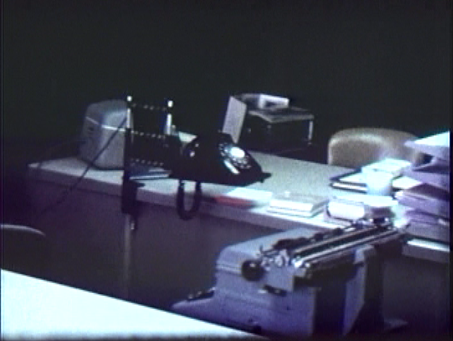
 There was a time not so long ago when accounting professionals focused more on tabulation and summarizing of information than on analysis. Accounting for businesses, in particular, required collecting myriad papers and receipts and other transaction documents, summarizing the information, translating it into journal entries, and finally posting those numbers to the big bound book which represented the business general ledger. With the work required to gather and enter all of the information, professionals necessarily focused their efforts on making the process as efficient as possible by attempting to structure the workflow and manage the paper.

 Make Sense?

 Cooper Mann Consulting