Using Structured Workflow to Manage Offline Clients | Intuit Accountants News Central

Using Structured Workflow to Manage Offline Clients | Intuit Accountants News Central

The demand today requires that accounting professionals be more attentive and, yes, aggressive, in terms of “attacking” a regular flow of processing client information rather than batching it at period end. This drives a great need to structure and organize the work, and workflow, so that the repetitive and regularly performed processes may be streamlined and made easier to manage on an ongoing regular basis. It is no longer good enough to wait for clients to deliver the information and request the resultant reports. We must proactively request and gather the required information for processing, especially with offline clients, in order to get the work done more frequently.

Read the entire article at Intuit Accountants News Central

J

Dashboard Reporting Tools: Gauging Accounting Relevance

Dashboard Reporting Tools: Gauging Accounting Relevance

Dashboard reporting tools can be of great assistance when accounting professionals want to help their clients understand how the business is performing.  In most cases, these tools do a good job of showing owners the details of the profit and loss or cash flow reports, presenting the information in a way that non-accountants can understand.  Many accounting professionals have turned to these reporting solutions to increase the value of the accounting work performed.  After all, if the client can’t really understand the P&L and the Balance Sheet, then the reports won’t do them much good.

While simplified graphical reporting solutions are beneficial to the business, providing more insight into historical business performance, they don’t do much for the client on a daily basis if the accounting data isn’t up to date.  Accounting professionals should recognize that these dynamic reporting solutions, tools which can provide business owners with real-time information on business activities and performance, can go a long way towards increasing the relevance of the accountant’s involvement in the client business.

Accounting professionals today are fighting battles on several fronts, and remaining relevant to the client is one of them.   This isn’t too surprising, given that many accounting professionals see their clients only at year-end when the tax return needs to be prepared.  In some cases, the business owner doesn’t even remember the name of their accountant – they just know they went there last year at tax time.  This arm’s length relationship between the accounting professional and the business clients leaves a lot of opportunity on the table for both parties.

When accounting professionals aren’t closely involved with their clients, they risk losing the client to a more attentive, consultative professional.  Many firms believe that the low profitability of bookkeeping and processing daily work for clients means that they should focus only on “higher level” opportunities, yet business owners will tend to seek advice from those who work with them on a regular basis, and who understand the issues that challenge growth and profitability.

Accounting professionals who recognize the value of providing regular bookkeeping services to their clients also recognize the value of working closer with the client, providing useful and actionable information rather than historic data long after-the-fact.  These professionals are more likely to reap the rewards of “higher level” engagement opportunities from the client, because they help to identify the need and are able to support it with real data and insight earned through regular involvement with the business.

Make Sense?

J

  • Read more about how accountants need business intelligence, too
  • Read more about how there’s no fear and loathing in accounting
  • Read more about Data Warriors: accounting in the cloud

CooperMann 2012 in review

CooperMann 2012 in review

2012 Was an interesting year, to say the least.  Not that it wasn’t a good year, but it certainly brought its share of challenges as well as opportunities.  At CooperMann.com, we attempted to reflect upon these challenges and opportunities, discussing how they impact our views on accounting and technology and business in general.

While the economy continued to struggle and churn, business owners found that reducing operating costs and creating sustainability in the business were initiatives they could no longer afford to minimally address. As advancements in technology and the growing popularity of cloud computing models resulted in a number of solutions to help businesses meet those cost and continuity issues, they also introduced new and different challenges for accounting and finance professionals seeking to reinforce their relevance and value to the business.  They say that the only constant is change, so we should expect no fewer challenges (or opportunities!) in the new year.

Joanie Mann Bunny Feet

As for CooperMann.com, here’s how we did in 2012, our inaugural year

600 people reached the top of Mt. Everest in 2012. This blog got about 10,000 views in the latter part of 2012. If every person who reached the top of Mt. Everest viewed this blog, it would have taken 17 years to get that many views.

The busiest day of the year was October 2nd: The most popular post that day was

Attractions in 2012

These are the posts that got the most views on CooperMann in 2012.

Changing How We See Software: QuickBooks 2013 interface frustrates power users

Is This The End Of ERP?

In Bookkeeping, Accounting, and Information Technology: The Value of Outsourcing

Working With the Right Numbers: Financial Data Analysis Requires Accurate Financial Data

Not Everybody’s Accounting Online: Outsourced Bookkeeping and Accounting for “Offline” Clients

Top 3 Favorite posts for 2012

One-Write System Revolutionizes Accounting: These guys had the right idea, they just didn’t have the cloud.

The race to find the “secret sauce” of hosted application services for small business

Accounting Professionals: It’s Good To Be Sticky

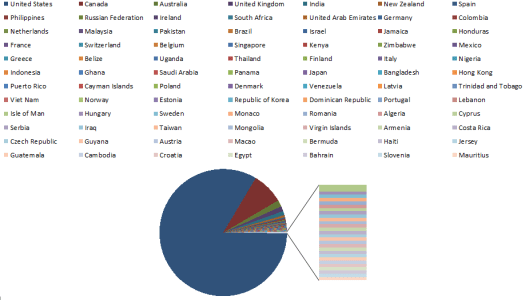
Where in the world is CooperMann viewed?

CMC2012-countries

buildingup-small-logoWhat’s coming up for 2013?  Keep watching CooperMann.com and BuildingUP.biz to stay on top of current issues and trends in accounting and business technology.

Not Everybody’s Accounting Online: Outsourced Bookkeeping and Accounting for “Offline” Clients

Not Everybody’s Accounting Online: Outsourced Bookkeeping and Accounting for “Offline” Clients

With all the focus on online technology, solutions that help you work smarter and not harder, and having mobile access to information at any time and from anywhere, you’d think that the entire world had adopted an entirely mobile and high-tech approach to life and business.   The popularity of software-as-a-service models and apps for just about everything are certainly a testament to the movement toward a more connected and mobile lifestyle and business environment.  However, not every business has adopted a comprehensive paperless, mobile-accessed, virtual working world – not by a long shot.  In fact, more folks than you may realize are still using actual paper, writing things by hand (things like checks and invoices), filing piles of paperwork in stand-up filing cabinets, and generally doing things the long, slow, painful way and then recording it on PC-based spreadsheets.  You know – the way we did things before the Internet showed up.

While paperless offices and technology-enabled approaches to collaborative business are gaining popularity and adopting users every day, there is a community of business users out there who are not as laser-focused on the high-tech approach to online accounting and working closer with their outsourced accountant or bookkeeper.  These business people are just getting the job done, and have found ways to handle their information and processes that work for them.  It is this business user that accounting professionals should not forget as they seek to adopt new and innovative cloud approaches to service delivery, and for a couple of reasons.  First, this type of client is likely to be in need of process support and additional service as the business grows, and the accounting professional is in a great position to help with those needs.  Second, this type of client exists in great number.

Consider the following scenario; a discussion I discovered when perusing a small business forum recently.  The interesting thing is that this is a discussion I see pretty frequently with small business owners and entrepreneurs – the discussion about the value of actual accounting or bookkeeping solutions versus a simple spreadsheet approach to record keeping.

I am the owner of a brand new small business. It has only been up and running for a short time. My accountant is pressuring me to use the online version of QuickBooks, but I am doubtful as to whether this is the right software for me.

I know that QuickBooks has a lot of different features, but I really only need it to track spending and customer payments, and since it’s still early on, I don’t have a lot of either. I would only need the very basics, and would probably only check it every two weeks at most.  The fees they want for the software would add up pretty quickly for something I’m not really going to use much.  My business is very small (just me) and service-based (tour guide), without much potential for repeat customers. I don’t need the payroll, invoicing, or other advanced features.

I honestly think that the easiest thing for me would be some sort of spreadsheet or really basic software that I could put directly on my computer instead of accessing online.

The truth of the matter is that spreadsheets often provide the common ground between small business owners and their accountants.  For a business owner, spreadsheets offer a simple and intuitive way to organize and record information because the column layout makes it easy to understand where to enter which data.  For the accountant, a spreadsheet can fairly quickly be sorted, filtered and prepared as accounting or tax return data.  While working with clients in a fully online, collaborative model may be the “best case scenario” in terms of delivering high levels of service in the most efficient manner, understanding how best to work with those clients in other scenarios is also necessary.  Getting the spreadsheet from this type of client is generally not terribly difficult – they are often more than willing to email it.  As long as the professional has a good document management solution to capture and manage these files, and introduce them into the firm workflow, then working with this type of offline client doesn’t have to be a huge impact to internal firm efficiency.

For accounting and bookkeeping professionals working with small business owners around the country, this type of client likely fits into the “normal” category more than those with a strong motivation to use cloud computing and having a great desire to use the Internet and connected services for everything they can (eventually the “new”normal?).  I believe the reality is that only a small fraction of smaller companies – solo, soho, and small/medium business – are actively managing the majority of their business process and information online.  In fact, Intuit (makers of QuickBooks) and other entry-level accounting and bookkeeping solution providers continue to heavily target small business users who are still tracking their finances using spreadsheets and other methods.  This simplified and after-the-fact approach to spreadsheet record keeping is being further facilitated by the banks and credit card companies providing customers with a greater ability to classify and categorize transaction information, and then quickly download it into said spreadsheet.

Yes, the dichotomy is clear: many small business owners resist (or are, at least, unimpressed with) cloud accounting approaches, yet these very same individuals are likely utilizing cloud services from banks and other financial institutions to support their spreadsheet and checkbook record keeping, as well as accessing email and other services via the web for various reasons.  It makes some sense, though, when you look at it from the business owner perspective.  Their way sounds easier, is less overwhelming, and meets the need – for now.

J

Learn more about Working Online With Clients: How to leverage the internet and cloud computing to work closer with your clients

Read more about Online Accountants and Their Clients: Working Smarter, or just Closer?

Read more about Data Warriors: Accountants in the Cloud

Read more about using the cloud to extend “connectedness” beyond traditional boundaries

Managing The Purchasing Process: More than just expenses

Managing The Purchasing Process: More than just expenses

When a business owner hears the term “expense management”, they immediately get a vision of traveling employees with piles of receipts and vouchers to be organized, accounted, and possibly reimbursed for.  The image is fleeting, gone out of mind with no lingering thought, because this business owner does not have personnel who travel frequently, and does not have to deal with volumes of expense reports from employees.  Expense management solutions aren’t anything this business owner is looking for.

Yet, what does happen every day is that equipment, materials, supplies, and services must be purchased to keep the business operation going.  Calls are made to vendors, price quotes are developed, and purchase requests are typed up in Excel spreadsheets and piled on the owner’s desk for approval.  The business owner rifles through the various requests, and brings in the bookkeeper to help work through the decision of which items to authorize based on current cash availability.  Because the availability of working capital changes frequently with billings being sent out and receipts being deposited daily, the owner and the bookkeeper spend much of their time together figuring out which purchases to make and when.  It is a continual and ongoing process, taking a lot of time and attention away from other important business matters.

Too often, thoughts of managing these efforts with more structure places the problem “in a box” and addresses only half of the issue – the purchase.  While managing materials requirements and predicting when parts or supplies will be needed is one side of the problem, factoring those purchasing plans in to the cash requirements of the business, and having a meaningful and effective way to monitor current cash, expected receipts and purchase requirements together is essential.  This ability requires that the payments management solution also address receivables in order to have the cash flow and availability information necessary.

Expense and purchase management processes generally involve three main steps: planning, tracking, and reporting.  As the process involves planning, it suggests a proactive rather than a reactive approach to cash management and purchasing activities.  By bringing together all of the critical data which describes “inflows and outflows”, the business owner has the information necessary to not only forecast (plan) cash requirements but to also understand the availability of working capital.  Knowing ahead of time that traditionally slow paying contracts aren’t factored into immediately available cash is important, and being able to make adjustments to purchase schedules based on availability of funds is essential.

Expense reporting may not be a big part of the business, but managing cash flow and purchasing goods and services is, even in the smallest of enterprises.  Make sure the business has the tools in place to help bring an additional level of intelligence to purchasing activities, and that those tools deliver the benefits of a structured (but not time-consuming) purchasing approvals and proactive cash flow management process.

For accounting and finance professionals, this is a highly valuable area of service you could be providing to your clients – helping to implement the tools and solutions which not only allow you to work in more depth with client businesses, but which deliver immediate visible and actionable benefit to the client.  This is just one of the ways accounting professionals can work closer with their clients, and the benefit is delivered each and every day (not just at tax time).

Make Sense?

J

  • Is your purchasing and expense approvals process holding up your business? Read more…
  • Read more about using the cloud to extend “connectedness” beyond traditional boundaries 

  • Read more about how there’s no fear and loathing in accounting
  • Read more about the pressure on accountants to deliver more value and intelligence to their clients
  • Read more about Data Warriors: accounting in the cloud

Knowing More: CFO and Accountant Value in Understanding Business Operations

Knowing More: CFO and Accountant Value in Understanding Business Operations

Accounting professionals are being pressured to deliver more value and intelligence to their business clients every day.  The pressure comes from a variety of areas, not the least of which is the fact that a lot of do-it-yourself tools are now available which lead business owners and managers to believe that they know what’s going on in the business.  Lots of charts, graphs, and dashboard presentations make the numbers more readable, but they don’t say whether or not the numbers are even right.  Even more important, they don’t deliver insight based on experience and understanding.  This is where the accounting professional’s value really comes from – providing insight based on good data and quality data analysis backed by experience and understanding of the business.

You can’t be a good CFO or a strategic business partner to your CEO until you thoroughly understand operations and how they drive performance,
CFO.com (http://s.tt/1rtoZ)

Knowing what makes a business valuable is important, but what many business owners don’t fully understand is how to best increase that value.  Generalized reports which summarize financial information, distilling it into a standard set of metrics, often don’t tell the business owner what they really need to know – how to go about increasing the overall value of their business, whether it is through improved profitability or through growth.

The business owner understands the operations, but not necessarily how operational activities actually impact value and profitability.  Helping owners know more about their enterprises requires that the accounting professional also know more, where gaining a deep understanding of operations and learning what business functions are addressed and how becomes the key to bridging the gap between operational knowledge and business valuation. This is where the accounting professional or CFO can really make a difference, and can help to apply their knowledge in building business value directly towards those areas which fundamentally impact it.

Make Sense?

J

  • Read more about how accountants need business intelligence, too
  • Read more about how there’s no fear and loathing in accounting
  • Read more about Data Warriors: accounting in the cloud