No REST for QuickBooks Desktop Integration Developers

No REST for QuickBooks Desktop Integration Developers
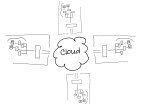
elastic-cloudIntuit, the maker of QuickBooks small business accounting software (among other things), is discontinuing service for the REST API and the Sync Manager on March 1, 2016 [1].  Developers with applications which integrate with the desktop editions of QuickBooks using this method must change their approach right away or risk having their integrations simply stop functioning.  It’s not that Intuit will DO something on March 1st.  Rather, they’ll stop doing something – like handling Sync Manager integrations.

There are a lot of different types of businesses in the world, and each of them produces and consumes a lot of information.   From sales to human resources; from operations to finance – every business generates and manages information to support the various processes which make up the business activities.  Computer systems and software represent the tools businesses use to develop and manage information, and often become foundations for structuring the information which flows through the organization. Just as there may be different people in the business, each with their own responsibilities and job functions, there are likely software applications which are similarly oriented to support different processes within the business.  Integrating or connecting different applications and processes within the business helps the organization be more efficient with information usage, generally increasing the quality of access and reporting throughout the business while at the same time reducing or eliminating redundant data entry and the potential for errors.  Software integrations are a big thing to many businesses, which is why the discontinuation of Intuit’s Sync Manager for QuickBooks Desktop editions is a big deal.

Intuit’s Sync Manager was the big thing just a few short years ago.  Providing developers with a seamless method for accessing QuickBooks company data and passing it to/from web-based and other applications was a boon to the online application model and paved the way for many disk-based integrated solutions to migrate to SaaS offerings instead.  Developers who saw success operating in Intuit’s QuickBooks marketplace as recognized add-ons were encouraged to use Sync Manager so that they would be able to seamlessly market to, subscribe and onboard new users who purchased QuickBooks products. Whether or not the developer participated in Intuit’s application marketplace, the Sync Manager and the REST API provided them with some very important capabilities and supported new methods now recognized as “standards” for development of web-based solutions and services.

The World Wide Web has succeeded in large part because its software architecture has been designed to meet the needs of an Internet-scale distributed hypermedia system. The modern Web architecture emphasizes scalability of component interactions, generality of interfaces, independent deployment of components, and intermediary components to reduce interaction latency, enforce security, and encapsulate legacy systems. http://dl.acm.org/citation.cfm?doid=337180.337228

In order to integrate a solution with QuickBooks desktop products, there are two essential problems to solve.  First, there must be access to the QuickBooks data.  Few products are able to directly access the data in a QuickBooks data file; generally, the QuickBooks program itself is used to ‘broker’ access to the company file. So, developers need a way to work inside of QuickBooks to use it to access the data their applications need.  Second, the data must be transported (via the Internet) to allow for data to come from QuickBooks into another app, or to allow data from the other app to come to QuickBooks.  The REST API and the Sync Manager addressed both of those problems and provided developers with the mechanisms required to facilitate the data integration as well as transport the data.

REST (representational state transfer) is “the software architectural style of the World Wide Web [2]” and represents a standard for creating scalable, distributed system interactions.  Using this method, developers were able to make their online solutions access, read and write data in QuickBooks desktop products because Intuit had first sync’d the data to its servers, so developers needed only to reach the Intuit servers to reach the data.  The Sync Manager provided the transport, carrying the data to/from the desktop installation where the Sync Manager service was running.  And, because the Sync Manager was basically built-in to QuickBooks, there was no additional software to install and maintain on the computer because it was all part of the QuickBooks installation.

Intuit did a fantastic job of getting developers to move to the API integration method, positioning all those lovely 3rd party solutions for linkage via an Intuit.com account and, now, to QuickBooks Online.  Intuit is clearly favoring the QuickBooks Online edition and the API integration method available with that platform, and is telling developers that they must convert their customers to QBO in order to retain the easy connective ability they had with the desktop editions via Sync Manager.

Now that Intuit has announced the discontinuation of the REST API and the Sync Manager, what options do QuickBooks integration developers have, and how can customers using 3rd party integrations keep using them?  Options do remain, and they aren’t all that bad.  In fact, the options which remain continue to be the methods of choice for certain developers. These developers recognized early on that Intuit’s somewhat “lightweight” methods couldn’t handle the complexity or full functionality of their integrations facilitated their solutions using the SDK and never looked back (and still don’t).  For this community of developers – many of whom likely never considered trying to market their solutions in the Intuit app marketplace – the elimination of the REST API and Sync Manager don’t really matter.  They didn’t bother with them in the first place, just as they aren’t bothering with QBO.  Those solutions don’t fit their customers, anyway.

The QuickBooks desktop SDK (Software Development Kit) has been around for years, and using the SDK developers have been able to craft tight integrations between their solutions and the QuickBooks desktop products.  From payment plug-ins to fully integrated sales, customer relationship, inventory and manufacturing solutions – a broad range of integrated applications built with the SDK have been successfully deployed to QuickBooks customers all over the world.   Many applications which integrate with QuickBooks desktop solutions are desktop products themselves and are designed to work within the same desktop and network environment as QuickBooks, so there is no need to worry about “transport” of the data over the Internet.

For other solutions, such as online applications and services, there may be a need to exchange data via the Web. The QuickBooks Web Connector has also been a very popular solution for developers of applications that integrate data with QuickBooks.  The Web Connector is just what its name implies: it is a way to connect QuickBooks to the web and vice versa. With the Web Connector application and a web connector configuration file, developers could provide a method of exchanging data between QuickBooks desktop and another solution fairly simply.  While the Web Connector is quite useful in providing a means to transport integrated data to/from the QuickBooks desktop to an external system (like an online application), it only allows access to whatever data Intuit decides.  For this reason, many developers use both an SDK application and the Web Connector so their applications can access all data required and also have a web service available to transport it.

There are numerous implications relating to the sunset of QuickBooks REST API and Sync Manager, and another among them is the impact in hosted environments.  For customers who are (or might) benefit from hosted QuickBooks delivery models, what does the end-of-life of the Sync Manager mean?  Since the Sync Manager was basically built into QuickBooks desktop editions, it meant that there wasn’t any extra software to install or manage when a company wanted to adopt a Sync Manager-based 3rd party integrated solution. In a hosting environment, this means that the customer could easily add integrated applications to work with their hosted QuickBooks and the service provider might never even know it was being done.  There would be no additional software to install on the host servers; so many providers would simply be unaware that their customers were using these other solutions.

As developers return to SDK and Web Connector implementations in order to integrate with QuickBooks desktop, customers will ask their hosting providers to install the QWC (QuickBooks Web Connector) and/or integration software in their service.  In shared service delivery models, this may be virtually impossible to do without potential compromise to existing customers using those servers or other applications resident on the systems.  Hosting customers will not always understand that a “simple plug-in” actually represents installable software that must be secured, maintained, managed, and kept from improperly interacting with other software in the environment.  Some providers may not even be willing to work with the new integration software, while others may allow it but will not take adequate precautions to ensure proper and secure function.

Intuit has said to many constituent groups that its focus on desktop editions of QuickBooks will continue, and new certifications and benefits for desktop ProAdvisors (and continued development of interoperability with other solutions, like the Revel POS integration for QuickBooks desktop) give support to those statements.  Yet developers who support integrations with QuickBooks desktop are once again adjusting to the not infrequent changes Intuit makes to developer programs and philosophies.  The push to QBO and connected apps may be the focus for QuickBooks marketing dollars, but there are still quite a number of (very busy!) developers supplying solutions to businesses who don’t shop inside their QuickBooks software.

Joanie Mann Bunny FeetMake Sense?

J

[1] https://developer.intuit.com/blog/2014/09/08/timeline-to-discontinue-the-quickbooks-desktop-rest-api

[2] https://en.wikipedia.org/wiki/Representational_state_transfer

Paperless_468x80

The Cloud, The Desktop and QuickBooks

subtitle: Just When They Told You the Desktop Was Dead… 

along comes another desktop app.

Everything is moving to the cloud! Everything is going online!  At least, that is what they’re telling you.  And, to a certain extent, it is true that a lot of things are moving to the cloud; just not everything.  And some of what has moved in is moving right back out.  Use of the cloud and cloud services is increasing, but that certainly isn’t proving that the desktop is going away anytime soon.  The only thing we can be certain of is that things are going to continue to change fairly rapidly, yet the lion’s share of business users will retain working models they have come to trust and rely upon until they are forced to do something else. Today, many accounting and business professionals feel that they are being forced out of the software they have known and worked with for years: QuickBooks desktop software.

I was recently asked to present to a group of accounting and tax professionals, the topic being “alternatives to QuickBooks Online”.  I thought it was interesting that this would be a topic of such interest, as QuickBooks has long been recognized as the market leading application for small business bookkeeping and accounting.  Accountants and bookkeepers, as well as tax professionals, have worked with QuickBooks for years – many having even styled their practices around the QuickBooks brand and offering QuickBooks-specific training and other services.  Why are these professionals now asking to learn about alternatives?  Well, it is an alternative to the online version of QuickBooks that these folks are seeking, and they have been given the impression that the desktop editions of their beloved QuickBooks are no more and their businesses are being forced to change.

Due to Intuit’s focus on promotion of the QuickBooks Online edition as THE  QuickBooks to buy, there is a growing belief that the desktop products are going away.  Many professionals who have worked with the product line for years are now operating under a belief that their only future with QuickBooks is with the online edition, so they are searching for alternatives for their clients and their own practices.  The QuickBooks Desktop editions aren’t being eliminated (2016 editions and certifications coming!), but any real mention of them in the direct marketing is gone, because Intuit isn’t pushing these solutions to new customers. It is no wonder the accounting and tax pros are looking at alternatives – and their customers are, too.

QuickBooks has always been a direct-to-consumer solution and was pretty much the only thing a small business owner would find if they shopped for software at the local computer or office supply store. The high-value desktop editions continue to be available, but it is difficult to tell a business owner they need to purchase licensing and then pay for mobility for QuickBooks desktop editions while QBO sounds much cheaper and they can get it on their tablet or PC for that cheap price. Also, there is more shopping online – from phones and tablets as well as PCs – so consumers are being exposed to other brands and the plethora of new online solutions. Now that they are considering buying or changing accounting/bookkeeping software… they could just as easily elect to use something completely free and not spend anything with Intuit or anybody else.

The small business owner isn’t focusing on the qualities of the accounting solution or how it impacts their accounting professional’s processes – they are focusing on monthly price of the solution.  Accounting professionals are now recognizing that the software isn’t (or shouldn’t be) the basis for their practices, it is simply a tool.  And there are a LOT of tools available to work with, not just QuickBooks, so the value of aligning solely with that solution is perhaps not as good an idea as it once was, but it is not gone.  There is still a tremendous volume of work to be done with businesses using the QB desktop products – you just wouldn’t know it from the marketing hype around QBO.

The thrill of exploring SaaS (software-as-a-service) and online application models has introduced new competition in markets where the dominant player once felt secure (small business accounting, for example).  While Intuit’s QuickBooks products were a defacto standard and essentially owned the smb accounting market, the diminished response to the QBO product has created opportunity for many newcomers.  Xero, for example, has been able to make great progress, even recruiting long-standing QB ProAdvisors as Xero advisors and promoters.  gnuCash, once a bit of an outlier, is getting new business because it IS desktop based (some people like that!) yet it doesn’t require an an ongoing commitment to internet connectivity or to pay fees to the developer. NolaPro, Wave, Freshbooks and more are growing in popularity as more freelancers and small business owners begin using applications other than spreadsheets to manage their business finances.  The generation that grew up with online banking is now readily adopting computerized bookkeeping, but they aren’t necessarily interested in QBO.  Still, a great many move to QuickBooks desktop editions because QBD is a recognized and respected solution.

It also remains to be seen what happens with usage of some of these online smb accounting solutions when the business reaches some size or complexity.  While they may be highly useful for startup or freelance business, many are not likely to satisfy business requirements far into the business lifecycle.  This is when the going concern and growing business demands more functionality and performance, which often becomes the catalyst for seeking faster and more powerful software and systems and has been a driving force for businesses returning to locally-installed or hosted accounting and ERP solutions.  Along with QuickBooks desktop editions, Sage is positioned extremely well here. The Sage 50 solutions (good old Peachtree!) can scale and also have very strong accounting functionality.  These were actually the preferred solutions for most accounting pros for a time, but the momentum of QuickBooks pushed them to the side.  With the attempt to now leverage the QB user base to the QB Online solution, Intuit has created the opportunity for Sage to regain a position with accounting professionals and their clients who demand more.

As these software and systems have (in some part) migrated from the local infrastructure to the web, we have also seen a lot of hybrid or “tweener” approaches come about.  These approaches, just as cloud service of any type, come in many varieties and exist to solve different problems.  The problem of browser-based functionality and modality is among the issues identified with QBO.  The browser-based app doesn’t allow for multiple operating windows – you have to use browser functionality for that.  And it is relatively slow – performing data updates and screen refreshes like with a website and not as one would require of a business application.  The solution provided is a great example of a hybrid approach.  The desktop app for QuickBooks Online (yeah) is a software app that comes in a flavor for Windows and Mac, and which provides more of a desktop user experience even though it mimics the interface and connects to the data of QBO.  It is faster, and multiple windows can be used, and more… which are some of the great benefits of running software on the local device and why desktop software is so great a performer.  This hybrid model simply allows for desktop software to work with cloud-stored data and back-end processes, and potentially delivers some of the best of both technology models: cloud and localized.

If you consider how much of the actual QuickBooks desktop product has been turned into web service (payroll, merchant processing, etc), it seems like QuickBooks desktop is already beginning to be a bit of a hybrid approach.  And when QB desktop is run with a hosting service provider, the whole thing becomes available anytime/anywhere.  Hosting is the way to provide the management and mobility aspects of QuickBooks and other desktop software.  The hosting model delivers benefits of cloud service – providing users with all the features and functionality of the desktop solution – and introduces the system management and mobility that is part of the underlying value of a web-based or SaaS application approach.

The real discussion, I believe, is not about the death or  near death of the desktop and locally installed applications – that’s just silly. Even phones are now being touted as possible desktop replacements, as the processing and storage capacity has increased to rival the most useful portables and laptops.  Clearly, devices continue to be more powerful and capable, and these advancements aren’t done solely to make web browsing more enjoyable.

pendulumDevices are more powerful so that they can run more applications – fast – and deliver more useful functionality to the user. Maybe the data will be in a cloud, and maybe even some app functionality will be delivered via a cloud, but it is very unlikely that everything will be in the cloud.  Complexity and cost drove developers to seek out alternatives, and advancements in technology will introduce new options that change everyone’s thinking again.  While the pendulum did swing to one extreme (move it all to the cloud and off the device!), we are now seeing it swing back  in the other direction a bit and those who didn’t swing all the way the first time are in a position to reap some benefit.

Joanie Mann Bunny FeetMake Sense?

J


Two Ways to Get QuickBooks in the Cloud

Get QuickBooks in the Cloud: Hosted QuickBooks Desktop or QuickBooks Online

cloud-computingRunning applications online, or “in the cloud” using today’s parlance, is top priority for a lot of businesses.  It’s not that these organizations have a burning desire to post their financials to the web, which is what a lot of folks thought was going to happen when we first suggested they use their financial applications online.  Rather, business owners and managers have begun to recognize and experience the benefits of connecting their various locations, remote and mobile workers with real time access to business applications and data.  Further, centralization of IT coupled with outsourced IT management and subscription service pricing has introduced financial and operational benefits which make businesses more cost-efficient as well as more agile.  From being the basis for foundational process and workflow improvements to allowing the repositioning of IT costs from capex to opex, online application services are proving their value in various ways every day.

The evident popularity of cloud solutions is clearly visible in one small corner of the global software marketplace: the small business accounting solution market. Intuit’s QuickBooks product, almost a default go-to with entrepreneurs and small business owners, is still the most prevalent accounting solution in use by US small businesses.  While there may be growing usage of other applications on the web, such as Xero or FreshBooks (both are awesome SaaS apps that do what they do quite well), there is equally strong growth in Intuit’s own SaaS version of QuickBooks.  The SaaS applications are easier to localize for different places in the world – different languages and currencies – so international use of these products is likely to continue to grow.  Even more to the point, these solutions address functionality and pricing levels which are acceptable to entirely different classes of users that previously wouldn’t even consider buying accounting software to do the books (like freelancers and solo/soho operators), so the overall size of the market of “businesses who use accounting or bookkeeping software” is actually growing.

Intuit’s QuickBooks Online edition is a true SaaS solution that is quite different from the desktop-based QuickBooks.  While QBO has gained tremendous popularity, it has yet to reach the user numbers the desktop products have.  The desktop solutions boast not just a particular range of functionality, but integrated applications and add-ons, and – perhaps most importantly – being a foundation for a wide variety of financial and business record keeping, bookkeeping, accounting, operationally oriented and reporting processes.  To sum it up: it’s embedded.  People know the software, the data is in a known format, and the product is simply part of how the business operates.

Once a solution is as entrenched as QuickBooks is – kind of like the entrenchment Microsoft Word and Excel have in the productivity area – it doesn’t go away very quickly and only when the value proposition is much greater… and maybe not even then.  Rather, folks find ways to make the solution they want work for them.  This is where hosting comes in and meets with the market’s demand for running applications (yes! even desktop applications!) online, as managed subscription service.

Running your QuickBooks desktop online via a hosting provider is how businesses take advantage of the best benefits of SaaS without actually converting to a SaaS application. They retain investments in training, process and integration yet introduce mobility, remote access and office connectivity, centralized information and predictable costs. QuickBooks-using businesses need to know about hosting their QuickBooks and the providers who can offer anything from standardized to extremely customized service.

As technology continues to evolve at ever-increasing rates, businesses will continue to be faced with new paradigms for doing business.  Some will adopt early and some will adopt later, and some simply won’t adopt.  Certainly the market as a whole doesn’t adopt as quickly as software companies would like, but then that’s always the way it is.  Customers will do what works for customers, and right now hosting is working for QuickBooks customers.

Joanie Mann Bunny FeetMake Sense

J

QuickBooks Online vs QuickBooks Desktop: The Great Debate

QuickBooks users around the country are facing a dilemma like never before – they’re being forced to consider exchanging their beloved QuickBooks desktop editions with a subscription-based online application that seems like an entirely different product.  It not only seems like a different product, it is.  And this is where the debate begins.

For years businesses both large and small found Intuit’s QuickBooks software to be their solution for business bookkeeping and accounting.  Over the years the product line grew to support larger businesses, with the Enterprise edition scaling to 30 users and boasting a load of operational process support features.  Accounting professionals, too, grew to favor the QuickBooks products because there were features just for these “mechanics” who learned to make the software do what was necessary to support the business, even if the software wasn’t intentionally designed to be used in that manner.  After all, it is this “unintentional” activity which often results in really cool new features being introduced in the product – features that the designers didn’t think up but that users did and the news eventually got back to the developers.

dt-v-online-great-debateWhen Intuit introduced QuickBooks Online, however, the tried-and-true solution known as “QuickBooks” became something very different at first glance, creating the need to educate the market about the continuing existence of desktop QuickBooks products as well as the newer online QuickBooks product.  Differentiation of the two is not really the “desktop” versus “online” moniker – Commercial Hosts for QuickBooks, who essentially turn the desktop products into online application service, pretty much eliminate the whole “any time, anywhere” debate, as hosted QuickBooks desktop editions are just as anytime/anywhere as the online edition is.  The benefit of Internet access and running on any device is now removed from the equation, so what’s left to compare other than functionality, benefits and features… and a proven track record?

We could, in the past, have a conversation about the features, benefits and functionality in QuickBooks and know that the flow-through of product use knowledge, stored data and integration with other business solutions would be fairly seamless and consistent.  QuickBooks Online has demonstrated none of this, fracturing the seamlessness and consistency users could previously expect as they move through the product line – as businesses will do as they grow larger and have more demands from their software solutions.

So now there’s a debate – which solution is best?  The answer really isn’t necessarily about which is best, but which addresses the business need now and, if the business intends to be around for a while, in the future.  Sometimes the argument is more about getting you where you need to be rather than simply supporting where you are now.  I know I’m not yet ready to place any hard bets on whether or not the QBO  model will truly deliver the goods for growing businesses long-term.

Joanie Mann Bunny FeetMake Sense?

J

Accounting for Custom Manufacturing

Accounting for Custom Manufacturing

Accounting and bookkeeping is a part of every business large and small, yet there are myriad details to work with and a multitude of possible approaches to addressing the requirement.  From a summary perspective, there are standards which are fairly easily met, providing the basics of sales and expense tracking and income reporting sufficient for basic tax and compliance work to be performed.  Yet accounting may go much deeper into the operational processes of the business, delving into the details of productivity and profitability in order to find and expose areas where the business might improve both.

mfgManufacturing, particularly custom manufacturing or ETO (engineering to order) is among those industry types that could benefit tremendously from a more intimate and detailed approach to accounting.  Unfortunately, it is often difficult to find experienced professionals with not simply a competence in working with manufacturing industry sector clients, but specifically with ETO process.  Building to order is one thing, but finding the way to improve efficiency and profitability when every job is a custom encounter takes additional skills and a lot of data.  Accounting professionals with these skills are needed to help these custom manufacturers grow, transform their businesses and make the overall operations more efficient and sustainable.

It seems logical that manufacturing and ETO space businesses are ripe for the same bridging of technology and analysis that the accounting industry started broadly approaching some years back.  With bookkeeping processes being more frequently outsourced to non-accountants, the accounting professionals saw increased pressure to find more efficient ways of doing things and had to find new value to deliver to clients.  Technology, data collection and analysis became the foundations for delivering on that new requirement.  With the established model and philosophy, bringing more operational aspects of client systems into the mix and extending the model end-to-end just makes sense.

It takes a combination of systems – from the core accounting solution to the manufacturing control or other operational systems, through to the analytical tools.  Leveraging hosting technologies and cloud service, businesses are finally able to bring the multiple work locations – shops, warehouses and business offices – together in a single software and technology platform, and collect the level of detail necessary to provide a comprehensive and true picture of the business.  The analytical tools then provide the means to explore the details and identify where improvements might be made or where previously unrecognized risk exists.

QuickBooks desktop editions remain among the most popular financial systems used by manufacturing and job shop applications, largely due to the effectiveness of connecting the operational applications to an accounting solution which proves highly workable and which has strong industry support.  Even with the emergence of QuickBooks Online (and the push by Intuit to get customers to adopt this web-based alternative to desktop-based software) the QuickBooks desktop edition products continue to provide more functionality and application support for these working models, as the ability to fully manage the information in the solution exists more in the disk based products than it does in a multitenant web-based application.  Accounting “mechanics” are able to see, access and work with all the data rather than simply view reports where only half of the transaction is visible – making detailed accounting and data analysis more readily available.


The key is to leverage the accounting professional, the right software tools, and the platform and delivery environment that allows it all to work in concert for the entire organization.  Add the QuickBooks hosting service so the participants can work more closely together.  Enabling the accounting professional and bringing them closer to their clients (and client systems) allows the deeper move into operational issues, creating the basis for both to receive new and more value from the relationship.

jmbunnyfeetMake Sense?

J


Everything Old is New Again: Big Fat Phones and Desktop QuickBooks in the Cloud

anywhere-anydeviceEvery year that passes leaves some reminder of the time – some person or occurrence which touches us and creates a lasting memory.  2014 delivered its share of memorable people and moments and proved again that social platforms such as Twitter and Instagram have become increasingly significant as people across the world organize, march or call for change.  Yet even as change is demanded from us and often forced upon us, it is wise to remember that the pendulum eventually swings both ways.  We want to have our cake and eat it, too, which is the ultimate no-win situation and causes us to constantly and consistently seek out the alternative.  Like the puppy chasing his tail, we end up going round in circles.  Harem pants and jeans torn from knee to thigh have come back in fashion, and even though they didn’t really work the first time, here they are again. It is inevitable.

Information technology trends follow similar patterns, and what was once in high fashion may now be considered as “legacy”.  Perhaps the better word is “classic”, as these legacy solutions often represent the standards by which new solutions will be measured.  Eventually, the properties of the classic or legacy solution wind up in the new breed, because this is what the market has come to expect and/or demand.  Even when entirely new standards are believed to be adopted, the truth is that years of learning and experience will often find the path previously traveled by others to be the right path.

It seems like so long ago when some said “the desktop is dead” and that all applications would be used by every device via the web, but not run on the device.  Well, there are quite a number of web-based applications and services delivered in just that manner, but there are also lots and lots of computers out there with software still installed on them, happily working away for their users (there’s an app for that, right?).  The desktop isn’t dead at all, it seems, and what’s more – there are trends to extend the capability and reach of the desktop to the web rather than replacing the desktop with the web.  Application integration, process integration, interoperability, functionality and modality – all these factors and more have become the underlying drivers for extension of and hosting for desktop applications, and are the areas where SaaS and web-based application service has not delivered as expected.

The idea of having no software on the computing device is kind of silly, when you think about it.  Computers continue to get more powerful and have more capability than ever.  Heck, even phones are getting fatter and bigger again.  The best phones these days are the ones that rival tablets and laptops in size and have lots of apps to run.

Microsoft Office, too, hasn’t gone anywhere, really.  It’s still firmly attached to most workstations whether they’re iPads or Macs or Windows systems.  Web-based productivity tools are certainly gaining in use, but not nearly as widely as some would believe.  Office productivity continues to live on the desktop, and ties many users to desktop computing for that very reason.  Use CRM in the cloud?  I’ll bet you still export data to Excel or Word on the PC.  Use accounting in the cloud?  A lot of reporting still goes through Excel, trial balance systems and the like.  The universe of web-based and SaaS apps is getting larger, but it hasn’t yet become the center of the universe for most established businesses.  Net-new customers and smaller businesses are adopting SaaS due largely to cost and to the success of the marketing message, but use and direct experience with the product applied in the business setting often demonstrates that adoption of a more flexible (malleable) or functionally rich solution is indicated. The business likes the mobility, remote access and managed service, but not the actual SaaS application.  So, hosting becomes the better alternative and the business is able to use the software that works for the business, and use it in a manner that allows the business to take advantage of remote and mobile capability, subscription service, and more.

I really have no gripes with web-based and SaaS solutions.  In fact, some of my best friends use SaaS  🙂  The message I’m trying to convey is simply that, regardless of what the media and marketing may tell you, things don’t always change as quickly as it seems.  Yes, there is a movement towards cloud solutions and online working models.  Yes, there is change in how information technology is obtained and used.  And equally true is the reality that only a portion of the market has adopted these changes and new philosophies.  By the time there is “complete” adoption, there will be a new standard or approach being marketed and we will be in this place once again.  Is there wide recognition of the benefit for mobility and remote capability? Sure there is, but it is also accompanied by the understanding that tried and true solutions will continue to deliver the functionality and capability businesses rely upon, even as new models for delivering them come about.

jmbunnyfeetMake Sense?

J

Here are some of the most popular articles from CooperMann.com in 2014.  Surprisingly enough, the most popular were articles about QuickBooks and the Cloud, a subject I’ve been writing about for many years.  In fact, some of the most popular of my QuickBooks/cloud articles are from 2013 and they remain among the most frequently viewed even today. Search and view metrics indicate that the topic’s popularity is not likely to diminish soon, so plan to hear more about how businesses are using QuickBooks (and other desktop and network applications) in the cloud, but aren’t using Online editions to make it work really well.

 The concert hall at the Sydney Opera House holds 2,700 people. CooperMann.com blog was viewed about 19,000 times in 2014. If it were a concert at Sydney Opera House, it would take about 7 sold-out performances for that many people to see it.

  1. The 2 Most Popular Models for Working with QuickBooks Desktop Editions and the Cloud
  2. Hosted QuickBooks and Office 365 a Complicated Technical and Licensing Model (until now)
  3. Intuit Introduces Changes to Authorized Commercial Host for QuickBooks Program, Introduces QuickBooks Enterprise Rental Licensing
  4. Managed Applications, Cloudpaging, and a New Flavor of Hosted QuickBooks
  5. QuickBooks and Dropbox? Yeah… no.
  6. Intuit Ends QuickBooks Remote Access Service: The Time to Host is Now