Cloud and Digital are Driving Change in Professional Practice

Accounting and Finance Professionals: Cloud and Digital are Driving Change in Professional Practice

Accountants and financial consultants working in public practice are experiencing a revolutionary change, evolving from documents and paper-based processes with after-the-fact reporting to real-time business management and providing services which support daily decision-making.  The underlying cause for this evolution in business accounting is the technology: cloud and collaborative computing models are enabling much closer and regular interaction between accounting professionals and the businesses they serve. Even more, technology is taking its proper place in automating once tedious activities, allowing professionals to focus on causes and results rather than on transactions.

What is the real impact this is having on the accounting profession?  It’s forcing a new focus and attention on change management within the practice, and is causing professionals to recognize the requirement for standardization of processes and development of controls which are the foundations for creating sustainability in a business.  The goal now is placing reliance on process rather than people, which establishes the basis for intelligent automation.  Standardization of processes does not require that the firm lose its personality.  Rather, the mission at hand is to imbue the organization with its unique flavor and approach and to use process automation to develop and support consistency in the functions performed.

While cloud computing models allow accounting and finance professionals to work closer with their business clients, it is important that the practice look at those client interactions and develop standards for processes supporting frequently performed functions.  These operations generally represent the activities within the firm which generate the highest levels of profitability due to the consistency in approach and repetition of tasks, and are the activities to apply intelligent automation to first.  Those activities or engagements which represent the “one-offs” are often the most costly for the firm to perform, and therefore may not be the most profitable of activities and are certainly the most challenging to support with any significant level of automation.  It is in this area where AI will find useful value in the practice, where a more informed answer than simple process automation is required.

The surprising finding when looking at many professional practices with more than one partner/professional involved is that these firms often fail to develop even the most basic of standard processes which apply throughout the firm.  Rather, each partner or professional has “their way” of handling things, which challenges the supporting personnel as they try to deal with multiple working methods. The result is a lack of consistency in the service delivery to the clientele and reduced productivity and profitability for the firm.

The thing that these firms are failing to recognize – the light bulb over their heads that just isn’t lighting up – is that cloud computing and collaborative working models aren’t designed just to enable and facilitate a closer working relationship with clients.  They’re also able to be applied inside the professional practice, enabling a more productive and efficient workflow which addresses the strengths and capabilities of the entire organization. And it doesn’t stop there.  Businesses are relying upon their accounting professionals to provide guidance and develop controls and standards to support the client transformation from paper-based to digital operations, and embracing the entire realm of data and interactions associating with the business. Digital transformation in a client business demands transformation in those firms who serve it.

As professionals learn to go deeper in client operations they would do well to look internally, too, exploring how increased attention to process automation and consideration for the firm’s own “digital transformation” might lead to great profitability through market differentiation and improved performance.

Make Sense?

J

Technology and Tools for Accounting Professionals

Joanie Mann Bunny FeetTechnology and Tools for Accounting Professionals

old_school_ledgerThere was a time not so long ago when accounting professionals focused more on tabulation and summarizing of information than on analysis.  Accounting for businesses, in particular, required collecting myriad papers and receipts and other transaction documents, summarizing the information, translating it into journal entries, and finally posting those numbers to the big bound book which represented the business general ledger.  With the work required to gather and enter all of the information, professionals necessarily focused their efforts on making the process as efficient as possible by attempting to structure the workflow and manage the paper.

When those efforts are compared to today’s approach which involves digital documents, intelligent data collection tools, automated workflow solutions, online accounting and data analysis, it is clear that the processes for accounting for business activities have not really become simpler.  In fact, much of the enabling technology has served to complicate certain processes, which drives users to find even more “solutions” to address these new problems.  It (IT) is a bit like the Wonka Everlasting Gobstopper, which never gets finished and never gets smaller.  IT simply changes things – regularly and often.

Back then – before the Internet and digital imaging, or even Personal Computers – high technology wasn’t the focus because it didn’t exist in the realm of business in general.  I suppose you could call business solutions at that time “low” technology, where mainly mechanical solutions were introduced to address various business problems.

old_school_filecabinet

As an example, prior to the advent of digital imaging and electronic documents, one of the primary requirements of the business was to organize and store paper documents.  Over time, a wide variety of filing, foldering and labeling solutions have been developed, all oriented towards making the storage and later retrieval of paper documents easier.  For some businesses, letting go of the paper is a hard thing to do.  Years and years of training in keeping paper files has left many business owners and managers wary of working without physical paper documents.  Investments in office space, filing cabinets, storage folders and personnel to organize, file and retrieve all of the documents is only a partial measurement of the cost of managing paper, and large numbers of businesses continue to operate in this manner.

old_school_desk

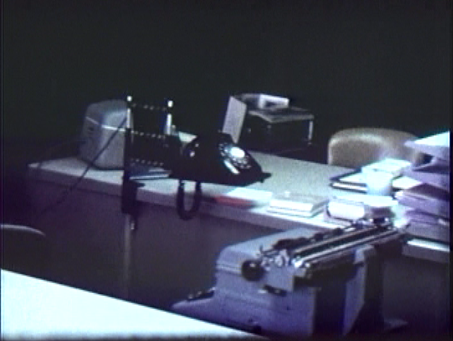
The technology applied to processing the work has also changed, in many ways even more dramatically than the technology applied to collecting and storing the information.  Take the simple processes of tabulation (to arrange in tabular form; condense and list) and summing (adding up) information, for example.  Previous generations didn’t have computers and spreadsheet software to perform the work.  Rather, individuals would painstakingly handwrite each transaction entry into a ledger or on a columnar worksheet, and would then have to manually add each column and then cross check footer totals to ensure accuracy.  Back then, the machines used to perform the addition/subtraction were mechanical devices and could not perform multiplication or division.   These adding machines were first hand-cranked devices, later replaced with shiny new electrical ones (weighing approximately 20 lbs each).

old_school_telephone

Even voice communications have changed dramatically over the years.  Many people don’t remember a time when having multiple phone lines in the business meant having multiple telephones, and the concept of a PBX (Private Branch eXchange) didn’t exist.  Every phone would be hard-wired to an incoming line; if you wanted to answer a call, you had to use the right phone.  This became difficult in an office with many people, so solutions such as the “fabulous extendo-phone” was invented to allow anyone in the office to access the phone from their desk.

The technology available to businesses today is astounding, and offers amazing potential and benefit.  On the other hand, technology rarely (truly) makes things simple or easy – it more frequently serves to shelter certain users from the complexity while delivering new workloads and concerns to others.  It’s rather like energy – it isn’t created or destroyed, it just changes form [law of conservation of energy].  Business is like that, particularly where information technology is involved.  The underlying requirement doesn’t go away, just like a business’s requirement to account for financial transactions and activities,  and the need for the business to capture and retain documents isn’t changed.  How the process is managed, and which tools or mechanisms are applied to the task is what changes.

Make Sense?

J

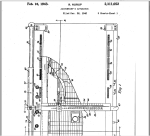
onewrite-accountant_apparatusOne-Write System Revolutionizes Accounting.  These guys had the right idea, they just didn’t have the cloud.

Lean and Mean – Improving Sales and Distribution Performance

Lean and Mean – Improving Sales and Distribution Performance

It is surprising that, even in this world of Internet marketing and online commerce, many businesses are operating at levels far below their potential.  Reliant upon people rather than information and process, these businesses are weighted down by their legacy approach to getting things done.  They throw money and personnel at the problem, adding more “fat” to the business and making sustainability just that much harder to achieve.  The right approach, and the mantra of all manufacturers and distributors, should be to work “lean and mean”, applying technology and business principles which support agility and improved process efficiency.

The center of lean business is in operations, and includes all aspects of the “order” processing and support systems.  From the point where an order is sought, to the point of order entry, and through to delivery and service – all aspects of the operation must be addressed for the business to achieve maximum success.  Innovating in operational areas, such as in order management and distribution, can help the business rise above others in the market and create a significant competitive advantage.

What becomes challenging for many businesses is the fact that years of working in established “silos” often makes it difficult to introduce the cross-functionality necessary to support lean operations.  It is not sufficient to simply suggest that the organization work collaboratively to streamline processes from order through to service and support.  Work groups and team members must work together and adapt to delivering process improvements, following through with the actions necessary to turn the philosophy into bottom line results.  Good support is required to keep customers, and a good product is necessary to support increased sales.  No aspect of the operation stands alone, so each is necessary to participate in making end-to-end improvement.  Additionally, back-office processes must be aligned to work collaboratively where required, supporting efficient operations rather than creating unnecessary bottlenecks or delays.

The key to developing a lean and mean, high performance operation is applying the technology and principles which translate into improved profitability and customer retention.  In many cases, the same solutions which create customer “self-help” capabilities are also solutions which can address similar needs for internal business users. Ultimately, the goals are elimination of redundant or error-prone processes, establishing the sharing and secure collaboration of information throughout the organization, implementing integrated systems which allow users to efficiently perform their particular tasks, and working cooperatively with others in the supply chain to maximize the real-time capability and efficiency.

Rather than continuing to utilize basic record keeping solutions, or accounting products which aren’t prepared to address the specific operational aspects of the business, owners and managers should be looking to the tools and solutions which will help them develop the framework to support improving operational performance, turning people knowledge into sustainable business profitability.

Make Sense?

J

Accountants and Small Manufacturers: Getting in Front of the Ball

There’s a lot more to accountability in a manufacturing or inventory-based business than simply keeping track of money in and money out.  Particularly in an economy when nobody can afford to build or stock products too far ahead of demand, it is essential that these businesses have a means to not only track and manage purchasing, manufacturing, distribution and stocking activities, but to understand conditions or trends which impact the flow of materials and cash through the business.  Read more…

Accountants and Small Manufacturers

rollingballGetting in Front of the Ball

There’s a lot more to accountability in a manufacturing or inventory-based business than simply keeping track of money in and money out.  Particularly in an economy when nobody can afford to build or stock products too far ahead of demand, it is essential that these businesses have a means to not only track and manage purchasing, manufacturing, distribution and stocking activities, but to understand conditions or trends which impact the flow of materials and cash through the business.  Further, this understanding must come in a timely manner in order for the business owner to make decisions and take action when it matters most.  Unfortunately, many business owners find themselves “behind the ball”, constantly pushing to make forward strides, and often due to not having the information they need to make business decisions that matter now, today.

Why is it so critical for these businesses to have more and better information to help them make strategic decisions and answer daily operational questions?  In a word: connectedness.  The Internet has truly made the world smaller when it comes to participation with even the smallest of local businesses.  Globalization of markets has impacted manufacturers in significant ways, and these businesses (like so many others) must now be prepared to address the realities of global supply chains, outsourcing, and a remote or mobile workforce and market.  While many of the software solutions addressing the functional business requirements of manufacturing and inventory or warehouse management are “locally implemented” solutions, extending and integrating these solutions to address the new global and mobile paradigm may represent a significant expenditure in time and resources for the small enterprise.

Application hosting and web-based solutions have emerged to help businesses address the need to “modernize” legacy applications and enable greater levels of system management and access.  Introducing the applications into a centralized and remotely accessible environment allows the business to immediately deliver the necessary support for remote work and mobile access, and positions the system to facilitate collaboration within the business and with outside participants, such as outsourced bookkeepers, accounting and finance professionals.

These professionals can be instrumental in assisting their clients manage the change to new collaborative computing paradigms.  Where accounting was previously viewed as an after-the-fact process, accountability through detailed activity tracking and reporting is now a focus which begins at the front end of the business, and accounting professionals are finding far greater value in helping structure and manage this daily activity in order to deliver greater operational information and insight.  Rather than being the last people to know what is happening in the business, accounting professionals are recognizing that their ability to positively impact business performance requires getting “in front of the ball”, initiating process structure, data control and collection which ultimately results in better and more informed decision-making through better and more timely access to more meaningful information.

Businesses at all levels are realizing that new computing paradigms can ease the burdens of collecting and sharing information, yet most small companies need help in determining exactly how to approach this “enabling” of the business and systems.  While accountants are also experiencing dramatic change in how they do business, it makes sense for them to embrace the opportunity and recognize that enabling client systems will ultimately allow the accounting professional to work more closely and to deliver more tangible value to their client on an ongoing basis.  Online accounting approaches are no longer a fad but are the new reality supporting how many bookkeepers and accountants work with their business clients.  Extending access beyond accounting and bookkeeping systems, and incorporating support for operational and line-of-business solutions, is the next step which will bring the accountant closer to the client business, and position both to benefit from deeper collaboration and useful insight.

Make Sense?

J