Accounting for Point of Sale

Accounting for Point of Sale

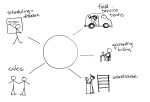
There are a lot of solutions available to help retail businesses get business done.  From touch screen technology to mobile credit card and payment processing, retailers have many choices when it comes to selecting the right technology for the establishment.  But even the best point of sale system can lack the critical element that makes it truly valuable for the business.  This critical element is integration to a trusted accounting and finance solution.  While the POS system may include a level of basic accounting functionality, the reality is that a dedicated financial application will perform better in the long run.

Just as specialized line of business applications are used to handle operational functions, the financial application should be considered to be the “line of business” solution for the accounting and finance department (even if it is a department of one). This system not only services essential processes like receivables management, bill payments and bank account reconciliation, it serves as the basis for payroll, financial, tax, performance and other reporting. Further, the financial systems are often the first and primary source of analytical data, illuminating KPIs and cash flows and ultimately the business value.

The point of sale application generally handles the selling of and payment processing for goods and services sold by the business.  Whether it is composed of registers and terminals connected to a host system, PCs running POS software, or mobile phones and tablets running mobile payment processing apps like Square or GoPayment, point of sale addresses the retailers need to capture and record sales and payment information, sometimes customer information, and often inventory information.

The data from the POS solution must make it to accounting in some manner, yet point of sale applications are too-often approached as a standalone business requirement, somehow disconnected from other aspects of the business including the back-office.  Sales and items may be recorded in the POS system, yet only summary sales data ends up being re-keyed into the accounting system.  Centralized inventory management is all but nonexistent in these cases, and gross sales total are often recorded rather than individual transactions and receipts being transmitted to the accounting system.  The process of re-keying information from the POS to accounting systems is not only an efficiency-killer, it is also introduces a great potential for errors.  When the business elects to conserve on data entry and post only summary information to the accounting system, valuable detailed sales and transaction data may be lost.

The right approach to bringing point of sale together with accounting is to automate the process of integrating POS data with accounting on a regular basis – with AUTOMATION being the key.  Rather than establishing a process that requires manual entry of information from either system, a data integration solution is the best approach, with an import/export solution running second. The point is the elimination of manual re-entry of information.

There are numerous tools available that can take formatted POS data and import it into products like QuickBooks, for example, where it can be properly accounted for.  While QuickBooks Point of Sale integrates with QuickBooks desktop products, other POS solutions can also connect with QuickBooks if the right integration tool is selected, and there are quite a few available.  Check with the POS vendor and ask about a direct integration with QuickBooks desktop or whatever financial system you use. If there isn’t a packaged integration solution available, then check out products like Transaction Pro Importer, which can automate a variety of data import processes and ease the burdens moving external data into QuickBooks.pointofsale

The other factor in getting point of sale data to accounting is actually getting it there… transporting the data from the POS location to where the accounting system lives.  In many situations it is not desirable to keep the accounting system on the same computers as the point of sale systems, and in some cases it isn’t even possible.  But there is generally a way to get the information in a form that makes it possible to transmit it in some manner.  Among the most popular approaches to solving the “getting the POS data from here to there” problem is to use a data sync solution like Dropbox.

If the point of sale data can be exported or output to a file on a PC hard drive, then it may be able to be stored in a Dropbox folder on that PC.  At the home office where the accounting system resides, the operator would access the sync’d files from the local PC Dropbox folder and import the data to QuickBooks.   For QuickBooks Point of Sale there is an option to create a “mailbag” of sorts from the POS data of a remote store, which QuickBooks POS at the home office would pick up from the Dropbox folder and push to the QuickBooks financial application.

For businesses using POS systems like Micros or POSitouch and others, there is likely a service or application that will produce the POS data for import to QuickBooks or other financial system, pulling POS data files placed in the Dropbox folders by the POS app or performing the function as a web service or SaaS integration.

While I am a big fan of application hosting services and running QuickBooks desktop editions in the cloud, I’m also a realist and recognize that many POS solutions either can’t or shouldn’t be hosted.  There are situations where a hosted point-of-sale makes a lot of sense, and then there are cases where no bandwidth or proprietary hardware-based solutions make hosting not even an option. That doesn’t mean that the financial systems shouldn’t be hosted, though, and there are numerous ways to get the sync’d POS exports to the hosted QuickBooks environment, for example.

The key for retailers is to make sure there is a solid process for getting detailed and accurate POS information into the accounting system on a regular basis.  Manual entry is never the best answer.  With all of the technology and tools available, manually re-entering sales information is a waste of time and is likely to produce errors.  The better answer is to use an approach that automates the regular collection of point-of-sale data from all sources, delivering the data in a regular and consistent manner to accounting, and providing the basis for end-to-end automation supporting the integration of the point of sale system data with the rest of the business accounting.

jmbunnyfeetMake Sense?

J

Good Habits for Healthy QuickBooks

Keeping_QuickBooks_HealthyUsing a QuickBooks desktop product is pretty simple – you install it and then you run it.  For many users, it’s just that easy and uncomplicated because they don’t need 3rd party integrated software, they don’t sync their files to other computers or services or try to share their QuickBooks data, and they remember to exit QuickBooks and back their files up each and every time they use them.  On the other hand, many QuickBooks users experience quite a lot of frustration with the product – frustration which may often be the result of a poor practice when using the software.  QuickBooks has been engineered over many years to be as simple to use as possible, but at the same time has grown to be a product with lots of features, add-ons and extensions.  Users have also found ways to make QuickBooks do things it wasn’t really designed to do, this truth being one of the good things and the bad things about the product.  When it works, it works great.  When it doesn’t work, it’s beyond frustrating.  It is a shame that a lot of the problems users have with solution may be rooted in the habits and behaviors of the QuickBooks users themselves.


Bad software use habits will cause problems whether the software is installed on the user PC or whether it’s being managed by a hosting service provider.  Certainly there are some issues that hosts may mitigate, but the following is a list of good habits for keeping the QuickBooks software and data healthy and working that should be standard operating procedure for any QuickBooks user, whether QuickBooks is being hosted or not.

Keep the company file in good condition.

I cannot stress enough the importance of keeping the file in good condition.  What’s the accounting and financial data worth, after all?  A little time spent taking care of the file can save on a lot of time and headaches trying to reinvent the information. A QuickBooks company file is really a database, and is a rather complicated framework for keeping track of all sorts of related information.  Anyone who has used QuickBooks desktop products for a while understands that the data file can get screwed up for a variety of reasons, and it is no fun.  Yet QuickBooks has utilities to verify and rebuild data files, so it makes sense to periodically use them to check for problems.  Like a check-up with the doctor, these utilities can help diagnose issues with the data file before they become really big issues.  Another good practice is to back up the company file to a “portable” once in a while, and to then restore it for use.  This process can not only validate the integrity of the file, it also helps condense and “condition” the file.  Particularly when using a hosting service, but also when just running local on the PC, conditioning the data file once in a while can help prevent data corruption and/or loss (of data, time, productivity, revenue).

Close the company file and exit QuickBooks once in a while, would ya?

Users who leave their computers on all the time are missing out on the fun of letting their machines reset and do a POST (power on self-test), which means the machine or operating system could have an issue and the user wouldn’t recognize it until the machine was powered off and then restarted.  For this same reason, programs and their data files should be closed when not being used – so they can run through their own startup and validation routines before you use them.  Also, leaving the program open means it is active on the computer, and leaving the data file open means that it’s available (read=vulnerable).  A random bypasser accessing the computer, a program crash, a machine crash… loss of power or a kitten running over the keyboard could all result in catastrophic damage to the application and/or data.  It’s just better for all involved if the files and programs are closed when not being used.  Maybe use a screensaver with a password, too.

Don’t try to use QuickBooks with a VPN (virtual private network) connection.

Just because a user can connect their remote PC to the office network doesn’t mean the PC will work like it’s in the office.  In the office, it’s a Local Area Network, and the speed is fine enough to allow multiple computers to share a QuickBooks company file in multi-user mode.  When there is a remote PC connected via a VPN, it’s usually a Wide Area Network connection, meaning that the network has been extended to include the remote computer, but that network connection IS NOT fast enough to allow the remote user to open QuickBooks along with others in the network.  QuickBooks multi-user access only works on a local network (where local means the machines are all “local” to each other – on the same LAN).  When QuickBooks is hosted by a service provider, the QuickBooks stations and the data files are all located inside the host’s network, making it all LAN stuff.  The only remote part of it is sending the input and output (display, printing, keyboard and mouse) information “over the wire”.  This is why a hosting model works when the app and data are hosted, but doesn’t work when only the data file is hosted.

Use Automatic Update, not Manual (but DO update).

Features change, new technologies must be supported, and user expectations adjust based on a wide variety of influences.  What this means is that software products will necessarily experience change over time and users will be expected to update them.  The first release of any new product is rarely flawless.  It’s during that first introduction to a volume of users where many issues are found, making the v1 release of a software product something many people try to avoid. Yet there are still lots of folks who just can’t wait to have the newest thing, even when it comes to something like software patches.  Regardless of how much they may put at risk, these folks want each and every patch and update as soon as it is available somewhere.  These are the users who end up debugging the software for the rest of us, so I guess we should thank them.

For most users, however, it makes sense to wait until the software has been out for a bit and those initial issues identified and corrected, perhaps bypassing v1 and going straight to v2.  If the product will allow, that is.  QuickBooks has this great (or annoying, depends on how you look at it) feature that can tell users when there is an update available.  This “automatic update” feature checks with Intuit to see if there are updates available for the product, and then tells the user they can download and install them.  Generally, Intuit pushes these updates out only when they’ve been debugged and are deemed ready for volumes of users.  If people want to get an update before Intuit pushes it out, they may be able to obtain it for manual installation.  This is not the recommended method of handling QuickBooks updates; for most users, waiting until the product tells them it’s time to update is best.

Make sense?

J

QuickBooks online, or QuickBooks Online? Use Software on the web without using Web-based software

cloud-computingThere is a trend among software makers these days to more fully leverage the “power of the web”, and why wouldn’t they?  The Internet has become the way businesses and users get and stay connected, and has become a foundation for how business gets done.   Remote and mobile access to information and applications has become an expectation of users, as social computing models have encouraged them to remain connected on all of their devices and from any location.  Online describes a working model that many businesses strive for, and software makers are seeking to capitalize on the trend.

The belief that software should no longer be installed and run from a local device has been adopted by some of the largest software vendors in the market, which would lead many users to expect that this is the important trend to follow.  Being encouraged to ditch their desktop software products and transition to using the web-based or SaaS alternative, users who have grown to trust their software products are now facing new buying decisions.  Any time a customer is forced to make a buying decision – like moving from a desktop product to a SaaS solution – there is a potential that the customer will go with a different vendor and leave the product line altogether.   Yet this is exactly what is happening with small business applications, and specifically with the tried-and true QuickBooks products – the solutions which had become the cornerstone of small business finance.

Where QuickBooks Pro, Premier and Enterprise desktop editions were the favored and trusted small business accounting solutions, Intuit is now on a wholesale push to get users transitioned to the QuickBooks Online edition.  In doing so, they’ve opened up the door for new competitors, because they’re forcing their QuickBooks users to make a new buying decision.   Assuming that customers will adopt the QuickBooks Online solution simply because it’s “QuickBooks” was perhaps a poor assumption on the part of Intuit.  Particularly by naming the product “QuickBooks”, Intuit invested the trust and long-standing recognition of the brand and product line into the online edition, and the user base and market has not been amused.  “It may be called QuickBooks, but it’s not the QuickBooks I want” says one customer.  Apparently, the QuickBooks Online edition is not what many experienced QuickBooks desktop users are looking for in a new version of the product.

Desktop QuickBooks users don’t have to move to the Online edition just to get the benefits of the cloud with their beloved QB.  The hosting and cloud service providers I work with help businesses run the QuickBooks desktop products as online service.  We deliver fully managed applications and data, allowing users to access their QuickBooks desktop products online and from a variety of devices just as if they were web-based.  Gaining the benefits of anytime/anywhere access with the added advantage of not changing software is a direction many users are electing to go.  While the price of a hosted solution may not be as low as a QuickBooks Online subscription, it is generally far less than a subscription to Salesforce.com, for example.  Isn’t the business financial data at least as valuable as CRM? The price isn’t unreasonable, and the benefits of online/remote access, managed IT, protected data, and an ability to take your ball and go home if you like are huge.  Grab your data file, install QuickBooks on your PC, and you’re back in action.  Can’t do that with most SaaS solutions, can you?  It’s only do-able with desktop software, which you can run in the cloud with a hosting provider or run on your own PC.

Assuming that all software will ultimately run online could be a big a mistake.  As technology advances and new capabilities introduce new complexities, the “heavy lifting” shifts from the center to the end points and back again.  While there may be a trend towards SaaS and leveraging the power of a remote system, the reality is that our devices – desktops and laptops, tablets and phablets and phones – are all getting more powerful.   Many SaaS applications and remote access technologies rely upon (and find ways to push more resource utilization to) the local device.  Video processes more quickly, input and output devices are more easily recognized, and the storage on the device is faster and easier to access.  A lot of work happens on the local device, and it will continue to be this way as the devices continue to get smarter and more powerful.  “There’s an app for that” for a reason: apps on the device work well and give users the functionality necessary to get things done efficiently.

SaaS is not all that’s out there – much of the software businesses know and love is still available the way they want it.  QuickBooks users need to know they can get their QuickBooks online without having to use QuickBooks OnlineThe desktop is not dead, and it won’t be for a long time.  Desktop software isn’t dead either; it’s just being pushed to the background as software companies attempt to wrap their arms firmly, with subscription based business models, around their respective customer bases.

Make sense?

J

Read more: Cloud Hold Out No More: QuickBooks Desktop Editions in the Cloud

QuickBooks and Dropbox? Yeah… no.

mobile cloud dataHaving your data available from anywhere is awesome.  Storing files in the cloud and being able to sync them with files on the computer is a great way to make sure the files are centrally available regardless of which machine you use to access them with.  Dropbox is among those favored solutions which provide users with the cloud drive storage and an ability to seamlessly sync those files to various computers.  It’s pretty cool, but let’s face it: not every type of file loves living in a Dropbox or sync folder.  Particularly for folks who want to be able to store and sync their QuickBooks and other business files to the cloud, there are a few things to be aware of when using these nifty sync solutions.

A file is not always just a file.  What do I mean by this?  Well, there are lots of different types of files an application might store and use, and not all of them work the same way.  For example, Word documents are files that only one person can actually work on at a time – there’s no actual “multi-user” functionality when it comes to a Word doc.  You either get the file in a state that allows you to make changes to it, or you get it in ready-only mode.  Document files like this – Word docs, Excel spreadsheets, PDFs and text files – work great with sync solutions. This is because the type of file being sync’d is designed to allow only one person at a time to have it open and editable.  You sync it to your computer, work on the file, and then sync it back.  It’s pretty straightforward.

The file that isn’t just a file is a database – a file or series of files that make up a complete data set, and which have some type of database manager or other framework keeping track of things.  It’s this type of solution that often has problems working in a sync folder or system.  An Outlook data file (a .PST file) is a type of file which fits into this category.  While the Outlook file isn’t generally viewed as a multi-user data file or a database file, it is being communicated with and written to by various processes while the application is running.  There is information being added to the file as emails are received, even while the user may be writing an email or entering a calendar appointment.  The point is that there are multiple types of data elements being updated all the time and by various processes.  This type of file is always in use and getting changes, so there really isn’t a point in time when it’s closed and available to make copies of, which is what has to happen for a proper sync.    And, because the sync solutions often try to sync incremental file changes, there is a big possibility of ending up with a damaged file because some changes were properly written where others might not be, ending up with file conflicts and corrupt data.

A QuickBooks company file is also a database file, so the same issues around syncing an Outlook data file exist with QuickBooks.  When the QuickBooks software is open and a company file is being worked on, the file may get incremental changes throughout the work session.  As each of these little changes happens, the sync program may attempt to copy those changes to the file in the cloud.  Because the QuickBooks file is constantly being updated, the attempt to incrementally sync updates to the file in the cloud can easily cause damage and corruption to the file.  Folks who have attempted to fake a sort of multi-user access to QuickBooks data files by using Dropbox or other sync services quickly find that the system isn’t going to work for them that way.  Further, they often find that the QuickBooks data files can get pretty screwed up trying to manage the live company file in this manner.


The only way to use QuickBooks, Outlook and similar types of data files with Dropbox is to recognize that the sync folders are only viable as a backup storage location for the files, not the place where the actual, working data files can be stored.  If using an application such as QuickBooks, businesses should store the “working copy” of the file in the documents area on the machine, and then backup or copy the data file to the sync folder periodically.  Placing the backup files or file copies in the sync folder allows them to sync to the cloud, storing them as offsite backups in case you need them, and allows the file to remain where it can be used by the application.

Businesses who need access to QuickBooks applications and data from different computers or locations may want to consider checking out hosting services as an alternative to a sync solution. Hosting solutions can help businesses get their software and data available anytime, anywhere either from their own PC or from a secure environment so they can access their QuickBooks applications and data from any Internet-connected device.

When a company wants to keep backup copies of their information in the cloud, a sync service might be an okay solution.  For folks who need to be able to access a live file and applications from a variety of locations, or if multi-user access is required (especially if those users are in different locations), then a full hosted solution might be the better answer.  Hosting the applications and data in the cloud is a great way to get the company connected, and it’s a far better alternative to pretending the system can be multi-user when it really can’t.

jmbunnyfeetMake Sense?

J

Turning a Product or Service into a Solution: the Value Add of a Reseller

Turning a Product or Service into a Solution: the Value Add of a Reseller

There is quite a bit of chatter on the web and among IT resellers about how opportunities to serve business customers are diminishing, yet business adoption of cloud computing, managed services, and mobile technologies is growing tremendously.  It seems that use of technology is increasing, but the opportunity for “traditional” IT resellers and channel partners to make money by selling IT-related products and services is diminishing.  This is not new, and is simply a finer form of the problem that has been revealing itself for years.  In order to provide value, suppliers must provide businesses with solutions to business problems rather than just trying to sell them products and services with a hefty profit margin.

Whether it is a physical item like a computer or an intangible item like consulting services, businesses will buy if they see value in it.  In the eyes of the consumer, the value is likely tied to far more than the item at hand; the value tracks to some expectation of business benefit to be achieved now and in the future.  Businesses will pay for solutions to problems they experience more readily than they will pay for shiny things or big ideas, and it is this truth that many “value added” resellers tend to forget even though it is part of their business description.

For many years channel resellers have struggled with competitive elements that reduce revenue and profit potential on core products and services.  When computer hardware prices dropped years ago and businesses found that going through distribution or direct to the manufacturer was often a more affordable path than buying through a reseller, the resellers re-trenched and began providing more value in terms of solution architecture, training and implementation support, and system management services.  As the delivery chain for information technology continues to compress and more products and services are delivered direct-to-consumer, the pressure for resellers to discover their “value add” grows even more severe.

The days of simply reselling technology products to make a living are quickly coming to an end. There isn’t enough profit margin available to eek out a living just selling hardware and software, and it takes a large volume of subscribing customers to reach any significant revenue level by reselling commoditized cloud services. Yet the customers are there to be won if the offerings represent solutions to defined and recognized business problems – solutions that introduce quantifiable business benefit rather than creating more business problems – and where the reseller plays an integral part in making the selection a successful one for the customer.

While it may seem that business cloud computing, hosting services and SaaS solutions all come with easy-to-read instructions, do-it-yourself installation and painless upkeep, the truth is often very different. Some consumers realize this when they go shopping for solutions and come up with more questions than answers; some only figure it out after they have made the wrong decision. Either way, these businesses could use the help of a professional who will provide the added value of taking time to understand the problem to be solved, consider the variables which exist in the client organization, and clear a path which takes the customer business to a better place.

Cloud computing and SaaS may be changing HOW businesses purchase and use technology, but it is not changing WHY they do it.  Businesses buy IT because they think it will solve a problem – they have expectations. The reseller can find and provide the added value: the reasoning (meeting expectation) for selecting the solution, why it is the right choice for the customer organization, and how they will ensure that the solution delivers the benefits described and expected.

Joanie Mann Bunny FeetMake Sense?

J

Read  more about Helping a Small Business Customer Choose Your Solution

Better QuickBooks Access, Management and Security – QuickBooks Licensing and Hosting Models

Whether hosted in-house or offsite, licensing models for hosting QuickBooks can be very confusing.

driving1-ANIMATIONThe demand for solutions to address user mobility, better collaboration and improved information security is increasing as connectivity improves and cloud services and threats evolve. Server-based computing models and application hosting are increasingly popular as businesses seek to embrace teleworking and telecommuting models for their entrenched applications and systems, creating a foundation for improved productivity and work/life balancing (or integration).  On the technical side, the benefits of centralizing applications and data include improved efficiency in managing, maintaining and securing systems. For many small businesses, this means centralizing the installation and maintenance of core business applications like Intuit QuickBooks Pro, Premier or Enterprise.

Whether it be offsite with a commercial hosting provider or on a co-located server somewhere, or an onsite installation on the in-house server, hosting Intuit QuickBooks licenses can be straightforward or complicated depending on what you are trying to do with them. Because QuickBooks was designed as a standalone single-user application, there are a number of challenges when it comes to preparing it for server-based use.  The primary issue is often simply understanding the QuickBooks licensing model, which is not particularly INTUITive (sorry).

Licensing hosted QuickBooks applications comes with two different sets of implementation issues: the technical implementation (the installation and setup) and the logical allocation of licenses to users (the licensing rules).

When it comes to the technical implementation, many an experienced engineer has beaten their head against the wall trying to get QuickBooks to work properly in a workspace or session-based system (e.g., terminal server), all because they expect the product to implement like a “normal” client/server application. While QuickBooks may use the Sybase database manager guts to handle multi-user access to QuickBooks data files (I think it is still Sybase), the architecture required to properly service a networked QuickBooks installation does not necessarily mimic what would be used with, for example, a .NET desktop client application with an MS SQL back-end.   First, the QuickBooks data files cannot be remote to the application, meaning that both the client and the database manager (which is actually working as an adjunct to the client) must exist on the local network; it will not work over a WAN connection, which is why so many folks get frustrated when they put their server “in the cloud” and attempt to connect from a local client using a VPN.  It just won’t work that way with QuickBooks; it all has to be on the local network – client, server, data… all of it.

It is notable that many businesses use Dropbox and other file sync solutions because they want to be able to get to their data from multiple locations, but the data they’re getting must be “local” to the apps that use it.  It doesn’t allow for simultaneous multi-user access, but it can be an effective way to share a file.  The caveat is that the file (at least in the case of a QuickBooks file, or Outlook PST file, etc.) should not actually be used from the sync folder.  Sync folder should contain copies of data files that users wish to sync or share with other devices.  But I digress…

With a server-based implementation of QuickBooks, technicians will install the QuickBooks desktop software on the server, and will determine whether or not that same machine will also handle the company data files.  The QuickBooks DB manager is part of the installation of QuickBooks, and the file system and drive where the QB files are to be managed must be recognized as a local drive on the server running the QBDB manager.  The overhead used by the database manager isn’t huge, but it can impact the performance of users on the server.  For this reason, some techs will decide to implement a separate file server to manage the QB data files, taking that load off the app server.

  • The QuickBooks software uses the database manager to “host” access to company files.  This simply means that a single server with the data on it is providing managed access to remote-desktop-sessionsQuickBooks application users.
  • When QuickBooks application software and data is installed and centrally managed on a server (instead of QuickBooks being installed on individual PCs), that means QuickBooks application is being “hosted” on that server.
  • When a 3rd party provider supplies the server, the QuickBooks installation, data storage, and your way of connecting to it all,  that provider is a “host” providing hosting services for your QuickBooks.

In a dedicated hosting environment, the data is often stored on the same server as the applications, whereas in a shared hosting environment, the data is often stored on central file servers which serve multiple customers. This is why, in some shared hosting situations, one bad data file can take down the database manager services for all the customers using that same file server.

Users open the QuickBooks application on the server instead of having the application installed on individual PCs.  The single server-based installation of the software is able to be used concurrently by all users logging in to that computer. With the database manager running, the file is essentially “hosted” on that machine, and the file may then be opened in multi-user mode.  OK so far.  The problem generally comes about when a second user on the same computer/server wants to open the same QB data file as the first user.

Because the QB database manager is looking at the license of the client application accessing the data file, it will recognize when two different users/sessions with the same license key attempt to open the company data file.  If that license key is a single-user key, then the database manager knows it should allow only 1 concurrent user in the file.  QuickBooks doesn’t get installed for each user on a computer or server; it is installed one time on the machine and each user on that machine runs from that single shared installation. Any particular version of the QuickBooks application may be installed only once on a single computer, but it is possible to install multiple editions, year versions, and “flavors” of QuickBooks on a single machine (cannot be more than one installation of each unique product). There will be more than a few annoyances when running a variety of QBs on the same computer, but it is technically possible.

In order to allow multiple users to simultaneously access the same data file from a central installation of QuickBooks, the license key installed on the computer must be a multi-user key.  QuickBooks Pro, for example, can be keyed to 3 concurrent users, meaning that the license will allow up to 3 users with that same license key to simultaneously access the same company file.  Technically (but not lawfully) this installation of QuickBooks on the machine could allow a virtually unlimited number of users to launch the QuickBooks application simultaneously, limited only by machine resources.  This is where the logical allocation of licensing comes in.. the rule of licensing QuickBooks.

The logical allocation of unique licenses for each QuickBooks user is a little easier to understand than the technical implementation.  The rule is simply that each user of QuickBooks is required to have a valid registered/activated license. That valid license is a license purchased and activated for that business.

total-businessMaking QuickBooks desktop editions more useful by adding secure remote access and centralized management makes a lot of sense.  For companies who rely on the functionality and features of the desktop products (QuickBooks Pro, Premier and Enterprise), a hosted approach is the only way to really address mobility and multi-location requirements.  Remember that hosting doesn’t necessarily mean offsite, although that could make sense for the business, too.

Centrally-managing QuickBooks applications and data creates greater efficiency and improves overall IT management capability for the business.  At the same time, a centralized model introduces a better strategy for mobilizing the workforce and connecting remote users and offices. The struggles of understanding and implementing proper QuickBooks licensing begin to seem very small when compared to the benefits of deploying a centralized system that’s easier to access, manage and secure.

Make sense?

J