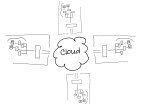
What we’ve learned about desktop and application hosting for small businesses

Application hosting is pretty popular these days, and a lot of that popularity can be attributed to the proliferation of web-based and SaaS solutions that have clearly revealed the benefits of mobility and managed service.  Not everyone wants to or can use a web-based application, however, causing demand for hosting of desktop applications to grow.  Take a look at what’s going on with Intuit QuickBooks, for example.  With all the push to QuickBooks Online, Intuit has created a surge in the demand for hosted QuickBooks desktop editions.  Folks want their QuickBooks available for remote access and to support multiple users from different locations… but they also want to continue to use the feature-rich QuickBooks desktop products their businesses rely on.  Hosting lets them have their cake and eat it, too.  It’s the best of both worlds.

Back in 2000, there were a few in the tech industry that said the desktop would be dead soon.  Business users wouldn’t be sitting down to work at computers, they would be using various devices to access their applications and data, from anywhere.  Those early visionaries recognized that mobility was the coming thing, and that even the smallest of businesses would need what was at the time enterprise-class technology. I wasn’t so sure about the potential death of the desktop and the beloved applications businesses love to use, but I was pretty certain that “working online” with centrally-managed systems was the thing to work toward.

A lot of hosting companies started up at that time, and a lot of them went out of business just a few years later – some in virtual flames.  Customers lost time, productivity, and in some cases their data.  Investors lost their investments.  It wasn’t that the service providers weren’t doing a good job, or that the technology wasn’t quite up to the task – the problem was the hype and the money.  Too many people sat on the sales-side of the technology, making promises they couldn’t deliver and coming up short in meeting investor and customer demands.

Quite a number of years have gone by, and the market is still rife with promises unkept and solutions undelivered.  But some of us in the industry have learned a lot over the years, so I’d like to share some of that learning.

Application hosting services gained popularity because they solved some major problems for businesses and their collaborators (including accountants, bookkeepers, remote workers, etc.).

Hosted application services allow everyone to work on the same software and data, regardless of where the user is located. Hosted application services provide centralized access for businesses with multiple locations or mobile workers.  And hosted application services make it easier for contracted or engaged professionals like accountants and bookkeepers to work closer with their clients.

In the beginning, when we were just launching these hosting services, the equipment, facilities and expansive engineering labor requirements were really expensive so there was tremendous pressure to find ways to keep costs down.  For customers, the plan was to pack as many users into the environment as possible, with volume representing a way to get a lower per-user cost.  This concept paved the way for the accountant cloud server model, where it was suggested that an accounting firm could bring all their clients onto the cloud server to help keep the costs down.  For a while that model worked pretty well, but then some issues started to be revealed.

With small business application hosting, particularly when dealing with QuickBooks, it should be recognized that nobody uses just QuickBooks.

There’s almost always a plug-in or add-on or some other solution that is also required with QuickBooks. Taking payments in QuickBooks requires a 3rd party plugin if you aren’t going to use Intuit payment solutions.  Downloading payroll data from another service may also require a plugin, as does the tax add-on and the order sync tool and the solution that integrates orders from the website or via EDI from vendors or suppliers.  It is almost never just QuickBooks.  When a provider tries to pack all that customization into a single server and serve a whole lot of different business, each with their own needs – things go a bit sideways.  Servers hang, customer applications interfere with one another, and data gets compromised.

The next phase then was either VDI or dedicated service.  VDI was and continues to be too expensive and complex when you have to factor in database engines, shared storage and such.  Dedicated service (server) is a bit more straightforward and still has some economy of scale.  With this model, each customer gets what they need.  They’re still in a cloud-hosted environment so collaboration isn’t a problem, and every customer has the benefit of working with exactly the software solutions they need for their particular business.  The challenge is serving just a few users.  Even though cloud servers can be relatively affordable to get these days, it may still be too costly for one- or two-user situations. (Note that these are the folks that often find themselves compelled to try the online, web version of an application simply due to cost.)

The customized cloud delivery is the right concept, but many service providers still have problems supporting multiple applications for customers and often charge quite a bit extra while delivering a marginal level of service.  You may find a provider who will try to deliver any application for you (and many will do that poorly) or you may find a popular provider that can only offer a particular set of applications for hosting.  If the provider isn’t able to deliver the applications the business needs, or if they are unable to deliver custom or personalized service, then they are likely not the right provider for the business.

The emergence of public cloud services like AWS should make it easier for small businesses to get affordable computing power and customized cloud service from any IT provider, but it hasn’t yet. 

The public cloud is still far too complicated for most small businesses to navigate or even get started with.  Truthfully, it is difficult for many IT resellers and partners to navigate, too.  Getting started is potentially costly in terms of time and resources especially for service providers, so those costs and complications end up reaching through to the customer.  The public cloud just isn’t ready for the average small business to take advantage of directly, so on-premises servers or managed cloud server hosting are still the most viable options.

A big wrinkle in the whole hosted online application model is that many businesses don’t really need or want to completely outsource their IT to a cloud provider.

Considerations relating to privacy and proximity are paramount for many business owners, not to mention the trust factor.  Lawyers, accounts, manufacturers… business owners in any industry may be uncomfortable considering moving their systems and information out of their immediate control.  There could be regulatory concerns or logistical challenges, or it could be something as simple as realizing that there remain applications or data on computers on-premises that make an outsourced hosting approach more complicated and costly while delivering only a partial solution.  Whatever the reasons, there remains a lot of in-house IT and that’s OK.

There is no doubt that business owners and their team members need and want mobility and secure remote access.  They also want to work with the IT providers they trust and maybe they even want to continue working from servers they have already contracted for or purchased. Others may wish to leverage cloud platforms, but remain closely associated with their IT providers.

Forcing a business owner to migrate their systems to a hosting platform when all they really want is remote access or multi-user service seems a bit like overkill.

Granted, there are many benefits to be derived from outsourcing IT management and administration, like improved focus on the business, and various business processes and workflows could be more streamlined with a centrally-managed and fully accessible solution.  Yet those benefits are the intangibles that businesses must discover after-the-fact, and are achieved only if the business works specifically towards those goals.  In short, it isn’t necessarily what business owners are buying.

If we have learned nothing else over the years it is that things don’t move as quickly as we’d like them to.

The world never seems to end before your homework is due.

Software-as-a-Service hasn’t completely killed off desktop software, and smartphones and tablets haven’t ended the useful life of the desktop computer.   What they have done is fully expose the desire and need for mobility and access, and have opened the doors for tools to address those needs better than the other approaches previously available.

jmbunnyfeetMake Sense?

J


Robots are just automation you didn’t know you needed

tall-tower-vancouver
There is a big trend in software integration these days which involves automation – turning connected systems into free-flowing conduits for data to move intelligently into and out of with ease.  Well, maybe not quite that, but the key is the unattended and intelligent movement of data from one system to another.  People don’t have to get involved in order for the information to flow from one system to another… it just goes by itself.  Like a robot.

Having software and systems connect to one another isn’t new at all, and businesses have for many years recognized the value of being able to have information entered in one system available in another.  Entire ERP frameworks have been created based on this concept of entering data once and using it in many ways.  The trick is when there is more than one system or software product involved.

A simple example might be someone who owns a web store and does their bookkeeping with QuickBooks Premier.  The webstore isn’t running QuickBooks; it is running an e-commerce solution or shopping cart system that allows customers to buy things online.  However, the webstore does create sales orders and charge transactions, and may even have to manage an inventory of saleable items.

Getting the information from the webstore to QuickBooks and vice versa is often a task business owners take on, either by entering the information manually themselves or hiring and employee to do it.  This manual re-entry of information introduces a large potential for errors in the data entered and is time-consuming and costly.

“It was just awful,” said David Clothier, treasurer of the Knoxville, Tenn., company, which operates more than 500 Pilot Flying J truck stops nationwide. “There were humans everywhere.”

http://www.wsj.com/articles/the-new-bookkeeper-is-a-robot-1430776272

Rather than having a person re-type the information from one system into another, software-based integration programs may be available to help users map the data and move it from one solution to the other.  Using a software program to transfer the information is much faster and reduces the error rate, increasing the overall value and usefulness of the information.

Automation isn’t the only requirement that makes this all robot-like.  The additional requirement is the intelligence.  If people still have to get directly involved in order for something to happen, then all the happening is still based on human performance. No robots here.

Intelligent integration of information occurs when the systems on both ends are capable of making decisions and acting on them.  For example, a business might use a solution that allows vendors to submit their invoices electronically.  Through a base of rules that match invoices to requests and approvals, the system is able to issue payment and record the transactions automatically and without human intervention, saving hugely on personnel and processing costs.  Robots (the automation solution) wouldn’t make up all the rules, but could follow them repetitively and without question once established.

…software can help businesses operate more effectively. “If you think like a human, there are only certain things you can do. When you think like a robot, many things are possible.”

http://www.wsj.com/articles/the-new-bookkeeper-is-a-robot-1430776272

It isn’t a new paradigm for building businesses – this doing of things a bit smarter than before and leveraging technology to get more done in less time.  The difference is that the pace of change is increasing, giving businesses less time to stand by and rub the chin and consider whether or not this new fangled technology makes sense. Robots, you say? Meet your new part-time bookkeeper.

jmbunnyfeetMake Sense?

J

The Cloud and the Business Desktop

Cloud computing is here – no longer is it considered to be temporary or just a fad.  Even though there are many businesses in the country without access to high quality high-speed Internet connectivity, the levels of investment and revenue surrounding cloud and mobile computing solutions and technologies has proven that mobility and managed service matter to those who are connected. What’s interesting is that the popularity of the cloud and the emergence of cloud-based applications and services haven’t really put much of a dent in the need for the desktop, which remains as the business workhorse and – connected or not – represents the foundation for business productivity and getting work done.

Some years ago, business applications began to emerge in SaaS (software-as-a-service) format, meaning a customer could simply subscribe to an application on the web rather than purchasing and installing software.  This option clearly resounded with many business customers and ushered in an era of online application services oriented specifically toward mobile users. Yet the desktop remains as the place where online solutions meet productivity (export any online data to an Excel spreadsheet recently?) and where accounting and finance connect with the rest of the operation.

Believing too much of the marketing-speak around cloud computing, many business users believe that they can only remotely access business software solutions if they are “cloud” and subscription model applications, and that the desktop products they know and have invested in cannot be available to them in a fully managed online model.  In fact, a large number of the business owners I speak with that actually use hosted desktop services somehow believe that the software they are using is something special and different from that which would be installed to their PCs. The fact is that the software is not different, regardless of what they may think. More often than not, the hosted applications are EXACTLY what the customer had previously installed (or would have installed) to their own computers had they not been working with a hosting provider.  Whether they are hosted or not… the desktop products generally function with all the features and capability designed into them because they are hosted on platforms they were designed to run on (like Microsoft Windows, for example).

Customers of the QuickBooks hosting companies often refer to their systems as “QuickBooks cloud, but not the online one”, not really understanding that it is simply the full desktop application that is being hosted for them.

Regardless of how many online application services emerge, and even if (IF) web-based versions of our favorite word processing and spreadsheet software become as useful as the installed kind, there will still be a need for the desktop if for no other reason than to make it easier to use and work with a variety of solutions at the same time.  Perhaps this is why remote desktop computing and hosted application services are becoming increasingly popular approaches to cloud and managed computing services.  The user benefits from having the feature-rich applications they need and a single place to access them and make them work together (the desktop value proposition), yet is able to have remote and mobile access, comprehensive system management and maintenance, data protection, helpdesk support and affordable monthly payments (the cloud value proposition).  In many ways, application hosting models represent the best of both worlds for the business.

JJoanie Mann Bunny Feet

Make Sense?

Consider how beneficial it would be to businesses who want the advantage of remote desktop and mobile access to applications to be able to run their QuickBooks (feature-rich desktop QuickBooks) and/or other business applications in an anytime, anywhere sort of environment. Businesses can obtain hosting services for QuickBooks Pro, Premier, and Enterprise – allowing organizations to have their QuickBooks financial applications managed, protected, secured, and made available to users all the time and from any location. Some hosting services may also support integrations and extensions for QuickBooks – for both desktop and Web-based applications and services. When the host can provide authorized subscription licensing for Microsoft Office, a business can have a complete, outsourced IT solution and pay only monthly service fees to get it. No installation or system management to worry about: the QuickBooks financials, the productivity, the operational systems and plugged-in applications can all be hosted in the cloud.

Taking Action to Expand Overtime Protections | whitehouse.gov

The Department of Labor is finalizing a rule to update overtime protections for workers. “In total, the new rule is expected to extend overtime protections to 4.2 million more Americans who are not currently eligible under federal law, and it is expected to boost wages for workers by $12 billion over the next 10 years.”

Source: Taking Action to Expand Overtime Protections | whitehouse.gov

This is a difficult subject for everyone involved – workers and business owners alike. Increases in minimum wage, increases in employee health care costs, and adjustments to wage and hour regulations all serve complicate and cost businesses more.  Fair payment for time worked, a living wage, and protections for workers from employer abuse are things that are expected – deservedly so – by employees.   Definitions vary, as do circumstances, so a one-size rule never really fits all and someone, somewhere, feels the burn.

A USA Today article on the subject describes Labor Secretary Thomas Perez as saying “the salary threshold was originally intended to exempt high-paid executives but instead has denied overtime to low-level retail supervisors and entry-level office workers who often toil 50 to 70 hours a week.”

On the other hand Dan Bosch, head of regulatory policy for the National Federation of Independent Business, was described as saying that “many small businesses can’t absorb the added cost and will instruct employees to work no more than 40 hours a week, bringing on part-time workers to pick up the slack”.  From Trey Kovacs, policy analyst with the Competitive Enterprise Institute: “The Obama rule puts a huge cost and regulatory burden on employers, who will face pressure to cut back on benefits and full-time employees”.

A bill was introduced on Thursday by Republican congressional leadership hoping to block the proposed overtime rule. The proposed legislation, Protecting Workplace Advancement and Opportunity Act, is intended to ensure that the Department of Labor takes a “balanced and responsible approach to updating federal overtime rules.” Sponsors of the legislation include members of the Senate Committee on Health, Education, Labor, and Pensions and the House Committee on Education and the Workforce.

Part of the bill’s consideration may be the burden of record keeping and information management that just keeps growing ever larger.  The current DOL changes, for example, now suggest that businesses must keep time and attendance records in detail for their salaried employees who might qualify for overtime compensation.  Getting employees to keep time cards or complete timesheets  may not be an easy thing to do, yet punching a timeclock and tracking their hours may become their new normal.  Some employers, on the other hand, will elect to simply raise workers’ base pay to the new threshold, avoiding paying the overtime and skirting the need to keep detailed time records.

logo-we-heart-employees

The extension of overtime protection to another 4.2 million Americans, and boosting wages by $12 billion over the next 10 years is the expectation for the new rule’s impact, although opponents suggest that employment (and employers) will suffer, reducing their workforces while absorbing costly HR management processes just in order to comply.

The rule is likely to touch nearly every sector of the U.S. economy, with the most notable adjustments occurring with nonprofits, retailers and hospitality (hotel and restaurants), as these are the industries generally having management-level workers whose salaries are at or below the new threshold.  Whether the outcomes of the rule will be as expected remains to be seen, but it is certain that many businesses must now put in place software, systems and processes which will help not just help them comply with new wage and hour rules, but deliver enough intelligence to support better personnel management, employee scheduling and labor cost containment.

jmbunnyfeetMake Sense?

J


Is this email legitimate? QuickBooks Payroll ACH ID Changes go live on the 22nd!

Is this email legitimate? QuickBooks Payroll ACH ID Changes go live on the 22nd!

Trusted QuickBooks Advisors – here’s another thing for you to help your clients with

Intuit recently sent an e-mail to QuickBooks Online Payroll (QBOP) and QuickBooks Full Service Payroll (QBFSP) customers about an ACH ID change.  It kind of looks like a phishing thing, but it is really a legitimate email from Intuit, and it is important to pay attention if your company uses the impacted services and a banking feature called “debit filtering”.  There isn’t much time to act, either, because the changes go live in 3 days (February 22, 2016).

Impacted services are QuickBooks Online Payroll and QuickBooks Full Service Payroll, so it is pretty important to address.  Nobody wants their business payroll processes interrupted, and this could easily do just that.

Intuit has added some new ACH ID numbers for use with direct deposit and other processes which work with the bank, so customers using a fraud-prevention method known as “debit filtering” will need to contact their banks to add the new IDs or their bank transactions will fail.

Debit filtering allows customers to tell their banks which ACH IDs are allowed to perform transactions with the bank account, like removing or depositing funds.  It is an extra level of fraud security that protects the bank account from unauthorized access, but it is also something that can work against the business if it is not managed.  In this case, contacting the bank to add the new IDs is critical to keeping things processing and flowing smoothly.  It is also important that the old IDs not be removed yet, as they may be tied to historic transactions that must be tracked and reported on for tax and other purposes.

“Is this really from Intuit? It seems like Intuit would have a better way to make such changes than to ask millions of subscribers to contact their bank”

Source: Is this email legitimate? ACH ID Changes; – QuickBooks Learn & Support

QuickBooks users don’t have much time to reach their banks and supply the new IDs, so pull the email out of the SPAM folder and call the bank right away. Intuit won’t be sending notices to the banks, and they have no authority to add different IDs to your approved list, anyway… which is a good thing.  If just anyone could add an approved ACH ID on your account, then just anyone could get to your funds.  Better to make the phone call yourself.

jmbunnyfeetMake Sense?

J

No REST for QuickBooks Desktop Integration Developers

No REST for QuickBooks Desktop Integration Developers

elastic-cloudIntuit, the maker of QuickBooks small business accounting software (among other things), is discontinuing service for the REST API and the Sync Manager on March 1, 2016 [1].  Developers with applications which integrate with the desktop editions of QuickBooks using this method must change their approach right away or risk having their integrations simply stop functioning.  It’s not that Intuit will DO something on March 1st.  Rather, they’ll stop doing something – like handling Sync Manager integrations.

There are a lot of different types of businesses in the world, and each of them produces and consumes a lot of information.   From sales to human resources; from operations to finance – every business generates and manages information to support the various processes which make up the business activities.  Computer systems and software represent the tools businesses use to develop and manage information, and often become foundations for structuring the information which flows through the organization. Just as there may be different people in the business, each with their own responsibilities and job functions, there are likely software applications which are similarly oriented to support different processes within the business.  Integrating or connecting different applications and processes within the business helps the organization be more efficient with information usage, generally increasing the quality of access and reporting throughout the business while at the same time reducing or eliminating redundant data entry and the potential for errors.  Software integrations are a big thing to many businesses, which is why the discontinuation of Intuit’s Sync Manager for QuickBooks Desktop editions is a big deal.

Intuit’s Sync Manager was the big thing just a few short years ago.  Providing developers with a seamless method for accessing QuickBooks company data and passing it to/from web-based and other applications was a boon to the online application model and paved the way for many disk-based integrated solutions to migrate to SaaS offerings instead.  Developers who saw success operating in Intuit’s QuickBooks marketplace as recognized add-ons were encouraged to use Sync Manager so that they would be able to seamlessly market to, subscribe and onboard new users who purchased QuickBooks products. Whether or not the developer participated in Intuit’s application marketplace, the Sync Manager and the REST API provided them with some very important capabilities and supported new methods now recognized as “standards” for development of web-based solutions and services.

The World Wide Web has succeeded in large part because its software architecture has been designed to meet the needs of an Internet-scale distributed hypermedia system. The modern Web architecture emphasizes scalability of component interactions, generality of interfaces, independent deployment of components, and intermediary components to reduce interaction latency, enforce security, and encapsulate legacy systems. http://dl.acm.org/citation.cfm?doid=337180.337228

In order to integrate a solution with QuickBooks desktop products, there are two essential problems to solve.  First, there must be access to the QuickBooks data.  Few products are able to directly access the data in a QuickBooks data file; generally, the QuickBooks program itself is used to ‘broker’ access to the company file. So, developers need a way to work inside of QuickBooks to use it to access the data their applications need.  Second, the data must be transported (via the Internet) to allow for data to come from QuickBooks into another app, or to allow data from the other app to come to QuickBooks.  The REST API and the Sync Manager addressed both of those problems and provided developers with the mechanisms required to facilitate the data integration as well as transport the data.

REST (representational state transfer) is “the software architectural style of the World Wide Web [2]” and represents a standard for creating scalable, distributed system interactions.  Using this method, developers were able to make their online solutions access, read and write data in QuickBooks desktop products because Intuit had first sync’d the data to its servers, so developers needed only to reach the Intuit servers to reach the data.  The Sync Manager provided the transport, carrying the data to/from the desktop installation where the Sync Manager service was running.  And, because the Sync Manager was basically built-in to QuickBooks, there was no additional software to install and maintain on the computer because it was all part of the QuickBooks installation.

Intuit did a fantastic job of getting developers to move to the API integration method, positioning all those lovely 3rd party solutions for linkage via an Intuit.com account and, now, to QuickBooks Online.  Intuit is clearly favoring the QuickBooks Online edition and the API integration method available with that platform, and is telling developers that they must convert their customers to QBO in order to retain the easy connective ability they had with the desktop editions via Sync Manager.

Now that Intuit has announced the discontinuation of the REST API and the Sync Manager, what options do QuickBooks integration developers have, and how can customers using 3rd party integrations keep using them?  Options do remain, and they aren’t all that bad.  In fact, the options which remain continue to be the methods of choice for certain developers. These developers recognized early on that Intuit’s somewhat “lightweight” methods couldn’t handle the complexity or full functionality of their integrations facilitated their solutions using the SDK and never looked back (and still don’t).  For this community of developers – many of whom likely never considered trying to market their solutions in the Intuit app marketplace – the elimination of the REST API and Sync Manager don’t really matter.  They didn’t bother with them in the first place, just as they aren’t bothering with QBO.  Those solutions don’t fit their customers, anyway.

The QuickBooks desktop SDK (Software Development Kit) has been around for years, and using the SDK developers have been able to craft tight integrations between their solutions and the QuickBooks desktop products.  From payment plug-ins to fully integrated sales, customer relationship, inventory and manufacturing solutions – a broad range of integrated applications built with the SDK have been successfully deployed to QuickBooks customers all over the world.   Many applications which integrate with QuickBooks desktop solutions are desktop products themselves and are designed to work within the same desktop and network environment as QuickBooks, so there is no need to worry about “transport” of the data over the Internet.

For other solutions, such as online applications and services, there may be a need to exchange data via the Web. The QuickBooks Web Connector has also been a very popular solution for developers of applications that integrate data with QuickBooks.  The Web Connector is just what its name implies: it is a way to connect QuickBooks to the web and vice versa. With the Web Connector application and a web connector configuration file, developers could provide a method of exchanging data between QuickBooks desktop and another solution fairly simply.  While the Web Connector is quite useful in providing a means to transport integrated data to/from the QuickBooks desktop to an external system (like an online application), it only allows access to whatever data Intuit decides.  For this reason, many developers use both an SDK application and the Web Connector so their applications can access all data required and also have a web service available to transport it.

There are numerous implications relating to the sunset of QuickBooks REST API and Sync Manager, and another among them is the impact in hosted environments.  For customers who are (or might) benefit from hosted QuickBooks delivery models, what does the end-of-life of the Sync Manager mean?  Since the Sync Manager was basically built into QuickBooks desktop editions, it meant that there wasn’t any extra software to install or manage when a company wanted to adopt a Sync Manager-based 3rd party integrated solution. In a hosting environment, this means that the customer could easily add integrated applications to work with their hosted QuickBooks and the service provider might never even know it was being done.  There would be no additional software to install on the host servers; so many providers would simply be unaware that their customers were using these other solutions.

As developers return to SDK and Web Connector implementations in order to integrate with QuickBooks desktop, customers will ask their hosting providers to install the QWC (QuickBooks Web Connector) and/or integration software in their service.  In shared service delivery models, this may be virtually impossible to do without potential compromise to existing customers using those servers or other applications resident on the systems.  Hosting customers will not always understand that a “simple plug-in” actually represents installable software that must be secured, maintained, managed, and kept from improperly interacting with other software in the environment.  Some providers may not even be willing to work with the new integration software, while others may allow it but will not take adequate precautions to ensure proper and secure function.

Intuit has said to many constituent groups that its focus on desktop editions of QuickBooks will continue, and new certifications and benefits for desktop ProAdvisors (and continued development of interoperability with other solutions, like the Revel POS integration for QuickBooks desktop) give support to those statements.  Yet developers who support integrations with QuickBooks desktop are once again adjusting to the not infrequent changes Intuit makes to developer programs and philosophies.  The push to QBO and connected apps may be the focus for QuickBooks marketing dollars, but there are still quite a number of (very busy!) developers supplying solutions to businesses who don’t shop inside their QuickBooks software.

Joanie Mann Bunny FeetMake Sense?

J

[1] https://developer.intuit.com/blog/2014/09/08/timeline-to-discontinue-the-quickbooks-desktop-rest-api

[2] https://en.wikipedia.org/wiki/Representational_state_transfer

Paperless_468x80