Criteria for Evaluating QuickBooks Hosting Providers: Going Beyond Pricing

Criteria for Evaluating QuickBooks Hosting Providers: Going Beyond Pricing

When a small business elects to run their QuickBooks desktop edition software in the “cloud”, it makes sense to work with an experienced provider – a company with the people and the experience to keep the QuickBooks desktop software working properly and securely.  The keys to selecting the best provider for the business are often hidden in the experiences of others; experiences which reveal issues that may significantly impact vendor selection and which have nothing to do with the price of the service. Criteria such as system performance, responsiveness to technical issues, resources for self-help, and knowledge of support personnel – these are the things that more frequently and directly impact the customer experience and, ultimately, the customer’s loyalty.

While Intuit supports QuickBooks Enterprise in terminal server and Remote Desktop environments, they only support the license when it is deployed for the single business organization the license was issued to. If a business has lots of different users on the platform and those users don’t belong to the one company who “owns” the infrastructure and the license, then the implementation is non-compliant and won’t be supported. Intuit also doesn’t offer direct support for QuickBooks Pro and QuickBooks Premier editions in remote desktop implementations, yet the software will work perfectly well in that environment. There are a few quirks and tricks to using the software in this manner, however, so provider technical experience specifically with QuickBooks is essential.

When working with a company providing managed application hosting services and not just managed server platforms, it generally means that the provider is taking responsibility not only for the server/network/infrastructure, but also for the setup, configuration and maintenance of system users and security, and the installation/management/maintenance of the applications running on the server.  When a business elects to outsource this level of service to any 3rd party, there are a variety of areas in addition to pricing which should be thoroughly explored prior to signing the service agreement.

When evaluating potential service providers, research the provider’s offerings and performance directly as well as evaluating the public’s perception of them, considering these 4 areas:

  1. Technology
  2. Innovation
  3. Business Practices
  4. Customer Satisfaction

The technology evaluation relates not only to the systems and tools applied to the service delivery, but also to the systems or tools applied to assist the customer with dealing with the service.  Too often, providers pay more attention to their ordering systems than their service delivery, believing that a quality customer experience rests more with simple purchasing processes than with a functional and well-performing application service.  Others may focus on delivering the best and highest quality application service, yet relegate their clients to sending emails or making phone calls to place service orders or request service information.  The providers who score the highest points in this category are those who recognize that both elements – service delivery and service administration – are critically important to providing a quality overall customer experience.

The innovation evaluation looks at the actual service infrastructure and delivery. This includes features as well as limitations.  One of the pitfalls of being an application service provider is the inertia created with existing systems and customers.  Once the platform is in place and there are a bunch of users on the systems, upgrading and updating the underlying technologies can be a tremendous challenge.  I have often related this as being like trying to change tires on a moving truck.  Unfortunately, systems age and lose functionality, compatibility, support, etc.

Keeping the platform updated isn’t the only element involved with scoring provider innovation.  Even more important than simple change management supporting status quo, true innovation speaks to efforts directed towards crafting a better, more functional and more useful solution delivery.  Many skilled technicians can set up a terminal server for remote access to QuickBooks using the “standard” tools available, but it takes more skill and understanding to create a service which offers more and better capability than everyone else.  The point isn’t that the provider is changing QuickBooks software in any way – that’s not really an option.  Rather, it is in how the provider elects to architect their systems and solution, and whether they are attempting to improve the experience and deliver with a unique approach rather than a generic one.

With increased competition and as some provider platforms experience challenges either due to age or capacity, certain “interesting” practices have emerged.  I now look at these business practices as part of the process of evaluating providers.  In the early days of hosting and application delivery, the business practices of various providers had some similarities, but not any more.  The practices which frustrate me most and which always cause me to score the provider with low marks in this category relate almost exclusively to transparency – or lack thereof.  Here are two scenarios which I’ve seen come up with some frequency, and which (in my opinion) are indications that the provider may not necessarily be one you want to work with.

  • A business has signed a one-year service agreement with a hosting provider, and has been required to prepay that annual contract.  The business was not provided with a demonstration or evaluation system prior to executing the service agreement; they simply trusted the information provided by sales.  After a few months on the service, the performance and support are so poor that the business wants out of the annual agreement, even though high service levels and support responses were part of the contract.  In order to be allowed to end the service agreement and stop paying for the service, the business was told they would have to not only buy out a portion of the remaining contract, but also sign an agreement not to communicate the service problems they experienced or the exit agreement terms with anyone. (*please note that I am essentially in agreement about having to buy out a committed term agreement, at least in part, but applying a gag order? Not so much).
  • A business is using the services of a hosting provider, and has a need to know details of their delivery (like server operating system version) in order to verify compatibility with a new software product they wish to purchase.  Before the business customer is allowed to obtain the information, the provider requires that they sign an agreement promising not to disclose the information they may receive to any other party.  (*note: While I recognize that this type of agreement is desirable to protect proprietary information, it is more often used to prevent the prospective customer from disclosing something potentially negative, and it certainly doesn’t do much in terms of building trust.)

The final evaluation is on customer satisfaction, where anecdotes and information is collected from both current and past customers of the provider.  Admittedly, much of this information I scour from various forums and discussion groups and interviews but it is truly amazing what you can learn about a business simply by listening to customer stories in various social venues.  The picture these stories paint is often (frequently!) very different from the “happy sunshine and rainbows” testimonials you find on websites and in marketing brochures.  Of course, who would buy from a provider who says their “support is great until you’ve been with us for a month, and then we pretty much don’t care about you any more”.  Also, people tend to be more vocal when they’re mad about something, so there is often more negative than positive out there in the social realm, so weight that carefully.  But the fact that certain provider names come up more often than others is the clue; when you don’t see the provider name come up in these discussions, it usually means they’re simply not making people mad.

There is a lot to consider in selecting the right service provider for the business, and the items listed above are just part of it.  While there are some (few) standards among application service providers, it is still what some might refer to as an “emerging” model and will continue to evolve with the market demand and technology.

For now, businesses just need to know that their solution provider is trustworthy and willing to communicate honestly and completely. Selecting the right provider – a provider who supports their business and model with full transparency to the client –  will help the business move forward just as the wrong provider is more likely to hold it back.  While pricing is an important and unavoidable aspect of the discussion, businesses should also put some focus on these other elements which help to reveal how the provider works with their customers, and to determine whether or not they can (or will even try to) meet your requirements now and in the future. 

Make Sense?

Joanie Mann Bunny FeetJ

Technology and Tools for Accounting Professionals

Joanie Mann Bunny FeetTechnology and Tools for Accounting Professionals

old_school_ledgerThere was a time not so long ago when accounting professionals focused more on tabulation and summarizing of information than on analysis.  Accounting for businesses, in particular, required collecting myriad papers and receipts and other transaction documents, summarizing the information, translating it into journal entries, and finally posting those numbers to the big bound book which represented the business general ledger.  With the work required to gather and enter all of the information, professionals necessarily focused their efforts on making the process as efficient as possible by attempting to structure the workflow and manage the paper.


When those efforts are compared to today’s approach which involves digital documents, intelligent data collection tools, automated workflow solutions, online accounting and data analysis, it is clear that the processes for accounting for business activities have not really become simpler.  In fact, much of the enabling technology has served to complicate certain processes, which drives users to find even more “solutions” to address these new problems.  It (IT) is a bit like the Wonka Everlasting Gobstopper, which never gets finished and never gets smaller.  IT simply changes things – regularly and often.

Back then – before the Internet and digital imaging, or even Personal Computers – high technology wasn’t the focus because it didn’t exist in the realm of business in general.  I suppose you could call business solutions at that time “low” technology, where mainly mechanical solutions were introduced to address various business problems.

old_school_filecabinet

As an example, prior to the advent of digital imaging and electronic documents, one of the primary requirements of the business was to organize and store paper documents.  Over time, a wide variety of filing, foldering and labeling solutions have been developed, all oriented towards making the storage and later retrieval of paper documents easier.  For some businesses, letting go of the paper is a hard thing to do.  Years and years of training in keeping paper files has left many business owners and managers wary of working without physical paper documents.  Investments in office space, filing cabinets, storage folders and personnel to organize, file and retrieve all of the documents is only a partial measurement of the cost of managing paper, and large numbers of businesses continue to operate in this manner.

old_school_desk

The technology applied to processing the work has also changed, in many ways even more dramatically than the technology applied to collecting and storing the information.  Take the simple processes of tabulation (to arrange in tabular form; condense and list) and summing (adding up) information, for example.  Previous generations didn’t have computers and spreadsheet software to perform the work.  Rather, individuals would painstakingly handwrite each transaction entry into a ledger or on a columnar worksheet, and would then have to manually add each column and then cross check footer totals to ensure accuracy.  Back then, the machines used to perform the addition/subtraction were mechanical devices and could not perform multiplication or division.   These adding machines were first hand-cranked devices, later replaced with shiny new electrical ones (weighing approximately 20 lbs each).

old_school_telephone

Even voice communications have changed dramatically over the years.  Many people don’t remember a time when having multiple phone lines in the business meant having multiple telephones, and the concept of a PBX (Private Branch eXchange) didn’t exist.  Every phone would be hard-wired to an incoming line; if you wanted to answer a call, you had to use the right phone.  This became difficult in an office with many people, so solutions such as the “fabulous extendo-phone” was invented to allow anyone in the office to access the phone from their desk.

The technology available to businesses today is astounding, and offers amazing potential and benefit.  On the other hand, technology rarely (truly) makes things simple or easy – it more frequently serves to shelter certain users from the complexity while delivering new workloads and concerns to others.  It’s rather like energy – it isn’t created or destroyed, it just changes form [law of conservation of energy].  Business is like that, particularly where information technology is involved.  The underlying requirement doesn’t go away, just like a business’s requirement to account for financial transactions and activities,  and the need for the business to capture and retain documents isn’t changed.  How the process is managed, and which tools or mechanisms are applied to the task is what changes.

Make Sense?

J

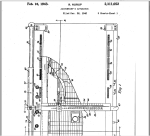
onewrite-accountant_apparatusOne-Write System Revolutionizes Accounting.  These guys had the right idea, they just didn’t have the cloud.

Cloud Computing and Online Accounting for All? Some Markets Are Still Waiting for Broadband

Cloud Computing and Online Accounting for All? Some Markets Are Still Waiting on Broadband

As the information technology industry espouses the benefits of the “paradigm shift” in computing and the move to cloud computing platforms and models, there are folks out there in the world who just aren’t seeing it happen like that.  Not everybody’s working online. For many, the Internet and online working models simply haven’t intruded into their lives and businesses as it has for others.  While this may be partially rooted in conservative mentalities and beliefs which are resistant to change, the more likely reality is that options for high-quality and affordable broadband service is simply not available to them.  Without choices for affordable and useful connectivity to the Internet, online just doesn’t have the attraction it does for those who are “connected”.

When businesses look at cloud solutions and the Internet dependency that comes along with them, having more than one connection to the outside world becomes the imperative rather than a luxury.  Unfortunately, some markets are still waiting for broadband (or have very limited options for service), rendering the cloud nearly unreachable.

It may come as a surprise to some, particularly to those in East and West coastal regions, that high speed broadband just isn’t as available in other zones.  In fact, the *National Broadband Map clearly reveals limited availability and choice in numerous regions of the US.  Broadband Internet access is a necessity to support the IT industry’s shift from localized IT to “cloud” IT.  But the shift is only evident to those who are involved in it or who have that option.  For those who the industry is beginning to refer to as the technology “have-nots”, this lack of available and affordable access will ultimately create more than simply an inability to participate in broadband-reliant IT solutions.  The fast pace of innovation and evolution in IT almost guarantees that the technology have-nots will fall even further behind, possibly to the point of not being able to catch up.

 “A Growing Gap Between IT Haves, Have-Nots. There will be a growing gap between the IT haves and have-nots in 2013. The latter will fall behind the former on a wide range of business technology fronts such as mobile, cloud, social, virtualization, and analytics…” 7 SMB Technology Predictions for 2013 | InformationWeek.com

As business (and personal) technology models continue to evolve, and as new solutions and services begin to displace the old, those who remain disconnected will begin to directly experience much more impact.

Consider something as simple as using QuickBooks desktop software for small business bookkeeping.  As Intuit continues to remove elements from the installed software product, turning them into web services instead, customers with limited or no broadband access will find themselves without the features and functionality they need in the software.  And the only possibly comparable alternatives to QuickBooks desktop accounting products are Internet-based alternatives, making them not really alternative options at all.

It is also likely that lack of sufficient broadband is one of the factors motivating many solution providers to seek clients in other markets – outside of the United States, and in regions where broadband availability is more prevalent and service speed and quality is higher.  Yes, it’s true.  The United States is not the leader in broadband availability, or even in quality.

“For many people, their broadband connections are their lifelines. So what is the state of broadband in the U.S.? Well, when it comes to speed and price and adoption, we’re certainly not a leader — “middling” is a better way to describe our position.

Currently 119 million people that live in the U.S. don’t have broadband connections (for many reasons, including not wanting it or not being able to afford it) while 19 million don’t even have the option to get it. Our rate of broadband adoption (62 percent) lags behind countries such as South Korea, the U.K.,and Germany, according this year’s Federal Communication Commission report. (We’re closer to the penetration rates to Japan, Finland, and Canada.) These numbers are not likely to change soon, given that broadband growth is slowing and providers are moving away from wireline infrastructure. “ GIGAOM:The state of broadband in the U.S. [infographic]

Accountants and other professional service providers serving clients in regions lacking sufficient choices for access must recognize that their approaches to doing business will not necessarily match their peers in more fully connected areas.  Certainly, accounting and legal professionals are dealing with this reality as practice coaches and industry leaders push for IT- and cloud-enabled models for improving practice performance and creating differentiation, even as their proven applications and business solutions morph into or are replaced with SaaS applications and online service.

The take away from this is that there are still large numbers of businesses and individuals doing things with legacy tools, managing spreadsheets on standalone PCs, or writing with pens and using paper – even in areas where broadband access is plentiful.  Regardless of how forward moving the rest of the world may be there remains a need to provide service and support these IT have-nots.  Perhaps this becomes a means for differentiation, finding ways to work with businesses who are connected and those who are not, and leveraging the firm’s access and capability to deliver what the client cannot obtain directly.

Make Sense?

J

*The National Broadband Map is a tool to search, analyze and map broadband availability across the United States

QuickBooks In-House Hosting Services for Accountants

QuickBooks Hosting Services for IT-Capable Accountants

DIY-SelfHostingSmall businesses in large numbers are looking to the cloud as a platform to deliver solutions for the problems of escalating IT costs, mobility, and remote access to business data. The cloud is also becoming the recommended platform for the delivery of services from accounting and bookkeeping professionals, as the benefits of remote data access and real-time collaboration nicely address the requirement for accounting pros to exchange and share information with their business clients. One of the popular “cloud” hosting solutions addressing a collaborative accounting model is a hosted application approach to using Intuit QuickBooks desktop products. While accounting professionals may be aware that QuickBooks can be hosted by 3rd party providers, many firms are not aware of what is referred to as the “self-host” model, which is a QuickBooks hosting model for accounting firms with some in-house technical capability.

For small businesses and many accounting service providers, working with a 3rd party hosting provider makes a lot of sense, as the host has the infrastructure and the support organization necessary to service large-scale hosted customer requirements.

On the other hand, there are a lot of accounting and bookkeeping firms which have skilled in-house IT personnel who are more than capable of creating a hosting environment to serve not only their internal needs, but also to meet basic requirements of the QuickBooks-using clients they work with. It makes sense to explore the possibilities of implementing a “self-hosting” model for client access to QuickBooks, overcoming the cost and other barriers involved with 3rd party hosting services.

When an accounting firm works with a number of clients with QuickBooks desktop edition files, the firm has to install and manage not only their own software products, but also the relevant QuickBooks software products in use by the various clients (must have the right QB program in order to open the QB data file). This often puts an undue burden on the internal IT systems of the practice which has its own internal-use software and systems to support. With an internal hosting approach, the firm can provide standardized/centralized application hosting services to their clients, building their own “economy of scale” on the platform and reducing the IT management while achieving all the real-time and remote access benefits of an outsourced hosted model. The firm does not experience a retail cost for a hosting solution, and the cost to host the client is generally offset through the efficiency gained at the firm level through direct access to client data and applications.

The technical model for delivering hosting services to a relatively small client base is not overly complicated. Commercial service providers have complex architectures because they must serve a large and diverse client base, and they never really know what sort of devices (computers and printers) or connectivity the customer may have. Commercial providers have to be prepared to deal with any and all situations, where a “self-host” firm needs only to concern themselves with supporting their particular client users and use cases. Additionally, when the solution is offered as part of the accounting or bookkeeping service, the support requirements of the customer tend to be focused during mutual working hours, as opposed to the 24×7 support demanded of the commercial host.

As accountants and bookkeepers search for solutions to improve efficiency, increase profitability and differentiate services, it makes sense for those serving QuickBooks desktop clients and having an in-house IT capability to explore becoming a QuickBooks self-host. It is one possible way to eliminate cost as a barrier to working closer with QuickBooks desktop clients while providing the mobility and collaboration businesses need.


Make Sense?

Joanie Mann Bunny FeetJ

Client Solutions, not just Professional Services

Client Solutions, not just Professional Services

Accounting Professionals serving a small business client base are struggling to find ways to demonstrate the value of the services they provide, yet many firms remain focused exclusively on their own processes and improving profitability therein rather than looking “outside the box” to see how they might involve the client in the discovery.  The obvious element which these firms are not addressing is the client user, and how a direct participation by the client becomes the foundation for internal process improvement.  After all, a lot of what accounting professionals are battling against is perceived value.  If the client were to be a more direct participant, the value of the work and the tools which support getting it done could provide a more tangible or visible aspect and increase the overall value perception of the client.

It is easy to say “get the client more involved”, but actually doing it can be the real challenge.  Professionals are recognizing this reality as they attempt to engage client users in online portals for document exchange and by providing application functionality which is supportive of the accountants’ processes.  While some professional firms are experiencing success with this approach, many other firms are not.  There are likely a variety of reasons why some firms have more success than others in getting clients to work with their online tools, but I believe there are two key elements which impact success:  accountant-centric focus, and provider lock-in.  Whether these elements work to the firms’ advantage or not depends solely upon the specifics of the service model and client market being served.

Accountant-centric focus

Most accounting professionals recognize that paperless approaches to working with client information and documents makes a lot more sense than working with the actual paper.  Particularly with the innovations in image capture, OCR and zero-entry solutions, it is logical to try to get as much of the required information transformed into useful digital data as possible.  Data entry time is reduced, accuracy is improved, and the resultant information is better and more useful and may be processed more efficiently… for the accounting professional.  For the client, on the other hand, it’s just another way to get information to the accountant (who is always wanting more information).  The value of the deliverable – the reconciled bank account, financial report, tax return or whatever – isn’t increased.   The solution often offered to the client is a solution intended to solve not the client problems, but the accountant’s.  For the client, it is difficult to see this as a “solution” to any evident problem they face.

Provider lock-in

Business software customers are often commenting about how the solutions they use don’t allow easy transition to alternative products, or add-ons are only available from developer-prescribed sources.  Vendor lock-in is a consideration and may be a barrier to doing business, because business owners want to know that they have the ability to change as business requirements change… whether it means changing software and systems, or whether it means changing professional service providers.  As more professional service providers attempt to engage their clients in technology-based approaches to doing business, clients are recognizing that these approaches may come with “strings attached”, limiting their future choices.  While it is important for the professional services firm to protect its work product, it is also important to consider the client’s position.  Part of every business relationship is trust, and that trust should not be one-sided.  Just as the professional trusts that the client will work with them in a legitimate manner, so does the client trust that their professional will not hold their information hostage if they elect to make a change or engage with other providers in the future.  Additionally, does the system provided by the accounting firm allow the client to collaborate with their own team members or other service providers, or does it address only the interactions between the accounting pro and the client?  This also represents a barrier to participation, as any given client business likely interacts with a variety of providers – many of whom are also asking that owner to implement solutions which improve their ability to do a form of e-business together.

As accounting service providers look to technology to facilitate closer and more efficient working arrangements with clients, they would do well to also consider how that technology is positioned to benefit the client as well as the professional practice.  Delivering a solution which provides clients with the capability to control information access, which allows collaboration with their various service providers, and which facilitates a lean process approach for all involved could be the right answer to the problem.  Perhaps this becomes the most important factor – client enablement – and focusing on solutions which address the clients’ information management and processing requirements as well as those of the firm.

Make Sense?

J

Read more about Data Warriors: Accountants in the Cloud

Read more about using the cloud to extend “connectedness” beyond traditional boundaries

Why Accountants and Bookkeepers Use the Cloud

When businesses do business, they generate a lot of information. In most cases, this information has a relationship to a financial transaction of some sort, like a bill from a vendor or an invoice or sales receipt for a customer. It can be difficult for a small business owner to find the best way to manage the information about customers and products and suppliers, and figuring out the best way to handle the bookkeeping and accounting is often a secondary issue. Sure, it’s important to know how much money is in the bank, but online banking helps with that. For a small business owner trying to keep their operation running, the biggest problems are the ones they face every day, like remembering which customer likes which products, or knowing which suppliers will deliver in a pinch. Bookkeeping just isn’t a huge focus other than during tax time because it doesn’t help them get business done.

It is this question of value in daily bookkeeping and accounting work that business owners and their accounting service providers alike struggle with. Certainly, most business owners recognize the necessity to get the books done, but it is generally for compliance purposes alone. Payroll taxes, sales and use taxes, personal property taxes, income taxes – these are the items that business owners think about when they think about accounting. If you see it through the eyes of the business owner, accounting = paying taxes. It’s a tough value proposition for the accountant, when you think about it. The business owner has to pay someone to figure out how much they have to pay someone else. Yeah, try to sell more of that, and good luck.

The cloud, on the other hand, is helping accounting and bookkeeping professionals change this perspective. It’s a relatively new working model for some even though the idea has been there for a long time. Better information helps business make better business decisions, and accounting professionals can help businesses implement the controls and processes which ensure that the information is complete and accurate; they can help make the information better and more meaningful.

Remotely accessed and hosted desktops and application models have been around for quite a while, too, but only recently has the market begun to realize the full potential of the hosted model. We have the investment in SaaS solutions to thank for this; they blazed the trail for online application adoption and created awareness of the possibilities around hosting and anytime/anywhere access. The SaaS and “true cloud” applications continue to gain in popularity and acceptance, yet the hosting model is providing businesses with the ability to retain use of their business applications and data yet benefit from the same managed service and remote access that other online solutions provide.

When you look at how public accountants and professional bookkeepers work with their clients, the concept of creating shared access to accounting applications and financial data makes a lot of sense. Time and distance are the real issues to be solved – the business owner and their accounting pros generally work from different locations, and likely need to access the information for different purposes at different times. If they aren’t in the same place and using the same tools, how efficient can the collaboration truly be? With the cloud, on the other hand, collaboration is fully enabled and allows each user to do what they need to regardless of the location and time.

As the accountant or bookkeeper is able to work more closely with their client (using the same tools and the same data in real time), information can be processed more regularly and with a higher degree of accuracy. Outsourced accounting and bookkeeping providers are then able to give their clients more timely and accurate financial information which supports making better business decisions all the time. Helping with the organization and processing of information as business happens, fewer gaps are found in the data and the improved controls protect against data loss or misclassification. The data becomes more useful in that it contains more details, is more accurate and complete.

For the accounting professional, the benefits are many. Not only is the professional in a better position to deliver tangible value to the client (much higher value than just a tax bill!), the value is delivered more frequently which increases the overall value perception of the service being provided. Note the word “value” is used a lot here; it is the basis for billing clients for the useful nature of services provided and not on the time it takes to provide them. Internally to the accounting or bookkeeping business, the increased efficiency introduced with real-time application and data access means that processing workflows and resources may be more streamlined and handled with a great level of efficiency, which drives improvement in profitability and the consistency of service delivery.

There are a lot of new and exciting products and services emerging: cloud application services, artificial intelligence and automation, and the Internet and Interfaces of Things.. and businesses are being encouraged to adopt these solutions for a variety of reasons. For accountants and bookkeepers working with small business clients, there is no doubt that the cloud, hosting and online collaboration are the keys to helping get more and better business done.

Joanie Mann Bunny FeetJ

Read about Hosting All My Applications in the Cloud

or more about the Collaborative Online Model for Small Business Accounting Professionals