Cloud and Digital are Driving Change in Professional Practice

Accounting and Finance Professionals: Cloud and Digital are Driving Change in Professional Practice

Accountants and financial consultants working in public practice are experiencing a revolutionary change, evolving from documents and paper-based processes with after-the-fact reporting to real-time business management and providing services which support daily decision-making.  The underlying cause for this evolution in business accounting is the technology: cloud and collaborative computing models are enabling much closer and regular interaction between accounting professionals and the businesses they serve. Even more, technology is taking its proper place in automating once tedious activities, allowing professionals to focus on causes and results rather than on transactions.

What is the real impact this is having on the accounting profession?  It’s forcing a new focus and attention on change management within the practice, and is causing professionals to recognize the requirement for standardization of processes and development of controls which are the foundations for creating sustainability in a business.  The goal now is placing reliance on process rather than people, which establishes the basis for intelligent automation.  Standardization of processes does not require that the firm lose its personality.  Rather, the mission at hand is to imbue the organization with its unique flavor and approach and to use process automation to develop and support consistency in the functions performed.

While cloud computing models allow accounting and finance professionals to work closer with their business clients, it is important that the practice look at those client interactions and develop standards for processes supporting frequently performed functions.  These operations generally represent the activities within the firm which generate the highest levels of profitability due to the consistency in approach and repetition of tasks, and are the activities to apply intelligent automation to first.  Those activities or engagements which represent the “one-offs” are often the most costly for the firm to perform, and therefore may not be the most profitable of activities and are certainly the most challenging to support with any significant level of automation.  It is in this area where AI will find useful value in the practice, where a more informed answer than simple process automation is required.

The surprising finding when looking at many professional practices with more than one partner/professional involved is that these firms often fail to develop even the most basic of standard processes which apply throughout the firm.  Rather, each partner or professional has “their way” of handling things, which challenges the supporting personnel as they try to deal with multiple working methods. The result is a lack of consistency in the service delivery to the clientele and reduced productivity and profitability for the firm.

The thing that these firms are failing to recognize – the light bulb over their heads that just isn’t lighting up – is that cloud computing and collaborative working models aren’t designed just to enable and facilitate a closer working relationship with clients.  They’re also able to be applied inside the professional practice, enabling a more productive and efficient workflow which addresses the strengths and capabilities of the entire organization. And it doesn’t stop there.  Businesses are relying upon their accounting professionals to provide guidance and develop controls and standards to support the client transformation from paper-based to digital operations, and embracing the entire realm of data and interactions associating with the business. Digital transformation in a client business demands transformation in those firms who serve it.

As professionals learn to go deeper in client operations they would do well to look internally, too, exploring how increased attention to process automation and consideration for the firm’s own “digital transformation” might lead to great profitability through market differentiation and improved performance.

Make Sense?

J

Why Accounting in the Cloud?

Why Accounting in the Cloud?

Business owners and managers need to keep close control of their financial data.  They need to know where they stand at all times, and having information available to make business decisions is essential.  When the financial information is in the office but the owner isn’t, how can wise decisions be made without access to supporting data?  They can’t, and that’s a problem.  The solution is simple: work in the cloud.

A cloud computing model properly applied to accounting and bookkeeping systems helps businesses of any size keep their financial data and accounting applications in a safe a secure environment, yet accessible to those who need it.  By locating the business applications and data in a protected central location, access to programs and data sets can be provided to authorized users regardless of location or computing platform.  For a small business owner, this means that working from home or on vacation can be as productive as working in the office.  In larger businesses, cloud-based accounting means the accounting department, CFO and financial advisers might all access the same financial records and applications no matter where they work from.

Cloud computing and hosted application models applied to accounting and bookkeeping represent a viable option for managing, securing and providing access to critical financial information.  Businesses outsourcing their accounting or bookkeeping work find that cloud based approaches offer workflow and process efficiencies to help get the necessary information in the hands of those who need it, quickly and efficiently.

Keeping accounting and bookkeeping systems safe yet available, providing business decision makers with the flexibility of accessing their financial data from anywhere and at any time is a highly valuable service. Accounting and finance professionals can act as the trusted adviser to their clients, providing important business insight and information, with guidance in developing cloud computing and online accounting approaches being among the benefits the firm offers.   Working closer with clients allows professionals to produce better, more accurate and insightful results.   Cloud computing models remove distance barriers and allow professionals and their clients to work more collaboratively with applications and data than ever before.

Many firms are just recently discovering the relationship between technology adoption and business competitiveness.  Those that embrace new computing paradigms gain the ability to meet client requirements in innovative, efficient and timely ways while those that do not adopt these new models continue to struggle, unable to communicate value and differentiation in their service offerings.

There are some recognized truths in business, and one is that is isn’t what you know but who you know.  Another truth, an understanding that is just now being fully recognized, is that it’s not what you do, but how you do it that matters.  Accounting and bookkeeping for business is absolutely an area where cloud computing and the wise application of technology and service can improve cost efficiency, accuracy and turnaround times, allowing the firm to provide a higher level of service to clients.  Accounting in the cloud is a technology-enabled approach which propels the firm into an entirely new range of capabilities and potential service offerings, reaching higher levels of performance and profitability.

Joanie Mann Bunny FeetMake Sense?

J

Efficiency and Value with Cloud Accounting

For some accounting professionals, the problem is finding a way to provide services that are valuable to the client, and doing it in a way that makes it profitable for the provider.  Outsourced and online accounting models are the answer, employing innovative tools in the practice and with clients: tools and resources necessary to get more informed and run the business better.

accountingCloud

With online accounting solutions the firm is able to increase profitability with the range of services offered, often adding clients and work without hiring more personnel.  Online solutions allow professionals and their clients to work from anywhere at any time, providing both with the freedom to focus on core business capabilities (and lifestyle).

Reducing the requirement for sophisticated on-premises technology may mean providing everyone with the ease of use and security of server-based computing models, which is among the benefits of a cloud IT approach.  Centralizing and managing applications, protecting valuable data resources, and streamlining business processes are among the benefits to be achieved with an outsourced, managed application hosting solution.  Businesses who outsource their IT management often realize an increased capacity to do business simply by leveraging the cloud to make the current working models more efficient and effective.

Leveraging mobility and real time access is also about increasing the overall range of opportunity to deliver value.  Contractors, employees and clients all find improvements in getting the information they need when it matters, and the firm finds a greater agility in meeting client demands and expanding service offerings.

Cloud computing and online accounting solutions have proven the viability of anytime, anywhere working models, and professional accounting practices of all sizes and orientations are realizing the benefits of working closer with their clients by applying them to the engagement.

Cloud accounting is really about improving the profitability of the accounting practice while delivering higher levels of service to the client.  The movement of information from one place to another; translating data from one form to another – these are the processes representing the cost and inefficiency in the practice, and are specific areas where a collaborative, online approach may introduce new service efficiency and value.

jmbunnyfeet

Make Sense?

J

It is worth noting that “cloud accounting” and online accounting models do not necessarily require the use of a SaaS solution.  QuickBooks Online, Xero, Freshbooks – these are new small business offerings that exist purely on the web.  QuickBooks desktop editions can be “cloudy”, too, when they’re hosted by an authorized QuickBooks hosting provider.  The point is not necessarily to use web software, but to approach IT management and systems from an outsourced perspective, allowing for centralized management and administration and delivering secure remote and mobile access.  The systems should facilitate the working model, not force it.

The Productivity Paradox: Accounting for Returns on IT Investments

The Productivity Paradox: Accounting for Returns on IT Investments

There has always been somewhat of a struggle between the IT department and “management”, much of the difficulty existing with the need to demonstrate clear returns on investments for IT purchases.  Unfortunately, expenditures in information technology are often the result of short-term views of long-standing problems, applying “solutions” that do not fully address the requirement or which do not deliver the productivity or performance gains expected, particularly in a dynamic and rapidly changing business environment. The assumption is that a wise investment in information technology will result with improved profitability and performance.  Demonstrating this on paper is not always easily accomplished.

There is a great deal of research on the subject of accounting for returns on IT investments.  Some of this research describes “The Productivity Paradox”, referring to early studies on the “relationship between information technology and productivity, and finding an absence of a positive relationship between spending on IT and productivity or profitability”. [1]  Previous to the emergence of cloud computing and widely available remote and mobile technologies (and now possibly even more with the prevalence of available options), businesses invest heavily in IT infrastructure and applications which deliver nominal benefit to the business when measured against the cost of acquisition and implementation.  Heavy IT investments are made with little or no measurable benefit to profitability, even if operational performance improvements are created.  In many cases, the difficulty in “proving” benefit from information technology investments rests with the lack of information relating to impacts in non-operational areas, such as with investors, auditors or analysts.

The early research has become a foundation for making the argument that accounting professionals should be more directly involved in determining the value and impacts of IT investments – due largely to the fact that accounting professionals are generally familiar with the variety of formulas and approaches which become relevant in measuring the effects of IT purchases.  Information technology spending will result in short-term impacts, but will impress on the business over the longer view as well. With a foundation in accounting principles, valuation and analysis, and accompanied by IT knowledge and experience, management accounting benefits from an improved ability to recognize the relevance and value in IT implementations even where no direct profit improvement is visible.

Can difference in firm performance be explained by differences in IT investments?
Can differences in firm performance be explained by differences in IT investments?

Emerging technology models are having huge impacts in business capability as well as risk, and this new paradigm requires that accounting professionals apply their skills to understanding more fully the influences from and results of IT spending in the enterprise.

Having a basis for studying valuation and recognizing the good and bad of focusing on various key measurements (return on assets vs equity vs sales vs investment…) is essential in developing a “formula” for predicting impacts of and potential returns from IT spending, and solving the puzzle that is the productivity paradox.

jmbunnyfeetMake Sense?

J

[1] Journal of Information Systems Vol. 16; “Returns on Investments in Information Technology: a Research Synthesis”

Predicting Outcomes and Providing Guidance | Being Nostradamus| Proformative.com

I have a gripe with the accounting profession.  My gripe is with the fact that accounting information delivered to most business owners is old news.  Stuff happened, the professional properly recorded it and reported on it,  you paid your taxes, and that’s that.  Game over.

Once upon a time, accountants had to work with book ledgers, pen and pencil (mostly pen, putting that single line through incorrect entries), and stacks upon stacks of paper documents.  Just keeping up with the process of recording transaction information, adding it all up (and making sure the footing totals jibe), and then summarizing the information into usable form took all the time available, and the focus was on the accuracy of the work – not necessarily the timeliness of it.  With the advent of computers and computerized accounting systems, the process of creating and storing the data became easier, but the volume and nature of information increased and thus the complexity and time to process increased (the “everlasting gobstopper” problem.. it never really goes away).There isn’t any argument over the critical value and importance of that work.  Every business owner understands that not properly accounting for business activities can mean increases in tax burdens, penalties and interest, and more.  It’s good work… but what do you do with it?  My intent is not to try to diminish the value of today’s approach to accounting.  Rather, I’m trying to point out how the accounting profession could make a huge impact in today’s pathetic economy, help businesses get financially healthier, and help put the small/medium business market on a path to growth and success.  It involves seeing into the future.

These days, technologies exist which facilitate acquiring the information (even in paper form), converting that information into digital data, and then actually interpreting the data to arrive at a transaction.  Traditional software and cloud service providers alike are recognizing that mechanical data entry is passé, and do-it-yourself solutions for accounting and bookkeeping will rely upon “smart” engines which can read and properly understand what each scanned document means.

So – once the accurate data entry problem is solved… what’s the next logical step?  Analytics!  It’s only really possible now that online solutions have brought the business information to the accounting professional in real-time, and have allowed the accounting professional and the business owner to collaborate and share data faster than ever before.  If information is power, we have a lot of power in our hands… but do we really know it?  This is where BI (business intelligence) and analytics come in, and where the opportunity exists for the accounting profession to become a guiding force in rebuilding our economy.

What if an accountant could not only tell his client that the business lost money last year or last month, but that they’re going to lose money through this month and year if they don’t change their behavior?  And, what if the accountant could run a variety of scenarios which would help forecast the most positive business outcome based on certain choices which could be made, or certain activities which could be handled in different ways?  What if the accountant could help his client peer into the future, and get an inkling of what the business could look like if certain economic or business conditions continued… changed… ?

Maybe I’m a little overzealous when it comes to believing that the accounting profession could have recognized the economic trauma which was coming, or that they could have prepared their business clients for it.  But I don’t believe I’m very far off the mark in believing that not nearly enough “analysis” occurs in the typical public accounting engagement, and even when it does… is the suggested path the right one?  I would submit that BI is new enough to so many people that it may not be.  Learning what the numbers are telling you is one thing… staving off disaster is quite another.

I would encourage all BI and Data Analytics fanatics to check out an article on CFO.com on this subject:  That New Big Data Magic  http://www3.cfo.com/article/2011/8/analytics_that-new-big-data-magic

A few memorable takeaways from the article:

“you may be spot-on about a problem, but the solution doesn’t magically appear out of the data.”

“what you do with [data] is a people-based activity, a skill base you have to mature.  And it doesn’t come quickly.”

“CFOs have a gut sense that there’s money out there in all that data… The challenge is how to turn that data into new opportunities.” The good news.. is that new technologies are making it more economical to make sense of Big Data… The caveat is that those technologies will not provide those opportunities. That’s still up to the people who make business decisions.”

jmbunnyfeetMake Sense?

J

reblogged from Proformative.com  Being Nostradamus – Predicting Outcomes and Providing Guidance

Technology and Tools for Accounting Professionals

Joanie Mann Bunny FeetTechnology and Tools for Accounting Professionals

old_school_ledgerThere was a time not so long ago when accounting professionals focused more on tabulation and summarizing of information than on analysis.  Accounting for businesses, in particular, required collecting myriad papers and receipts and other transaction documents, summarizing the information, translating it into journal entries, and finally posting those numbers to the big bound book which represented the business general ledger.  With the work required to gather and enter all of the information, professionals necessarily focused their efforts on making the process as efficient as possible by attempting to structure the workflow and manage the paper.

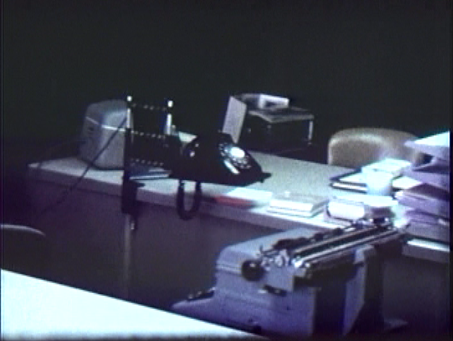
When those efforts are compared to today’s approach which involves digital documents, intelligent data collection tools, automated workflow solutions, online accounting and data analysis, it is clear that the processes for accounting for business activities have not really become simpler.  In fact, much of the enabling technology has served to complicate certain processes, which drives users to find even more “solutions” to address these new problems.  It (IT) is a bit like the Wonka Everlasting Gobstopper, which never gets finished and never gets smaller.  IT simply changes things – regularly and often.

Back then – before the Internet and digital imaging, or even Personal Computers – high technology wasn’t the focus because it didn’t exist in the realm of business in general.  I suppose you could call business solutions at that time “low” technology, where mainly mechanical solutions were introduced to address various business problems.

old_school_filecabinet

As an example, prior to the advent of digital imaging and electronic documents, one of the primary requirements of the business was to organize and store paper documents.  Over time, a wide variety of filing, foldering and labeling solutions have been developed, all oriented towards making the storage and later retrieval of paper documents easier.  For some businesses, letting go of the paper is a hard thing to do.  Years and years of training in keeping paper files has left many business owners and managers wary of working without physical paper documents.  Investments in office space, filing cabinets, storage folders and personnel to organize, file and retrieve all of the documents is only a partial measurement of the cost of managing paper, and large numbers of businesses continue to operate in this manner.

old_school_desk

The technology applied to processing the work has also changed, in many ways even more dramatically than the technology applied to collecting and storing the information.  Take the simple processes of tabulation (to arrange in tabular form; condense and list) and summing (adding up) information, for example.  Previous generations didn’t have computers and spreadsheet software to perform the work.  Rather, individuals would painstakingly handwrite each transaction entry into a ledger or on a columnar worksheet, and would then have to manually add each column and then cross check footer totals to ensure accuracy.  Back then, the machines used to perform the addition/subtraction were mechanical devices and could not perform multiplication or division.   These adding machines were first hand-cranked devices, later replaced with shiny new electrical ones (weighing approximately 20 lbs each).

old_school_telephone

Even voice communications have changed dramatically over the years.  Many people don’t remember a time when having multiple phone lines in the business meant having multiple telephones, and the concept of a PBX (Private Branch eXchange) didn’t exist.  Every phone would be hard-wired to an incoming line; if you wanted to answer a call, you had to use the right phone.  This became difficult in an office with many people, so solutions such as the “fabulous extendo-phone” was invented to allow anyone in the office to access the phone from their desk.

The technology available to businesses today is astounding, and offers amazing potential and benefit.  On the other hand, technology rarely (truly) makes things simple or easy – it more frequently serves to shelter certain users from the complexity while delivering new workloads and concerns to others.  It’s rather like energy – it isn’t created or destroyed, it just changes form [law of conservation of energy].  Business is like that, particularly where information technology is involved.  The underlying requirement doesn’t go away, just like a business’s requirement to account for financial transactions and activities,  and the need for the business to capture and retain documents isn’t changed.  How the process is managed, and which tools or mechanisms are applied to the task is what changes.

Make Sense?

J

onewrite-accountant_apparatusOne-Write System Revolutionizes Accounting.  These guys had the right idea, they just didn’t have the cloud.