Cloud and Digital are Driving Change in Professional Practice

Accounting and Finance Professionals: Cloud and Digital are Driving Change in Professional Practice

Accountants and financial consultants working in public practice are experiencing a revolutionary change, evolving from documents and paper-based processes with after-the-fact reporting to real-time business management and providing services which support daily decision-making.  The underlying cause for this evolution in business accounting is the technology: cloud and collaborative computing models are enabling much closer and regular interaction between accounting professionals and the businesses they serve. Even more, technology is taking its proper place in automating once tedious activities, allowing professionals to focus on causes and results rather than on transactions.

What is the real impact this is having on the accounting profession?  It’s forcing a new focus and attention on change management within the practice, and is causing professionals to recognize the requirement for standardization of processes and development of controls which are the foundations for creating sustainability in a business.  The goal now is placing reliance on process rather than people, which establishes the basis for intelligent automation.  Standardization of processes does not require that the firm lose its personality.  Rather, the mission at hand is to imbue the organization with its unique flavor and approach and to use process automation to develop and support consistency in the functions performed.

While cloud computing models allow accounting and finance professionals to work closer with their business clients, it is important that the practice look at those client interactions and develop standards for processes supporting frequently performed functions.  These operations generally represent the activities within the firm which generate the highest levels of profitability due to the consistency in approach and repetition of tasks, and are the activities to apply intelligent automation to first.  Those activities or engagements which represent the “one-offs” are often the most costly for the firm to perform, and therefore may not be the most profitable of activities and are certainly the most challenging to support with any significant level of automation.  It is in this area where AI will find useful value in the practice, where a more informed answer than simple process automation is required.

The surprising finding when looking at many professional practices with more than one partner/professional involved is that these firms often fail to develop even the most basic of standard processes which apply throughout the firm.  Rather, each partner or professional has “their way” of handling things, which challenges the supporting personnel as they try to deal with multiple working methods. The result is a lack of consistency in the service delivery to the clientele and reduced productivity and profitability for the firm.

The thing that these firms are failing to recognize – the light bulb over their heads that just isn’t lighting up – is that cloud computing and collaborative working models aren’t designed just to enable and facilitate a closer working relationship with clients.  They’re also able to be applied inside the professional practice, enabling a more productive and efficient workflow which addresses the strengths and capabilities of the entire organization. And it doesn’t stop there.  Businesses are relying upon their accounting professionals to provide guidance and develop controls and standards to support the client transformation from paper-based to digital operations, and embracing the entire realm of data and interactions associating with the business. Digital transformation in a client business demands transformation in those firms who serve it.

As professionals learn to go deeper in client operations they would do well to look internally, too, exploring how increased attention to process automation and consideration for the firm’s own “digital transformation” might lead to great profitability through market differentiation and improved performance.

Make Sense?

J

Technology and Tools for Accounting Professionals

Joanie Mann Bunny FeetTechnology and Tools for Accounting Professionals

old_school_ledgerThere was a time not so long ago when accounting professionals focused more on tabulation and summarizing of information than on analysis.  Accounting for businesses, in particular, required collecting myriad papers and receipts and other transaction documents, summarizing the information, translating it into journal entries, and finally posting those numbers to the big bound book which represented the business general ledger.  With the work required to gather and enter all of the information, professionals necessarily focused their efforts on making the process as efficient as possible by attempting to structure the workflow and manage the paper.
When those efforts are compared to today’s approach which involves digital documents, intelligent data collection tools, automated workflow solutions, online accounting and data analysis, it is clear that the processes for accounting for business activities have not really become simpler.  In fact, much of the enabling technology has served to complicate certain processes, which drives users to find even more “solutions” to address these new problems.  It (IT) is a bit like the Wonka Everlasting Gobstopper, which never gets finished and never gets smaller.  IT simply changes things – regularly and often.

Back then – before the Internet and digital imaging, or even Personal Computers – high technology wasn’t the focus because it didn’t exist in the realm of business in general.  I suppose you could call business solutions at that time “low” technology, where mainly mechanical solutions were introduced to address various business problems.

old_school_filecabinet

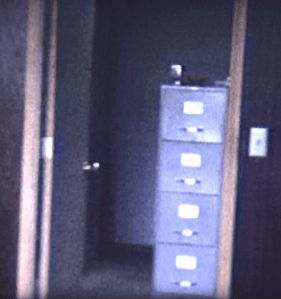
As an example, prior to the advent of digital imaging and electronic documents, one of the primary requirements of the business was to organize and store paper documents.  Over time, a wide variety of filing, foldering and labeling solutions have been developed, all oriented towards making the storage and later retrieval of paper documents easier.  For some businesses, letting go of the paper is a hard thing to do.  Years and years of training in keeping paper files has left many business owners and managers wary of working without physical paper documents.  Investments in office space, filing cabinets, storage folders and personnel to organize, file and retrieve all of the documents is only a partial measurement of the cost of managing paper, and large numbers of businesses continue to operate in this manner.

old_school_desk

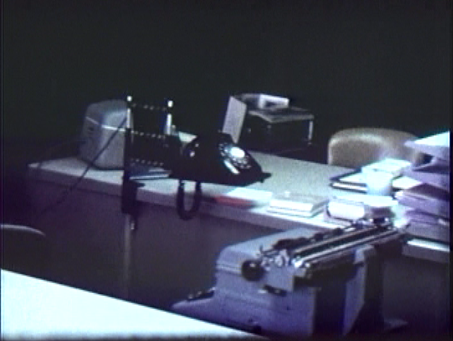
The technology applied to processing the work has also changed, in many ways even more dramatically than the technology applied to collecting and storing the information.  Take the simple processes of tabulation (to arrange in tabular form; condense and list) and summing (adding up) information, for example.  Previous generations didn’t have computers and spreadsheet software to perform the work.  Rather, individuals would painstakingly handwrite each transaction entry into a ledger or on a columnar worksheet, and would then have to manually add each column and then cross check footer totals to ensure accuracy.  Back then, the machines used to perform the addition/subtraction were mechanical devices and could not perform multiplication or division.   These adding machines were first hand-cranked devices, later replaced with shiny new electrical ones (weighing approximately 20 lbs each).

old_school_telephone

Even voice communications have changed dramatically over the years.  Many people don’t remember a time when having multiple phone lines in the business meant having multiple telephones, and the concept of a PBX (Private Branch eXchange) didn’t exist.  Every phone would be hard-wired to an incoming line; if you wanted to answer a call, you had to use the right phone.  This became difficult in an office with many people, so solutions such as the “fabulous extendo-phone” was invented to allow anyone in the office to access the phone from their desk.

The technology available to businesses today is astounding, and offers amazing potential and benefit.  On the other hand, technology rarely (truly) makes things simple or easy – it more frequently serves to shelter certain users from the complexity while delivering new workloads and concerns to others.  It’s rather like energy – it isn’t created or destroyed, it just changes form [law of conservation of energy].  Business is like that, particularly where information technology is involved.  The underlying requirement doesn’t go away, just like a business’s requirement to account for financial transactions and activities,  and the need for the business to capture and retain documents isn’t changed.  How the process is managed, and which tools or mechanisms are applied to the task is what changes.

Make Sense?

J

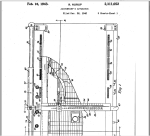
onewrite-accountant_apparatusOne-Write System Revolutionizes Accounting.  These guys had the right idea, they just didn’t have the cloud.

The True Cost of the Cloud

The True Cost of the Cloud

Excerpt from article on Intuit Accountants News Central: The True Cost of the Cloud

“Accounting professionals are strongly encouraged to adopt cloud computing models in their practices, and there can be little argument that mobility and access are driving the need. In concert with the messages supporting mobile access to business information – and the value of anytime, anywhere access – cloud service providers are strongly suggesting that the overall cost of purchasing and maintaining information technology (IT) in the business is much lower when a cloud computing approach is used.

Arguments over the total cost of IT and related services become somewhat subjective. Many business owners and managers fail to consider the value of their own time spent dealing with business technology issues, much less the time spent by in-house employees and remote workers. To further complicate the issue, dramatic changes in process support and delivery, connected service and cloud computing approaches are impacting business productivity and profitability in new and dramatic ways. As a result, every business should consider the costs and the benefits of this new connected and collaborative working model.

At the core, cloud computing is really just an outsourced IT service that addresses the various levels of application and computing infrastructure. From IaaS (infrastructure as a service) to SaaS (software as a service) and all things in between, a viable cloud computing approach for a business may encompass little more than co-location of physical server and network resources with a third-infrastructure provider to something much larger scale, such as offloading virtually every aspect of application management and delivery to a SaaS solution.

Because there is no single, correct definition of what makes up a “cloud” service model, attempting to compare costs directly to a more traditional IT approach is quite complicated.”

Read the entire article at Intuit Accountants News Central

http://blog.accountants.intuit.com/ways-to-grow-your-business/the-true-cost-of-the-cloud/