Technology and Tools for Accounting Professionals

Joanie Mann Bunny FeetTechnology and Tools for Accounting Professionals

old_school_ledgerThere was a time not so long ago when accounting professionals focused more on tabulation and summarizing of information than on analysis.  Accounting for businesses, in particular, required collecting myriad papers and receipts and other transaction documents, summarizing the information, translating it into journal entries, and finally posting those numbers to the big bound book which represented the business general ledger.  With the work required to gather and enter all of the information, professionals necessarily focused their efforts on making the process as efficient as possible by attempting to structure the workflow and manage the paper.

When those efforts are compared to today’s approach which involves digital documents, intelligent data collection tools, automated workflow solutions, online accounting and data analysis, it is clear that the processes for accounting for business activities have not really become simpler.  In fact, much of the enabling technology has served to complicate certain processes, which drives users to find even more “solutions” to address these new problems.  It (IT) is a bit like the Wonka Everlasting Gobstopper, which never gets finished and never gets smaller.  IT simply changes things – regularly and often.

Back then – before the Internet and digital imaging, or even Personal Computers – high technology wasn’t the focus because it didn’t exist in the realm of business in general.  I suppose you could call business solutions at that time “low” technology, where mainly mechanical solutions were introduced to address various business problems.

old_school_filecabinet

As an example, prior to the advent of digital imaging and electronic documents, one of the primary requirements of the business was to organize and store paper documents.  Over time, a wide variety of filing, foldering and labeling solutions have been developed, all oriented towards making the storage and later retrieval of paper documents easier.  For some businesses, letting go of the paper is a hard thing to do.  Years and years of training in keeping paper files has left many business owners and managers wary of working without physical paper documents.  Investments in office space, filing cabinets, storage folders and personnel to organize, file and retrieve all of the documents is only a partial measurement of the cost of managing paper, and large numbers of businesses continue to operate in this manner.

old_school_desk

The technology applied to processing the work has also changed, in many ways even more dramatically than the technology applied to collecting and storing the information.  Take the simple processes of tabulation (to arrange in tabular form; condense and list) and summing (adding up) information, for example.  Previous generations didn’t have computers and spreadsheet software to perform the work.  Rather, individuals would painstakingly handwrite each transaction entry into a ledger or on a columnar worksheet, and would then have to manually add each column and then cross check footer totals to ensure accuracy.  Back then, the machines used to perform the addition/subtraction were mechanical devices and could not perform multiplication or division.   These adding machines were first hand-cranked devices, later replaced with shiny new electrical ones (weighing approximately 20 lbs each).

old_school_telephone

Even voice communications have changed dramatically over the years.  Many people don’t remember a time when having multiple phone lines in the business meant having multiple telephones, and the concept of a PBX (Private Branch eXchange) didn’t exist.  Every phone would be hard-wired to an incoming line; if you wanted to answer a call, you had to use the right phone.  This became difficult in an office with many people, so solutions such as the “fabulous extendo-phone” was invented to allow anyone in the office to access the phone from their desk.

The technology available to businesses today is astounding, and offers amazing potential and benefit.  On the other hand, technology rarely (truly) makes things simple or easy – it more frequently serves to shelter certain users from the complexity while delivering new workloads and concerns to others.  It’s rather like energy – it isn’t created or destroyed, it just changes form [law of conservation of energy].  Business is like that, particularly where information technology is involved.  The underlying requirement doesn’t go away, just like a business’s requirement to account for financial transactions and activities,  and the need for the business to capture and retain documents isn’t changed.  How the process is managed, and which tools or mechanisms are applied to the task is what changes.

Make Sense?

J

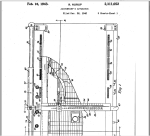
onewrite-accountant_apparatusOne-Write System Revolutionizes Accounting.  These guys had the right idea, they just didn’t have the cloud.

Innovation and Disruption: Challenging the Professional Accountant’s Value

Innovation and Disruption: Challenging the Professional Accountant’s Value

It’s tough, being a professional accountant or bookkeeper for small businesses and it’s not getting any easier.  Yes, there have always been challenges to the relationship, particularly with the perceived value of performing the work being fairly low yet the value of the work product being quite high. But professionals are facing new competition – competition in more areas and delivered in more ways – than ever before.  This competition and the advantage it often represents is founded in the disruption of traditional IT created through cloud computing services, and the innovative use of technology, people and process to craft entirely new service models.  Accounting professionals must recognize and leverage these elements to improve client service levels and differentiate offerings, or they risk losing revenue, business value, and relevance to their clients and markets.

Accounting and finance technology has, for many years, been necessarily focused on managing the ever-increasing volume of paper-based information.  This paperwork provided the basis for financial transactions and had to be collected, translated and normalized, keyed into the system as data, and finally summarized for various reporting purposes.  It makes sense that the simple fact of “document and paper handling logistics” have resulted in a variety of approaches and computerized tools designed to deal with all that paper. The “reality of paper” is firmly entrenched in business, and has been for so long that accounting solutions and financial systems have been developed to make working with supporting documents easier, yet continue to approach the use of those documents simply as support for data entered after-the-fact.

But there are new participants in the world of small business accounting and bookkeeping, and this entirely new generation of solutions does not carry with them the weight of years of paperwork and paper-based processes.  Rather, this generation of online application solutions is developed with innovation in mind, and is seeking to develop a new approach to what are generally referred to as “best practices” for accounting for small business.  Bear in mind that the term “best practices” describes something well-known and

There are two very important aspects of these “new generation” solutions and the services they provide, and which represent the challenge to the old rules of doing business.  Based on early adoption and usage of many of these solutions, they will be successful.  How they fit into the profile of today’s accounting or bookkeeping practice remains to be fully exposed.

1.  Real-time information

It was always broke, and now we can fix it.  When most of the business and accounting information was paper based, it meant that accounting and bookkeeping would always be performed after-the-fact.  It takes time to gather the information, and even more time to organize it and turn it into useful digital data.  The new approach is not to provide a better way to manage paper or to turn it into data more quickly.  The disruptive and innovative approach introduced is the belief that information should originate as data and not as a document.

2.  Consumer-oriented service

DIY is fundamental to many of today’s small business solutions and services.  While the term Software as a Service describes how software and systems are being sold in the form of subscription services, the reality of many of these solutions is Service through Software, where the work product is the service rather than the software and systems (and people) performing it. Customers subscribe to a supporting business service, and it’s delivered through a software-based interface. The innovation delivered is the simplicity and affordability of getting the work done for the business owner, and the disruption is the further-diminished perceived value of the accounting or bookkeeping professional and the fundamental services they provide.

Accounting and bookkeeping service providers have difficult decisions to make regarding how they will address these very immediate challenges to the value of the services they provide.  Professionals who learn to understand and appropriately select and apply this new generation of technology-supported services are likely to find that the competencies they develop – which represent differentiation – serve to make them as valuable to their own enterprises as those of their clients.

Make Sense?

J

Small Businesses and Performance Data – Analytics are more important than ever

Creating and keeping a competitive edge is critical to building a successful business.  Developing a plan, monitoring the plan to make sure the business remains on target, and setting goals for growth and profitability are foundations of business success.  But great strategy and detailed planning cannot ensure success because the economy and business environments are unpredictable; no amount of planning is a guarantee that bad things won’t happen and the business won’t experience challenges.  On the other hand, regularly monitoring small business performance data can reveal trends and indications that things are not going as expected, and provide a basis for making the decisions necessary to get the business back on track and regain the competitive edge.

Business owners must be prepared to make adjustments as conditions change, acting on decisions made based on business performance data.  While business analytics are more important than ever, with businesses facing volatility in financial markets and increasingly globalized competition, finding a way to approach the matter is often the biggest barrier.  The growing difficulty – the increasingly expanding problem facing business owners and their advisors – can be distilled down to three particularly noticeable trends.

An Aberdeen Group report from Nov 2011 titled “The Analytical SMB” identifies these trends as More Data, More Users and Less Time.

More Data

  1. The volume of data flowing into organizations is already high and is increasing.
    1. The data is complex
    2. The data lacks similarity (data is disparate)

The volume of information flowing in to businesses is already high, and is increasing steadily.  With all the data collection applications and tools available, and as the business seeks to gain more information and intelligence from more sources, the volume of information gathered by businesses has increased at astounding rates.  Technology has adapted to this need, allowing businesses to gather than store vast amounts of data.  To be of value, however, the data must be analyzed to find the answers to questions posed.  What technology is only now beginning to address is the complex and disparate nature of the collected data.  Coming from varying sources and in equally varying formats, data must be “normalized” and related for it to make much sense.

More Users

  1. More business decision makers in more job roles and functions are getting involved
    1. More people approaching the problem with their own “brand” of analysis

In a very small business, decisions are generally made by the owner.  This is most often due to the fact that the owner is the person who not only knows what’s going on in the business, but is generally the one doing a lot of the work.  As businesses grow and bring in personnel to manage various functions, these managers become decision-makers.  Decisions are made in businesses at all levels, and as management layers are compressed, those “closer to the action” are being handed more responsibility for the decisions impacting their areas.   Without a comprehensive and company-wide framework for data analysis and reporting, these individuals and workgroups find ways to capture and analyze the data they feel is pertinent to their requirement and within their own realm.

Less Time

  1. Timeframe for making decisions is shrinking, and is shrinking at an “alarming” rate
    1. The “velocity” (rapidity of motion) of business is increasing

It may be that, in some businesses and markets, certain decisions don’t have to be made with any great speed.  Businesses or markets of this type are tough to find these days because the Internet, information technology and connected systems have all but eliminated the effects of time and distance. Just about everything in business today moves at a rapid pace, and that means that business decisions are often demanded on-the-spot, providing little time for detailed consideration and working through the problem.   Without the tools and data providing meaningful real-time visibility into business performance, decision-makers may be able to act fast but not wisely, and are most frequently guided by their “gut feel” as to what the right move is.

Driving Small Business Analytics

Business decision makers are now recognizing the need to know more about the business and how it is operating and competing in order to effectively address the choices and decisions faced each day.   The cause for this recognition may be due to variable elements, but the conclusion reached was the same: good business decisions require business analytics to support them.

Not surprising was the report finding – that the majority of small business owners felt pressured to adopt a business analytics solution primarily due to the fact that “critical business decisions rely too much on “gut feel”.  Surprise! Other drivers listed were lack of visibility into operational metrics, the growing number of people in the business who want analytical capability, the business’s inability to identify and act upon business opportunities, and having less time to make decisions.

Steps to Get There

As with any business project, there are “degrees of success”, and the ultimate success of a business initiative requires that all parties be on board with it.  Businesses who recognize a need to improve their analytical capability, but who do not then empower their systems, processes and people, will not achieve the same result as those who do.

Focusing on the business data, it is important to address both the volume and disparity by creating formal data management practices and policies, and implementing systems and processes which assist with the intelligent capture and storage of business information.  Simply retaining the data is not useful; it must be presented and applied in a meaningful manner for it to become useful as decision-supporting information.  The value of the information increases dramatically when it becomes truly useful to the business.  Additionally, by empowering a broader framework for data collection and analysis, businesses extend the “intelligence” to others in the organization, supporting individual and workgroup efforts to make better decisions for their respective areas of responsibility.  Of course, if the information is not provided in a timely manner, its value is reduced if not eliminated (hindsight may be 20/20, but that doesn’t help you see where you going to step next).  Any approach to building business intelligence should leverage connectivity and integration to provide a timely delivery of complete information how and when it is needed.

What’s the Proven Benefit?

source: article
source: article

The obvious benefit of business analysis is that business owners are provided with data to help them understand more about the business operational and financial performance.  The real and proven benefit is that the information provides a basis for gaining insight into trends and conditions which impact performance, and which support making the necessary decisions which facilitate improvement in various business areas.

The highest level of proven benefit, according to the Aberdeen Group report, was achieved by those businesses who embraced the requirement to know more about the organization and operation, and who implemented a focused effort at building business intelligence.

Fast Facts: Best-in-Class SMBs Achieved 24% year over year increase in new customer accounts sold compared to 12% for the industry average, and 11% for the laggards.

These organizations which achieved the greatest improvement operated from real data rather than being guided by gut and emotion, enabled the entire organization to participate in the development of organizational and business intelligence, positioned themselves to identify and act on new business and market opportunities, and ensured that those who must make decisions have the information and insightful data to support making the right ones.

Make Sense?

J

read more about


Does Your Customer Data Support the Value of Your Receivables? | FundingGates blog

Does Your Customer Data Support the Value of Your Receivables? | FundingGates blog

Trade Accounts Receivable (AR) represents the credit a company extends to its business partners. AR is essentially an approach to financing customers’ business operations, using the supplier company as the lender rather than a bank or other source. Particularly when markets are slow-moving and cash availability is low, trade credit tends to be what keeps businesses in business. AR is a business asset (which explains why it shows up on the balance sheet), because it is something the business has that is of value. When the business needs to get a little of its own financing, should an approach using AR as the basis be a consideration? Is it even possible?

AR “financing” means that the business trade accounts receivable are the main consideration of the lender in providing financing, where the AR is either collateral for the loan or is a factor making the business eligible for the loan. There are many types of AR-based financing, and there are still more issues to think about before trying to use AR as a financing tool.

When it comes to other assets in the business, the information about them is probably pretty well-known. Physical assets in particular don’t leave a lot of question as to their value – at least in terms of what was paid for them and then depreciated over time. Other assets, like Accounts Receivable, are a bit more difficult to value. Realistically, the value of the AR may not actually BE the book value of the AR, because not all of that money may be able to be collected. Considering that companies fail or go bankrupt or experience other events which cause them to default on obligations, there is risk connected to the AR and, subsequently, a question of whether or not it makes sense to “leverage” that AR for immediate cash.

There is research out of the Columbia School of Business (among other sources) which discusses a condition called “information asymmetry”and how it may impact the business decision to use AR financing.

Read the rest of the article on FundingGates blog: Does Your Customer Data Support the Value of Your Receivables?.

Knowing Enough to Run a Successful Business

Knowing Enough to Run a Successful Business

If you own and operate a business, you probably want to make it successful.  Granted, success comes in many flavors, and there are also “degrees” of success, where maybe you do okay but not as well as you’d like (or not as well as your local competitor).  Running a successful business, and crafting a business with sustainability and long-term value, takes information as well as know-how.   Remember that information = power and you want to be as powerful as possible when it comes to running your business.

While today’s information technologies, mobile devices, and “everything as a service” have the capability to deliver way too much information for the average business owner to make sense of, there are a few areas of the business where investing in a little insight and reporting can make a big difference in the level of understanding you have about the business.

Rather than making decisions based on guesses or gut, business owners should use actual historic data relating to these are key areas (and key performance indicators) to help predict sales and order volumes, estimate cash flows, and forecast profitability.

Getting Customers

The “customer lifecycle” does not start when someone buys from you, it starts when they become a potential customer (often referred to as a target).  Even before someone buys, your business may expend resources to expose your brand or product to them on websites, in advertisements, and through other marketing channels.  These marketing efforts will (hopefully) result in the generation of qualified leads for the business to sell to.  Unless the business understands the costs involved and the efficiency of the marketing and lead generation efforts, it cannot understand the actual cost of getting a new customer.

The next step in getting customers is turning a qualified lead into an actual paying customer.  The business will want to keep track of conversion of leads into customers, along with sales data including total sales, number of items sold, and how items were priced.  Powered by sales performance data, business owners can learn whether or not their lead qualification efforts are working, if their products are competitive, and if the pricing is in alignment with the industry.

Producing Work

When businesses operate, they essentially produce whatever work product their business model is designed to produce – whether it is a professional service, product, logistical support or whatever.  Every business produces some type of work product.  This is the operational aspect of the business, and business owners should want to know as much as possible about how well operations are running and how effective the operation is.   This isn’t just the cost of production, (the yield expected for a given investment in materials or equipment), it is also about the quality of the product (customer satisfaction) and the quality and value of the service behind it (customer retention).

Keeping Money

Money (more specifically, cash and the availability of it) is the metric that most small business owners tend to focus on.  It makes sense, too, given that most small businesses survive based on what they have in their bank accounts.   Then again, looking at the accounts receivable and payable won’t tell the entire story, either.  Business owners need to know how quickly their customers generally pay, and they need to know how much capacity or inventory they have before needing to buy or develop more.

The message underlying this entire discussion is that fact that you can’t analyze what you can’t quantify (no information = no power), so it is essential that systems be in place to capture information from the business and its activities.   Further, recognize that it takes some skill and experience – perhaps from your trusted accounting professional – to put the information together so that it makes sense and is useful.

Make Sense?

J
Measure, Manage and Succeed.  It’s all about knowing how to speak the language of finance