The Most Popular Models for Working with QuickBooks Desktop Editions and the Cloud

cloud-computingWhen Intuit created the Authorized Commercial Host for QuickBooks program, a variety of providers were enabled to offer not only managed application hosting services for QuickBooks desktop products, they were also permitted to provide QuickBooks desktop product licenses for rent.  By allowing these hosting providers to also license the QuickBooks products on a subscription basis, the entire solution – the hosting of the QuickBooks, the management of the company data files, and the licensing of the software – was able to be packaged together and offered as an equivalent of the SaaS solution.  The benefits of running tried-and-true business applications on the business network had already been proven, and creating the ability to access this resource at any time and from anywhere (mobility!) became the feature which encouraged a wide variety of large and small business to move to “cloud” and online working models.

While the complete hosted application model – where the business desktop applications and associated data are installed and managed on the service provider servers – addresses a broad requirement for many companies, there remains a large community of users who have needs which do not extend to “cloud server” or remotely hosted desktops and complete managed application services.  For these users, having access to the data file from anywhere is the primary goal (maybe even multi-user access for just a couple of users), and management of the software and license across multiple computers is not their first consideration.

Here are the most popular models for working with QuickBooks desktop editions in/with the cloud.  Each of these approaches solves a different business problem, so it is important to understand which problems need to be solved before shopping for the solution.

1. Storing the QuickBooks file in a file sync solution

Solves: gives access to the data file from various locations (not at the same time)

Doesn’t solve: no multi-user access in real time, still have to purchase QuickBooks licenses, install and manage applications, and secure and backup data

The popularity of Dropbox and similar file sync solutions clearly demonstrates the value of giving users the ability to store, sync and share files securely via the Web.  Further, these services allow people at different locations to access files in a relatively collaborative manner, giving otherwise disconnected users the ability to sort of work like they’re on the same network and using the files in near-realtime.  While this approach works awesomely well for Word documents, PDFs and other files, it doesn’t work as well for QuickBooks company data files.  It’s pretty much an automated approach to using a file storage solution (like any web drive, file share service or such). To clarify, users can store copies of QuickBooks company files in a Dropbox or sync folder to have that file sync’d to the host and to other permitted computers, but a “live” QuickBooks data file doesn’t like living in this type of folder.  The sync or file sharing method of applying a cloud solution to QuickBooks allows for only one person to be in the “real” file at a time, and each user still has to purchase, install and manage the QuickBooks software on their PC.  Oh, and bandwidth will become an issue when files must be sync’d frequently and when the files are fairly large (which QB files tend to be).

2. Using secure remote access to QuickBooks, remote desktop or remote app solution (like hosting, but the host just happens to be an on-premises computer already in place)

Solves: gives access to the file and applications from various locations, allows for multi-user access to company file, allows access to just QuickBooks or any combination of applications on the host computer; low-cost solution providing mobility and device independence just like commercial hosting but at a fraction of the cost

Doesn’t solve: have to purchase QuickBooks licenses, install and manage applications on the host, and backup data

Secure remote access solutions like MyQuickCloud allow users to connect to applications that are installed on existing workstations or servers. This approach provides users with access to QuickBooks and other software installed on the in-house computer.  The problem with this model is that the bandwidth and the in-house computer need to be sufficient to support remote users, and the activities of the user sitting at the in-house computer will take priority over the remote user requests.

3. Using a hosting provider and/or platforms for QuickBooks, remote desktop or remote app type of solution

Solves: gives access to the file and applications from various locations, allows for multi-user access to company file, may allow for rental licensing of QuickBooks software, files are backed up by service provider

Doesn’t solve: commercial hosting is not a very low-cost solution for those who only need file sharing

Application hosting models allow users to connect to servers where the applications are installed and managed by the service provider and delivered to customers as subscription service.  This approach provides customers with flexible options for accessing QuickBooks software installed and maintained on the host’s servers, and to have the multi-user capabilities of the product just as it would function on a local network. Application hosting models are generally offered as standardized service or as custom service, with variable pricing and features associated with each.

Because these hosting models require that all components of the delivery be combined to deliver the service – from networks to servers to desktop virtualization to application virtualization, application licensing, data management… it’s a big list of things – the cost of service may seem a bit high for a single user or very small business to bear.  This is among the reasons for continued popularity of do-it-yourself remote access solutions that deliver mobility but fail to address any sort of system management benefit.

When business users ask about using their QuickBooks desktop editions in the cloud, it makes sense to drill down into the details of what they’re really looking for.  In many cases, the QB user simply doesn’t know how to ask for what they want, using popular terms without real understanding of what they mean.  This is something which frequently happens when a prospective customer contacts a QuickBooks hosting provider, and the sales department of the hosting provider isn’t generally in a position to offer consultation – they are there to sell their solution to the prospect.  The result is that the customer doesn’t really get what they want, and the provider gets a bad review.

The problem isn’t necessarily with the provider or service (I wish more sales teams were able to offer more consultative approaches, but that’s an entirely different conversation); the problem occurs largely due to the variety of services being offered around “cloud QuickBooks” and the ambiguity which exists in much of the marketing language around them.  Maybe this information will help businesses as they look to find solutions to the variety of problems with “enabling” their desktop QuickBooks to work with the cloud.

Joanie Mann Bunny FeetMake Sense?

J


Hosted QuickBooks Need Drives Hosted QuickBooks Approach: QuickBooks Desktop Editions in the Cloud

Intuit QuickBooks essentially “owns” the accounting/bookkeeping software market in the US, having an enormous share of distribution and millions of users.  Even with the emergence of new web-based and SaaS solutions designed to address the needs of small business bookkeeping, the visibility and momentum of the QuickBooks brand has kept it in the lead position and users continue to adopt the QuickBooks desktop and online editions in record numbers.  What may be a surprise to folks who believe “the desktop is dead” is the reality that quite a lot of the adoption and usage continues to be centered on the QuickBooks desktop edition products rather than the purely Online, SaaS product, and this is at least in some part supported by the hosted QuickBooks service model.

The desktop is dead. Long live the desktop!

Software-as-a-Service and “the cloud” have become the focus of the entire information technology industry, and this new paradigm of computing continues to evolve and reveal potential at every level.  What’s interesting is that the paradigm – which involves mobility, anytime/anywhere access, managed service delivered as a utility subscription, and more –  is bringing new life to what many have come to refer to as “legacy” applications (like QuickBooks desktop editions).  While many technologists would have us believe that the traditional desktop is dead, the reality is that the traditional part of it is all that may be dying… the desktop and what it offers and represents isn’t dead at all.  In fact, it’s very much alive and well and continuing to do what it was intended to do, perhaps a bit better, due largely to advancements in desktop and application virtualization and other discoveries.

Several years ago the Application Service Provider model established itself, positioned to provide hosting of business applications as a subscription service (“several” is somewhat of an understatement; the first real ASPs emerged around 2000-ish).  Using Windows Terminal Services and other tools, these early providers recognized the benefits of hosted and managed desktops, and further recognized that the value of the service existed largely with the applications and not simply the outsourced desktop.  Back then, there was an awful lot of talk about how the “desktop is dead”, because delivered applications would become the norm.  Then the dotcoms busted and a lot of ASPs went out of business, leaving a rather poor taste in the mouths of consumers and independent software vendors (ISVs) alike.

As web-based, SaaS and “cloud” solutions began to emerge and prove their viability, business users returned to the web in search of solutions to mobility and secure remote access to business applications and data.  While a great deal of success has been realized by many of these SaaS solution providers, there has remained a significant need and desire for desktop applications, desktop presentation, and desktop functionality.  The adoption by the market of SaaS and cloud services eased the adoption of hosted application services, as well, and now there are a wide variety of providers offering an equally wide variety of hosted and virtualized desktop and application services (application services like hosted QuickBooks, for example).

The popularity of the QuickBooks desktop products, coupled with new capability offered through advancements in hosting and application delivery solutions, directly address the desire of the market to eliminate complexity and reduce cost of IT operations.   Hosting is somewhat of an “equalizer” between QuickBooks desktop and QuickBooks Online, allowing the QuickBooks desktop users to have the same managed subscription service as Online Edition users, but with the rich features and full functionality present in the desktop editions.  Businesses wanting to run QuickBooks in the Cloud are not forced to transition to the product which may not fully meet their needs, or which is simply unfamiliar to them – they can continue to utilize their trusted QuickBooks desktop editions, only in a hosted/delivered environment.

Here’s the catch:  It’s a good idea to only work with an Intuit-authorized Commercial Host for QuickBooks, because there is no other lawful way to obtain QuickBooks hosting services from a service or solution provider.  No, it is not lawful to provide QuickBooks hosting services unless the hosting provider/service is actually authorized by Intuit to do so, and anybody using QuickBooks software has already agreed that they will not utilize the software with a hosting provider or similar entity without specific authorization.  The hosting provider risks being targeted for unauthorized software distribution, and the customer risks losing their right to the software and services by violating the EULA terms.  Even if the software doesn’t cost a lot, businesses will recognize that their business data has value, and keeping their software in a usable and properly licensed state is necessary to preserve the value of that data.

The End User License Agreement for QuickBooks products – an agreement between Intuit and the consumer – spells it out in plain language and describes specifically how the QuickBooks product is NOT eligible to be hosted, or provided by a hosting service. Note that this includes situations where the hosting company is providing the actual QuickBooks software, and in situations where a business already has their QuickBooks software and provides it to a commercial hosting company to have it installed and managed and provided to users.  In short – QuickBooks is not supposed to be installed and managed by a 3rd party hosting provider who is not authorized by Intuit as a commercial host for QuickBooks regardless of whether or not the customer provided the license.

Further, by accepting the EULA in order to use the QuickBooks product, users accept the fact that Intuit has the full right to terminate that license in the event that terms of use are violated.  Remember that these license agreements provide USE RIGHTS, not ownership, of the product.  You have to use the solution under the terms and conditions of the license, or you lose your rights to the product, support, or any other benefits included.  http://support.quickbooks.intuit.com/support/articles/INF20630

Why Businesses Use QuickBooks Hosting Services

The reasons why businesses elect to have their QuickBooks solutions hosted come in many forms, which explains why there are a variety of options for getting hosted QuickBooks service.

For users of the QuickBooks Enterprise products, managed IT service may be the primary goal in adopting a cloud hosting model.  Hosted and managed IT services, including hosted desktops and managed applications, allows the business to benefit from predictability in IT cost and to transition from a regularly scheduled capital-intensive upgrade cycle to a consistent and budgetable operational expense.

Users of QuickBooks Pro and Premier, on the other hand, are more likely to see mobility, remote access, and real time collaboration as the primary benefits of a hosted model.  While the small business owner will frequently argue about the true cost of IT management (which is pretty arguable when the totality of their infrastructure consists of a standalone PC), it is the access to the application and data at any time and from anywhere that gets this single user online – generally with a smart phone or tablet computer or some such mobile device accompanying the requirement.

In many cases, there are other drivers in the business moving the organization along the path towards “cloud enablement” of their solutions, and QuickBooks is simply one of the products to contend with.  Hosted QuickBooks may not be THE REASON for going to an online working model, but it is one of the core components which can cause the project to either see success or fail miserably.

I have seen situations where an entire organization’s computing infrastructure was re-deployed as SaaS service, but the one critical thing they forgot was the controller’s requirement for QuickBooks Pro.  Months of time and many dollars were invested in moving the rest of the company to online application service, only to find that they all returned to local application use because of the requirement to work collaboratively with the controller and with reports and data produced through QuickBooks.  On the other hand, I’ve also seen where the accounting department was the only group moved to the hosted environment (in this case, the provider was focusing on QB and not on the rest of the business requirement), and this group also returned quickly to local operation in order to continue collaboration with internal team members and to benefit from the integration of applications (e.g., QuickBooks working with MS Office, etc.).  One size certainly does not fit all, and any purchaser of a hosted QuickBooks solution should keep in mind the entire business requirement in case QuickBooks is only a piece of the puzzle (albeit an essential piece).

Hosted QuickBooks may come as a published or managed application, as a desktop application on a remote or virtual desktop delivery, or as an application“delivered” to the user’s PC.  In any case, whether QuickBooks is viewed as a point solution – delivered alone as a single application – or whether it is part of a larger virtualized desktop or application deployment, it remains one of those products that satisfies a fundamental need in small businesses, and now it’s available in the cloud.

Joanie Mann Bunny FeetMake Sense?

J

Criteria for Evaluating QuickBooks Hosting Providers: Going Beyond Pricing

Criteria for Evaluating QuickBooks Hosting Providers: Going Beyond Pricing

When a small business elects to run their QuickBooks desktop edition software in the “cloud”, it makes sense to work with an experienced provider – a company with the people and the experience to keep the QuickBooks desktop software working properly and securely.  The keys to selecting the best provider for the business are often hidden in the experiences of others; experiences which reveal issues that may significantly impact vendor selection and which have nothing to do with the price of the service. Criteria such as system performance, responsiveness to technical issues, resources for self-help, and knowledge of support personnel – these are the things that more frequently and directly impact the customer experience and, ultimately, the customer’s loyalty.

While Intuit supports QuickBooks Enterprise in terminal server and Remote Desktop environments, they only support the license when it is deployed for the single business organization the license was issued to. If a business has lots of different users on the platform and those users don’t belong to the one company who “owns” the infrastructure and the license, then the implementation is non-compliant and won’t be supported. Intuit also doesn’t offer direct support for QuickBooks Pro and QuickBooks Premier editions in remote desktop implementations, yet the software will work perfectly well in that environment. There are a few quirks and tricks to using the software in this manner, however, so provider technical experience specifically with QuickBooks is essential.

When working with a company providing managed application hosting services and not just managed server platforms, it generally means that the provider is taking responsibility not only for the server/network/infrastructure, but also for the setup, configuration and maintenance of system users and security, and the installation/management/maintenance of the applications running on the server.  When a business elects to outsource this level of service to any 3rd party, there are a variety of areas in addition to pricing which should be thoroughly explored prior to signing the service agreement.

When evaluating potential service providers, research the provider’s offerings and performance directly as well as evaluating the public’s perception of them, considering these 4 areas:

  1. Technology
  2. Innovation
  3. Business Practices
  4. Customer Satisfaction

The technology evaluation relates not only to the systems and tools applied to the service delivery, but also to the systems or tools applied to assist the customer with dealing with the service.  Too often, providers pay more attention to their ordering systems than their service delivery, believing that a quality customer experience rests more with simple purchasing processes than with a functional and well-performing application service.  Others may focus on delivering the best and highest quality application service, yet relegate their clients to sending emails or making phone calls to place service orders or request service information.  The providers who score the highest points in this category are those who recognize that both elements – service delivery and service administration – are critically important to providing a quality overall customer experience.

The innovation evaluation looks at the actual service infrastructure and delivery. This includes features as well as limitations.  One of the pitfalls of being an application service provider is the inertia created with existing systems and customers.  Once the platform is in place and there are a bunch of users on the systems, upgrading and updating the underlying technologies can be a tremendous challenge.  I have often related this as being like trying to change tires on a moving truck.  Unfortunately, systems age and lose functionality, compatibility, support, etc.

Keeping the platform updated isn’t the only element involved with scoring provider innovation.  Even more important than simple change management supporting status quo, true innovation speaks to efforts directed towards crafting a better, more functional and more useful solution delivery.  Many skilled technicians can set up a terminal server for remote access to QuickBooks using the “standard” tools available, but it takes more skill and understanding to create a service which offers more and better capability than everyone else.  The point isn’t that the provider is changing QuickBooks software in any way – that’s not really an option.  Rather, it is in how the provider elects to architect their systems and solution, and whether they are attempting to improve the experience and deliver with a unique approach rather than a generic one.

With increased competition and as some provider platforms experience challenges either due to age or capacity, certain “interesting” practices have emerged.  I now look at these business practices as part of the process of evaluating providers.  In the early days of hosting and application delivery, the business practices of various providers had some similarities, but not any more.  The practices which frustrate me most and which always cause me to score the provider with low marks in this category relate almost exclusively to transparency – or lack thereof.  Here are two scenarios which I’ve seen come up with some frequency, and which (in my opinion) are indications that the provider may not necessarily be one you want to work with.

  • A business has signed a one-year service agreement with a hosting provider, and has been required to prepay that annual contract.  The business was not provided with a demonstration or evaluation system prior to executing the service agreement; they simply trusted the information provided by sales.  After a few months on the service, the performance and support are so poor that the business wants out of the annual agreement, even though high service levels and support responses were part of the contract.  In order to be allowed to end the service agreement and stop paying for the service, the business was told they would have to not only buy out a portion of the remaining contract, but also sign an agreement not to communicate the service problems they experienced or the exit agreement terms with anyone. (*please note that I am essentially in agreement about having to buy out a committed term agreement, at least in part, but applying a gag order? Not so much).
  • A business is using the services of a hosting provider, and has a need to know details of their delivery (like server operating system version) in order to verify compatibility with a new software product they wish to purchase.  Before the business customer is allowed to obtain the information, the provider requires that they sign an agreement promising not to disclose the information they may receive to any other party.  (*note: While I recognize that this type of agreement is desirable to protect proprietary information, it is more often used to prevent the prospective customer from disclosing something potentially negative, and it certainly doesn’t do much in terms of building trust.)

The final evaluation is on customer satisfaction, where anecdotes and information is collected from both current and past customers of the provider.  Admittedly, much of this information I scour from various forums and discussion groups and interviews but it is truly amazing what you can learn about a business simply by listening to customer stories in various social venues.  The picture these stories paint is often (frequently!) very different from the “happy sunshine and rainbows” testimonials you find on websites and in marketing brochures.  Of course, who would buy from a provider who says their “support is great until you’ve been with us for a month, and then we pretty much don’t care about you any more”.  Also, people tend to be more vocal when they’re mad about something, so there is often more negative than positive out there in the social realm, so weight that carefully.  But the fact that certain provider names come up more often than others is the clue; when you don’t see the provider name come up in these discussions, it usually means they’re simply not making people mad.

There is a lot to consider in selecting the right service provider for the business, and the items listed above are just part of it.  While there are some (few) standards among application service providers, it is still what some might refer to as an “emerging” model and will continue to evolve with the market demand and technology.

For now, businesses just need to know that their solution provider is trustworthy and willing to communicate honestly and completely. Selecting the right provider – a provider who supports their business and model with full transparency to the client –  will help the business move forward just as the wrong provider is more likely to hold it back.  While pricing is an important and unavoidable aspect of the discussion, businesses should also put some focus on these other elements which help to reveal how the provider works with their customers, and to determine whether or not they can (or will even try to) meet your requirements now and in the future. 

Make Sense?

Joanie Mann Bunny FeetJ

Technology and Tools for Accounting Professionals

Joanie Mann Bunny FeetTechnology and Tools for Accounting Professionals

old_school_ledgerThere was a time not so long ago when accounting professionals focused more on tabulation and summarizing of information than on analysis.  Accounting for businesses, in particular, required collecting myriad papers and receipts and other transaction documents, summarizing the information, translating it into journal entries, and finally posting those numbers to the big bound book which represented the business general ledger.  With the work required to gather and enter all of the information, professionals necessarily focused their efforts on making the process as efficient as possible by attempting to structure the workflow and manage the paper.


When those efforts are compared to today’s approach which involves digital documents, intelligent data collection tools, automated workflow solutions, online accounting and data analysis, it is clear that the processes for accounting for business activities have not really become simpler.  In fact, much of the enabling technology has served to complicate certain processes, which drives users to find even more “solutions” to address these new problems.  It (IT) is a bit like the Wonka Everlasting Gobstopper, which never gets finished and never gets smaller.  IT simply changes things – regularly and often.

Back then – before the Internet and digital imaging, or even Personal Computers – high technology wasn’t the focus because it didn’t exist in the realm of business in general.  I suppose you could call business solutions at that time “low” technology, where mainly mechanical solutions were introduced to address various business problems.

old_school_filecabinet

As an example, prior to the advent of digital imaging and electronic documents, one of the primary requirements of the business was to organize and store paper documents.  Over time, a wide variety of filing, foldering and labeling solutions have been developed, all oriented towards making the storage and later retrieval of paper documents easier.  For some businesses, letting go of the paper is a hard thing to do.  Years and years of training in keeping paper files has left many business owners and managers wary of working without physical paper documents.  Investments in office space, filing cabinets, storage folders and personnel to organize, file and retrieve all of the documents is only a partial measurement of the cost of managing paper, and large numbers of businesses continue to operate in this manner.

old_school_desk

The technology applied to processing the work has also changed, in many ways even more dramatically than the technology applied to collecting and storing the information.  Take the simple processes of tabulation (to arrange in tabular form; condense and list) and summing (adding up) information, for example.  Previous generations didn’t have computers and spreadsheet software to perform the work.  Rather, individuals would painstakingly handwrite each transaction entry into a ledger or on a columnar worksheet, and would then have to manually add each column and then cross check footer totals to ensure accuracy.  Back then, the machines used to perform the addition/subtraction were mechanical devices and could not perform multiplication or division.   These adding machines were first hand-cranked devices, later replaced with shiny new electrical ones (weighing approximately 20 lbs each).

old_school_telephone

Even voice communications have changed dramatically over the years.  Many people don’t remember a time when having multiple phone lines in the business meant having multiple telephones, and the concept of a PBX (Private Branch eXchange) didn’t exist.  Every phone would be hard-wired to an incoming line; if you wanted to answer a call, you had to use the right phone.  This became difficult in an office with many people, so solutions such as the “fabulous extendo-phone” was invented to allow anyone in the office to access the phone from their desk.

The technology available to businesses today is astounding, and offers amazing potential and benefit.  On the other hand, technology rarely (truly) makes things simple or easy – it more frequently serves to shelter certain users from the complexity while delivering new workloads and concerns to others.  It’s rather like energy – it isn’t created or destroyed, it just changes form [law of conservation of energy].  Business is like that, particularly where information technology is involved.  The underlying requirement doesn’t go away, just like a business’s requirement to account for financial transactions and activities,  and the need for the business to capture and retain documents isn’t changed.  How the process is managed, and which tools or mechanisms are applied to the task is what changes.

Make Sense?

J

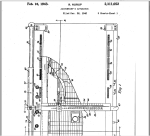
onewrite-accountant_apparatusOne-Write System Revolutionizes Accounting.  These guys had the right idea, they just didn’t have the cloud.

Cloud Computing and Online Accounting for All? Some Markets Are Still Waiting for Broadband

Cloud Computing and Online Accounting for All? Some Markets Are Still Waiting on Broadband

As the information technology industry espouses the benefits of the “paradigm shift” in computing and the move to cloud computing platforms and models, there are folks out there in the world who just aren’t seeing it happen like that.  Not everybody’s working online. For many, the Internet and online working models simply haven’t intruded into their lives and businesses as it has for others.  While this may be partially rooted in conservative mentalities and beliefs which are resistant to change, the more likely reality is that options for high-quality and affordable broadband service is simply not available to them.  Without choices for affordable and useful connectivity to the Internet, online just doesn’t have the attraction it does for those who are “connected”.

When businesses look at cloud solutions and the Internet dependency that comes along with them, having more than one connection to the outside world becomes the imperative rather than a luxury.  Unfortunately, some markets are still waiting for broadband (or have very limited options for service), rendering the cloud nearly unreachable.

It may come as a surprise to some, particularly to those in East and West coastal regions, that high speed broadband just isn’t as available in other zones.  In fact, the *National Broadband Map clearly reveals limited availability and choice in numerous regions of the US.  Broadband Internet access is a necessity to support the IT industry’s shift from localized IT to “cloud” IT.  But the shift is only evident to those who are involved in it or who have that option.  For those who the industry is beginning to refer to as the technology “have-nots”, this lack of available and affordable access will ultimately create more than simply an inability to participate in broadband-reliant IT solutions.  The fast pace of innovation and evolution in IT almost guarantees that the technology have-nots will fall even further behind, possibly to the point of not being able to catch up.

 “A Growing Gap Between IT Haves, Have-Nots. There will be a growing gap between the IT haves and have-nots in 2013. The latter will fall behind the former on a wide range of business technology fronts such as mobile, cloud, social, virtualization, and analytics…” 7 SMB Technology Predictions for 2013 | InformationWeek.com

As business (and personal) technology models continue to evolve, and as new solutions and services begin to displace the old, those who remain disconnected will begin to directly experience much more impact.

Consider something as simple as using QuickBooks desktop software for small business bookkeeping.  As Intuit continues to remove elements from the installed software product, turning them into web services instead, customers with limited or no broadband access will find themselves without the features and functionality they need in the software.  And the only possibly comparable alternatives to QuickBooks desktop accounting products are Internet-based alternatives, making them not really alternative options at all.

It is also likely that lack of sufficient broadband is one of the factors motivating many solution providers to seek clients in other markets – outside of the United States, and in regions where broadband availability is more prevalent and service speed and quality is higher.  Yes, it’s true.  The United States is not the leader in broadband availability, or even in quality.

“For many people, their broadband connections are their lifelines. So what is the state of broadband in the U.S.? Well, when it comes to speed and price and adoption, we’re certainly not a leader — “middling” is a better way to describe our position.

Currently 119 million people that live in the U.S. don’t have broadband connections (for many reasons, including not wanting it or not being able to afford it) while 19 million don’t even have the option to get it. Our rate of broadband adoption (62 percent) lags behind countries such as South Korea, the U.K.,and Germany, according this year’s Federal Communication Commission report. (We’re closer to the penetration rates to Japan, Finland, and Canada.) These numbers are not likely to change soon, given that broadband growth is slowing and providers are moving away from wireline infrastructure. “ GIGAOM:The state of broadband in the U.S. [infographic]

Accountants and other professional service providers serving clients in regions lacking sufficient choices for access must recognize that their approaches to doing business will not necessarily match their peers in more fully connected areas.  Certainly, accounting and legal professionals are dealing with this reality as practice coaches and industry leaders push for IT- and cloud-enabled models for improving practice performance and creating differentiation, even as their proven applications and business solutions morph into or are replaced with SaaS applications and online service.

The take away from this is that there are still large numbers of businesses and individuals doing things with legacy tools, managing spreadsheets on standalone PCs, or writing with pens and using paper – even in areas where broadband access is plentiful.  Regardless of how forward moving the rest of the world may be there remains a need to provide service and support these IT have-nots.  Perhaps this becomes a means for differentiation, finding ways to work with businesses who are connected and those who are not, and leveraging the firm’s access and capability to deliver what the client cannot obtain directly.

Make Sense?

J

*The National Broadband Map is a tool to search, analyze and map broadband availability across the United States

Many Companies Are Negligent About SAP Security, Researchers Say – CIO.com

Is your hosting service provider helping to keep your critical business applications secure?  It is not enough to simply harden machine images and develop policy-driven access; application hosting providers need to understand the vulnerabilities introduced by each and every application in the environment.  Otherwise, the system could be exposed to threats directed specifically at the application environment and opportunities it presents.

Many hosting providers will offer customers service for any business application they have, and often provide those services with no significant experience or expertise in dealing with configuration or security issues specific to those applications or environments.  Consider the following report from IDC which indicates that numerous SAP deployments remain vulnerable to attack or intrusion, even though SAP has improved security of the products. The problem rests not exclusively with the SAP applications, but also with the approach to implementation of systems and security around those applications.  Understanding the various vulnerabilities introduced with SAP products is the first step to securing them.  Certainly a skilled IT solution provider is likely to offer a high level of service and capability, but there may be issues presented by various products (like SAP) which introduce additional or unique considerations, and it is important for the service provider to be aware of and address them.

Joanie Mann Bunny FeetMake Sense?

J

IDG News Service — SAP has significantly improved the security of its products over the past few years but many of its customers are negligent with their deployments, which exposes them to potential attacks that could cripple their businesses, according to security researchers.

The biggest issue is that companies expose insecure SAP services to the Internet — not only HTTP services, but also critical administrative interfaces, Alexander Polyakov, chief technology officer at ERPScan, a developer of security monitoring products for SAP systems, said Tuesday.

Between 5 percent and 10 percent of companies that use SAP products expose critical services to the Internet that shouldn’t be publicly accessible, Polyakov said. This happens because they want to enable remote management or because of improper configurations, he said.

Most of the services have vulnerabilities that can be easily attacked, Polyakov said.

Publicly available exploits exist for many SAP vulnerabilities, including some that are part of Metasploit, a popular security testing tool.

The percentage of companies with exposed SAP services differs from country to country. The situation is better in North America and Europe and worse in the Asia-Pacific region, Africa and Latin America, Polyakov said. However, even 5 percent translates to a very large number of companies, he said.

via Many Companies Are Negligent About SAP Security, Researchers Say – CIO.com.