Finance Department Participation in Supply Chain Management

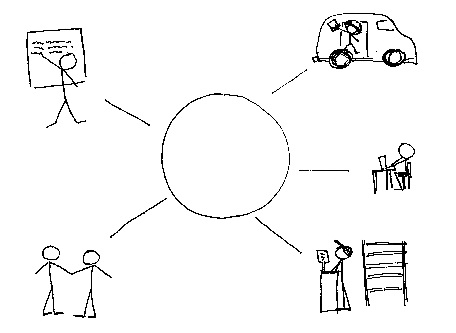
When most businesses approach Supply Chain Management, the focus is on the item or product – the physical thing that ultimately gets delivered somewhere, somehow. What many businesses do not consider is that the orchestration and timing of “supply chain” activities can have significant impacts on financial performance, reporting and cash flow. The current processes could just be working just “okay”, and not delivering the financial benefit that might be obtained through modernization of technologies and transformations in approaches. The key is to get the right people involved.

One big aspect of seeking to integrate electronic commerce and collaboration with customers, suppliers and payment services is the recognition that supply chain activities involving orders, invoices, payments, and remittances are directly related to finances, revenue recognition and cash management.

For any project to be successful, it should include execs from both the supply chain and finance areas so that all concerns relating to event timing may be addressed to allow proper treatment in the financial statements. After all, the same things that trigger supply chain activities (orders etc) are the same documents which drive finance. When the information is accurate and timely, and when the inefficient manual processes can be replaced with electronic workflows, the business is best positioned to improve cash flow and overall financial performance as well as business value.

Unfortunately, few business owners have a real understanding of the costs associated with manual entry activities and how the direct financial impacts they have. The speed and accuracy of processing orders and invoicing customers means faster cash in, and leveraging the speed of electronic data interchange with suppliers so that “just in time” orders may be placed and logistics processes more fully enabled means cash out when necessary and not ahead of time.

… using a digital transaction for payments allowed [businesses] to hold on to cash longer and better control the timing of the release of funds, something more difficult to control when mailing a physical check. Check fraud remains rampant across many industries. According to an AFP payment fraud and control survey, 70% of U.S. organizations reported check fraud in 2019, responsible for more than $18 billion in losses.” –

source: What Every CFO Needs to Know About Supply Chains; Study published by DiCentral and Lehigh University; 2012

For example, there are many studies which show that purchase orders that are not sent digitally are most often manually processed, and that this manual processing may be done by any number of departments in the company – but most often the job falls to finance. Rather than looking to eliminate the manual entry of data and the errors and delays that come along with it, businesses execs first looked to where the lowest labor cost rests and had them handle the extra data input.

A digital strategy that transforms inefficient manual process into efficient electronic workflows is the better solution. While many companies have approached streamlining of activities by exchanging manual entry operations for data file formatting and imports, they still have not solved the problem as would be with an integration that takes even less human time and effort.

The real goal of any business improvement effort is to improve overall business value. By bringing in finance along with supply chain execs to the “digital transformation” discussion, the business is much better positioned to make real progress in areas that directly impact cash performance as well as long-term business value. It comes down to having all the information and being able to weigh the risks against the potential rewards to be gained from the contemplated changes.

jm bunny feetMake Sense?

J

Connecting Your Web Store to QuickBooks on Azure

If you sell products via the Internet using a web store or shopping cart application, then you are probably facing the problem of getting your order and sales activities into QuickBooks and then getting shipping and product information back into the web store. For some, the additional need is to mirror the products and pricing information between the inventory management or financial system and the web store. In many businesses, this is a big chore and requires literally hours of redundant data entry and updating.

As with any manual process, there are many opportunities for errors and mistakes which ultimately cost the business both time and money.

Online selling is a dynamic business, and the sale is made when the customer is ready and willing to buy and the seller has the item available at the right price. The web store (ecommerce system) exists to process this sale in order to meet the immediacy of customer demand. If the system is not up to date with current product or pricing information, then the customer may not find what they want, and the sale is lost.

This means that the connectivity between the online selling system and the inventory/accounting system is of paramount importance in the ability to do business.

Synchronizing inventory information between the web store and the inventory/accounting system ensures that product and quantity information is updated on the web as product is sold and shipped (or received in). At the same time, importing invoices and sales receipts into the accounting system helps to ensure proper and accurate recording of sales and payment information and improves tracking of accounts receivable, shipping charges, and sales taxes.

cloud-small-business

To make this connection between the Web store and the inventory/accounting software, an integration solution or connector is generally required. The connector gets installed on the same systems as the inventory/accounting solution (on the same systems as QuickBooks, in this case) and provides the mechanism to synchronize data between the web store and the accounting system.

Integrating an always-on web store with an on-site accounting solution can be a challenge, even for the most tech savvy business owner.

Creating seamless processes for exchanging data between these remote systems requires that both solutions be operating in a secure and accessible platform. While the web store is accessible via the Internet, getting to data in accounting and other systems residing on local PCs or networks is more problematic.

An option that many successful online businesses have adopted is NOOBEH‘s QuickBooks on Azure service, which provides centralized hosting and management for the QuickBooks desktop and any connected inventory or warehouse management applications as well as the integration to the web store.

Enabling the accounting and operational systems to be online and always on, like the web store, allows them to exchange data when and where it is required.

Connecting services in a secure and managed environment introduces new efficiencies and eliminates risk due to data entry errors or lost transactions. The QuickBooks on Azure cloud hosting service provides the system management, platform security and uptime required to ensure that the inventory and accounting systems supporting the always-on web store are also always on.

jm bunny feetMake Sense?

J

Are You Prepared for SQL Server 2008 End of Support?


Everything gets old eventually, and now it is official for SQL Server 2008.

03-2012sean-phone-328-e1377042261105On July 9, 2019, support for SQL Server 2008 and 2008 R2 will end. That means the end of regular security updates and general support for the product. Are you ready?

It took more than 10 years for Microsoft to end support for our beloved SQL 2005 and version 2008 has enjoyed a similarly long reign. But it’s over and you need to get used to the idea. Even more, you need to get upgraded to a new version of SQL so your systems can still be patched, updated and supported. With all the nasty exploits out there, letting your software get out of date is more of a business risk than ever.

With cyberattacks becoming more sophisticated and frequent, running apps and data on unsupported versions can create significant security and compliance risks. The 2008 family of products was great for its time, but we highly recommend upgrading to the most current versions for better performance, efficiency, and regular security updates.

Now is a Good Time to Consider Azure

Microsoft is giving a present to businesses that want to migrate their workloads to Azure. For those customers that elect to take this as an opportunity to move to the Azure cloud, extended security updates will be available for free in Azure for 2008 and 2008 R2 versions of SQL Server and Windows Server to help secure workloads for three more years after the end of support deadline. Moving existing systems to the Azure cloud is a natural step in modernizing the business infrastructure and makes the next step of upgrading to managed database services and/or migrating to new Azure servers a lot easier.

Upgrading isn’t simply a matter of maintaining status quo, either.

Moving to new versions can be a foundation for new strategic capability and increasing overall business potential, powering new decision-making processes fueled by analytics and business intelligence.

The Microsoft Lifecycle Policy offers 10 years of support (5 years of regular support and another 5 years of extended support) for the 2008 and 2008 R2 versions of SQL Server and Windows Server. When the extended support period ends, there will be no patches or security updates, which always creates security risk.

If your business is going to remain competitive, you can’t rely on outdated systems.

Your business is tough enough to manage without having your systems work against you.  Software that prevents you from keeping up with demand, creates risk in compliance and security, and reduces operational performance is not what you need. Collecting, storing and rationalizing data takes power and speed, and securing your growing information warehouse requires vigilance in security and update management.

Use this opportunity to review your platforms and applications, and consider moving your on-premises or co-located systems to the cloud. The upcoming milestone is a great opportunity to transform applications and infrastructure to take advantage of cloud computing and the latest versions of SQL Server and Windows Server.

jmbunnyfeetMake Sense?

J

Next Generation Accountants and Businesses

Understanding the value and application of information technology is the cornerstone of building a successful “next generation” accounting or consulting practice. Professionals are finding that new opportunities to engage with new and existing clients comes from closer involvement with client financial and operational systems. Collecting and analyzing data, integrating applications and automating data exchanges, and leveraging cloud platforms and services is rapidly becoming the next level of “standardized” service offered by many professionals.

The pace of change is increasing, which makes it increasingly important for business owners to wisely select their technology partners and solutions. While many accounting professionals consider themselves to be the business owner’s trusted advisor, their clients often seek advice on increasing efficiency and reducing costs from software and IT consultants instead.

Yet conditions will change and could force the client business to make adjustments that impact the applications and services supporting the operation. Do the solutions in place have the agility necessary to meet changing business needs, being adaptable enough to meet new conditions or orientations? This is where accounting professionals can help their business clients make the right choices to address current and potential future needs.

Even as information management paradigms continue to shift, accounting professionals can help their business clients achieve better business performance and profitability through innovating workflows and increasing process efficiency. Whether or not the existing systems lend themselves to these efforts remains the question, and represents an area where the professional could provide great value.

Accounting professionals should look at services they can provide to clients that have direct and meaningful impact on operational efficiency and resultant profitability.  These areas represent not simply cost and efficiency improvements, but speak to quality of service and sustainability as well, creating better and repeatable outcomes that can support the operation even as operating conditions may change.

Improving data collection and analysis provides the foundation for understanding more about the operation, and delivers the insight required to identify areas where performance might be improved and then to prove the outcome.

Automating data exchanges and imports, eliminating redundant entry and the potential for manual errors, establishes structure in processes which can then be streamlined to deliver consistent and predictable results.

Utilizing cloud platforms and services allows the business to utilize the infrastructure required to support operations while providing a level of affordable scalability that doesn’t push the business beyond its reasonable boundaries.

What this discussion touches on is the subject of digital transformation and what that really means for small businesses and the accounting professionals who support them.

Rather than performing the accounting and financial work as after-the-fact participants, accounting professionals should help their business clients take a new view of processes and activities performed throughout the business, identifying areas where new approaches can be applied to increase efficiency as well as agility, developing a stronger foundation for growth and profitability. 

From the adoption of paperless and electronic workflows to merging social media with marketing and support activities, digital transformation represents an ongoing effort within a business to fundamentally shift from manual processes to electronic exchange, and expanding considerations beyond physical boundaries to include the virtual, as well.

All of this represents new opportunity and enhanced value for the accounting professionals ready to help their clients become “next generation” businesses.

Make Sense?

J

Model Your Dreams, Not Your Workflows

Jurassic Park: “Are those heavy? Then they’re expensive, put them back..”

Process modeling, process improvement, workflow design and quality management all sound like big, complicated things that larger companies do. Analyzing and re-engineering processes and developing highly structured workflows is often work performed within an enterprise; heavy and complicated and expensive work that’s required to keep large or distributed organizations operating as a single unit. But structure isn’t just for big business operations; it’s a big deal for small business, too.

The truth is that modeling business processes and workflows isn’t necessarily difficult or expensive, and the benefits to be gained apply as directly to small businesses as they do to large enterprises – perhaps even more because smaller businesses can change their trajectory early on, before things are too fully entrenched.  Ongoing, the development of workflows to guide process activities and the regular evaluation and testing of the outcomes may reveal wondrous opportunities to increase performance and profits. It’s all about drawing that picture of what you want the business to be, and then finding the best way to make it be like that.

While business owners and managers may be familiar with projecting financial performance under different scenarios, how often do they look at the actual processes supporting business operations and “project” performance based on changes to processes, worker activities or operational workflows?  It just isn’t something you hear much about in the small business world.  When I reached out to Ben Boomer of ParkPro to have a discussion about this type of stuff, I had no idea that the conversation would turn into a real example of how one single software solution could be the foundation for incredibly beneficial change in the organization, the business performance, and the satisfaction of workers and customers alike. The software is from the Dutch company Exact, and the product is Synergy Enterprise.

ParkPro has been operating for just about 40 years, providing an array of services and solutions ranging from auto gates and access controls to parking revenue management and camera solutions, and even anti-terrorism solutions.  Their deliverables are mostly project-based and there is a very large installation and maintenance services aspect to the business. What all this means is that there are a lot of moving parts, lots of scheduling, projects and recurring activities, and lots of possible product and service combinations. There’s also a lot of inertia behind the processes and methods that have been standard business practice for a long time.

“Making any change to how the business operates is akin to changing tires on a moving vehicle” says Boomer. “You still have to get the work done and move forward”.  With Synergy Enterprise, ParkPro’s system is agile enough to allow them to use the software and at the same time configure and tweak it to meet the needs of the business and not the other way around. He suggests that this is the problem with systems that lack of the flexibility of Synergy Enterprise; businesses must adjust to the way the software works rather than making the software really work for the business. Ben discussed an example and the good advice he received from Jeff Sachs when the company wanted to implement barcodes and thought they could use whatever came in a “canned” solution. Jeff’s suggestion was that “if the process doesn’t work, then this will simply make it not work… faster”.

Greater efficiency and performance are always important, but what it also comes down to is configuring accountability into the system.  The very act of formalizing the processes and the workflow forces ParkPro to think about and define the processes as they really are.  The system that helps them set up work requests and structure activities also helps establish accountability along the way. This has allowed the company to benefit in ways they couldn’t even imagine.

Synergy allows them to make copies of their system where they can pose questions and model the answers and outcomes.  “Do we really need to do this step, or is it just because it’s written down?” he asks. “We can pose questions and then find efficiencies in answering those questions”.  Just as with financial modeling and forecasting, workflow modeling informs on the potential result of the adjustment, allowing businesses to make better decisions and avoid missteps.

The ability to adapt Synergy Enterprise to the requirements of the business has been central to the company’s success in creating new efficiencies and improving overall performance, and the effects are felt throughout the company.  Boomer says that the changes they’ve made in their processes and the workflows which connect them has even resulted in restructuring the organization and management hierarchy to be more reflective of how things are in Synergy because its more efficient.

Reliant upon the “open” nature of Synergy Enterprise and its ability to flex with the needs of the company, Ben knows the solution will continue to support beneficial change in the operation.  In Ben’s own words, “Synergy allows us to project our future dreams and know the software can keep up”.

Make Sense?

J


  • Series Introduction:  Fringe to Foundation: Aligning Business Goals and Lifting Business Performance through Digital Workflows
  • Article 1: Every Business Deserves a Chance to be Better
  • Article 2: Improve Processes and Profit More
  • Article 3: Workflow Has 3 E’s

Workflow Has Three E’s

When discussing how a business operates – how folks in the company go about the business of getting work done – the conversation almost always boils down to a discussion of the problems, conditions and challenges to consistently getting the work right and on time.

No mud. No flow. We got to go.
(Deepwater Horizon, 2016)

Sometimes the focus is on people and other times it is on resources or processes, but the underlying context is that there are kinks in the line which interrupt the flow. When the flow is interrupted, bad things can happen.

The flow in business is the workflow: those strung-together processes which make up the work and form the operation.

The workflow guides workers in the performance of their jobs, informing them about who is supposed to do what when, and sometimes even why.

Structured and managed workflow drives the 3 E’s in business: Efficiency, Effectiveness and Evolution.

In almost every discussion about structuring work and documenting processes and procedures, the terms “efficient” and “effective” come up.  In fact, it is hard to have a conversation on these subjects without running into those terms. Most organizations recognize that worker efficiency and process effectiveness are guided and informed by structured workflows, so desk reference guides and operations manuals become the norm. What may be somewhat less obvious is the evolutionary aspect of modeling business workflows, where improvements small and large may be uncovered or identified at any level of work while it is being described and modeled. A solid workflow management system serves to remove any memory impairment in a business, memorializing not just the process but its result as part of the historic record of the business. This data assists in supporting ongoing process evolution, ensuring continued alignment with changing business conditions and goals.

Modeling the operation and applying conditional elements like timing and resource availability can make the difference between useful guidance and a semi-useful handbook of procedures.

As business conditions change so does the workflow. Unlike with printed manuals, the software system that is used to structure workflows and provide worker guidance can also supply data necessary to support change.  Using a software solution to manage workflow creates an agility in the business that is necessary to make meaningful adjustments when it matters –prior to or with change, rather than far after.

This article is the 3rd in series, and focuses on how business workflows are supported and informed by the right software solution.  Even more, that activity tracking and process controls should be part of the structure and foundation for worker activities, where workers perform their job functions while the systems that guide them capture meaningful information regarding those activities and transactions.

The thesis is that creating structured workflows not only informs workers what is expected of them and when, but the act of creating and updating the workflows helps identify disconnected processes, finds missing process data, smooths cross-functional transitions, and identifies missing or ineffectual policies. There are numerous conversations and interactions that wrap around or influence every activity and transaction. The goal is modeling the business and workflows in a way that not only defines worker activities but also connects those activities (transactions) to the related documents, contacts, policies and other data involved or impacted.

Whether there are a few or many individuals involved in the business, there are tasks and activities which must be performed in particular order and manner.

For a few people to efficiently and effectively manage the work, it is essential that there be clarity in what should happen and when and by whom it is to be done.  It may seem that crafting workflow systems to guide these activities could be overkill, where a few people could communicate directly and let each other know what and when. Really, it only seems that way and typically only when things are going just right. Change a factor or condition or make an individual unavailable to perform the work and things can change dramatically.  What was once a seemingly straightforward operation becomes mysteriously ineffective when critical players or information are no longer available.

Without structure to guide and support the entire organization, any part may fail to perform when the essential elements holding the process together are removed. The result is dis-satisfaction with the work as well as the result. In the end, it means reduced performance reflected as lower productivity, lower work quality, lower customer satisfaction levels, and lower profits. As with any legend or lore, details in the “tribal knowledge” are lost over time and what was once trusted and workable ultimately fails in the face of progress.

These truths became the focus of a conversation with Jerie Harrell of Small Business Solutions LLC (SBS) based in Huntsville, Alabama. Jerie works with Bob Crook, also known as “QB Bob,” and his team of certified consultants offering on-site and remote setup, training, instruction, and ongoing maintenance of QuickBooks financial solutions for small to mid-sized businesses. SBS prides themselves on forming long-term relationships with their clients. According to Jerie, the team “is always there after the sale; we don’t walk away after a customer buys from us”.

“I often tell clients we are like an Oreo cookie, with the accountant on one side and the client business on the other” Jerie says. ”We’re the creamy center that holds everybody together and makes things work together. The client’s business is more efficient and gets things done faster with our support, and the accountant gets better data”.

Keeping things coordinated with the consultants, supporting clients and managing ordering and other activities keeps Jerie very busy most days. Layer into those responsibilities the added requirement to plan for expansion and train new personnel and the workload gets even bigger. There is a lot of information to manage, lots of procedures to work through, and the regular work needs to be done completely, accurately and in a timely manner or the machine breaks down and customers don’t get the products or services they need when they need them.  Just thinking about taking a vacation or maybe even retiring causes chills to run up and down her spine because Jerie knows she has more work to do before that could really happen. This is where the discussion about workflow and process support really started.

Jerie knows that you have to “keep things simple and keep the flow simple” in order to get everyone to participate. Her background in process analysis and improvement is really helpful to the business, because it enforces the understanding that things need to be fully documented and communicated clearly. “If you get things written down.. the processes and procedures, then the staff can be more efficient and effective.  They get more work done, production goes up, sales go up, and then you can hire more people. “

Speaking of hiring new people, this is another area that Jerie knows she needs to address and is among the reasons for looking at a structured workflow system. Also, while the idea of retirement sounds increasingly attractive on some days, the challenge is that Jerie’s job has been developed over many years and there isn’t a comprehensive guide to how she does it all. She has created a way of working and a flow that meets the needs of the business, and transitioning all that knowledge is no small endeavor. “Having things structured and documented is the key. I always have procedure manuals on every desk, but that doesn’t cover everything. The workflow, time management, and the underlying processes should be visible to others because even if a key person isn’t available, business still has to go on”.

Synergy Enterprise is a business management solution from the Dutch software company Exact (www.exact.com).

Looking at CRM and workflow solutions, and specifically at the Synergy Enterprise system from Exact Software, is the next big step in solving the workflow problem and setting up the business to learn more from its activities.

“Transparency in the workflows and processes allows you to analyze them, identify bottlenecks and where improvements can be made” says Jerie.

“It’s like TQM (Total Quality Management) embedded in the CRM: you manage from the bottom up.  When I look at CRM, I really see workflow.  It’s everything in the business: everyone is a customer… even your boss is a customer, and the goal is to provide great customer support throughout the organization. I try to help inform management about work performance, but there are a lot of issues that are intertwined. How do you measure that without a good system?”

Summing things up, Jerie suggests that implementing Synergy in a business might be similar to using something like Google Analytics to analyze and understand website activity.  She asks “why not track the activities performed in everyday business? Why did the customer not buy from you and what needs to happen to change that outcome? You need to know more!”

All three E’s are there, and I couldn’t have said it better myself.

Make Sense?

J

  • Series Introduction:  Fringe to Foundation: Aligning Business Goals and Lifting Business Performance through Digital Workflows
  • Article 1: Every Business Deserves a Chance to be Better
  • Article 2: Improve Processes and Profit More