Is this email legitimate? QuickBooks Payroll ACH ID Changes go live on the 22nd!

Is this email legitimate? QuickBooks Payroll ACH ID Changes go live on the 22nd!

Trusted QuickBooks Advisors – here’s another thing for you to help your clients with

Intuit recently sent an e-mail to QuickBooks Online Payroll (QBOP) and QuickBooks Full Service Payroll (QBFSP) customers about an ACH ID change.  It kind of looks like a phishing thing, but it is really a legitimate email from Intuit, and it is important to pay attention if your company uses the impacted services and a banking feature called “debit filtering”.  There isn’t much time to act, either, because the changes go live in 3 days (February 22, 2016).

Impacted services are QuickBooks Online Payroll and QuickBooks Full Service Payroll, so it is pretty important to address.  Nobody wants their business payroll processes interrupted, and this could easily do just that.

Intuit has added some new ACH ID numbers for use with direct deposit and other processes which work with the bank, so customers using a fraud-prevention method known as “debit filtering” will need to contact their banks to add the new IDs or their bank transactions will fail.

Debit filtering allows customers to tell their banks which ACH IDs are allowed to perform transactions with the bank account, like removing or depositing funds.  It is an extra level of fraud security that protects the bank account from unauthorized access, but it is also something that can work against the business if it is not managed.  In this case, contacting the bank to add the new IDs is critical to keeping things processing and flowing smoothly.  It is also important that the old IDs not be removed yet, as they may be tied to historic transactions that must be tracked and reported on for tax and other purposes.

“Is this really from Intuit? It seems like Intuit would have a better way to make such changes than to ask millions of subscribers to contact their bank”

Source: Is this email legitimate? ACH ID Changes; – QuickBooks Learn & Support

QuickBooks users don’t have much time to reach their banks and supply the new IDs, so pull the email out of the SPAM folder and call the bank right away. Intuit won’t be sending notices to the banks, and they have no authority to add different IDs to your approved list, anyway… which is a good thing.  If just anyone could add an approved ACH ID on your account, then just anyone could get to your funds.  Better to make the phone call yourself.

jmbunnyfeetMake Sense?

J

Mobilizing QuickBooks Desktops

 Hosted QuickBooks for Remote and Mobile Access

There was a time not too long ago when the “thought leaders” in information technology said that the desktop is dead, and all software will be accessed via the web. (Note: I put “thought leaders” in quotes because industry thought leaders are often those with the greatest media influence.  After all, you can’t lead them if you can’t reach them, right?). The whole no software thing is a dramatic oversimplification of what is happening with computer software, but one thing is kind of coming true: nobody wants to be tied to their desktop.  It’s not that the desktop is dead… it’s just not all there is. For users of the desktop editions of Intuit QuickBooks software, the question really isn’t whether they intend to give up their familiar and trusted software to use a different, online solution. The question is how to use the QuickBooks desktop software they want in the cloud so they can use it on desktops that aren’t the primary desktop computer, or on mobile devices.

Computing technology has finally reached a level of accessibility that was previously only imagined in science fiction stories.  Communicating instantaneously with anyone anywhere around the world; accessing extensive (limitless?) libraries of information, art and music with a simple handheld device – these are the things that people do every day without a second thought.  Business users may even be able to access their business documents, email, contacts and appointments etc. from mobile devices, enabling a productive and functional mobile workforce.
desktop-appsYet the desktop remains as the primary workhorse for most business users. This is where the productivity applications live, where large spreadsheets and full-screen applications are run, and where keyboarders and production data entry users operate.  Tablets, touchscreens and mobile devices just don’t provide the same capabilities unless you tether them to full size monitors and keyboards.  Even then they may not because they might not run the same OS as the desktop.  The point is that the desktop hasn’t gone away and isn’t likely to any time soon.  Users may use more mobile apps and devices, but this isn’t diminishing use on the desktop as much as it augmenting it.  This is what fuels the interest in application hosting and virtual desktop computing models – the desire to mobilize desktop and network applications and working environments.

Hosting applications and data gives businesses the flexibility of working in desktop applications and accessing data just as if they were in the office, yet users may be located anywhere there is Internet connectivity. When the applications and the associated data are managed in the datacenter, businesses are able to centralize their information assets and manage them more effectively than if the data were distributed among multiple computers.  While most sync and share solutions require files to be downloaded to local computers in order to open and edit, a hosted application service with virtual desktops and file sharing provides a security model which keeps business data secure yet available for user access without compromising security by downloading information to the user device.

A hosted solution approach can make license utilization more efficient and compliance easier to maintain, too.  By enabling access to applications on a centralized platform and eliminating the installation and maintenance of software on individual computers, businesses reduce the reliance on local IT personnel to install and update applications and user accounts, and improve their ability to control application assignments and usage.

Hosting helps businesses take advantage of technology that would otherwise be unaffordable, and delivers the mobility and centralized management required to boost productivity and contain costs.  There is a high cost to managing a business network, and creating secure mobile access to that network can represent an exponential increase in IT spending (just to initially set up, not to mention ongoing costs for security management, monitoring and support). Rather than taking on the entire burden of service management and delivery directly, businesses electing to work with hosting providers find that they are able to focus more on business operation, strategy and growth – and spend less time worrying about the IT supporting them.  Costs are reduced, workers are empowered, and capabilities are increased while knowledge and process investments are preserved.  When it comes to mobilizing business applications like QuickBooks desktop editions, it all starts with a hosted approach.

Joanie Mann Bunny FeetMake Sense?

J

Report Right or It’ll Cost You (double)

Report Right or It’ll Cost You (double)

paper-stackReporting requirements for business just keep growing, and so do the penalties for doing it wrong.  New this year and just in time for the annual reporting season (makes it sound almost fun, huh?) are new forms to file and an increase in penalties for not making an effort to get the information correct and into the hands of the proper recipient. Failure to file by the due date can cost businesses $250 per item, up to $3,000,000 in penalties ($1,000,000 for small businesses).  Add to that the warning about intentionally not filing or having an “intentional disregard of the requirements to furnish a correct payee statement”, which carries a penalty of at least $500 per payee statement and has no maximum penalty. Clearly, the cost of making sure the information is correct and filed in a timely manner is far less than the cost of not getting it done – or done right.

Growing problems around wage and revenue reporting have caused the IRS to pursue a variety of measures over the years to try to improve information reporting.  The Affordable Care Act has also had quite an impact on wage and benefit reporting, increasing reporting requirements substantially.  From the introduction of health plan reporting on W2s to the new mandatory forms 1095-C and 1094-C (for applicable large employers), businesses of all sizes are feeling the pressure.

February 2016 marks the date when employers and healthcare providers are required to file those shiny new IRS information returns regarding employer-provided healthcare coverage, providing a copy of the return to each employee much like a W2. The information would then enable the IRS to enforce rules established under the Affordable Care Act by revealing whether an individual might be eligible for a premium tax credit, or if an employer may be subject to non-compliance penalties. Penalties for failing to comply essentially double in 2016.  And the IRS suggests that a “good faith effort” standard will be applied to information reporting, offering no relief for employers that fail to make the effort to file timely and correctly.

It wasn’t very long ago that 1099 filing requirements expanded substantially, forcing businesses to get far more detailed in their production of information to the IRS and to payment recipients.  While this filing requirement impacted businesses both large and small, most lived through it (with the help of their trusted accounting professional!) and were able to comply.  That effort informed the IRS on a wide variety of business payments and expenses not previously tracked, in particular payments made for services and non-employee compensation.

The increasing scrutiny of wage and earning information may also help in efforts to curtail tax refund fraud.  Identity thieves use stolen (or borrowed) social security numbers to file false tax returns early in the year. Unfortunately, with the IRS motto of “pay first, prove later” the cross checking won’t likely be done until after the refund check has been sent. Once the task is performed, however, the taxpayer could end up getting a letter from the IRS stating that more than one tax return was filed using the social security number, they owe for a tax year for which they did not file a return, or the IRS indicates that wages were reported from an employer the taxpayer doesn’t know.

The IRS expects tax refund fraud to top $21 billion by 2016, which is an increase of 223% from 2013 numbers. Tax refund fraud costs every taxpayer.  No wonder the IRS is getting tougher with the penalties for not filing information returns accurately or on time.

jmbunnyfeetMake Sense?

J

Following is the text from the IRS, which outlines the “Increase in Penalties for Failure to File Correct Information Returns and to Provide Correct Payee Statements — 31-JUL-2015

L. 114-27, section 806, increased penalties for failure to file correct information returns and provide correct payee statements for information returns required to be filed after December 31, 2015.

Penalties are discussed in Section O in the General Instructions for Certain Information Returns. The penalties in the bulleted list under “Failure To File Correct Information Returns by the Due Date (Section 6721)” are revised as follows.

  • $50 per information return if you correctly file within 30 days (by March 30 if the due date is February 28); maximum penalty $500,000 per year ($175,000 for small businesses).
  • $100 per information return if you correctly file more than 30 days after the due date but by August 1; maximum penalty $1,500,000 per year ($500,000 for small businesses).
  • $250 per information return if you file after August 1 or you do not file required information returns; maximum penalty $3,000,000 per year ($1,000,000 for small businesses).

Franchise FUD: Browning-Ferris Industries, the NLRB, and Joint-Employer Status

Franchise FUD: Browning-Ferris Industries, the NLRB, and Joint-Employer Status

iconicAn August decision by the NLRB is likely to have a broad impact in the coming years, forcing a great deal of change in how many businesses do business.  While the issue may be under the radar for some business owners, those in the franchise industry are paying very close attention – which makes sense because the ruling could easily be construed as the beginning of the end for the franchise business model.  At stake are the definition of “employer” and the determination of who is really responsible for the workers.

The issue stems from a 3-2 decision by the NLRB on a case involving Browning-Ferris Industries of California.  Browning-Ferris Industries is a waste management company that contracted with another company – Leadpoint – to supply employees to perform a variety of work functions.  Under the NLRB ruling, it was determined that Browning-Ferris was a joint employer with Leadpoint.  What is interesting in this case (and where the FUD – fear, uncertainty and doubt – come in) is that “indirect control” of the employees became the primary factor determining whether a joint employer relationship existed under the National Labor Relations Act. Going against years of precedent, the board ruled that Browning-Ferris and Leadpoint were jointly employing the workers.

In the decision, the Board applies long-established principles to find that two or more entities are joint employers of a single workforce if (1) they are both employers within the meaning of the common law;  and (2) they share or codetermine those matters governing the essential terms and conditions of employment. In evaluating whether an employer possesses sufficient control over employees to qualify as a joint employer, the Board will – among other factors — consider whether an employer has exercised control over terms and conditions of employment indirectly through an intermediary, or whether it has reserved the authority to do so.

https://www.nlrb.gov/news-outreach/news-story/board-issues-decision-browning-ferris-industries

There are many who believe Browning-Ferris is a precursor to the pending proceeding against McDonald’s Corp. in which the NLRB general counsel charges McDonald’s Corp as a joint employer of its franchisees’ employees.  Possibly in response to outcries of wage inequality and fast-food worker strikes to force an increase in the minimum wage, the NLRB seems to be adjusting its definitions in favor of the movement and may inadvertently destroy the foundations of the franchise business model according to some.

Clearly the franchise business model is in the crosshairs.  In an article published on Law360 by David J. Kaufmann, Breton H. Permesly and Dale A. Cohen, the authors cite from the June amicus brief on the Browning-Ferris proceeding, in which NLRB General Counsel Richard F. Griffin Jr “directly addressed and attacked franchising, claiming that it was merely an “outsourcing arrangement” and insisting that franchisors are the joint employers of their franchisees’ employees because franchisors can exert significant control over the day-to-day operations of their franchisees”. No ambiguity there.

There have always been questions when workers are classified as contractors, forcing regulatory agencies to delve into the details of the relationship to determine whether or not independence actually exists.  But this decision changes things in a big way.  From Unions gaining more strength in forcing contracting organizations to participate in bargaining processes, to franchise businesses electing to run only company-owned locations to minimize exposure and risk, there is likely to be some troubling times for businesses large and small in the coming months and years as the new definitions take hold.

jmbunnyfeetMake Sense?

J

here’s a shortlink to this article http://wp.me/p2hGOJ-Om

Payment Card Roll Call: “Not Present” fraud likely to increase as EMV takes hold

Payment Card Roll Call: “Not Present” fraud likely to increase as EMV takes hold

rollingballNo retailer wants to become the next Target (pun intended).  Payment card fraud costs businesses and consumers billions of dollars every year.  What’s even more frightening, many of the breaches in the news are the result of innocent participants inadvertently granting access to the bad guys.  The Target breach in 2013 exposed the data of 110 million payment cards.  Hackers got into the network using perfectly good credentials of the HVAC company.  Sometimes password security just isn’t enough, which might bring in to question the security of all those SaaS subscriptions and online shopping sites folks use these days.

EMV chip technology, the standard around the world which has just recently become a standard in the United States, has done a lot to stem the tide of credit card fraud in other countries.  As it was implemented in various countries, guess where it pushed the fraudsters?  Where the anti-fraud technology wasn’t, of course! The United States was among the laggards in requiring EMV chip technology for payment cards, opening the door for bad guys and turning the US into a veritable haven for credit card fraud, “accounting for nearly 50% of global fraud losses, according to the Nilson Report[1]”.

EMV chip (or chip and pin) technology will go a long way to prevent credit card fraud for businesses accepting payment cards… in-person and counterfeit card fraud, anyway. Online retail, on the other hand, not so much.  A chip on the card doesn’t really help when the transaction is completed with the card not present (CNP).  Some industry analysts suggest that CNP fraud losses will exceed $6 billion within the next few years, making e-commerce and online payment security a high stakes game for even the smallest of retailers.  As it gets more difficult to hack the payment system when the card is presented, bad guys will fall back in even greater numbers to the card-not-present model to find their victims.

Online retailers and service providers must take additional steps to secure their systems and protect customers and business partners, and face the challenge with the understanding that effort must be ongoing as new threats emerge. Tokenization is a prime method of layering the system with security, making the merchant system somewhat less of a worthy target by not storing the card data in the system.  Even if the system becomes compromised, the bad guys wouldn’t find customer payment card information.  There are numerous other steps a business can take to secure the CNP sales, including applying behavioral analytics which might identify rogue activities, or using 3D Secure to authenticate a cardholder’s identity at the time of purchase.   The point is that CNP fraud is likely to spike as EMV technology takes a firm hold in the US.

Card fraud is already escalating rapidly for ecommerce retailers and other card not present channels – it didn’t take EMV to start on that roll but it will surely give it a push.  Paperless payment systems, SaaS subscription services and online application service usage are increasing dramatically and there’s no chip to get in the way of these transactions.  Sellers of any and every service utilizing online payments need to now pay particular attention to system and information security.  The risk has always been there, and EMV chips and other shifts in pay card technology simply give it a push.

jmbunnyfeetMake Sense?

J


[1] Chipping away at Credit Card Fraud with EMV; Information Week Tech Digest powered by Dark Reading, Nov 2015; NilsonReport http://www.nilsonreport.com/publication_newsletter_archive_issue.php?issue=1071

Mobile Device Security is a Moving Target

Mobile Device Security is a Moving Target

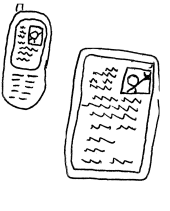
mobile-devicesAs businesses mobilize their workforces and processes the volume and variety of sensitive data passing through and sitting on mobile devices increases dramatically.  Even though the business owner or IT manager may recognize the importance of mobile data and device security, doing something useful about it is altogether another issue.  New considerations enter into the picture frequently, turning mobile security into a moving target. Protecting the business – the organization, its employees and its customers – requires adopting mobile security strategies that cover a broad range of issues.

First of all, is there any means of monitoring the activities of the connected or mobile devices?  Knowing which devices are interacting with your information would seem to be an essential part of business information security, yet smartphones and tablet devices often fall under the proverbial radar of IT or business management.  Actually, business management is likely among the base of users with the very mobile devices in question.

Are there ways to limit what information is accessible via these mobile devices, and is that data encrypted?  Consider also that data is sometimes at rest (like when it is just sitting on a hard drive) and sometimes in transit (like being uploaded/downloaded/transmitted over the wire).  In either state, the data should be encrypted in order to be more secure.

Is there a standard set of apps or services that users can enable, or is it pretty much personal choice?  Too often a user will innocently install a malicious app on their device, exposing the business to a variety of potential threats.  Creating strict policies around app selection and use is a really good idea, and finding a way to actually enforce them is even better.

The big issue is separation of work and personal apps and content.  Especially in small businesses where personal devices are the norm (well, not just in small business… Hey Hillary!) it is quite a challenge to create any useful separation between personal and business use.  The mobile device is often adopted as a personal choice of the user – who elects to invest their personal mobile device in their work – so exacting any real level of control in how the device is used is tough.  The security of the information is only as good as the security of the device, meaning that it is usually up to the device owner to decide if a password or pin is required.  Unfortunately and for the sake of convenience, there is often little or no real security on the device meaning there is no real security around the information on the device in the event that it becomes lost, stolen or compromised.

There are a lot of things that the business can do in order to improve the security of their business data in a mobile device environment.  Here are a few of the basics:

  1. Have defined procedures for what happens when a device is lost or stolen; make sure they’re followed
  2. Have a way to do a remote wipe of the device
  3. Make sure all devices lock after a period of inactivity, and that they have password or pin protection
  4. Have a mobile device use policy, and make sure all employees understand why it matters and agree to it.

jmbunnyfeetMake Sense?

J