Unlock KPIs and Improve Reporting with QuickBooks

It is surprising how many businesses still keep boxes of 3×5 ledger cards with customer and vendor information on them. More likely than the card box, the business may be storing its essential customer billing and vendor product information in the accounting system because that is the system they have.

These growing businesses need a better system to capture more information that delivers greater detail for accounting and reporting purposes. Just as likely, the business has other information it should and possibly could be capturing but isn’t sure about what steps to take next.

When details that inform a process are not part of an integrated system, it creates greater potential for lost or inaccurate data. The larger the volume, the more difficult and error-prone managing the information becomes.  

Business needs more detailed information about… everything.

Businesses may need to track time for payroll or jobs or both, job tracking may be a requirement, inventory tracking or more detailed inventory management may all be areas for greater attention. Mendelson Consulting can help develop these capabilities by making sure the business is using the right software, and then enabling the functionality needed to support the workflow and capture more and better data.

No data means no KPIs.

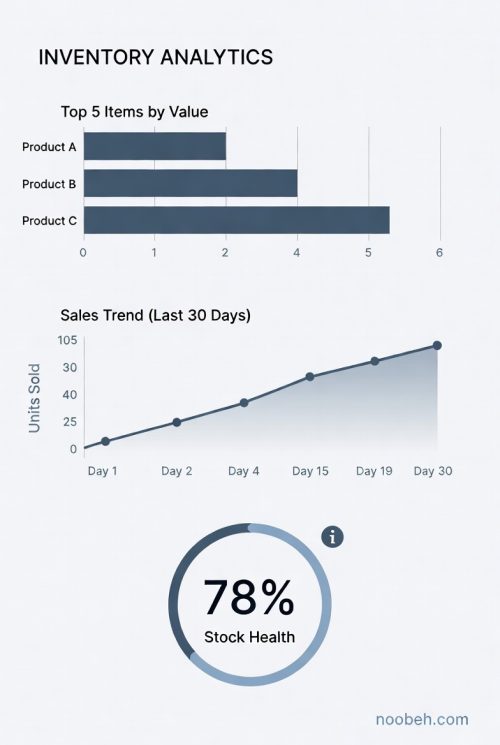
More and better data means more information to fuel KPI reporting. Key performance indicators can reflect operational performance in a variety of areas and may help identify where improvements are required.

Using data from the accounting and operational systems, businesses of all sizes measure their effectiveness using KPIs to evaluate the successes – or failures – of their processes and activities.

Mendelson Consulting’s team of QuickBooks Enterprise Experts and ERP consultants provide guidance, implementation and training, and report development to get beyond bookkeeping to proper processes that result in good accounting data. Mendelson’s cloud services team – Noobeh – sets it all up on Microsoft Azure, where data connectors, data warehouses and Microsoft Fabric weave it all together.

Whether just starting out or an enterprise or franchise expanding at a national or global level, we help businesses do more with their systems and software. We understand each stage of business and how to help our clients reach their next best level.

jm bunny feetMake sense?

J

Maximize QuickBooks Performance with Proper Data Maintenance

Millions of businesses around the globe use QuickBooks software for their accounting. With an estimated 84% of the small business accounting market making the buying decision to go with it, QuickBooks has enough product momentum and functionality to support small businesses through midmarket customers.

This is a broad base of customers for any accounting product, and the continued popularity of QuickBooks Enterprise is a testament not just to the application’s usefulness, but to the large gap that exists in the space where QuickBooks Enterprise desktop leaves off and the well-known enterprise ERP systems start. 

Initially, a business will implement their accounting system to keep track of customers, vendors, items, and cash. More detailed processes are then introduced as the business requirements grow, such as tracking more specific information on the costs of certain products, or drilling into customer purchases or item sales activity to see more details. This additional data provides a much more informed basis for business decision-making but also has impacts on systems and software as the volume of data to be managed grows.

Data growth can happen in many ways. Growth can occur in the number of products or services offered, growth in the number of transactions processed regularly, growth in the dollar value of transactions, or growth in the number of employees who need access to the system. Each impacts the ability of the system to continue to support the business requirements, but not necessarily in a way that isn’t manageable.

Given enough time, a certain “density of data” will eventually be reached, causing the system to lose efficiency in manipulating the file. The business process requirements may not have changed, just the size or condition of the file and data. The file opens slower, operations slow down and processes take longer, the system crashes frequently or has errors, and the usefulness of the product is severely diminished.

Keeping the QuickBooks data maintained and in good condition will improve performance and increase longevity of the application.

Too often, businesses assume they have outgrown their QuickBooks software because it is slower or has problems when they begin using additional features. Frustration sometimes even turns to looking at changing the accounting software entirely. Yet experience has shown that many of these situations are solved with some data file maintenance and repair, and sometimes a little re-training or setup work.

Regular file maintenance and a little housekeeping can keep a QuickBooks file in good working condition for a long time.  Regular backups with a complete verification and other routines will clean up the file and help the software manage the file more efficiently. But there are limits to how much data a single QB company file can hold, so it is wise to consider starting a new file every few years, just to keep the file manageable. This in no way means abandoning any data, as previous files can be retained and available to open and view at any time. How many years of data you can store in a QB Enterprise company file depends on a number of variables, and can range from a few to many.

While QuickBooks is very easy to use compared to most accounting products that service this small/medium enterprise market, this is both a benefit and a bit of a problem. Many users aren’t really trained in accounting, they are trained in how to operate QuickBooks. Moreover, the knowledge of how to make something work in QuickBooks doesn’t always translate to either proper use or to proper accounting. Even if it is simple to accomplish something in QuickBooks, it is always wise to get a little confirmation of the setup and training on proper use.

For a QuickBooks Enterprise desktop customer, the next step up in software is a big one no matter what, and it would come with drastic change, require data conversion (or abandonment), and incur high costs in licensing, implementation and training services. If there is a good business purpose to make such a change, then it makes sense. But bearing the significant costs of change may not make sense if the problems are centered on poor housekeeping or improper usage.

Mendelson Consulting’s team of QuickBooks Enterprise experts and ERP consultants can help your company get your data file and QuickBooks operations in the condition they need to be. With data file analysis tools and numerous methods for dealing with QuickBooks data and operations issues, Mendelson provides the services businesses need to continue success with QuickBooks. And, if we find that you have outgrown what a QuickBooks-based solution can do for your business, we’ll have that conversation, too.

jm bunny feetMake sense?

J

Software and the Business Lifecycle

Every year, roughly 4.5 million US small businesses are started. The fuel which drives the American economy, small businesses account for more than 99% of all businesses in the US. And job creation happens in small business, which means growth also happens here. Growth happens at every stage of a business if the business is moving forward. From just starting out to achieving large enterprise status, the lifecycle of a business carries with it a multitude of learning moments.

As businesses implement solutions to manage accounting and operational needs, there is often less consideration for the agility of the solution to meet changing and expanding business needs than there is for affordability and the immediacy of the implementation. Small business owners frequently adopt solutions because they fit the needs now, not understanding what may happen when the business outgrows the solution. Sometimes a product meets the functionality requirements quite nicely yet can’t handle the increasing volume. These are among the issues facing growing businesses and forcing stakeholders to make more buying decisions regarding the software supporting the operation.

Each stage of a business where functional or process requirements change drives to another software buying decision. This buying decision is most often met with angst, as considerations include not only cost, but data conversion vs re-loading, new process or system design and setup, user training, proofing the system (running parallel?) and a host of other issues, not the least of which is the business benefit to be derived.

If information is power, too many businesses are losing that power when they migrate from one software product to another.

Businesses often lose valuable historical information by leaving transactional and other detail data behind when they change from one business software system to another.  This should be an area of focus and key discussion point when any change to systems is considered.  After all, the insight and business intelligence gathered over the years was likely instrumental in helping the small business grow to become a successful big business and will continue to be important for years to come.

Maximizing a return on investment is crucial with any business expenditure, whether it is in people, processes or systems.

The selection of software to support the operation plays a most important role in finding that value return, as the software is what empowers the people, guides the processes and drives the systems’ foundation. Knowing the crucial positioning of the software selection in supporting business growth and recognizing that future changes may risk loss of valuable business intelligence, the importance of the initial selection becomes that much greater.

Mendelson Consulting will help you review your business and processes, building an understanding of what functionality needs to be supported and how the business intends to operate. For businesses looking to take the next step, we help identify where automation can improve efficiency and productivity. With that understanding, we help business owners and stakeholders navigate through the overwhelming landscape of solutions and approaches to find the right one for your business.

At every step and stage of business growth, Mendelson Consulting looks ahead to what’s next, helping our clients plan for the future.

While we don’t have a crystal ball, our experience coupled with industry and product knowledge allows us to make recommendations which minimize loss of valuable business intelligence while maximizing the ROI of the software which it informs.

jm bunny feetMake Sense?

J

Setting a Proper Foundation: Getting Started with QuickBooks

Businesses exist to make money, so it is no wonder that new business owners focus on the things that impact cash flow, like invoicing customers and making payments. These processes, involving getting and spending money, are among the first accounting-related things a new business owner generally addresses, yet they aren’t where the accounting should actually begin. The strongest foundation for any business begins with accounting, and proper setup and treatment is everything.

When most small business owners begin their operations, they get a business license, a computer, an email address and, more often than not, QuickBooks. Even if the owner isn’t fully prepared to handle the accounting for the business, they understand that they must do something to collect money and pay bills. QuickBooks is the standard for small business bookkeeping and has been for years, so this is where most begin.

Keeping a check register in QuickBooks, at the minimum, lets the business owner know how much money is in the bank. For a small business person, it’s all about cash flow and cash availability. Focusing on the checkbook and managing activities by counting payments going out and receipts coming in may help calculate the bank balance, but it doesn’t guarantee that the accounting is correct.

If the foundation isn’t solid, everything built on it is at risk.

To establish a proper foundation for business bookkeeping and accounting, there needs to be an understanding of basic accounting principles and how they are applied to this business. With the help and guidance of experienced accounting professionals or accounting software consultants, businesses will start out not just with the right chart of accounts, but also with knowledge of how to use the software properly. This enables workflows which utilize the capabilities of the software to handle the transactions properly at the back end, where data becomes information that provides insight into the business activities and results.

Whether the business is just getting started or has been operating for a while, there’s no time like the present to review the fundamentals and make sure you’re on solid ground. Mendelson Consulting, backed by CPAs and with years of business accounting software experience, is there to help businesses get the most from their accounting solutions. From initial setup to operational reviews and workflow re-design, you need a team that provides the services businesses need to build up their capabilities and grow the enterprise without compromising the structure supporting it.

jm bunny feetMake sense?

J

Why Small Businesses Need Proactive Accounting

It has been demonstrated time and again that businesses working with experienced accounting professionals can benefit from the strategic financial guidance and compliance support they may provide. Yet these factors alone are often not enough to make the business owner happy. For most small business owners and growing enterprise stakeholders, the lack of proactive advice compounded by slow responses to business requests are the primary reasons for leaving their CPA.

Even if they don’t know how to ask for it, small businesses want proactive attention from their accounting professionals. Small businesses want and need to get information when it matters, and they need help deciphering what the information really means.

It is common for professional accounting firms to simply wait for their clients to provide after-the-fact information from which reports are prepared and delivered long after their relevance has passed. These firms often see no sense of urgency in helping clients address the business issues facing them in real-time.

Business owners attempting to grow a small enterprise from their budding small business especially need the benefit of experienced insight into operational metrics, cash flows and overall business performance. Without this meaningful data and advice delivered in real-time, stakeholders don’t really know what is going on or if they’re on the right path.

Advice on business planning and financial strategies should come to business owners from their accounting professionals, but it often does not. It is interesting that so many firms list business planning and strategy among the services promoted on their websites, yet they just sit back and wait for clients to ask for help.

Regulatory and reporting requirements for businesses are ever-increasing, so it makes some sense that many professional practices continue to focus on taxes and compliance work. Firms may find it challenging enough to keep up with changes to these core services provided. Yet this is why practitioners should take notice and accept that their ability to meet changing market and customer demands is wrapped in their ability to leverage technology to do what people and process can’t do alone.

Information technology is needed to speed up the bookkeeping, accounting and reporting processes, and it takes even more technology to help turn data into relevant and useful information. This is where Mendelson Consulting and Noobeh cloud services can help.
Working with businesses of all sizes and encouraging participation by the accounting professional, Mendelson and Noobeh help businesses implement the technology that facilitates faster collection of information throughout the business and then applying solutions that reflect those numbers in ways that helps users visualize the meaning of the data.

Mendelson and Noobeh help CPAs and accounting professionals remove threats of competition and irrelevance by helping them work closer with and deliver greater value to their small business clients. Applying proven, innovative technologies with improved processing methods and controls leads to better information provided in a timelier manner, which returns to the client as a better result offering greater insight. This is what small businesses want from their CPA, and Mendelson Consulting and Noobeh Cloud Services helps professionals deliver it.

jm bunny feetMake sense?

J

Deadline Approaching for QuickBooks Desktop Users

All QuickBooks Desktop Users Are Required to Upgrade to a Current Subscription Model by Sep 30. Yes, the time has come to buy in to the software subscription model or lose access to your books. But at least you get to keep using QuickBooks desktop software, which is worth a lot of you’re already invested in QuickBooks.

Effective Sep 30, 2024, all existing users of QuickBooks Desktop Pro, Premier, Mac, and Enterprise Solutions v21 (and earlier) must transition to the annual subscription model. For Pro and Premier users, this is a short reprieve. Previously Intuit had announced a July deadline for renewing Pro/Premier licenses. After the now-September deadline, there won’t be any new sales of Pro or Premier licenses. With some of the recent price increases it almost becomes a moot point, as QB Enterprise is now priced similarly (less?) than Premier.

Something notable in all of this is that versions sold under non-subscription one-time licenses will be discontinued entirely. That is just fine for many users, however, as the much older versions don’t “phone home” to authorize the license, so they can keep working. The downside to that is vulnerability. Outdated and unpatched software is more vulnerable to risk than software that is actively updated to protect against various exploits. Best practices demand keeping software updated and patched. Being out of support with your business financial and accounting software is not a position you want to find yourself in.

Starting Oct 1, 2024, QuickBooks Enterprise will be the only QuickBooks Desktop version available for new purchases. For very small businesses, this is going to be a challenge as QB Enterprise is not as affordable as Pro was. These businesses may find that QuickBooks Online works for them, but they will not only miss out on a great deal of QB Desktop functionality that is not present in Online, but they will also be locked into the QuickBooks Online service model of receiving product updates without announcement, not having a backup of your company data, getting bombarded with a revolving door of add-on apps, and having literally no control whatsoever of where your data lives and how Intuit and its companies are accessing it.

If you are using an older version of QuickBooks Desktop, upgrading to the subscription model before the deadline is crucial to avoid any interruption of services.

What does this mean?

  1. Service Discontinuation:
    Failure to upgrade will result in the discontinuation of services such as QuickBooks Desktop Payroll, Payments, Online Backup, online banking, system updates, security patches, and live support. This could potentially disrupt your business operations.
  2. Immediate Action Needed:
    To ensure uninterrupted business operations, we strongly recommend planning your upgrade without delay.
  3. Advantages of Upgrading:
    Intuit encourages existing Desktop subscribers to upgrade to the current version (Desktop 2024) to benefit from the latest features, improvements, security updates, and bug fixes. Updated software also improves compatibility with current versions of Windows, Microsoft Office applications, Gmail services and other solutions that use modern methods of account protection and authentication.

At that time, you may also want to consider your alternatives to how and where you run your QuickBooks Desktop software.

Intuit offers “cloud access” with their QuickBooks Enterprise licensing, but this option is not your only or best option for running your QuickBooks Desktop/Enterprise software in the cloud.

With the bad guys (hackers) and malware being as prevalent as they are, businesses must be vigilant in securing their business and financial information. Shared hosting platforms where service providers allow many users from many businesses to operate on the same servers simply cannot provide the level of security or protection most businesses need.

Noobeh QBonAzure offers some limited shared hosting, but only for customers that have limited requirements and only for a few users. When a company needs more than just “vanilla” hosting for their valuable financial data, we strongly recommend going the private route and having your own cloud server.

Not just a “dedicated” server in a service provider’s network, Noobeh works only in the private Microsoft account of each customer, ensuring that there is absolutely no sharing of any resources with other customers. This allows us to build a system that works specifically for your business, with all the applications and services needed to support all aspects of operation. There aren’t different levels of service or service packages; each system is built and sized for the customer’s unique requirements, and we don’t charge per-application or silly things like that. You need what you need to run your business, and we host that.

Connect with us if you have any questions or need assistance during this transition. We will help you navigate the changes and understand how best to proceed for your business and circumstances, engaging with the right products and services to ensure continuity and set you up for greater future success.

jm bunny feetMake Sense?

J