Unlock KPIs and Improve Reporting with QuickBooks

It is surprising how many businesses still keep boxes of 3×5 ledger cards with customer and vendor information on them. More likely than the card box, the business may be storing its essential customer billing and vendor product information in the accounting system because that is the system they have.

These growing businesses need a better system to capture more information that delivers greater detail for accounting and reporting purposes. Just as likely, the business has other information it should and possibly could be capturing but isn’t sure about what steps to take next.

When details that inform a process are not part of an integrated system, it creates greater potential for lost or inaccurate data. The larger the volume, the more difficult and error-prone managing the information becomes.  

Business needs more detailed information about… everything.

Businesses may need to track time for payroll or jobs or both, job tracking may be a requirement, inventory tracking or more detailed inventory management may all be areas for greater attention. Mendelson Consulting can help develop these capabilities by making sure the business is using the right software, and then enabling the functionality needed to support the workflow and capture more and better data.

No data means no KPIs.

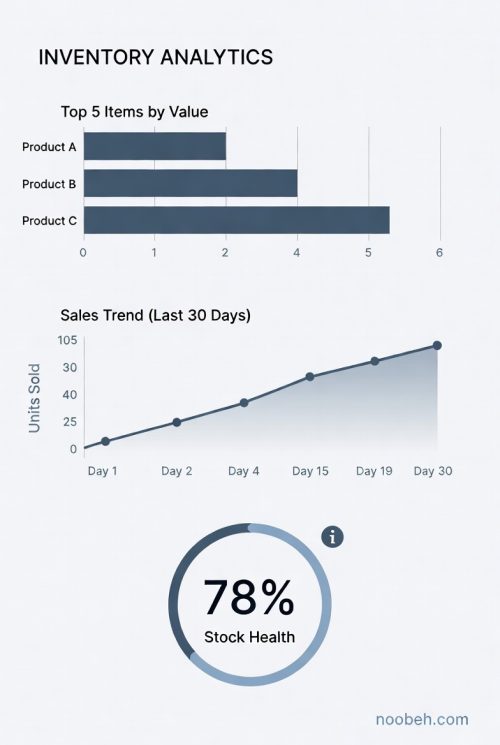
More and better data means more information to fuel KPI reporting. Key performance indicators can reflect operational performance in a variety of areas and may help identify where improvements are required.

Using data from the accounting and operational systems, businesses of all sizes measure their effectiveness using KPIs to evaluate the successes – or failures – of their processes and activities.

Mendelson Consulting’s team of QuickBooks Enterprise Experts and ERP consultants provide guidance, implementation and training, and report development to get beyond bookkeeping to proper processes that result in good accounting data. Mendelson’s cloud services team – Noobeh – sets it all up on Microsoft Azure, where data connectors, data warehouses and Microsoft Fabric weave it all together.

Whether just starting out or an enterprise or franchise expanding at a national or global level, we help businesses do more with their systems and software. We understand each stage of business and how to help our clients reach their next best level.

jm bunny feetMake sense?

J

Streamline Your Accounting: Add-Ons vs. Full Migration

Growing businesses have growing needs.  More customers, more products, more workers, more vendors. More of everything, and the need to keep track of it all comes along for the ride. With business accounting systems, one of the challenges of supporting more detailed or complex processes is the idea of changing over to an entirely different solution.

Instead of thinking in terms of migration, it is often better to preserve the knowledge, training, and data already invested in the current solution, and add on to that system to support the expanded processes or functionality.

This is a buying decision in the business lifecycle: enable new systems and processes versus a comprehensive solution migration.

In many cases, the add-on or extension for QuickBooks is a better answer than a migration to an entirely different – more expansive and more expensive – ERP solution. Part of the reason is the historical data. Another is learning.

The early years of a company are the formative years, where much learning is accomplished. Losing the fidelity of this data and the organizational knowledge that developed is losing a past that could be learned from. There is also tremendous value in the working knowledge of the team members who utilize the systems every day. Preserving any of these investments is of benefit to the organization.

Mendelson Consulting works with business owners and stakeholders who know they need to expand systems and capabilities but just aren’t sure where to begin.

Our QuickBooks Enterprise experts, ERP consultants and cloud specialists can help identify the gaps in information, processes and workflows, and identify the solutions to solve the problems and smooth the flows. From QuickBooks add-ons, extensions and sync solutions to other ERP options, we provide our clients what they need to do more and better business.

jm bunny feetMake sense?

J

Maximize QuickBooks Performance with Proper Data Maintenance

Millions of businesses around the globe use QuickBooks software for their accounting. With an estimated 84% of the small business accounting market making the buying decision to go with it, QuickBooks has enough product momentum and functionality to support small businesses through midmarket customers.

This is a broad base of customers for any accounting product, and the continued popularity of QuickBooks Enterprise is a testament not just to the application’s usefulness, but to the large gap that exists in the space where QuickBooks Enterprise desktop leaves off and the well-known enterprise ERP systems start. 

Initially, a business will implement their accounting system to keep track of customers, vendors, items, and cash. More detailed processes are then introduced as the business requirements grow, such as tracking more specific information on the costs of certain products, or drilling into customer purchases or item sales activity to see more details. This additional data provides a much more informed basis for business decision-making but also has impacts on systems and software as the volume of data to be managed grows.

Data growth can happen in many ways. Growth can occur in the number of products or services offered, growth in the number of transactions processed regularly, growth in the dollar value of transactions, or growth in the number of employees who need access to the system. Each impacts the ability of the system to continue to support the business requirements, but not necessarily in a way that isn’t manageable.

Given enough time, a certain “density of data” will eventually be reached, causing the system to lose efficiency in manipulating the file. The business process requirements may not have changed, just the size or condition of the file and data. The file opens slower, operations slow down and processes take longer, the system crashes frequently or has errors, and the usefulness of the product is severely diminished.

Keeping the QuickBooks data maintained and in good condition will improve performance and increase longevity of the application.

Too often, businesses assume they have outgrown their QuickBooks software because it is slower or has problems when they begin using additional features. Frustration sometimes even turns to looking at changing the accounting software entirely. Yet experience has shown that many of these situations are solved with some data file maintenance and repair, and sometimes a little re-training or setup work.

Regular file maintenance and a little housekeeping can keep a QuickBooks file in good working condition for a long time.  Regular backups with a complete verification and other routines will clean up the file and help the software manage the file more efficiently. But there are limits to how much data a single QB company file can hold, so it is wise to consider starting a new file every few years, just to keep the file manageable. This in no way means abandoning any data, as previous files can be retained and available to open and view at any time. How many years of data you can store in a QB Enterprise company file depends on a number of variables, and can range from a few to many.

While QuickBooks is very easy to use compared to most accounting products that service this small/medium enterprise market, this is both a benefit and a bit of a problem. Many users aren’t really trained in accounting, they are trained in how to operate QuickBooks. Moreover, the knowledge of how to make something work in QuickBooks doesn’t always translate to either proper use or to proper accounting. Even if it is simple to accomplish something in QuickBooks, it is always wise to get a little confirmation of the setup and training on proper use.

For a QuickBooks Enterprise desktop customer, the next step up in software is a big one no matter what, and it would come with drastic change, require data conversion (or abandonment), and incur high costs in licensing, implementation and training services. If there is a good business purpose to make such a change, then it makes sense. But bearing the significant costs of change may not make sense if the problems are centered on poor housekeeping or improper usage.

Mendelson Consulting’s team of QuickBooks Enterprise experts and ERP consultants can help your company get your data file and QuickBooks operations in the condition they need to be. With data file analysis tools and numerous methods for dealing with QuickBooks data and operations issues, Mendelson provides the services businesses need to continue success with QuickBooks. And, if we find that you have outgrown what a QuickBooks-based solution can do for your business, we’ll have that conversation, too.

jm bunny feetMake sense?

J

Deadline Approaching for QuickBooks Desktop Users

All QuickBooks Desktop Users Are Required to Upgrade to a Current Subscription Model by Sep 30. Yes, the time has come to buy in to the software subscription model or lose access to your books. But at least you get to keep using QuickBooks desktop software, which is worth a lot of you’re already invested in QuickBooks.

Effective Sep 30, 2024, all existing users of QuickBooks Desktop Pro, Premier, Mac, and Enterprise Solutions v21 (and earlier) must transition to the annual subscription model. For Pro and Premier users, this is a short reprieve. Previously Intuit had announced a July deadline for renewing Pro/Premier licenses. After the now-September deadline, there won’t be any new sales of Pro or Premier licenses. With some of the recent price increases it almost becomes a moot point, as QB Enterprise is now priced similarly (less?) than Premier.

Something notable in all of this is that versions sold under non-subscription one-time licenses will be discontinued entirely. That is just fine for many users, however, as the much older versions don’t “phone home” to authorize the license, so they can keep working. The downside to that is vulnerability. Outdated and unpatched software is more vulnerable to risk than software that is actively updated to protect against various exploits. Best practices demand keeping software updated and patched. Being out of support with your business financial and accounting software is not a position you want to find yourself in.

Starting Oct 1, 2024, QuickBooks Enterprise will be the only QuickBooks Desktop version available for new purchases. For very small businesses, this is going to be a challenge as QB Enterprise is not as affordable as Pro was. These businesses may find that QuickBooks Online works for them, but they will not only miss out on a great deal of QB Desktop functionality that is not present in Online, but they will also be locked into the QuickBooks Online service model of receiving product updates without announcement, not having a backup of your company data, getting bombarded with a revolving door of add-on apps, and having literally no control whatsoever of where your data lives and how Intuit and its companies are accessing it.

If you are using an older version of QuickBooks Desktop, upgrading to the subscription model before the deadline is crucial to avoid any interruption of services.

What does this mean?

  1. Service Discontinuation:
    Failure to upgrade will result in the discontinuation of services such as QuickBooks Desktop Payroll, Payments, Online Backup, online banking, system updates, security patches, and live support. This could potentially disrupt your business operations.
  2. Immediate Action Needed:
    To ensure uninterrupted business operations, we strongly recommend planning your upgrade without delay.
  3. Advantages of Upgrading:
    Intuit encourages existing Desktop subscribers to upgrade to the current version (Desktop 2024) to benefit from the latest features, improvements, security updates, and bug fixes. Updated software also improves compatibility with current versions of Windows, Microsoft Office applications, Gmail services and other solutions that use modern methods of account protection and authentication.

At that time, you may also want to consider your alternatives to how and where you run your QuickBooks Desktop software.

Intuit offers “cloud access” with their QuickBooks Enterprise licensing, but this option is not your only or best option for running your QuickBooks Desktop/Enterprise software in the cloud.

With the bad guys (hackers) and malware being as prevalent as they are, businesses must be vigilant in securing their business and financial information. Shared hosting platforms where service providers allow many users from many businesses to operate on the same servers simply cannot provide the level of security or protection most businesses need.

Noobeh QBonAzure offers some limited shared hosting, but only for customers that have limited requirements and only for a few users. When a company needs more than just “vanilla” hosting for their valuable financial data, we strongly recommend going the private route and having your own cloud server.

Not just a “dedicated” server in a service provider’s network, Noobeh works only in the private Microsoft account of each customer, ensuring that there is absolutely no sharing of any resources with other customers. This allows us to build a system that works specifically for your business, with all the applications and services needed to support all aspects of operation. There aren’t different levels of service or service packages; each system is built and sized for the customer’s unique requirements, and we don’t charge per-application or silly things like that. You need what you need to run your business, and we host that.

Connect with us if you have any questions or need assistance during this transition. We will help you navigate the changes and understand how best to proceed for your business and circumstances, engaging with the right products and services to ensure continuity and set you up for greater future success.

jm bunny feetMake Sense?

J

Good and Proper Accounting for Small Business

There are many reasons why a small business needs to have quality accounting, and it isn’t just about the cash. Especially when a business is small or growing, a strong financial management and reporting process will benefit the business in a number of important ways. Managing the cashflow and keeping money in the bank to cover payroll and inventory is critical, but good accounting data helps support better decision-making for more than just cash management.

Accounting and financial systems help small businesses keep track of their financial performance. This includes monitoring income and expenses (money in and money out) and creating financial statements. By having accurate and up-to-date financial information, small businesses can make informed decisions about how to allocate resources and grow the business.

Tax compliance is another area where good accounting data is essential. Small businesses are required to file taxes just like larger ones, and proper recordkeeping helps small businesses stay compliant with tax laws and regulations and to avoid penalties and fines.
Securing funding for operations and growth is another area where quality accounting data is critical. Banks and investors usually require financial statements and other financial information before providing any funding. By having accurate and well-organized financial records, small businesses can demonstrate their financial health and increase their chances of securing funding.

Knowing more about the business is always helpful, but being able to look at trends and understand what the numbers indicate is the real power. From budgeting and forecasting to identifying and reducing areas of risk, accounting data is the foundation for developing a true understanding of business activity and performance and finding ways to improve.

Track business performance, remain compliant with taxes, and get funding or investment when it’s needed. With good and proper accounting supporting management decisions, decisions become more informed and relevant and are likely to bring a better result.

jm bunny feetMake Sense?

J

Integrated is Better: Connecting Your Systems and Workflows

Small businesses need software and systems to help them get business done efficiently. The global pandemic has been fuel for recent growth in the small business software market where companies of all types are adopting more applications and services to better support operations.  Especially when users are no longer able to work in the office and consumers are demanding increasingly more personalized services, businesses need to find ways to get more business done in less time and with fewer resources.

According to Intuit® research “small businesses, on the average, use four or more apps to run their business”. You could consider it that business owners and managers buy software apps to get jobs done. Software can help structure the work and the information, creating workflows that improve efficiency and accuracy.

The key to getting the full benefit from any application or service is to have it connected to or integrated with your other solutions. There is almost never a completely disconnected process in a business; everything flows from and to something else. It should be the same with software and data. Saving time and improving accuracy of information means that data should only be entered once, and key data should sync between systems to remain up to date.

QuickBooks Desktop (Pro, Premier, Accountant and Enterprise), as well as other desktop accounting or ERP solutions like Sage100, AccountEdge and more, have a variety of 3rd party applications and integrations offering additional functionality or services. Just because the main solution is a desktop application does not mean that all integrated applications must also be desktop products.

To extend functionality of desktop products, developers often create web-based applications and services that sync or integrate data with the desktop product. In fact, many of the services inside of QuickBooks desktop are web-based application services which sync data to and from QuickBooks. Payroll, payments, and more are subscription-based services connected in QuickBooks but look like they are just part of the installed program.

When QuickBooks and other desktop applications are hosted with NOOBEH’s QuickBooks on Azure service, the system is running entirely on the Microsoft Cloud. This improves system flexibility, resiliency, and security, as well as providing the optimum platform for desktop applications and web-based services to connect – the bandwidth they use is cloud to cloud instead of cloud to your PC.

Even if the average small business uses four or more apps in the business, it doesn’t necessarily mean that all those apps are talking. Often, a business will implement a new application to handle a particular job but won’t consider the additional benefits to be gained by connecting the new app to the accounting system. Yes, the new app may make getting data from the field easier, as with a timesheet or field service management solution. Maybe it makes doing payroll easier because the calculation, reporting and delivery of paychecks is automated. Perhaps it is a website that takes customer orders and manages their payments.

All are cases where a business benefits a great deal from increased efficiency in data capture, reporting and more, but if all the information from the app needs to be re-entered into the accounting system, then a great deal of additional benefit is simply not there.  Data entry takes time away from other work and introduces the potential for errors that can take hours to track down (if they are even noticed).

When connecting any 3rd party solution with your accounting or ERP system, it’s important to make sure that the company fully supports the integration. Whether it is a direct connection to your QB or other software or is a “brokered” connection (as with an Integration-as-a-service connector), just make sure that the integration has the features and functionality you need and that the data will flow as you want.

We know that businesses need more than a single solution to address the variety of business problems that arise. We also know that sub-standard or improperly configured integrations risk doing more damage than good to the business data. That’s why we offer consulting and deployment services for a wide range of add-ons and integrated products. Even if it is a solution we haven’t worked with yet, our consultants know how to validate and test the integration within QuickBooks to ensure that the data flows properly and gets the right treatment in the financial system.

Get your software connected and working better for your business. Mendelson Consulting and NOOBEH Cloud Services help you focus on your business and not the IT that supports it, so that you can get more done with the resources you have. We help you work smarter, not harder.

jm bunny feetMake Sense?

J